1
CHAPTER 3
The Studies
3.2
Open Studies
3.1.1 KaseSwing
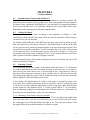
KaseSwing is an open study that is available to all users of BLOOBERG
PROFESSIONAL® at no charge. It is built into many of the Kase algorithms, including
KEES, the KaseCD and the PeakOscillator to identify swings and highs and lows needed
for determining valid entries and divergences. The study itself may be used by Kase to
define both swing lines and waves.
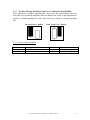
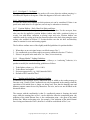
KaseSwing identifies each bar as either a falling or rising bar. A falling bar is defined as a
bar that has a lower low than the previous bar, or a rising bar, which has a higher high
than the last bar. Note that outside bars, those that make a higher high and lower low than
the last bar, are counted as both rising and falling bars. Inside bars, those that do not make
a higher high or lower low that the last bar, are ignored. There are specific rules and
settings for handling both outside and inside bars.
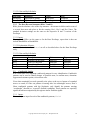
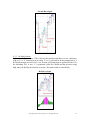
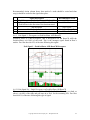
A running count of rising and falling bars is kept and updated for each new bar. This
count is used to find the detail or resolution of the swings and is controlled by an input
called MinSize that controls the sensitivity of the swings drawn. This means that after a
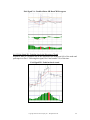
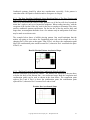
swing has formed, MinSize numbers of bars are needed to draw the next swing. As
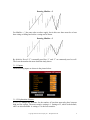
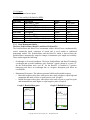
shown in the chart below, after a high swing formed, there was one falling bar and then
one rising bar. Because MinSize = 1 a swing can be drawn at the low of the falling bar
and the high of the rising bar.
Drawing MinSize = 1
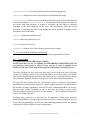
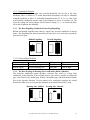
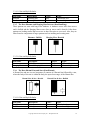
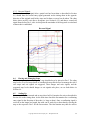
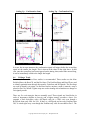
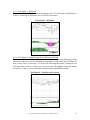
If the MinSize = 2 there must be two falling bars and two rising bars in order for a swing
to be drawn, as shown in the right sketch. Otherwise, as shown on the left, if there is only
one falling bar and then another rising bar no swing is drawn.
Copyright 2010 Kase and Company, Inc. All Rights Reserved.
5