1
APPENDIX
xxvi
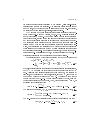
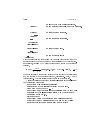
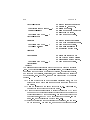
(c) The pattern "r2?xay" matches all strings that begin with r2 followed by any single character, and then followed by the characters
xay.
(g) A set of elements in the input le can be specied by a statement of
the form
(range "<elem-range0>"
"<elem-range1>" ...)
where "<elem-range0>", "<elem-range1>", ... are pattern strings of
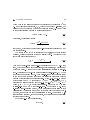
the element names. Element names are of the form <zone>#<i>:<j>:<k>,
where <i>, <j>, <k> are the indices i = 1; : : : nx, j = 1; : : :; ny,
k = 1; : : :; nz of the grid where nx,ny,nz are the number of elements in
the direction of the x,y, and z axes. Examples are that "e*" denotes
all elements which start with the letter e, and that "*#2:3:*" denotes
all elements that have indices i = 2 and j = 3.
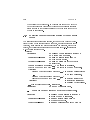
Another way that a set of elements can be specied is through the
statement
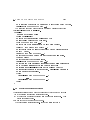
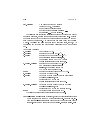
(index-range
(<imin> <imax> <jmin> <jmax> <kmin> <kmax>)
...
...
...
...
...
...
(<imin> <imax> <jmin> <jmax> <kmin> <kmax>)
\index-range)
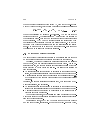
which denes a union of rectangular regions each of which is specied
their minimum and maximum i, j , k indices, i.e., i =<imin>; : : :;<imax>,
j =<jmin>; : : :;<jmax>, k =<kmin>; : : :;<kmax>.
In the documentation of the NUFT input that follows, the index-range
method can be used anywhere that it is stated that the range method
is used.
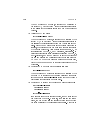
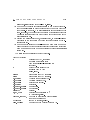
(h) The following statement
(include "<file-name>")
will paste the contents of a le in the current directory into the input
le. It can be placed anywhere in the input le where a complete
statement with matching parentheses is expected.
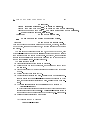
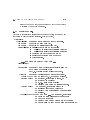
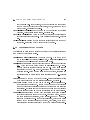
(i) The statement
(#define <symbol>)
will cause the stated symbol to be \dened." It is used in conjunction
with the #ifdef and #ifndef statements in order to conditionally
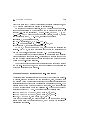
activate selected sections of the input le. That is, if the stated symbol
with name <symbol> is dened then the input statements within
(\#ifdef <symbol>)
...