1
May 31, 2012
US 2012/0137254 A1
output devices, such as a monitor or other display device, or as
control signals to still further components.
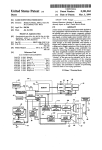
[0065] Referring still to FIG. 5, central computing device
501 also may include a variety of internal and/or peripheral
ucts by AT&T’s Natural Voices offered by WiZZard,
Microsoft Voices, digitiZed voice (digitally recorded voice
clips) or others. A volume control module 522 may be con
trolled by one or more scrolling sWitches or touch-screen
components in addition to those already mentioned or
described above. PoWer to such devices may be provided
buttons.
from a battery 503, such as but not limited to a lithium
polymerbattery or other rechargeable energy source. A poWer
sWitch or button 505 may be provided as an interface to toggle
incorporated With SGD 500 may Work together to provide one
the poWer connection betWeen the battery 503 and the other
hardWare components. In addition to the speci?c devices
upon contact With the touch screen, With highlight and bold
options to visually indicate selection. In a “Touch Exit”
discussed herein, it should be appreciated that any peripheral
method, selection is made upon release as a user moves from
hardWare device 507 may be provided and interfaced to the
speech generation device via a USB port 509 or other com
selection to selection by dragging a ?nger as a stylus across
the screen. In a “Touch Auto Zoom” method, a portion of the
screen that Was selected is automatically enlarged for better
municative coupling. It should be further appreciated that the
components shoWn in FIG. 5 may be provided in different
con?gurations and may be provided With different arrange
ments of direct and/or indirect physical and communicative
links to perform the desired functionality of such compo
nents.
[0069]
The various input, output and/or peripheral devices
or more access modes or methods of interfacing With the
SGD. In a “Touch Enter” access method, selection is made
visual recognition by a user. In a “Scanning” mode, highlight
ing is used in a speci?c pattern so that individuals can use a
sWitch (or other device) to make a selection When the desired
object is highlighted. Selection can be made With a variety of
customiZation options such as a l-sWitch autoscan, 2-sWitch
directed scan, 2-sWitch directed scan, l-sWitch directed scan
[0066] Various input devices may be part of electronic
device 500 and thus coupled to the computing device 501. For
With dWell, inverse scanning, and auditory scanning. In a
example, a touch screen 506 may be provided to capture user
inputs directed to a display location by a user hand or stylus.
“Joystick” mode, selection is made With a button on the
joystick, Which is used as a pointer and moved around the
A microphone 508, for example a surface mount CMOS/
MEMS silicon-based microphone or others, may be provided
to capture user audio inputs. Other exemplary input devices
(e.g., peripheral device 510) may include but are not limited
touch screen. Users can receive audio feedback While navi
to a peripheral keyboard, peripheral touch-screen monitor,
peripheral microphone, mouse and the like. A camera 519,
such as but not limited to an optical sensor, e.g., a charged
gating With the joystick. In an “Auditory Touch” mode, the
speed of directed selection is combined With auditory cues
used in the “Scanning” mode. In the “Mouse Pause/Head
trackers” mode, selection is made by pausing on an object for
a speci?ed amount of time With a computer mouse or track
ball that moves the cursor on the touch screen. An external
coupled device (CCD) or a complementary metal-oxide
sWitch exists for individuals Who have the physical ability to
semiconductor (CMOS) optical sensor, or other device can be
utiliZed to facilitate camera functions, such as recording pho
tographs and video clips, and as such may function as another
direct a cursor With a mouse, but cannot press doWn on the
input device. HardWare components of SGD 500 also may
include one or more integrated output devices, such as but not
limited to display 512 and/or speakers 514.
mouse button to make selections. A “Morse Code” option is
used to support one or tWo sWitches With visual and audio
feedback. In “Eye Tracking” modes, selections are made
simply by gaZing at the device screen When out?tted With eye
Display device 512 may correspond to one or more
controller features and implementing selection based on
dWell time, eye blinking or external sWitch activation.
substrates out?tted for providing images to a user. Display
device 512 may employ one or more of liquid crystal display
also may include various communication devices and/or
[0067]
[0070]
Referring still to FIG. 5, SGD hardWare components
(LCD) technology, light emitting polymer display (LPD)
modules, such as but not limited to an antenna 515, cellular
technology, light emitting diode (LED), organic light emit
phone or RF device 516 and Wireless netWork adapter 518.
For example, antenna 515 may be provided to facilitate Wire
less communications among the components of SGD 500
and/or betWeen SGD 500 and other devices (e.g., a secondary
ting diode (OLED) and/ or transparent organic light emitting
diode (TOLED) or some other display technology. In one
exemplary embodiment, a display device 512 and touch
screen 506 are integrated together as a touch- sensitive display
that implements one or more of the above-referenced display
computer) in accordance With one or more of a variety of RF
technologies (e.g., LCD, LPD, LED, OLED, TOLED, etc.) or
tooth®, WiFi (802.11 b/g/n), and ZigBee® Wireless commu
others.
nication protocols. A cellular phone or other RF device 516
may be provided to enable the user to make phone calls
[0068] Speakers 514 may generally correspond to any com
pact high poWer audio output device. Speakers 514 may func
communication protocols including, but not limited to Blue
directly and speak during the phone conversation using the
tion as an audible interface for the speech generation device
SGD, thereby eliminating the need for a separate telephone
When computer processor(s) 502 utiliZe text-to-speech func
device. A Wireless netWork adapter 518 may be provided to
tionality. Speakers can be used to speak the messages com
enable access to a netWork, such as but not limited to a dial-in
posed in a message WindoW as described herein as Well as to
netWork, a local area netWork (LAN), Wide area netWork
provide audio output for telephone calls, speaking e-mails,
(WAN), public sWitched telephone netWork (PSTN), the
reading e-books, and other functions. Speech output may be
Internet, intranet or ethemet type netWorks or others. Addi
generated in accordance With one or more precon?gured text
tional communication modules such as but not limited to an
to-speech generation tools in male or female and adult or
child voices, such as but not limited to such products as
infrared (IR) transceiver may be provided to function as a
universal remote control for the SGD that can operate devices
offered for sale by Cepstral, HQ Voices offered by Acapela,
Flexvoice offered by Mindmaker, DECtalk offered by Fonix,
in the user’s environment, for example including TV, DVD
player, and CD player. When different Wireless communica
Loquendo products, VoiceText offered by NeoSpeech, prod
tion devices are included Within an SGD, a dedicated com