1
• Reduction in the work-load for teachers (at least in terms of time spent marking)
• More transparency and the potential for increased ‘objectivity’ and ‘fairness’
• Greater flexibility about the time and place assessment can take place
• A wider range of tools and options for assessing different sorts of knowledge
However, despite its attractions, the move to on-line and computer based assessment may not be an easy one. If
it is not carefully planned, designed and implemented, there is a danger that on-line or ICT-supported assessment
simply becomes a tick-box system that generates automatic responses. This means that at best only the lower level
cognitive skills are assessed; at worst the students will get bored quickly and learn to ‘cheat’ the system.
If we are to use on-line assessment intelligently and make best use of its potential to assess critical thinking skills
or other complex cognitive tasks, we need a more sophisticated model. In particular we need to start thinking about
what sort of learning needs to be assessed and the kind of tool we can use to perform that assessment.
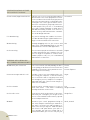
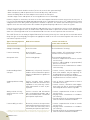
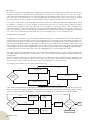
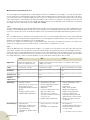
The CSHE (Center for the Study of Higher Education) at Coventry University has come up with a useful table which
maps the type of learning objective against an appropriate mode of on-line assessment together with some of the
constraints or pitfalls of each.3
Type of learning objective
to be assessed
Mode of assessment
Learner constraints or
issues to be considered
A body of knowledge
An on-line exam
The likelihood of ‘cheating’
Learner autonomy
An on-line quiz
with formative feedback
Some students’ ICT-related anxiety may dissuade them from using this mode
Group work skills
On-line study groups
There may be problems with
• learners’ comprehension of how to contribute effectively
• learners’ understanding of group product/
process assessment
• variation in learner commitment to collaborative learning
Understanding of basic
concepts
Web-based, self-paced, interactive
modules with automated responses
and no recorded marks or grades for
students
• Learner interest, motivation and engagement with modules may be negatively affected by absence of marks or grades
• Delays because of heavy traffic at peak times
may demotivate or frustrate learners
Student problem-solving
skills
On-line ‘role-play’ where students
adopt allocated roles and then solve
a problem in role, with only a minimum requirement in terms of participation
• Lack of learner comprehension of how to
contribute effectively
• Learner interest, motivation and engagement with role play or material negatively
affected by absence of marks or grades
Ability to think critically
and articulate the critical
analysis
On-line scenarios and information
with accompanying prompts and a
discussion board, with a minimum
participation requirement
• Learner comprehension of how to contribute effectively
• Varying learner commitment to collaborative learning
• Possible variation in starting and completion
times for distance and other students
Learner ability to reflect
Rhetorical, ethical or other questions
and a web forum which learners must
use to share their reflections, with a
minimum participation requirement
• Learner comprehension of how to contribute effectively
• Varying learner commitment to collaborative learning
• Possible variation in starting and completion
times for distance and other students
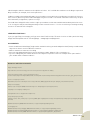
3 : LEASK, B., Issues in on-line delivery: quizzes and discussion groups, Adelaide, University of South Australia, 1999.
Retrieved May 20, 2009 from the World Wide Web: www.cshe.unimelb.edu.au/assessinglearning/03/online.html.
60 TACCLE handbook