1
dp.book Page 79 Wednesday, August 10, 2005 9:53 PM
It sounds obvious, but it’s critical. The viewfinder or monitor shows roughly what you’ll
get in your shot.2 Learn to see clearly what’s in the frame of the shot, and not what you
see when you look outside the camera. Treat your frame as an artist treats a canvas, and
be aware of all that lies inside it.
See What’s in the Shot
One of the most common errors you can make is to overlook objects that are right there
in your shot—especially objects in the foreground that seem invisible but then appear as
if by magic later. You’re concentrating so hard on the primary subject that you fail to see
extraneous objects cluttering the frame. Don’t be surprised by what shows up in your shot.
Check each shot immediately after you take it, and reshoot it if necessary.
Likewise, don’t miss a critical story element that you’ve inadvertently cut out of the shot
by poor framing. Change angles, or zoom a bit if necessary.
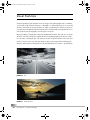
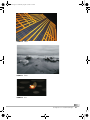
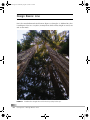
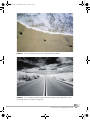
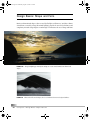
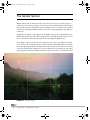
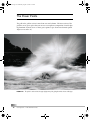
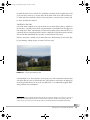
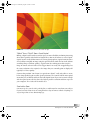
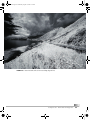
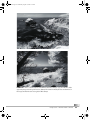
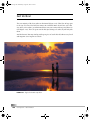
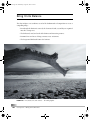
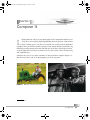
FIGURE 2-29
A classic (bad) landscape shot
Consider Figure 2-29. There may have been a pretty view of the mountains when the shot
was made. But you can’t tell it from this shot: The horizon is dead center; the light poles
in the foreground obscure the view; the baseball fields (?) are awkwardly cropped. What
other problems can you diagnose?
2. Most viewfinders on digital cameras match only about 90 percent of what you can expect to see in your
final image. The small electronic monitors on the back are a bit better. You’ll need to practice with your
camera to get a good sense of how closely the camera’s viewfinder and monitor match the final image.
Compose It > Control the Frame
79