1
11.
LEARNING MODELS (DEEPENING THE UNDERSTANDING WITH TIME – THEORY U)
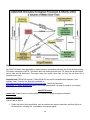
Throughout the processes of learning that yielded this report the authors were relating their learning processes to
Scharmer’s Theory U (Senge et al. 2005). Each new trial and error and reflection on the modelling systems report in
Part II was identified on the U and discussed. In this way the time spent on the technical work reported in Part II was
encapsulated in the reflection and social learning processes described in Part I
12.
CAPACITY BUILDING
In all Water Research Commission projects the matter of human capacity development is given special emphasis. The
scale, complexity, uncertainty and urgency of the challenges facing South Africa in the area of land use effects on
water quality are such that capacity building was central to the project teams thought processes. To be frank we do
not know exactly how the issues of human behaviour with respect to land use and water quality are going to be
resolved. We do know that if societal role players do not learn to reason wisely and collectively then the chances of
sensible solutions are remote. At present the state of our rivers and streams provide prima facia evidence that we
need to build our capacity to learn, reason and act wisely as individuals but also collectively. The connections that
this project has made, all be they only conceptual in some case, to the DHI-SA signing of MOUs with Universities and
science councils, software such as TeamViewer, the SA water Partnership, the Alliance for Water Stewardship, the SA
water Stewardship Council Trust and the Dinokeng Scenarios “Walking Together”, are all significant, strategically in
terms an environment that supports capacity building. One of the key elements of capacity building is that those
whose capacity is being developed need to feel that they are connecting to a vibrant whole that is much greater than
their own individual efforts but which simultaneously applauds and rewards their contributions.
As part of the capacity building component of this project, the development of skills amongst two students was
achieved during the December-January vacation period. They started from a base of skills in GIS and some knowledge
of hydrology and they went through the document above, step by step. In this way they greatly increased their skills
in the above areas and at the same time they were effectively testing the skills and learning of Bruce Eady whose
capacity was itself developed on this project. One demonstration of Bruce’s capacity is this document which was then
used to develop the capacity of the new cohort of students on the project.
13. REFERENCES
124