1
Guidelines for Maintaining a Contamination-Free Workplace
At some point, most qPCR users will experience some level of template contamination. Simple steps can mitigate the risk of accidental contamination that results in
non-informative data and, thus, wasted time and money:
19
•
Design a unidirectional process flow. PCR setup should be done in a templatefree room using reagents that never come into contact with potential contamination sources. This means keeping enzyme mixes, water, primers, probes, pipettes, tubes, filter tips, and plates in a room where template is never isolated
or stored.
•
When mixes have been made and dispensed into the wells, move the plates to
a new location for template addition.
•
If using robotics, do not use the same platform for setting up PCR assay plates
and isolating nucleic acids.
•
Regular decontamination of commonly used equipment is recommended, especially pipettes and work surfaces.
•
Regular cleaning of non-porous surfaces with a 5% bleach solution is encouraged.
•
Bench-top hoods with HEPA filters and UV lights can be useful but are not absolutely necessary. Short-term UV light treatment is only effective against live
organisms and not against purified nucleic acid.
•
Water carboys are not recommended for long-term water storage because microorganisms can thrive in these containers.
•
Multiple freeze–thaw cycles of oligonucleotides in a buffered solution are often
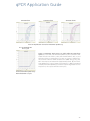
mistakenly thought to lead to their degradation. In order to prevent this problem, users are often advised to make small aliquots of the primer-probe mixes.
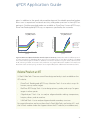
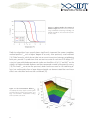
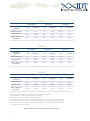
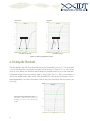
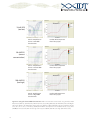
However, IDT has shown that PrimeTime® Assays containing primer-probe mixes are stable in buffered solutions for over 30 freeze–thaw cycles (Figure 8). Aliquots are useful if the stock solutions will be accessed frequently with pipettes
that are potentially contaminated with nucleic acids.