1
Shoddy workmanship, which compromises
the durability of a system, can usually be
recognised at sight.
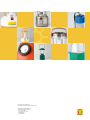
Photo: ISE
Progress in solar technology has recently led to a growing
use of solar-powered lighting solutions in developing countries. Particularly in rural areas with a dispersed population,
where connection to the electricity grid would be uneconomic, solar lighting systems are a promising alternative.
Solar lighting systems may broadly be divided into three
classifications: simple models, similar to ordinary torches,
are already available in many countries for a retail price of
about ten US dollars. These are sometimes sold with a crank
dynamo in place of the solar cells. Luminous efficacy and
durability are usually poor. Such low-cost lanterns often
last for only a month, or give light for only a few minutes.
At the other end of the price scale are ‘solar home systems’
with a solar module of 20 to 100 watts and an optimised
car battery, capable of powering several lights, a radio and
a TV set simultaneously. Although some three million such
solar home systems have already been installed worldwide,
for most users they remain unaffordable: in Africa and
Latin America they cost between 500 and 1000 US dollars.
Only in Asia are they somewhat less expensive.
For its testing of PV lighting technology, therefore, GTZ
(German technical cooperation) has concentrated on a
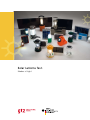
third product category, which is rapidly gaining importance: solar lanterns or ‘pico-PV systems’ whose retail prices
currently fall between the two extremes above. In their outward appearance they resemble kerosene lamps – but they
promise greater lighting convenience and minimal running
costs. In most models available so far, a small solar module
– typically with a capacity of 3 to 10 watts – is separate
from the lantern, so that it can be placed outdoors without
the lantern being exposed to the weather. The best of these
lanterns can be hung indoors or placed on a table, but are also
portable enough to light the way when walking at night.
Another way in which these ‘pico-PV systems’ stand out
from simple solar torches is the auxiliary uses available
on many newer models. These offer outputs for a radio,
a mobile phone charger or other functions, thus making
a minimal basic provision of electrically powered microdevices conceivable for all poor rural populations in the
near future.
Following exhaustive research on solar lanterns currently
on the market, twelve promising models were selected for
technical examination and tested by the Fraunhofer Institute for Solar Energy Systems (ISE) in Freiburg, Germany.
This examination is the preliminary stage of a field test that
GTZ plans for 2009. Experience in development cooperation shows that one thing must be avoided at the outset:
that users of cheap and inadequate devices should become
so disillusioned that the entire technology is discredited.
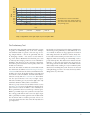
Table 1: Cost comparison
Lighting system
Typical cost (USD / klmh)
Candle
2.00
Kerosene lamp
0.10 – 1.00
Solar lanterns
0.10 – 4.00
Solar home system
0.04
Mains electricity
0.01
Estimated unit costs of lighting from different
sources, measured in kilolumen-hours. Kerosene
prices fluctuate widely. Lighting costs of better
solar lanterns are currently roughly at par with
kerosene lamps. Several solar lantern manufacturers have announced significant price reductions for
2009.