1
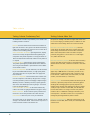
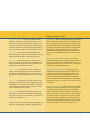
Table criteria: Testing Criteria: Preliminary Test Testing Criteria: Main Test The distribution of marks in the preliminary test is based on the The system for marking in the main test begins with a base value following examiner’s checklist: of 1 for each category, from which points are deducted for individual faults or shortcomings. These are assessed as follows: Function: Does the lantern function? How is the distribution of light? Does the lantern cause glare? Is the switch mechanically Deviation of solar module from nominal rating: Does the robust? Can an illumination be created on a level surface that is system deliver the nominal rated values of power output, open sufficient to allow reading / writing? circuit voltage and shortcircuit current? If these are less than Visual examination of lanterns: Operating elements, displays 90 % of rated value, deduct 2 marks. For absence of impact and reflector usefully arranged? Robust housing? Wiring and protection, fixing options or strain relief or for a cable length components firmly fixed? Components correctly placed and sol- < 5 m, deduct ½ mark each. dered to PCB (Printed Circuit Board)? Cables correctly soldered or crimped? Deviation from battery capacity: Do the test results for battery Lantern mechanics: Switch function given? Socket mechani- capacity agree with the rated capacity? 1 mark deducted for a cally stable? Splash guard provided? Handle robust? Reflector deviation of more than 10 %, 2 marks for a deviation of more than and cover glass unbreakable or protected? Does lantern holder 20 %. ensure reliable contact? Electrical components: For CFL illuminants, can the electrodes Loss of battery capacity during continuous testing: This test be pre-heated? With LED illuminants, is a high-quality brand- applies only to NiMH batteries. Is the battery resistant to over- name LED used? In the case of power LEDs is an appropriate charging? How does capacity hold up under a continuous load? heat sink fitted? Loss of over 5 % – deduct 1 mark, over 10 % 2 marks, over 15 % Electronic components: Does the ballast allow constant lumi- 3 marks, over 20 % 4 marks (i.e. a mark of 5). nous flux irrespective of the battery charge state? Is a charge 10 controller provided to prevent overcharging or deep discharge? Charge controller: Of concern here, besides the efficiency of the Weather protection: Is weather protection / a splash guard evi- controller, is particularly the protection of the battery against dent? Is the cable weatherproof and long enough – or must the discharge and overcharging (load rejection), the power con- lantern be charged outdoors? sumption of the controller, and signalling. For efficiency, deduct Visual examination of module: Is the module mechanically 1 mark per step as follows: less than 90 %, less than 80 % and robust and resistant to ageing (aluminium frame, glass cover)? less than 65 %. If there is no charge controller at all, deduct Module mechanics: Are the connection points protected from 2 marks if there is a likelihood of damage to the battery. Lack moisture? Is strain relief provided for the cable connector? of load rejection – also deduct 2 marks. If it is not possible to User manual: Is there one, and is it easy to understand? recharge fully discharged batteries, deduct 4 marks. The overall mark for the preliminary test is obtained from the Efficiency of ballast device: How good is the efficiency of the average of the individual marks. Serious defects may lead to a ballast? If less than 90 %, deduct 1 mark; less than 80 %, deduct failure result and exclusion from the main test. a further mark.