1
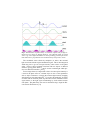
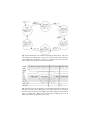
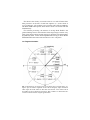
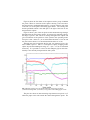
Fig. 1. Demonstration of pixel intensity as a function of phase delay for light returned from two objects at different distances. The reflected signals are mixed
with a copy of the original modulation waveform producing pixel1 and pixel2. The
total shaded area is proportional to the returned intensity of the pixels, I1 and I2.
The modulated sensor effectively multiplies (or mixes) the returned
light waveform with the original modulation signal. This is then integrated
within the pixel to give an averaged intensity value relative to the phase
offset. Figure 1 shows example waveforms with two objects at different
distances, giving phase shifts θ1 and θ2 for the returned light which produce two different intensities I1 and I2.
From a single frame it is impossible to know if reduced pixel intensity is
a result of the phase offset of a distant object or due to other parameters
such as object reflectance or simply the returned light intensity dropping
with distance by the relationship I/d2. To resolve this ambiguity, N frames
are taken with an artificial phase step introduced in the modulated sensor
signal relative to the light signal incrementing by 2π/N radians between
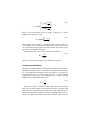
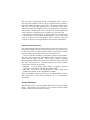
each frame. The phase delay can now be calculated using a single bin Discrete Fourier Transform as [11]