1
When waste is incinerated, many different emissions can occur. Usually an LCA
practitioner would like to know which material in the product is responsible
for which emissions. Furthermore, in an LCA, one would like to see the dependence between the material composition and the emissions that occur. To
allow for this SimaPro can also divide the waste stream in different waste
types or materials. A waste type is a general name, such as paper, plastics,
PVC or ferro metals. For the waste modelling, it is usually not so important to
know which paper, as the atomic composition is about equal for all kinds of
paper. In SimaPro, you can define your own waste types and you can specify
which materials belong to a waste type.
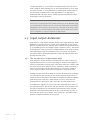
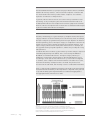
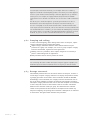
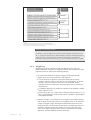
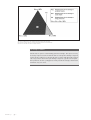
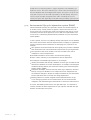
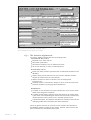
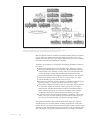
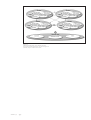
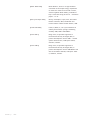
Figure 18
A waste scenario specifies how a waste stream is split up and send
to other waste scenarios or waste treatments. This splitting can be specified
per waste type or material. A waste treatment specifies what actually
happens if a material is land filled, incinerated or recycled, etc.
3 Allocating emissions to a specific material is
usually done by separating between process and
product specific emissions. For example the amount
of CO typically depends on the way the incinerator
is designed and operated, and not of the chemical
composition of the waste. This is a process specific
emission. The amount of CO2 is typically
determined by the content of the product that is
incinerated, for every kg Carbon in the product,
4,4 kg of CO2 is produced. This is a product specific
emission. Process specific emissions are usually
allocated to the materials according to the
flue gas amount they create.
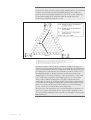
With the waste types well defined, you can specify how the waste stream that
is to be incinerated is split up according to the waste types. Each waste type
is now "send" to a specific waste treatment. For example the waste type paper
is send to the waste treatment process called "incineration of paper". This
waste treatment specifies the average emissions that can be allocated to the
incineration of one kg of paper.3 Similarly, the waste type PVC can be send to
a waste treatment that describes the incineration of PVC materials.
Making very detailed waste scenarios
With a structure as described here, you will see that the emissions from waste
treatment really are dependent of the composition of your product. If you specify
that there is 2kg of material, which is labelled as belonging to the waste type
PVC, and if 50% of the waste is incinerated, the waste treatment called incineration
will receive 1 kg of material as input.
Working with waste types simplifies you modelling, but also creates some
distortions. Not all PVC contains lead as a stabiliser, and if you have only waste
type PVC, you cannot see the difference between PVC with and without such
stabilisers.
Two solutions can solve this:
1. Introduce more waste types for PVC.
Do not use waste types at all, and let the waste scenarios divide the waste
streams per individual material.
SimaPro 5.1
• 51 •