1
Chapter 1. Getting Started
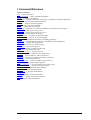
Table of Contents
Generating a new keypair
Exchanging keys
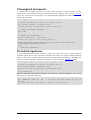
Encrypting and decrypting documents
Making and verifying signatures
GnuPG is a tool for secure communication. This chapter is a quick-start guide that covers the
core functionality of GnuPG. This includes keypair creation, exchanging and verifying keys,
encrypting and decrypting documents, and authenticating documents with digital signatures. It
does not explain in detail the concepts behind public-key cryptography, encryption, and digital
signatures. This is covered in Chapter 2. It also does not explain how to use GnuPG wisely. This
is covered in Chapters 3 and 4.
GnuPG uses public-key cryptography so that users may communicate securely. In a public-key
system, each user has a pair of keys consisting of a private key and a public key. A user's private
key is kept secret; it need never be revealed. The public key may be given to anyone with whom
the user wants to communicate. GnuPG uses a somewhat more sophisticated scheme in which a
user has a primary keypair and then zero or more additional subordinate keypairs. The primary
and subordinate keypairs are bundled to facilitate key management and the bundle can often be
considered simply as one keypair.
Generating a new keypair
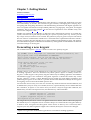
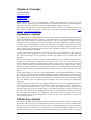
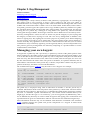
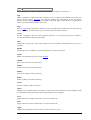
The command-line option --gen-key is used to create a new primary keypair.
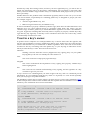
alice% gpg --gen-key
gpg (GnuPG) 0.9.4; Copyright (C) 1999 Free Software Foundation, Inc.
This program comes with ABSOLUTELY NO WARRANTY.
This is free software, and you are welcome to redistribute it
under certain conditions. See the file COPYING for details.
Please select what kind of key you want:
(1) DSA and ElGamal (default)
(2) DSA (sign only)
(4) ElGamal (sign and encrypt)
Your selection?
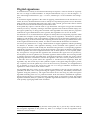
GnuPG is able to create several different types of keypairs, but a primary key must be capable
of making signatures. There are therefore only three options. Option 1 actually creates two
keypairs. A DSA keypair is the primary keypair usable only for making signatures. An ElGamal
subordinate keypair is also created for encryption. Option 2 is similar but creates only a DSA
keypair. Option 41 creates a single ElGamal keypair usable for both making signatures and
performing encryption. In all cases it is possible to later add additional subkeys for encryption
and signing. For most users the default option is fine.
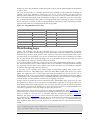
You must also choose a key size. The size of a DSA key must be between 512 and 1024 bits, and
an ElGamal key may be of any size. GnuPG, however, requires that keys be no smaller than 768
bits. Therefore, if Option 1 was chosen and you choose a keysize larger than 1024 bits, the
ElGamal key will have the requested size, but the DSA key will be 1024 bits.
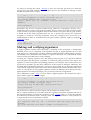
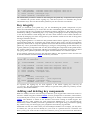
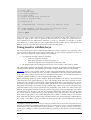
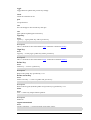
About to generate a new ELG-E keypair.
minimum keysize is 768 bits
default keysize is 1024 bits
highest suggested keysize is 2048 bits
What keysize do you want? (1024)
The longer the key the more secure it is against brute-force attacks, but for almost all purposes
the default keysize is adequate since it would be cheaper to circumvent the encryption than try
to break it. Also, encryption and decryption will be slower as the key size is increased, and a
larger keysize may affect signature length. Once selected, the keysize can never be changed.
1
Option 3 is to generate an ElGamal keypair that is not usable for making signatures.
2/3