1
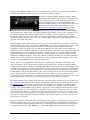
the Troy Savings Bank Music Hall, in Troy, New York. That venue is noted for its acoustics and has played host to
performances by many renowned piano players in its well over a century of existence.
We will be covering the Garritan Authorized Steinway Virtual
Piano Basic Edition. While I will, for brevity, be referring to this as
simply "Garritan Steinway" in the remainder of this review, it is
worth noting that Garritan also offers Standard Edition and
Professional Edition packages. You can find the full comparison of
the three versions of the product on the Garritan web site at
http://garritan.com/steinway_comparison.html. In a nutshell,
though, the Basic Edition's more expensive siblings provide
additional microphone perspectives, soft pedal samples, multiple
stage-tracking release sample triggers, and a larger and higher quality sample set. They are also available as boxed
product with a printed manual, whereas the Basic Edition is available for download delivery only and, hence,
includes only a PDF user manual. Since I did not test the Professional Edition or Standard Edition, all further
"Garritan Steinway" references in this review refer to the Basic Edition, though many of the references may also be
applicable to the higher end products.
The Basic Edition of the Garritan Steinway provides a single, close-miked under-the-lid perspective for maximum
flexibility in different recording contexts. Sustain (MIDI CC#64) and sostenuto (CC#66) pedal support are provided,
and proportional pedaling is supported with a continuous sustain pedal controller. Sustain resonance and
sympathetic resonance are supported via convolution-based DSP modules, while sample-based mechanical (i.e.
pedal) noises are also available and adjustable. To tailor the instrument to the needs of your setup and recording, the
Garritan Steinway also provides multiple velocity curves, adjustable polyphony, a selection of historical tunings
(with Scala file import to allow additional possibilities), a 3-band equalizer, and an integrated Ambience reverb.
Garritan's new ARIA Sample Player, developed in conjunction with Plogue Technologies, is included and handles
all under-the hood duties. Both plug-in and standalone operation are supported, with the standalone version of the
product also offering MIDI file playback and audio file recording.
The user manual is a 98-page PDF file with bookmarks for quick navigation. In addition to information on the
expected information on the program itself, the manual provides brief histories of Steinway instruments and the
company itself, information on the Troy Savings Bank Music Hall, detailed information on alternate tunings (written
by Wendy Carlos), Steinway quotes from famous pianists, and even an exhortation to practice your instrument! The
only minor complaint I have about the manual is that it s a general manual for the Garritan Steinway, not specific to
the Basic Edition of the product. This results in some coverage of features that are not present on the Basic Edition
product, and the manual does not always note where this is the case. While covering the general product is a
reasonable approach to economizing on an otherwise relatively luxurious document, it would have been nice to have
features that aren't in all versions of the product flagged as such to prevent potential user confusion.
The Garritan Steinway supports Windows XP and both 32- and 64-bit editions of Windows Vista on the PC. It also
supports OS X for PPC and Intel 32-bit and 64-bit on the Macintosh. Detailed system requirements can be found on
the Garritan web site. Plug-in formats supported include VST and RTAS on both Windows and Macintosh and
AudioUnits on the Macinotosh under OS X only. Of course, in addition to the computer-oriented requirements,
you'll also want a suitable MIDI keyboard controller, especially if you are wanting the Garritan Steinway to feel as
much like a real piano as possible. In addition to typical keyboard size and feel considerations, such as an 88-key
keyboard with a piano-like feel, a continuous controller pedal will be needed if you want to take advantage of the
proportional sustain pedaling. You'll also want an addition pedal, which can be on/off only, for use as the sostenuto
pedal. (If you're using the Standard or Professional Edition of the Garritan Steinway, you will also want one more
pedal for use as a soft pedal.)
I began my testing with V1.02 of the Garritan Steinway Basic, then upgraded to V1.03 when it was released about a
month and a half later. Most of my testing was performed under SONAR 8.0.2 and SONAR 8.3.1, though I also
tried several other host platforms when troubleshooting some initial problems found with the V1.02 software. The
test system had an Intel Core 2 Duo E6000 processor with 4 GB of RAM and Windows XP Home SP3 (fully
Originally published on CakewalkNet.com, July 30, 2009.
Page 2