1
Appendix A: Incoming Types
Overview
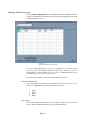
An incoming type is the signaling protocol used by the telco to send digits/signals to the
EXS Switch. Before configuring channels in the Host, you must request an incoming
type from the telco. The incoming type you configure in the Host must match the
incoming type from the telco.
Signals arriving from the telco to the EXS Switch are either MF (Multi Frequency),
DTMF (Dual Tone Multi Frequency), or ISDN. MF uses 10 tones that represent KP and
5 tones that represent ST. DTMF uses the keys on the telephone pad, including * and
#. ISDN uses computer data type messages rather than tones.
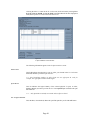
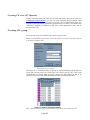
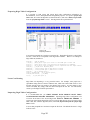
Incoming types consist of incoming rules defining how the EXS Switch collects digits,
and inseize control instructions defining the signaling used between the telco and EXS
Switch.
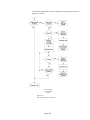
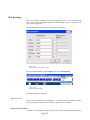
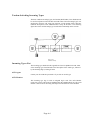
Each incoming type contains at least one stage. Each stage can contain up to two
strings. A "stage" represents all incoming address digits contained in the digit stream.
A stage of address data can contain one or several digit strings, such as an identification
string (ANI) along with an address string.
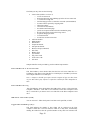
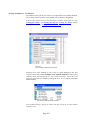
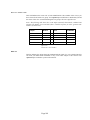
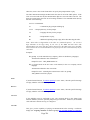
The following list identifies the acronyms/characters shown in the String field:
•
* (Star Character). In DTMF signaling, the star character separates the destination
number and ANI. There are no ’II’digits when using DTMF.
•
KP/ST (Key Pulse/Start Signal). The standard Feature Group D method of
collecting MF signals used by AT&T and Northern Telecom.
•
KP (Key Pulse). In MF tone signaling, a signal preparing the EXS Switch to collect
digits.
•
ST (STart Signal). In MF tone signaling, a signal indicating the end of collecting
digits.
•
STIIP. An "ST" with a different frequency.
•
Wink (On-hook / Off-hook). A digital pulse that changes the condition on the A and B
leads on a T1.
•
II (Informational or "Info" Digits). The ’II’digits describe from where the calls are
coming.
Page A-1