1
Manual version 015
Section 4: Routine Maintenance and Calibration
SBE 9plus
Sensor Calibration
Note:
After recalibration, Sea-Bird ships the
sensors back to the user with an
updated configuration (.xmlcon) file
and Calibration Certificates showing
the new coefficients.
Sea-Bird sensors are calibrated by subjecting them to known physical
conditions and measuring the sensor responses. Coefficients are then
computed, which may be used with appropriate algorithms to obtain
engineering units. The conductivity, temperature, and pressure sensors on the
SBE 9plus are supplied fully calibrated, with coefficients printed on their
respective Calibration Certificates (back of manual) and stored in the
instrument configuration (.xmlcon or .con) file.
We recommend that the 9plus sensors be returned to Sea-Bird for calibration.
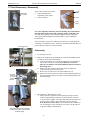
There is no need to send the 9plus main housing along with the temperature
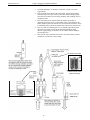
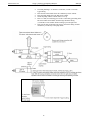
and conductivity sensors. See TC Duct Disassembly / Reassembly below for
detailed instructions on removing the sensors.
Conductivity
The SBE 4C conductivity sensor incorporates a fixed precision resistor in
parallel with the cell. When the cell is dry and in air, the sensor’s electrical
circuitry outputs a frequency representative of the fixed resistor. This
frequency is recorded on the Calibration Certificate and should remain stable
(within 1 Hz) over time.
The primary mechanism for calibration drift in conductivity sensors is the
fouling of the cell by chemical or biological deposits. Fouling changes the cell
geometry, resulting in a shift in cell constant. Accordingly, the most important
determinant of long-term sensor accuracy is the cleanliness of the cell. We
recommend that the conductivity sensor be calibrated before and after
deployment, but particularly when the cell has been exposed to contamination
by oil slicks or biological material.
Temperature
The primary source of temperature sensor calibration drift is the aging of the
thermistor element. Sensor drift will usually be a few thousandths of a degree
during the first year, and less in subsequent intervals. Sensor drift is not
substantially dependent on the environmental conditions of use, and — unlike
platinum or copper elements — the thermistor is insensitive to shock.
Pressure
The Paroscientific Digiquartz pressure sensor is so stable and immune to
environmental effects that much less frequent checks are required.
Techniques are provided below for making small corrections to the pressure
sensor calibration using the slope and offset calibration coefficient terms by
comparing SBE 9plus pressure output to:
• Readings from a barometer - Digiquartz sensors show most of their error as
a linear offset from zero. Check the 0 pressure reading from the sensor
against the local barometric pressure.
• Readings from a dead-weight pressure generator – For especially critical
work, on an annual schedule check the pressure sensor full scale response
using a dead-weight tester. This provides more accurate results, but requires
equipment that may not be readily available.
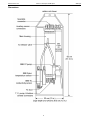
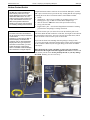
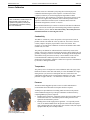
Pressure sensor port
(main housing bottom end cap)
31