1
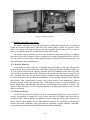
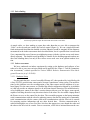
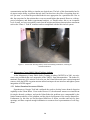
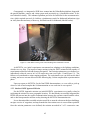
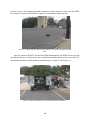
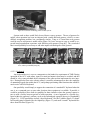
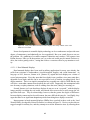
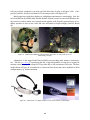
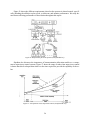
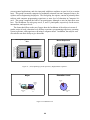
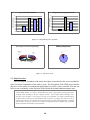
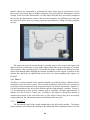
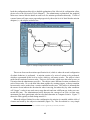
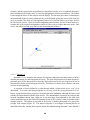
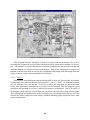
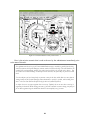
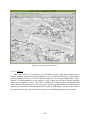
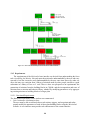
Preliminary research has attested to the feasibility of this approach using a head-mounted display.
Observations include:
1) That a simple stationary background grid in the sky portion is insufficient to reduce
motion sickness.
2) The induced motion of the background grid did not appear in peripheral vision.
3) A simple foreground grid did assist in reducing motion sickness.
4.2.3 Operator Performance
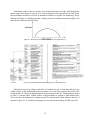
Sheridan states [Sheridan and Ferrell 1974] two relevant tenets: when working at capacity one
can increase speed only at the expense of accuracy, and conversely; some parallel processing can
be carried out, but to do several tasks will require switching among them.
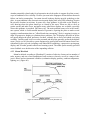
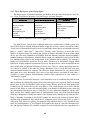
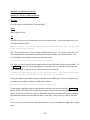
In reference [Sheridan and Ferrell 1974] to an earlier study by Merkel, response times are increased when:
1. The stimulus is unexpected
2. There are many possible stimulus-response pairs
3. The stimulus or responses are unfamiliar
4. It is difficult to discriminate between stimuli or when searching or scanning is required
for detection
5. The response is related to stimulus in complex manner
6. The response in difficult to perform.
7. Visual stimuli responses are longer than auditory which are longer than for tactile
These trends can serve as targets for TMR interface and training design.
4.2.3.1 Metrics
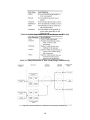
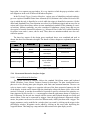
It is interesting to note that in the early work in teleoperation system design [Corliss and Johnsen,
1968, Johnsen and Corliss, 1967] virtually no effort was dedicated to human factors evaluation,
as evidenced in statements such as "Assertions regarding the relative effectiveness of different
teleoperators often imply that considerable experimental data exist, but no thorough studies have
been made" [Johnsen and Corliss, 1967]. Unfortunately, the situation appears only slightly better
today, with more lip service than actual experimental studies having been conducted. Most human factors studies have not focused on direct measurements of human control of robots, but
rather involve other forms of control (e.g., air traffic controllers) from which we must extrapolate.
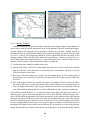
There are exceptions however. In discussions with John Draper at Oak Ridge National Laboratories, one of the main users of teleoperators over the past several decades, he alone is involved in
human factors related work. In a sense it is better that there does exist at least one individual
within DOE to design and conduct these studies, but it is a sad commentary still regarding how
engineering typically regards human factors issues.
68