1
precisely documented and configurable. Moreover, it must be possible to disable this
functionality in the regulator configuration and to inhibit it temporarily from outside the
regulator.
(4) Tuning occurs continuously.
Cases (1) and (2) are to be classified as autotuning, case (4) is clearly continuous adaptation,
case (3) is somehow hybrid but, if the logic is properly configured, it is much more similar to
autotuning than to continuous adaptation. It is important, when selecting an autotuner, to understand in which category it falls so as to forecast how it will possibly interact with the rest
of the control system. It is also necessary to read the documentation carefully, since an expression like ‘expert tuning mode’, ‘supervised self adaptation’ or something similar, does
not provide any information on the actual mechanisms involved.
In this work we shall focus primarily on PID autotuning for single loop situations and say
almost nothing on continuous adaptation and more complex structures. This might appear a
limitation, so a justification is in order. First, the statistics reported in (Control Engineering,
May 1998) state that single loop controllers contribute 64% of all loop controllers, suggesting that “many customers still want a controller to handle only one or two loops so as to provide a more manageable process in case of failure”. In addition, the two most desired features of a loop controller are the PID algorithm and “startup self-tuning”, which in our terminology means autotuning initiated at power up. As such, becoming familiar with autotuning for single loop controllers means becoming proficient in a fundamentally relevant situation. Then, no matter how complex a plant is, control system optimisation is a skyscraper
whose foundations are the low level loops. As such, learning to (auto)tune the individual
loops means mastering the very basic fundamentals of the overall construction. Finally, discussing the issues we have chosen to omit would really lead far beyond the scope and extent
of this work, so we must acknowledge that we are covering a small section of the competencies required for setting up control systems in the ‘general’ case.
An effective grasp of what we mean can be obtained e.g. from (EnTech, 1994), a short
document that the authors strongly recommend to anyone involved in industrial control, or
from (Bialkowski, 2000). However, accepting these limitations will allow for a selfcontained discussion; some problems will necessarily be left open, and it is the authors’ hope
that the reader will be encouraged and stimulated by them. Some suggestions for further
reading will be given, when useful, to guide those who desire a wider or deeper knowledge.
1.1. How autotuners work and how they can be broadly
classified
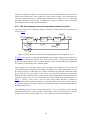
To start understanding how an autotuner works, consider how a human would act when tuning a regulator in the field. Basically, he would (a) observe how the process behaves, maybe
stimulating it somehow, and – more or less consciously – turn this knowledge into a description of the process behaviour, (b) convert his ideas on how the closed loop should function,
taking into account the limitations of the process description determined in (a), into a de-
4