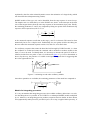
1
The simple structure of the PID regulator (especially in the 1-d.o.f. case) calls for simple
process descriptions, so that first or second order models or small sets of characteristics are
typically used. In this section we present a very brief review of some modelling and identification techniques used in autotuners, limiting the scope to experiment based methods since
they cover almost the totality of cases and treating the other methods would really not be
practicable. Since this presentation cannot be exhaustive for apparent reasons, we only introduce methods adopting the most common approaches, i.e. involving an open loop experiment, the recording of the so obtained response and the processing of this for obtaining the
process description.
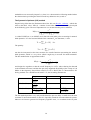
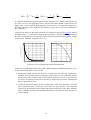
In most cases, a step response will be used. Step experiments are the most common strategy
in experiment-based autotuners. For the reader willing to experiment, they are also easy to
apply in the field: it suffices to switch the regulator to manual, wait until a reasonably steady
state is reached, then change the control variable suddenly by an amount sufficient to make
the response obtained easily distinguishable from noise. In addition, step tests permit the
process to be maintained under reasonable control without perturbing it excessively or leading it to the stability boundary, as required e.g. by the closed loop Ziegler-Nichols method
(treated later on). Finally, a step experiment lasts as long as the process takes to settle, thus it
is one of the shortest ways of getting all the required information.
In some cases the step is applied in closed loop (to the set point or to the control signal), but
this requires that a regulator be already present. Hence this is only used for refining an existing tuning or in autotuners with a ‘pretune’ mode. Closed-loop step experiments clearly provide a description of the closed loop system. That of the process must be obtained from it,
which is a nontrivial task and is not treated in this work. For a more extensive discussion including closed-loop identification, frequency domain methods and so on, the reader can refer
to Åström and Hägglund (1995) and to the references given therein, particularly in the bibliography of chapter 2.
Step experiments are very common both in model based autotuners (because it is straightforward to identify a model on the basis of a step response record) and in characteristic based
ones, since several interesting features of the process dynamics emerge clearly from some
features of the step response such as the apparent delay, the settling time and so on.
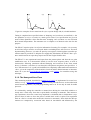
Another widely used method for stimulating the process is the use of random-like signals,
e.g. a PRBS (Pseudo Random Binary Sequence). In practical applications this is common
only when a model has to be identified by parameter optimisation techniques (see later). Finally, several experiment based autotuners use the so called ‘relay identification’. As will be
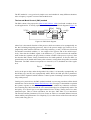
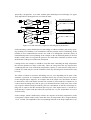
explained later, almost any stable process subject to relay feedback enters a permanent oscillatory state, from which some characteristics in the time or (especially) in the frequency domain are straightforward to obtain. Relay feedback has the important feature that it does not
require one to open the loop, which makes it particularly useful in some applications.
31