1
information in order to be able to compare with other products, with the objective of encouraging the
purchase of more energy efficient models (27).
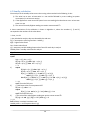
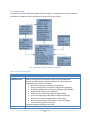
Other well known types of labeling are the European Conformity mark (28) or “CE marking” (29) and the
EU ENERGY STAR label (30) shown in Figure 3 b) and 3 c). These types of labels are meant to give the
end-user the knowledge that a product complies with minimum EU performance standards before being
placed on the market. The EU Energy Star label was implemented in 2006 and is an appliance specific
label focusing on office equipment, identifying equipment that meets certain energy efficiency
standards. This has proved to be effective in moving the market to a greater efficiency (31); between the
years 2008 and first half of 2009 the percentage increased from 45% to 66% in EU ENERGY STAR
registered models. In the second half of 2009 a new more demanding specification was implemented
which resulted in a decrease down to 30% of EU Energy Star registered models, but by the end of 2010 it
had increased again to 50%.
3.2 Incentives in the EU
Several countries within the EU are offering subsidies and/or tax benefits to end-users who purchase
energy efficient appliances.
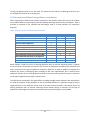
In January 2007 the Italian Government introduced a tax subsidy program, in order to promote the sales
of highly efficient cold appliances. End-users who bought an A+/A++ refrigerator or freezer could deduct
20% of the appliance cost (up to a maximum of 200 euro) from their income tax. As a result there was a
growth in the sales of A+ class cold appliances by a factor of 2.5 in 2007 compared to the previous year.
The share of A+ appliances in sales reached 45.5% in 2008 and 62% in 2010 (6).
In 2009 and 2010 Austria ran a scrapping bonus program on cold appliances during two periods;
September-December 2009 and September-November 2010, where the end-user could apply for
reimbursement when replacing an old appliance with a new A++ appliance (up to a maximum of 100
euro). During the first period the campaign resulted in 30% sales in Sep-Oct 2009 and 34% sales in NovDec 2009, which was a considerable increase from the 15% in the months before (Jul-Aug 2009). The
second period did not see quite as large an increase; in the months between the two periods the sales
where between 21 and 25% whereas they rose to 38, 40 and 39% (Sep, Oct and Nov 2010, respectively)
during the campaign, which was concluded to be due to early replacement buyers already being
triggered by the first campaign (32).
3.3 New Smart Appliances
Smart appliances have been introduced by many manufacturers for some time now (33) (34) (35), but it
was not until 2012-13 that they became available to the public. Whirlpool and LG are two of the
companies which have produced lines of smart appliances that are only available in the US at this time.
Below is an example of smart appliances which these companies have produced, but the information
gathered only refers to electricity savings.
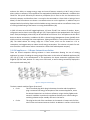
Whirlpool’s Smart Appliances with 6th Sense Live™ Technology (5) came out in spring of 2013 and offers
washing machines, dryers, refrigerators and dishwashers equipped with a technology which gives the
14