1
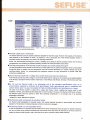
Table
1
Note that the temperature listed in Table 1 refers to the surface temperature of the thermal cutoff,
and not the ambient temperature.
OThermal cutoffs have a limited life.
The thermal elements used are durable substances designed for long-time usage. However, the longevity of the thermal
cutoff depends on the conditions in which it is exposed to. This is particularly true if the thermal protection device is
frequently exposed to temperature very close to its operating temperature.
Hence, it is recommended that designers conduct a reliability test by fixing the thermal protection device onto the actual
end-application and simulating the expected operating conditions to assess the lifetime of the device.
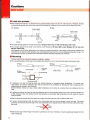
oThe body temperature of the thermal cutoff increases as current passes through
it.
The body temperature of the thermal cutoff could rise to levels higher than the ambient temperature as the current passes
through the device. ln addition, the body temperature could also increase depending on a number of factors such as the
mounting method. Hence, it is recommended that designers measure the body temperature of thermal cutoff after
conducting a reliability test.
oUse the thermal cutoff with a voltage and current level lower than the rated level.
lf the thermal cutoff is used with a voltage or current level higher than the rated level, the contacts may be welded together
in the SF-type, causing the thermal cutoff to malfunction. ln the SM-type and D6-type, the body of the thermal cutoff may
rupture.
oDo not use the thermal cutoff in an atmospher out of lhe standard specifications such as in
environments exposed to sulfurous acid gas,nitrogen oxide gas,ammonia gas or conditions that
contain formic acid. lt is also not suitable for high humidity situations and submersion in a liquid.
The case of the thermal cutoff(-) is made with a copper alloy (brass). Hence, installing the thermal cutoff in such
conditions or similar, could deteriorate the sealing resin or lead to cracks in the case of the thermal cutoff due to corrosion.
The therm.al cutoff could thus operate at lower than operating temperatures or not activate even
if its operating
temperature is exceeded.
* except
SF-Y series, SM-type and D6-type
OThe thermal cutoff corresponds to industrial waste.
The thermal cutoff corresponds to industrial waste, and requires disposal according to governmental and provincial
regulations. The services of a licensed disposal contractor could also be engaged.
OThe thermal cutoff is a non-repairable device.
ln case of replacement, an equivalent thermal cutoff from the same manufacturer should be used. For general consumers
who are not aware ol the cautions associated with the thermal cutoff, they should be informed not to mount, remove or
replace the thermal cutoff through a note to this effect in the user's manual and other related materials.
24