1
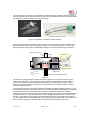
The test animals are confined in polycarbonate containment tubes (examples shown in Figure 2)
which are attached to the exposure ports by friction fit. Both sealed and vented containment tubes
are available for mice, hamsters, rats, and guinea pigs.
Vented Containment Tubes
Sealed Containment Tube
Figure 2. Examples of Animal Containment Tubes
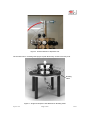
Fresh test atmosphere is provided to each animal from the inner plenum and exhausted into the
space between the inner and the outer plenum (Figure 3). The test aerosol, gas, or vapor that
flows through the inner plenum is distributed uniformly to the test animals through the trumpet.
Exhaust (Upper swivel)
Connector cone
Trumpet
Outer plenum
Inner plenum
Fresh Aerosol
Exhaled Breath
Test article inlet (Bottom swivel)
Figure 3
The chamber is equipped with a bottom inlet section (plate) and a top exhaust section. Both
sections are designed to connect easily to other equipment through swivels. Venturi tubes to
measure the exposure unit inlet and exhaust flows may be included with the system. These
attach at the inlet and exhaust of the unit. The venturi tubes are attached to pressure gauges
which are calibrated to flow.
If vented tubes are used, the chamber should be operated at a slightly positive pressure (i.e., the
inlet flow should slightly exceed the exhaust flow) to assure that the test atmosphere is not diluted
by air entering the animal containment tube. However, operating the system at a positive
pressure may result in escape of test article from the exposure unit into the hood. If sealed animal
containment tubes are used, the exhaust flow should be slightly higher than the inlet flow of the
chamber. This will assure no escape of test article from the exposure unit. When the system is
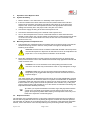
run with sealed animal containment tubes, the exhaust section is equipped with an air inlet (small
filter) in order to make up for the flow difference between inlet and exhaust (Figure 4).
Exposure Unit
Page 3 of 9
5/16/07