1
Preparing Samples for MALDI-TOF Mass Spectrometry
by Reena Zutshi
adapted for Chemical Biology Laboratory by J. Frederick
(return to Contents)
I. Introduction
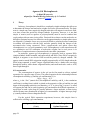
Mass spectrometry is a powerful tool used for studying the masses of atoms,
molecular fragments, and molecules. In general, molecules in the gas phase (or
species desorbed from a condensed phase) are ionized, and the ions are then
accelerated by an electric field and separated on the basis of their mass-to-charge
ratio (m/z). For an ion with a charge of +1, m/z will be numerically equal to the mass.
The electron ionization that converts molecules to ions can not only remove electrons,
but may impart so much energy that the molecule fragments. The molecular ions are
deflected by a magnet as they travel through the analyzer tube toward the detector. A
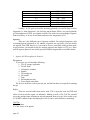
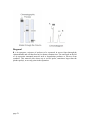
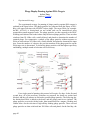
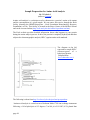
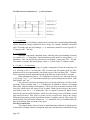
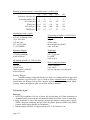
mass spectrum is a chromatogram presenting the signal intensity (y-axis) versus m/z
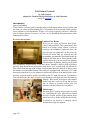
(x-axis). See Figure 1 below. The peak intensities are expressed as a percentage of the
most intense signal (the base beak). A time-of-flight (TOF) mass spectrometer
separates ions with identical kinetic energy but different m/z, since lighter ions travel
faster than heavier ones. Interpretation of the fragmentation patterns and isotopic
peaks can provide valuable clues for the structure determination of organic molecules.
Mass spectrometry of proteins is primarily used for determination of molecular mass;
therefore, high-energy ionization that leads to fragmentation is not desirable. Matrixassisted laser desorption/ionization mass spectrometry (MALDI-MS) emerged as an
effective analytical tool about twelve years ago. MALDI provides a 'soft' ionization
source that prevents decomposition of fragile biomolecules, producing primarily
singly charged, intact protein ions. In MALDI, the sample (such as an aliquot of
purified peptide) is embedded in an excess of matrix, which is a solution of an
ultraviolet absorbing compound. When the liquid evaporates, the sample consists of
dry crystals of sample mixed with matrix. When this mixture is irradiated with a laser,
the matrix assists in the volatilization and ionization of the analyte. The ions produced
with the MALDI technique are analyzed using a time-of-flight (TOF) mass
spectrometer, which is characterized by a high ion throughput and therefore high
sensitivity. By knowing the molecular mass of your peptide or protein, you can
determine whether it is present in a given sample by examining the mass spectrum for
peaks with the right mass.
The Chemistry department has a MALDI-TOF mass spectrometer located in the
instrument center. Chemical Biology students will be trained by the instrument center
staff and their TA. As always, your TA will provide specific guidance and suggest
modifications to the protocol below as necessary.
page 77