1
8XC251SA, 8XC251SB,
8XC251SP, 8XC251SQ
Embedded Microcontroller
User’s Manual
8XC251SA, 8XC251SB,
8XC251SP, 8XC251SQ
Embedded Microcontroller
User’s Manual
November 1995
Information in this document is provided in connection with Intel products. Intel assumes no liability whatsoever, including infringement of any patent or copyright, for sale and use of Intel products except as provided in Intel’s Terms and Conditions of
Sale for such products.
Intel retains the right to make changes to these specifications at any time, without notice. Microcontroller products may have
minor variations to this specification known as errata.
*Other brands and names are the property of their respective owners.
Contact your local Intel sales office or your distributor to obtain the latest specifications before placing your product order.
Copies of documents which have an ordering number and are referenced in this document, or other Intel literature, may be
obtained from:
Intel Corporation
Literature Sales
P.O. Box 7641
Mt. Prospect, IL 60056-7641
or call 1-800-548-4725
COPYRIGHT © INTEL CORPORATION, 1995
CONTENTS
CHAPTER 1
GUIDE TO THIS MANUAL
1.1
MANUAL CONTENTS ................................................................................................... 1-1
1.2
NOTATIONAL CONVENTIONS AND TERMINOLOGY ................................................ 1-3
1.3
RELATED DOCUMENTS .............................................................................................. 1-5
1.3.1
Data Sheet ................................................................................................................1-6
1.3.2
Application Notes ......................................................................................................1-6
1.4
CUSTOMER SERVICE.................................................................................................. 1-7
1.4.1
How to Use Intel's FaxBack Service .........................................................................1-7
1.4.2
How to Use Intel's Application BBS ..........................................................................1-8
1.4.3
How to Find the Latest ApBUILDER Files and Hypertext Manuals
and Data Sheets on the BBS ....................................................................................1-9
CHAPTER 2
ARCHITECTURAL OVERVIEW
2.1
8XC251SA, SB, SP, SQ ARCHITECTURE ................................................................... 2-3
2.2
MCS 251 MICROCONTROLLER CORE ....................................................................... 2-4
2.2.1
CPU ..........................................................................................................................2-5
2.2.2
Clock and Reset Unit ................................................................................................2-6
2.2.3
Interrupt Handler .......................................................................................................2-7
2.2.4
On-chip Code Memory ..............................................................................................2-7
2.2.5
On-chip RAM ............................................................................................................2-7
2.3
ON-CHIP PERIPHERALS.............................................................................................. 2-7
2.3.1
Timer/Counters and Watchdog Timer .......................................................................2-7
2.3.2
Programmable Counter Array (PCA) ........................................................................2-8
2.3.3
Serial I/O Port ...........................................................................................................2-8
2.4
SUMMARY OF A-STEPPING DIFFERENCES ............................................................. 2-9
2.4.1
Package Options .......................................................................................................2-9
2.4.2
Memory Address Space ............................................................................................2-9
2.4.2.1
On-chip Memory ...................................................................................................2-9
2.4.2.2
External Memory ..................................................................................................2-9
2.4.3
Configuration Bytes ...................................................................................................2-9
CHAPTER 3
ADDRESS SPACES
3.1
ADDRESS SPACES FOR MCS® 251 MICROCONTROLLERS................................... 3-1
3.1.1
Compatibility with the MCS® 51 Architecture ...........................................................3-2
3.2
8XC251SA, SB, SP, SQ MEMORY SPACE .................................................................. 3-5
3.2.1
On-chip General-purpose Data RAM ........................................................................3-8
3.2.2
On-chip Code Memory (83C251SA, SB, SP, SQ/87C251SA, SB, SP, SQ) .............3-8
3.2.2.1
Accessing On-chip Code Memory in Region 00: ..................................................3-9
iii
CONTENTS
3.2.3
External Memory .....................................................................................................3-10
3.2.4
Memory Space for the A-stepping of the 8XC251SB ..............................................3-10
3.3
8XC251SA, SB, SP, SQ REGISTER FILE .................................................................. 3-10
3.3.1
Byte, Word, and Dword Registers ...........................................................................3-13
3.3.2
Dedicated Registers ................................................................................................3-13
3.3.2.1
Accumulator and B Register ..............................................................................3-13
3.3.2.2
Extended Data Pointer, DPX ..............................................................................3-15
3.3.2.3
Extended Stack Pointer, SPX ............................................................................3-15
3.4
SPECIAL FUNCTION REGISTERS (SFRS) ............................................................... 3-16
CHAPTER 4
DEVICE CONFIGURATION
4.1
CONFIGURATION OVERVIEW .................................................................................... 4-1
4.2
DEVICE CONFIGURATION (B-STEPPING) ................................................................. 4-2
4.3
DEVICE CONFIGURATION (A-STEPPING) ................................................................. 4-2
4.4
THE CONFIGURATION BITS........................................................................................ 4-3
4.5
DEVICE CONFIGURATION (A-STEPPING COMPATIBLE) ......................................... 4-5
4.6
CONFIGURING THE EXTERNAL MEMORY INTERFACE......................................... 4-11
4.6.1
Page Mode and Nonpage Mode (PAGE#) ..............................................................4-11
4.6.2
Configuration Bits RD1:0 ........................................................................................4-11
4.6.2.1
RD1:0 = 00 (18 External Address Bits) ..............................................................4-12
4.6.2.2
RD1:0 = 01 (17 External Address Bits) ..............................................................4-12
4.6.2.3
RD1:0 = 10 (16 External Address Bits) ..............................................................4-15
4.6.2.4
RD1:0 = 11 (Compatible with MCS 51 Microcontrollers) ....................................4-15
4.6.3
Wait State Configuration Bits ..................................................................................4-16
4.6.3.1
Configuration Bits WSA1:0#, WSB1:0# .............................................................4-16
4.6.3.2
Configuration Bits WSA and WSB .....................................................................4-16
4.6.3.3
Configuration Bit XALE# ....................................................................................4-16
4.7
OPCODE CONFIGURATIONS (SRC)......................................................................... 4-17
4.7.1
Selecting Binary Mode or Source Mode ..................................................................4-18
4.8
MAPPING ON-CHIP CODE MEMORY TO DATA MEMORY (EMAP#) ...................... 4-20
4.9
INTERRUPT STACK MODE (INTR)............................................................................ 4-20
CHAPTER 5
PROGRAMMING
5.1
SOURCE MODE OR BINARY MODE OPCODES ........................................................ 5-1
5.2
PROGRAMMING FEATURES OF THE MCS® 251 ARCHITECTURE......................... 5-1
5.2.1
Data Types ................................................................................................................5-2
5.2.1.1
Order of Byte Storage for Words and Double Words ...........................................5-2
5.2.2
Register Notation ......................................................................................................5-2
5.2.3
Address Notation ......................................................................................................5-2
5.2.4
Addressing Modes ....................................................................................................5-4
iv
CONTENTS
5.3
DATA INSTRUCTIONS ................................................................................................. 5-4
5.3.1
Data Addressing Modes ............................................................................................5-4
5.3.1.1
Register Addressing .............................................................................................5-5
5.3.1.2
Immediate ............................................................................................................5-5
5.3.1.3
Direct ....................................................................................................................5-5
5.3.1.4
Indirect .................................................................................................................5-6
5.3.1.5
Displacement .......................................................................................................5-8
5.3.2
Arithmetic Instructions ...............................................................................................5-8
5.3.3
Logical Instructions ...................................................................................................5-9
5.3.4
Data Transfer Instructions .......................................................................................5-10
5.4
BIT INSTRUCTIONS ................................................................................................... 5-11
5.4.1
Bit Addressing .........................................................................................................5-11
5.5
CONTROL INSTRUCTIONS ....................................................................................... 5-12
5.5.1
Addressing Modes for Control Instructions .............................................................5-13
5.5.2
Conditional Jumps ..................................................................................................5-14
5.5.3
Unconditional Jumps ...............................................................................................5-15
5.5.4
Calls and Returns ...................................................................................................5-15
5.6
PROGRAM STATUS WORDS .................................................................................... 5-16
CHAPTER 6
INTERRUPT SYSTEM
6.1
OVERVIEW ................................................................................................................... 6-1
6.2
8XC251SA, SB, SP, SQ INTERRUPT SOURCES ........................................................ 6-3
6.2.1
External Interrupts .....................................................................................................6-3
6.2.2
Timer Interrupts .........................................................................................................6-4
6.3
PROGRAMMABLE COUNTER ARRAY (PCA) INTERRUPT........................................ 6-5
6.4
SERIAL PORT INTERRUPT.......................................................................................... 6-5
6.5
INTERRUPT ENABLE ................................................................................................... 6-5
6.6
INTERRUPT PRIORITIES ............................................................................................. 6-6
6.7
INTERRUPT PROCESSING ......................................................................................... 6-9
6.7.1
Minimum Fixed Interrupt Time ................................................................................6-10
6.7.2
Variable Interrupt Parameters .................................................................................6-10
6.7.2.1
Response Time Variables ..................................................................................6-10
6.7.2.2
Computation of Worst-case Latency With Variables ..........................................6-12
6.7.2.3
Latency Calculations ..........................................................................................6-13
6.7.2.4
Blocking Conditions ............................................................................................6-14
6.7.2.5
Interrupt Vector Cycle ........................................................................................6-14
6.7.3
ISRs in Process ......................................................................................................6-15
CHAPTER 7
INPUT/OUTPUT PORTS
7.1
INPUT/OUTPUT PORT OVERVIEW ............................................................................. 7-1
7.2
I/O CONFIGURATIONS................................................................................................. 7-2
7.3
PORT 1 AND PORT 3 ................................................................................................... 7-2
v
CONTENTS
7.4
7.5
7.6
7.7
7.8
PORT 0 AND PORT 2 ................................................................................................... 7-2
READ-MODIFY-WRITE INSTRUCTIONS ..................................................................... 7-5
QUASI-BIDIRECTIONAL PORT OPERATION.............................................................. 7-5
PORT LOADING............................................................................................................ 7-7
EXTERNAL MEMORY ACCESS ................................................................................... 7-7
CHAPTER 8
TIMER/COUNTERS AND WATCHDOG TIMER
8.1
TIMER/COUNTER OVERVIEW..................................................................................... 8-1
8.2
TIMER/COUNTER OPERATION................................................................................... 8-1
8.3
TIMER 0......................................................................................................................... 8-4
8.3.1
Mode 0 (13-bit Timer) ...............................................................................................8-4
8.3.2
Mode 1 (16-bit Timer) ...............................................................................................8-5
8.3.3
Mode 2 (8-bit Timer With Auto-reload) ......................................................................8-5
8.3.4
Mode 3 (Two 8-bit Timers) ........................................................................................8-5
8.4
TIMER 1......................................................................................................................... 8-6
8.4.1
Mode 0 (13-bit Timer) ...............................................................................................8-9
8.4.2
Mode 1 (16-bit Timer) ...............................................................................................8-9
8.4.3
Mode 2 (8-bit Timer with Auto-reload) .......................................................................8-9
8.4.4
Mode 3 (Halt) ............................................................................................................8-9
8.5
TIMER 0/1 APPLICATIONS........................................................................................... 8-9
8.5.1
Auto-load Setup Example .........................................................................................8-9
8.5.2
Pulse Width Measurements ....................................................................................8-10
8.6
TIMER 2....................................................................................................................... 8-10
8.6.1
Capture Mode .........................................................................................................8-11
8.6.2
Auto-reload Mode ...................................................................................................8-12
8.6.2.1
Up Counter Operation ........................................................................................8-12
8.6.2.2
Up/Down Counter Operation ..............................................................................8-13
8.6.3
Baud Rate Generator Mode ....................................................................................8-14
8.6.4
Clock-out Mode .......................................................................................................8-14
8.7
WATCHDOG TIMER ................................................................................................... 8-16
8.7.1
Description ..............................................................................................................8-16
8.7.2
Using the WDT ........................................................................................................8-18
8.7.3
WDT During Idle Mode ...........................................................................................8-18
8.7.4
WDT During PowerDown ........................................................................................8-18
CHAPTER 9
PROGRAMMABLE COUNTER ARRAY
9.1
PCA DESCRIPTION ...................................................................................................... 9-1
9.2
PCA TIMER/COUNTER................................................................................................. 9-2
9.3
PCA COMPARE/CAPTURE MODULES ....................................................................... 9-5
9.3.1
16-bit Capture Mode .................................................................................................9-5
9.3.2
Compare Modes .......................................................................................................9-7
vi
CONTENTS
9.3.3
9.3.4
9.3.5
9.3.6
16-bit Software Timer Mode ......................................................................................9-7
High-speed Output Mode ..........................................................................................9-8
PCA Watchdog Timer Mode .....................................................................................9-9
Pulse Width Modulation Mode ................................................................................9-11
CHAPTER 10
SERIAL I/O PORT
10.1 OVERVIEW ................................................................................................................. 10-1
10.2 MODES OF OPERATION............................................................................................ 10-4
10.2.1 Synchronous Mode (Mode 0) ..................................................................................10-4
10.2.1.1 Transmission (Mode 0) ......................................................................................10-4
10.2.1.2 Reception (Mode 0) ............................................................................................10-5
10.2.2 Asynchronous Modes (Modes 1, 2, and 3) .............................................................10-6
10.2.2.1 Transmission (Modes 1, 2, 3) .............................................................................10-6
10.2.2.2 Reception (Modes 1, 2, 3) ..................................................................................10-6
10.3 FRAMING BIT ERROR DETECTION (MODES 1, 2, AND 3)...................................... 10-7
10.4 MULTIPROCESSOR COMMUNICATION (MODES 2 AND 3).................................... 10-7
10.5 AUTOMATIC ADDRESS RECOGNITION ................................................................... 10-7
10.5.1 Given Address ........................................................................................................10-8
10.5.2 Broadcast Address ..................................................................................................10-9
10.5.3 Reset Addresses ...................................................................................................10-10
10.6 BAUD RATES ............................................................................................................ 10-10
10.6.1 Baud Rate for Mode 0 ...........................................................................................10-10
10.6.2 Baud Rates for Mode 2 .........................................................................................10-10
10.6.3 Baud Rates for Modes 1 and 3 .............................................................................10-10
10.6.3.1 Timer 1 Generated Baud Rates (Modes 1 and 3) ............................................10-11
10.6.3.2 Selecting Timer 1 as the Baud Rate Generator ...............................................10-11
10.6.3.3 Timer 2 Generated Baud Rates (Modes 1 and 3) ............................................10-12
10.6.3.4 Selecting Timer 2 as the Baud Rate Generator ...............................................10-12
CHAPTER 11
MINIMUM HARDWARE SETUP
11.1 MINIMUM HARDWARE SETUP.................................................................................. 11-1
11.2 ELECTRICAL ENVIRONMENT ................................................................................... 11-2
11.2.1 Power and Ground Pins ..........................................................................................11-2
11.2.2 Unused Pins ............................................................................................................11-2
11.2.3 Noise Considerations ..............................................................................................11-2
11.3 CLOCK SOURCES...................................................................................................... 11-3
11.3.1 On-chip Oscillator (Crystal) .....................................................................................11-3
11.3.2 On-chip Oscillator (Ceramic Resonator) .................................................................11-4
11.3.3 External Clock .........................................................................................................11-4
11.4 RESET ......................................................................................................................... 11-5
11.4.1 Externally Initiated Resets ......................................................................................11-6
11.4.2 WDT Initiated Resets ..............................................................................................11-6
vii
CONTENTS
11.4.3
11.4.4
Reset Operation ......................................................................................................11-6
Power-on Reset ......................................................................................................11-7
CHAPTER 12
SPECIAL OPERATING MODES
12.1 GENERAL.................................................................................................................... 12-1
12.2 POWER CONTROL REGISTER ................................................................................. 12-1
12.2.1 Serial I/O Control Bits .............................................................................................12-1
12.2.2 Power Off Flag ........................................................................................................12-1
12.3 IDLE MODE ................................................................................................................. 12-4
12.3.1 Entering Idle Mode ..................................................................................................12-4
12.3.2 Exiting Idle Mode ....................................................................................................12-5
12.4 POWERDOWN MODE ................................................................................................ 12-5
12.4.1 Entering Powerdown Mode .....................................................................................12-6
12.4.2 Exiting Powerdown Mode .......................................................................................12-6
12.5 ON-CIRCUIT EMULATION (ONCE) MODE ................................................................ 12-7
12.5.1 Entering ONCE Mode .............................................................................................12-7
12.5.2 Exiting ONCE Mode ................................................................................................12-7
CHAPTER 13
EXTERNAL MEMORY INTERFACE
13.1 OVERVIEW ................................................................................................................. 13-1
13.2 EXTERNAL BUS CYCLES .......................................................................................... 13-3
13.2.1 Bus Cycle Definitions ..............................................................................................13-3
13.2.2 Nonpage Mode Bus Cycles ....................................................................................13-4
13.2.3 Page Mode Bus Cycles ...........................................................................................13-6
13.3 EXTERNAL BUS CYCLES WITH WAIT STATES ....................................................... 13-8
13.3.1 Extending RD#/WR#/PSEN# ..................................................................................13-8
13.3.2 Extending ALE ......................................................................................................13-10
13.4 CONFIGURATION BYTE BUS CYCLES................................................................... 13-10
13.5 PORT 0 AND PORT 2 STATUS ................................................................................ 13-11
13.5.1 Port 0 and Port 2 Pin Status in Nonpage Mode ....................................................13-12
13.5.2 Port 0 and Port 2 Pin Status in Page Mode ..........................................................13-12
13.6 EXTERNAL MEMORY DESIGN EXAMPLES............................................................ 13-12
13.6.1 Example 1: RD1:0 = 00, 18-bit Bus, External Flash and RAM ..............................13-13
13.6.2 Example 2: RD1:0 = 01, 17-bit Bus, External Flash and RAM ..............................13-15
13.6.3 Example 3: RD1:0 = 01, 17-bit Bus, External RAM ..............................................13-17
13.6.4 Example 4: RD1:0 = 10, 16-bit Bus, External RAM ..............................................13-19
13.6.5 Example 5: RD1:0 = 11, 16-bit Bus, External EPROM and RAM .........................13-21
13.6.5.1 An Application Requiring Fast Access to the Stack .........................................13-21
13.6.5.2 An Application Requiring Fast Access to Data .................................................13-21
13.6.6 Example 6: RD1:0 = 11, 16-bit Bus, External EPROM and RAM .........................13-24
13.6.7 Example 7: RD1:0 = 01, 17-bit Bus, External Flash ..............................................13-25
viii
CONTENTS
13.7 EXTERNAL BUS AC TIMING SPECIFICATIONS ..................................................... 13-25
13.7.1 Explanation of AC Symbols ..................................................................................13-26
13.7.2 AC Timing Definitions ...........................................................................................13-31
CHAPTER 14
PROGRAMMING AND VERIFYING
NONVOLATILE MEMORY
14.1 GENERAL.................................................................................................................... 14-1
14.1.1 Programming Considerations for On-chip Code Memory .......................................14-2
14.1.2 EPROM Devices .....................................................................................................14-3
14.2 PROGRAMMING AND VERIFYING MODES.............................................................. 14-3
14.3 GENERAL SETUP....................................................................................................... 14-3
14.4 PROGRAMMING ALGORITHM................................................................................... 14-6
14.5 VERIFY ALGORITHM.................................................................................................. 14-7
14.6 PROGRAMMABLE FUNCTIONS ................................................................................ 14-7
14.6.1 On-chip Code Memory ............................................................................................14-7
14.6.2 Configuration Bytes .................................................................................................14-8
14.6.3 Lock Bit System ......................................................................................................14-8
14.6.4 Encryption Array .....................................................................................................14-9
14.6.5 Signature Bytes .....................................................................................................14-10
14.7 VERIFYING THE 83C251SA, SB, SP, SQ (ROM) .................................................... 14-10
14.8 VERIFYING THE 80C251SB (ROMLESS, A-STEPPING) ........................................ 14-10
APPENDIX A
INSTRUCTION SET REFERENCE
A.1
NOTATION FOR INSTRUCTION OPERANDS ............................................................ A-2
A.2
OPCODE MAP AND SUPPORTING TABLES ............................................................. A-4
A.3
INSTRUCTION SET SUMMARY ................................................................................ A-11
A.3.1
Execution Times for Instructions that Access the Port SFRs ................................ A-11
A.3.2
Instruction Summaries .......................................................................................... A-14
A.4
INSTRUCTION DESCRIPTIONS ............................................................................... A-26
APPENDIX B
SIGNAL DESCRIPTIONS
APPENDIX C
REGISTERS
GLOSSARY
INDEX
ix
CONTENTS
FIGURES
Figure
2-1
2-2
2-3
3-1
3-2
3-3
3-4
3-5
3-6
3-7
3-8
4-1
4-2
4-3
4-4
4-5
4-6
4-7
4-8
4-9
4-10
5-1
5-2
5-3
6-1
6-2
6-3
6-4
6-5
6-6
6-7
7-1
7-2
7-3
7-4
8-1
8-2
8-3
8-4
8-5
8-6
8-7
8-8
8-9
x
Page
Functional Block Diagram of the 8XC251SA, SB, SP, SQ ...........................................2-2
The CPU.......................................................................................................................2-5
Clocking Definitions ......................................................................................................2-6
Address Spaces for MCS® 251 Microcontrollers .........................................................3-1
Address Spaces for the MCS® 51 Architecture ...........................................................3-3
Address Space Mappings MCS® 51 Architecture to MCS® 251 Architecture.............3-4
8XC251SA, SB, SP, SQ Memory Space......................................................................3-6
Hardware Implementation of the 8XC251SA, SB, SP, SQ Memory Space..................3-7
The Register File ........................................................................................................3-11
Register File Locations 0–7 ........................................................................................3-12
Dedicated Registers in the Register File and their Corresponding SFRs...................3-14
B-stepping Configuration Array (On-chip) ....................................................................4-4
B-stepping Configuration Array (External)....................................................................4-5
User Configuration Byte UCONFIG0............................................................................4-6
User Configuration Byte UCONFIG1............................................................................4-7
Configuration Byte CONFIG0 .......................................................................................4-9
Configuration Byte CONFIG1 .....................................................................................4-10
Internal/External Memory Mapping (RD1:0 = 00 and 01)...........................................4-13
Internal/External Memory Mapping (RD1:0 = 10 and 11)...........................................4-14
Binary Mode Opcode Map..........................................................................................4-19
Source Mode Opcode Map ........................................................................................4-19
Word and Double-word Storage in Big Endien Form ...................................................5-3
Program Status Word Register...................................................................................5-18
Program Status Word 1 Register................................................................................5-19
Interrupt Control System ..............................................................................................6-2
Interrupt Enable Register .............................................................................................6-6
Interrupt Priority High Register .....................................................................................6-8
Interrupt Priority Low Register ......................................................................................6-8
The Interrupt Process ...................................................................................................6-9
Response Time Example #1 ......................................................................................6-11
Response Time Example #2 ......................................................................................6-12
Port 1 and Port 3 Structure...........................................................................................7-3
Port 0 Structure ............................................................................................................7-3
Port 2 Structure ............................................................................................................7-4
Internal Pullup Configurations ......................................................................................7-6
Basic Logic of the Timer/Counters ...............................................................................8-2
Timer 0/1 in Mode 0 and Mode 1 .................................................................................8-4
Timer 0/1 in Mode 2, Auto-Reload................................................................................8-5
Timer 0 in Mode 3, Two 8-bit Timers............................................................................8-6
TMOD: Timer/Counter Mode Control Register .............................................................8-7
TCON: Timer/Counter Control Register .......................................................................8-8
Timer 2: Capture Mode ..............................................................................................8-11
Timer 2: Auto Reload Mode (DCEN = 0) ....................................................................8-12
Timer 2: Auto Reload Mode (DCEN = 1) ....................................................................8-13
CONTENTS
FIGURES
Figure
8-10
8-11
8-12
9-1
9-2
9-3
9-4
9-5
9-6
9-7
9-8
9-9
10-1
10-2
10-3
10-4
10-5
11-1
11-2
11-3
11-4
11-5
12-1
12-2
13-1
13-2
13-3
13-4
13-5
13-6
13-7
13-8
13-9
13-10
13-11
13-12
13-13
13-14
13-15
13-16
13-17
13-18
13-19
Page
Timer 2: Clock Out Mode............................................................................................8-15
T2MOD: Timer 2 Mode Control Register....................................................................8-16
T2CON: Timer 2 Control Register ..............................................................................8-17
Programmable Counter Array.......................................................................................9-3
PCA 16-bit Capture Mode ............................................................................................9-6
PCA Software Timer and High-speed Output Modes...................................................9-8
PCA Watchdog Timer Mode.......................................................................................9-10
PCA 8-bit PWM Mode ................................................................................................9-11
PWM Variable Duty Cycle ..........................................................................................9-12
CMOD: PCA Timer/Counter Mode Register...............................................................9-13
CCON: PCA Timer/Counter Control Register.............................................................9-14
CCAPMx: PCA Compare/Capture Module Mode Registers.......................................9-16
Serial Port Block Diagram ..........................................................................................10-2
SCON: Serial Port Control Register ...........................................................................10-3
Mode 0 Timing............................................................................................................10-5
Data Frame (Modes 1, 2, and 3) ................................................................................10-6
Timer 2 in Baud Rate Generator Mode ....................................................................10-13
Minimum Setup ..........................................................................................................11-1
CHMOS On-chip Oscillator.........................................................................................11-3
External Clock Connection .........................................................................................11-4
External Clock Drive Waveforms................................................................................11-5
Reset Timing Sequence .............................................................................................11-8
Power Control (PCON) Register.................................................................................12-2
Idle and Powerdown Clock Control ............................................................................12-3
Bus Structure in Nonpage Mode and Page Mode ......................................................13-1
External Bus Cycle: Code Fetch, Nonpage Mode ......................................................13-4
External Bus Cycle: Data Read, Nonpage Mode .......................................................13-5
External Bus Cycle: Data Write, Nonpage Mode........................................................13-5
External Bus Cycle: Code Fetch, Page Mode ............................................................13-7
External Bus Cycle: Data Read, Page Mode..............................................................13-7
External Bus Cycle: Data Write, Page Mode..............................................................13-8
External Bus Cycle: Code Fetch with One RD#/PSEN# Wait State
(Nonpage Mode) ........................................................................................................13-9
External Bus Cycle: Data Write with One WR# Wait State (Nonpage Mode) ............13-9
External Bus Cycle: Code Fetch with One ALE Wait State (Nonpage Mode) ..........13-10
Configuration Byte Bus Cycles .................................................................................13-11
Bus Diagram for Example 1: 80C251SB in Page Mode ...........................................13-13
Memory Space for Example 1 ..................................................................................13-14
Bus Diagram for Example 2: 80C251SB in Page Mode ...........................................13-15
Memory Space for Example 2 ..................................................................................13-16
Bus Diagram for Example 3: 87C251SB/83C251SB in Nonpage Mode ..................13-17
Memory Space for Example 3 ..................................................................................13-18
Bus Diagram for Example 4: 87C251SB/83C251SB in Nonpage Mode ..................13-19
Memory Space for Example 4 ..................................................................................13-20
xi
CONTENTS
FIGURES
Figure
13-20
13-21
13-22
13-23
13-24
13-25
13-26
13-27
13-28
13-29
14-1
14-2
14-3
xii
Page
Bus Diagram for Example 5: 80C251SB in Nonpage Mode.....................................13-22
Memory Space for Examples 5 and 6 ......................................................................13-23
Bus Diagram for Example 6: 80C251SB in Page Mode ...........................................13-24
Bus Diagram for Example 7: 80C251SB in Page Mode ...........................................13-25
External Bus Cycle Timing: Code Fetch in Nonpage Mode .....................................13-26
External Bus Cycle Timing: Data Read in Nonpage Mode.......................................13-27
External Bus Cycle Timing: Data Write in Nonpage Mode .......................................13-28
External Bus Cycle Timing: Code Fetch in Page Mode............................................13-29
External Bus Cycle Timing: Data Read in Page Mode .............................................13-30
External Bus Cycle Timing: Data Write in Page Mode .............................................13-31
Setup for Programming and Verifying Nonvolatile Memory........................................14-5
Program/Verify Bus Cycles.........................................................................................14-6
Program/Verify Timing Diagram ...............................................................................14-11
CONTENTS
TABLES
Table
2-1
3-1
3-2
3-3
3-4
3-5
3-6
3-7
3-8
3-9
3-10
4-1
4-2
4-3
4-4
4-5
5-1
5-2
5-3
5-4
5-5
5-6
5-7
5-8
5-9
5-10
6-1
6-2
6-3
6-4
6-5
6-6
6-7
7-1
7-2
8-1
8-2
8-3
9-1
9-2
9-3
10-1
10-2
10-3
Page
8XC251SA, SB, SP, SQ Features................................................................................2-3
Address Mappings........................................................................................................3-4
Minimum Times to Fetch Two Bytes of Code...............................................................3-9
Register Bank Selection .............................................................................................3-12
Dedicated Registers in the Register File and their Corresponding SFRs...................3-15
8XC251SA, SB, SP, SQ SFR Map and Reset Values ...............................................3-17
Core SFRs..................................................................................................................3-18
I/O Port SFRs .............................................................................................................3-18
Serial I/O SFRs ..........................................................................................................3-19
Timer/Counter and Watchdog Timer SFRs ................................................................3-19
Programmable Counter Array (PCA) SFRs................................................................3-19
External Addresses for Configuration Array .................................................................4-4
Memory Signal Selections (RD1:0), B-stepping ...........................................................4-8
Memory Signal Selections (RD1:0), A-stepping ...........................................................4-8
RD#, WR#, PSEN# External Wait States ...................................................................4-17
Examples of Opcodes in Binary and Source Modes ..................................................4-18
Data Types ...................................................................................................................5-2
Notation for Byte Registers, Word Registers, and Dword Registers ............................5-3
Addressing Modes for Data Instructions in the MCS® 51 Architecture ........................5-6
Addressing Modes for Data Instructions in the MCS® 251 Architecture ......................5-7
Bit-addressable Locations ..........................................................................................5-11
Addressing Two Sample Bits......................................................................................5-12
Addressing Modes for Bit Instructions ........................................................................5-12
Addressing Modes for Control Instructions.................................................................5-13
Compare-conditional Jump Instructions .....................................................................5-14
The Effects of Instructions on the PSW and PSW1 Flags..........................................5-17
Interrupt System Pin Signals ........................................................................................6-1
Interrupt System Special Function Registers ...............................................................6-3
Interrupt Control Matrix.................................................................................................6-4
Level of Priority.............................................................................................................6-7
Interrupt Priority Within Level .......................................................................................6-7
Interrupt Latency Variables ........................................................................................6-13
Actual vs. Predicted Latency Calculations..................................................................6-13
Input/Output Port Pin Descriptions ...............................................................................7-1
Instructions for External Data Moves............................................................................7-8
Timer/Counter and Watchdog Timer SFRs ..................................................................8-2
External Signals ...........................................................................................................8-3
Timer 2 Modes of Operation.......................................................................................8-15
PCA Special Function Registers (SFRs) ......................................................................9-4
External Signals ...........................................................................................................9-4
PCA Module Modes ...................................................................................................9-15
Serial Port Signals ......................................................................................................10-1
Serial Port Special Function Registers .......................................................................10-2
Summary of Baud Rates ..........................................................................................10-10
xiii
CONTENTS
TABLES
Table
10-4
10-5
10-6
12-1
13-1
13-2
13-3
13-4
13-5
13-6
14-1
14-2
14-3
14-4
A-1
A-2
A-3
A-4
A-5
A-6
A-7
A-8
A-9
A-10
A-11
A-12
A-13
A-14
A-15
A-16
A-17
A-18
A-19
A-20
A-21
A-22
A-23
A-24
A-25
A-26
A-27
A-28
B-1
B-2
xiv
Page
Timer 1 Generated Baud Rates for Serial I/O Modes 1 and 3..................................10-12
Selecting the Baud Rate Generator(s) .....................................................................10-13
Timer 2 Generated Baud Rates ...............................................................................10-14
Pin Conditions in Various Modes................................................................................12-3
External Memory Interface Signals.............................................................................13-2
Bus Cycle Definitions (No Wait States) ......................................................................13-3
Port 0 and Port 2 Pin Status In Normal Operating Mode..........................................13-12
AC Timing Symbol Definitions ..................................................................................13-27
AC Timing Definitions for Specifications on the 8XC251Sx ....................................13-32
AC Timing Definitions for Specifications on the Memory System.............................13-33
Programming and Verifying Modes ............................................................................14-4
Lock Bit Function ........................................................................................................14-9
Contents of the Signature Bytes...............................................................................14-10
Program/Verify Timing Definitions ............................................................................14-11
Notation for Register Operands................................................................................... A-2
Notation for Direct Addresses...................................................................................... A-3
Notation for Immediate Addressing ............................................................................. A-3
Notation for Bit Addressing.......................................................................................... A-3
Notation for Destinations in Control Instructions ......................................................... A-3
Instructions for MCS® 51 Microcontrollers.................................................................. A-4
New Instructions for the MCS® 251 Architecture........................................................ A-5
Data Instructions ......................................................................................................... A-6
High Nibble, Byte 0 of Data Instructions...................................................................... A-6
Bit Instructions............................................................................................................. A-7
Byte 1 (High Nibble) for Bit Instructions...................................................................... A-7
PUSH/POP Instructions .............................................................................................. A-8
Control Instructions .................................................................................................... A-8
Displacement/Extended MOVs.................................................................................... A-9
INC/DEC.................................................................................................................... A-10
Encoding for INC/DEC .............................................................................................. A-10
Shifts ......................................................................................................................... A-10
State Times to Access the Port SFRs ....................................................................... A-12
Summary of Add and Subtract Instructions............................................................... A-14
Summary of Compare Instructions ............................................................................ A-15
Summary of Increment and Decrement Instructions ................................................. A-16
Summary of Multiply, Divide, and Decimal-adjust Instructions.................................. A-16
Summary of Logical Instructions ............................................................................... A-17
Summary of Move Instructions .................................................................................. A-19
Summary of Exchange, Push, and Pop Instructions ................................................. A-22
Summary of Bit Instructions....................................................................................... A-23
Summary of Control Instructions ............................................................................... A-24
Flag Symbols............................................................................................................. A-26
Signals Arranged by Functional Categories ................................................................ B-1
Description of Columns of Table B-3........................................................................... B-2
CONTENTS
TABLES
Table
B-3
B-4
B-5
C-1
Page
Signal Descriptions...................................................................................................... B-2
Memory Signal Selections (RD1:0), B-stepping .......................................................... B-5
Memory Signal Selections (RD1:0), A-stepping .......................................................... B-5
8XC251SA, SB, SP, SQ Special Function Registers (SFRs)...................................... C-1
xv
1
Guide to This Manual
CHAPTER 1
GUIDE TO THIS MANUAL
This manual describes the 8XC251SA, SB, SP, SQ† embedded microcontroller which is the first
member of the Intel MCS® 251 microcontroller family. This manual is intended for use by both
software and hardware designers familiar with the principles of microcontrollers.
1.1
MANUAL CONTENTS
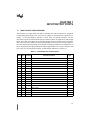
This manual contains 14 chapters and 3 appendixes. This chapter, Chapter 1, provides an overview of the manual. This section summarizes the contents of the remaining chapters and appendixes. The remainder of this chapter describes notational conventions and terminology used
throughout the manual and provides references to related documentation.
Chapter 2 — Architectural Overview — provides an overview of device hardware. It covers
core functions (pipelined CPU, clock and reset unit, and on-chip memory) and on-chip peripherals (timer/counters, watchdog timer, programmable counter array, and serial I/O port.)
Chapter 3 — Address Spaces — describes the three address spaces of the MCS 251 microcontroller: memory address space, special function register (SFR) space, and the register file. It also
provides a map of the SFR space showing the location of the SFRs and their reset values and explains the mapping of the address spaces of the MCS® 51 architecture into the address spaces of
the MCS 251 architecture.
Chapter 4 — Device Configuration — describes microcontroller features that are configured at
device reset including the external memory interface (the number of external address bits, the
number of wait states, memory regions for asserting RD#, WR#, and PSEN#, page mode), binary/
source opcodes, interrupt stack mode, and mapping a portion of on-chip code memory to data
memory. It describes the configuration bytes and how to program them for the desired configuration. It also describes how internal memory space maps into external memory.
Chapter 5— Programming — provides an overview of the instruction set. It describes each instruction type (control, arithmetic, logical, etc.) and lists the instructions in tabular form. This
chapter also discusses the addressing modes, bit instructions, and the program status words.
(Appendix A provides a detailed description of each instruction.)
Chapter 6— Interrupts — describes the 8XC251Sx interrupt circuitry which provides a TRAP
instruction interrupt and seven maskable interrupts: two external interrupts, three timer interrupts,
a PCA interrupt, and a serial port interrupt. This chapter also discusses the interrupt priority
scheme, interrupt enable, interrupt processing, and interrupt response time.
†
8XC251SA, SB, SP, SQ is also referred to herein as 8XC251Sx.
1-1
GUIDE TO THIS MANUAL
Chapter 7— Input/Output Ports — describes the four 8-bit I/O ports (ports 0–3) and discusses
their configuration for general-purpose I/O, external memory accesses (ports 0, 2) and alternative
special functions.
Chapter 8 — Timer/Counters and WDT — describes the three on-chip timer/counters and
discusses their application. This chapter also provides instructions for using the hardware watchdog timer (WDT) and describes the operation of the WDT during the idle and powerdown modes.
Chapter 9— Programmable Counter Array (PCA) — describes the PCA on-chip peripheral
and explains how to configure it for general-purpose applications (timers and counters) and special applications (programmable WDT and pulse-width modulator).
Chapter 10— Serial I/O Port — describes the full-duplex serial I/O port and explains how to
program it to communicate with external peripherals. This chapter also discusses baud rate generation, framing error detection, multiprocessor communications, and automatic address recognition.
Chapter 11 — Minimum Hardware Considerations — describes the basic requirements for
operating the 8XC251Sx in a system. It also discusses on-chip and external clock sources and describes device resets, including power-on reset.
Chapter 12 — Special Operating Modes — provides an overview of the idle, powerdown, and
on-circuit emulation (ONCE) modes and describes how to enter and exit each mode. This chapter
also describes the power control (PCON) special function register and lists the status of the device
pins during the special modes and reset (Table 12-1).
Chapter 13 — External Memory Interface —describes the external memory signals and bus
cycles, and provides examples of external memory design. It provides waveform diagrams for the
bus cycles, bus cycles with wait states, and the configuration byte bus cycles. It also provides bus
cycle diagrams with AC timing symbols and definitions of the symbols.
Chapter 14 — Programming and Verifying Nonvolatile Memory — provides instructions for
programming and verifying on-chip code memory, configuration bytes, signature bytes, lock bits
and the encryption array.
Appendix A — Instruction Set Reference — provides reference information for the instruction
set. It describes each instruction; defines the bits in the program status word registers (PSW,
PSW1); shows the relationships between instructions and PSW flags; and lists hexadecimal opcodes, instruction lengths, and execution times. (Chapter 5, “Programming,” includes a general
discussion of the instruction set.
1-2
GUIDE TO THIS MANUAL
Appendix B — Signal Descriptions — describes the function(s) of each device pin. Descriptions are listed alphabetically by signal name. This appendix also provides a list of the signals
grouped by functional category.
Appendix C — Registers — accumulates, for convenient reference, copies of the register definition figures that appear throughout the manual.
1.2
NOTATIONAL CONVENTIONS AND TERMINOLOGY
The following notations and terminology are used in this manual. The Glossary defines other
terms with special meanings.
#
The pound symbol (#) has either of two meanings, depending on the
context. When used with a signal name, the symbol means that the
signal is active low. When used in an instruction, the symbol prefixes
an immediate value in immediate addressing mode.
italics
Italics identify variables and introduce new terminology. The context
in which italics are used distinguishes between the two possible
meanings.
Variables in registers and signal names are commonly represented by
x and y, where x represents the first variable and y represents the
second variable. For example, in register Px.y, x represents the
variable [1–4] that identifies the specific port, and y represents the
register bit variable [7:0]. Variables must be replaced with the correct
values when configuring or programming registers or identifying
signals.
XXXX
Uppercase X (no italics) represents an unknown value or a “don’t
care” state or condition. The value may be either binary or
hexadecimal, depending on the context. For example, 2XAFH (hex)
indicates that bits 11:8 are unknown; 10XX in binary context
indicates that the two LSBs are unknown.
Assert and Deassert
The terms assert and deassert refer to the act of making a signal
active (enabled) and inactive (disabled), respectively. The active
polarity (high/low) is defined by the signal name. Active-low signals
are designated by a pound symbol (#) suffix; active-high signals have
no suffix. To assert RD# is to drive it low; to assert ALE is to drive it
high; to deassert RD# is to drive it high; to deassert ALE is to drive it
low.
Instructions
Instruction mnemonics are shown in upper case to avoid confusion.
When writing code, either upper case or lower case may be used.
1-3
GUIDE TO THIS MANUAL
Logic 0 (Low)
An input voltage level equal to or less than the maximum value of
VIL or an output voltage level equal to or less than the maximum
value of VOL. See data sheet for values.
Logic 1 (High)
An input voltage level equal to or greater than the minimum value of
VIH or an output voltage level equal to or greater than the minimum
value of VOH. See data sheet for values.
Numbers
Hexadecimal numbers are represented by a string of hexadecimal
digits followed by the character H. Decimal and binary numbers are
represented by their customary notations. (That is, 255 is a decimal
number and 1111 1111 is a binary number. In some cases, the letter B
is added for clarity.)
Register Bits
Bit locations are indexed by 7:0 for byte registers, 15:0 for word
registers, ands 31:0 for double-word (dword) registers, where bit 0 is
the least-significant bit and 7, 15, or 31 is the most-significant bit. An
individual bit is represented by the register name, followed by a
period and the bit number. For example, PCON.4 is bit 4 of the
power control register. In some discussions, bit names are used. For
example, the name of PCON.4 is POF, the power off flag.
Register Names
Register names are shown in upper case. For example, PCON is the
power control register. If a register name contains a lowercase
character, it represents more than one register. For example,
CCAPMx represents the five registers: CCAPM0 through CCAPM4.
Reserved Bits
Some registers contain reserved bits. These bits are not used in this
device, but they may be used in future implementations. Do not write
a “1” to a reserved bit. The value read from a reserved bit is indeterminate.
Set and Clear
The terms set and clear refer to the value of a bit or the act of giving
it a value. If a bit is set, its value is “1”; setting a bit gives it a “1”
value. If a bit is clear, its value is “0”; clearing a bit gives it a “0”
value.
Signal Names
Signal names are shown in upper case. When several signals share a
common name, an individual signal is represented by the signal name
followed by a number. Port pins are represented by the port abbreviation, a period, and the pin number (e.g., P0.0, P0.1). A pound
symbol (#) appended to a signal name identifies an active-low signal.
1-4
GUIDE TO THIS MANUAL
Units of Measure
1.3
The following abbreviations are used to represent units of measure:
A
amps, amperes
DCV
direct current volts
Kbyte
kilobytes
KΩ
kilo-ohms
mA
milliamps, milliamperes
Mbyte
megabytes
MHz
megahertz
ms
milliseconds
mW
milliwatts
ns
nanoseconds
pF
picofarads
W
watts
V
volts
µA
microamps, microamperes
µF
microfarads
µs
microseconds
µW
microwatts
RELATED DOCUMENTS
The following documents contain additional information that is useful in designing systems that
incorporate the 8XC251Sx microcontroller. To order documents, please call Intel Literature Fulfillment (1-800-548-4725 in the U.S. and Canada; +44(0) 793-431155 in Europe).
Embedded Microcontrollers
Order Number 270646
Embedded Processors
Order Number 272396
Embedded Applications
Order Number 270648
Packaging
Order Number 240800
1-5
GUIDE TO THIS MANUAL
1.3.1
Data Sheet
The data sheet is included in Embedded Microcontrollers and is also available individually.
8XC251SA, SB, SP, SQ High-Performance CHMOS Microcontroller
(Commercial/Express)
1.3.2
Order Number 272783
Application Notes
The following application notes apply to the MCS 251 microcontroller.
AP-125, Designing Microcontroller Systems
for Electrically Noisy Environments
Order Number 210313
AP-155, Oscillators for Microcontrollers
Order Number 230659
AP-708, Introducing the MCS® 251 Microcontroller
—the 8XC251SB
Order Number 272670
AP-709, Maximizing Performance Using MCS® 251 Microcontroller
—Programming the 8XC251SB
Order Number 272671
AP-710, Migrating from the MCS® 51 Microcontroller to the MCS 251 Order Number 272672
Microcontroller (8XC251SB)—Software and Hardware
Considerations
The following MCS 51 microcontroller application notes also apply to the MCS 251 microcontroller.
AP70, Using the Intel MCS® 51 Boolean Processing Capabilities
Order Number 203830
AP-223, 8051 Based CRT Terminal Controller
Order Number 270032
AP-252, Designing With the 80C51BH
Order Number 270068
AP-425, Small DC Motor Control
Order Number 270622
AP-410, Enhanced Serial Port on the 83C51FA
Order Number 270490
AP-415, 83C51FA/FB PCA Cookbook
Order Number 270609
AP-476, How to Implement I2C Serial Communication
Using Intel MCS® 51 Microcontrollers
Order Number 272319
1-6
GUIDE TO THIS MANUAL
1.4
CUSTOMER SERVICE
This section provides telephone numbers and describes various customer services.
• Technical Support (U.S. and Canada) 800-628-8686, 916-356-7599, and
916-356-6100 (fax)
• Customer Training (U.S. and Canada) 800-234-8806
• Product Literature
— 800-548-4725 (U.S. and Canada)
— 708-296-9333 (U.S. from overseas)
— 44(0)1793-431155 (Europe (U.K.))
— 44(0)1793-421333 (Germany)
— 44(0)1793-421777 (France)
— 81(0)120-47-88-32 (Japan, fax only)
• FaxBack* Service
— 800-525-3019 (U.S. and Canada)
— 44(0)1793-496646 (Europe)
— 503-264-6835 (U.S., Canada, Japan, Asia Pacific)
• Application Bulletin Board System
— 800-897-2536 (U.S. and Canada)
— 916-356-3600 (U.S., Canada, Japan, Asia Pacific, up to 19.2-Kbaud line)
— 916-356-7209 (U.S., Canada, Japan, Asia Pacific, dedicated 2400-baud line)
— 44(0)1793-496340 (Europe)
Intel provides 24-hour automated technical support through our FaxBack service and our centralized Intel Application Bulletin Board System (BBS). The FaxBack service is a simple-to-use information system that lets you order technical documents by phone for immediate delivery to
your fax machine. The BBS is a centralized computer bulletin board system that provides updated
application-specific information about Intel products.
Intel offers a variety of information through the World Wide Web (URL:http://www.intel.com/).
Select “Embedded Design Products” from the Intel home page.
1.4.1
How to Use Intel's FaxBack Service
Think of the FaxBack service as a library of technical documents that you can access with your
phone. Just dial the telephone number (see page 1-7) and respond to the system prompts. After
you select a document, the system sends a copy to your fax machine.
1-7
GUIDE TO THIS MANUAL
Each document is assigned an order number and is listed in a subject catalog. First-time users
should order the appropriate subject catalogs to get a complete listing of document order numbers.
The following catalogs and information packets are available:
1.
Microcontroller, Flash, and iPLD catalog
2.
Development Tools Handbook
3.
System catalog
4.
DVI and multimedia catalog
5.
BBS catalog
6.
Microprocessor and peripheral catalog
7.
Quality and reliability catalog
8.
Technical questionnaire
1.4.2
How to Use Intel's Application BBS
The Application Bulletin Board System (BBS) provides centralized access to information, software drivers, firmware upgrades, and revised software. Any user with a modem and computer can
access the BBS. Use the following modem settings.
• 14400, N, 8, 1
If your modem does not support 14.4K baud, the system provides auto configuration support for
1200-baud through 14.4K-baud modems.
To access the BBS, just dial the telephone number (see page 1-7) and respond to the system
prompts. During your first session, the system asks you to register with the system operator by
entering your name and location. The system operator will then set up your access account within
24 hours. At that time, you can access the files on the BBS. For a listing of files, call the FaxBack
service and order catalog #6 (the BBS catalog).
If you encounter any difficulty accessing our high-speed modem, try our dedicated 2400-baud
modem (see page 1-7). Use the following modem settings.
• 2400 baud, N, 8, 1
1-8
GUIDE TO THIS MANUAL
1.4.3
How to Find the Latest ApBUILDER Files and Hypertext Manuals and Data
Sheets on the BBS
The latest ApBUILDER files and hypertext manuals and data sheets are available first from the
BBS. To access the files:
1.
Select [F] from the BBS Main menu.
2.
Select [L] from the Intel Apps Files menu.
3.
The BBS displays the list of all area levels and prompts for the area number.
4.
Select [25] to choose the ApBUILDER / Hypertext area.
5.
Area level 25 has four sublevels: (1) General, (2) 196 Files, (3) 186 Files, and (4) 8051
Files.
6.
Select [1] to find the latest ApBUILDER files or the number of the appropriate productfamily sublevel to find the hypertext manuals and data sheets.
7.
Enter the file number to tag the files you wish to download. The BBS displays the approximate download time for tagged files.
1-9
2
Architectural
Overview
CHAPTER 2
ARCHITECTURAL OVERVIEW
The 8XC251Sx is the first member of the MCS® 251 microcontroller family. This family of 8-bit
microcontrollers is a high-performance upgrade of the widely-used MCS 51® microcontrollers.
It extends features and performance while maintaining binary-code compatibility and pin compatibility with the 8XC51FX, so the impact on existing hardware and software is minimal. Typical control applications for the 8XC251Sx include copiers, scanners, CD ROMs, and tape drives.
It is also well suited for communications applications, such as phone terminals, business/feature
phones, and phone switching and transmission systems.
This manual covers both the B-stepping version which is available as memory options
8XC251SA, SB, SP, SQ and the A-stepping version which is available as option 8XC251SB.
Memory options are listed in Table 2-1 on page 2-3.
All MCS 251 microcontrollers share a set of common features:
•
•
•
•
•
•
•
24-bit linear addressing and up to 16 Mbytes of memory
a register-based CPU with registers accessible as bytes, words, and double words
a page mode for accelerating external instruction fetches
an instruction pipeline
an enriched instruction set, including 16-bit arithmetic and logic instructions
a 64-Kbyte extended stack space
a minimum instruction-execution time of two clocks (vs. 12 clocks for MCS 51 microcontrollers)
• binary-code compatibility with MCS 51 microcontrollers
Several benefits are derived from these features:
• preservation of code written for MCS 51 microcontrollers
• a significant increase in core execution speed in comparison with MCS 51 microcontrollers
at the same clock rate
• support for larger programs and more data
• increased efficiency for code written in C
2-1
ARCHITECTURAL OVERVIEW
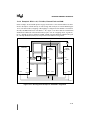
I/O Ports and
Peripheral Signals
System Bus and I/O Ports
P0.7:0
P2.7:0
Port 0
Drivers
Port 2
Drivers
Code
OTPROM/ROM
8 Kbytes
or
16 Kbytes
Data RAM
512 Bytes
or
1024 Bytes
P1.7:0
P3.7:0
Port 1
Drivers
Port 3
Drivers
Memory Data (16)
Watchdog
Timer
Memory Address (16)
Code Address (24)
Code Bus (16)
Interrupt
Handler
Data Bus (8)
SRC1 (8)
SRC2 (8)
Data Address (24)
Instruction Sequencer
IB Bus (8)
Peripheral
Interface
Bus Interface
Timer/
Counters
PCA
Serial I/O
ALU
Register
File
Data
Memory
Interface
Clock
&
Reset
Peripherals
DST (16)
MCS® 251 Microcontroller Core
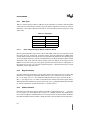
Clock & Reset
8XC251SA/SB/SP/SQ Microcontroller
A4214-01
Figure 2-1. Functional Block Diagram of the 8XC251SA, SB, SP, SQ
2-2
ARCHITECTURAL OVERVIEW
2.1
8XC251SA, SB, SP, SQ ARCHITECTURE
Figure 2-1 is a functional block diagram of the 8XC251SA, SB, SP, SQ. The core, which is common to all MCS 251 microcontrollers, is described in “MCS 251 Microcontroller Core” on page
2-4. Each microcontroller type in the family has its own on-chip peripherals, I/O ports, external
system bus, size of on-chip RAM, and type and size of on-chip program memory. Table 2-1 lists
the distinguishing features of the 8XC251SA, SB, SP, SQ.
Thee 8XC251Sx peripherals include a dedicated watchdog timer, a timer/counter unit, a programmable counter array (PCA), and a serial I/O unit. The 8XC251Sx has four 8-bit I/O ports, P0–P3.
Each port pin can be individually programmed as a general I/O signal or as a special-function signal that supports the external bus or one of the on-chip peripherals. Ports P0 and P2 comprise a
16-line external bus, which transmits a 16-bit address multiplexed with 8 data bits. (You can also
configure the 8XC251Sx to have a 17-bit or an 18-bit external address bus. See “Configuring the
External Memory Interface” on page 4-11). Ports P1 and P3 carry bus-control and peripheral signals.
Table 2-1. 8XC251SA, SB, SP, SQ Features
On-chip Memory
Part
Number
OTPROM/
EPROM
(Kbytes)
ROM
(Kbytes)
RAM
(Bytes)
80C251SB
0
0
1024
A-, B-
80C251SQ
0
0
512
B-
83C251SA
0
8
1024
B-
83C251SB
0
16
1024
A-, B-
83C251SP
0
8
512
B-
83C251SQ
0
16
512
B-
87C251SA
8
0
1024
B-
87C251SB
16
0
1024
A-, B-
87C251SP
8
0
512
B-
87C251SQ
16
0
512
B-
Common features:
Address space
External Address bus
Register file
I/O lines
Interrupt sources
Version
(Stepping)
512 Kbytes (1)
16-bit, 17-bit, or 18-bit (2)
40 bytes
32
11
NOTES:
1. 256 Kbytes for A-stepping
2. 16-bit or 17-bit for A-stepping
2-3
ARCHITECTURAL OVERVIEW
The 8XC251Sx has two power-saving modes. In idle mode, the CPU clock is stopped, while
clocks to the peripherals continue to run. In powerdown mode, the on-chip oscillator is stopped,
and the chip enters a static state. An enabled interrupt or a hardware reset can bring the chip back
to its normal operating mode from idle or powerdown. See Chapter 12, “Special Operating
Modes” for details on the power-saving modes.
MCS 251 microcontrollers use an instruction set that has been expanded to include new operations, addressing modes, and operands. Many instructions can operate on 8-, 16-, or 32-bit operands, providing easier and more efficient programming in high-level languages such as C.
Additional new features include the TRAP instruction, a new displacement addressing mode, and
several conditional jump instructions. Chapter 5, “Programming,” describes the instruction set
and compares it with the instruction set for MCS 51 microcontrollers.
You can configure the 8XC251Sx to run in binary mode or source mode. Either mode executes
all of the MCS 51 architecture instructions and all of the MCS 251 architecture instructions. However, source mode is more efficient for MCS 251 architecture instructions, and binary mode is
more efficient for MCS 51 architecture instructions. In binary mode, object code for an MCS 51
microcontroller runs on the 8XC251Sx without recompiling.
If a system was originally developed using an MCS 51 microcontroller, and if the new
8XC251Sx-based system will run code written for the MCS 51 microcontroller, performance will
be better with the 8XC251Sx running in binary mode. Object code written for the MCS 51 microcontroller runs faster on the 8XC251Sx.
However, if most of the code is rewritten using the new instruction set, performance will be better
with the 8XC251Sx running in source mode. In this case the 8XC251Sx can run significantly faster than the MCS 51 microcontroller. See Chapter 4, “Device Configuration” for a discussion of
binary mode and source mode.
MCS 251 microcontrollers store both code and data in a single, linear 16-Mbyte memory space.
The 8XC251Sx can address up to 256 Kbytes of external memory. The special function registers
(SFRs) and the register file have separate address spaces. See Chapter 3, “Address Spaces” for a
description of the address spaces.
2.2
MCS 251 MICROCONTROLLER CORE
The MCS 251 microcontroller core contains the CPU, the clock and reset unit, the interrupt handler, the bus interface, and the peripheral interface. The CPU contains the instruction sequencer,
ALU, register file, and data memory interface.
2-4
ARCHITECTURAL OVERVIEW
2.2.1
CPU
Figure 2-2 is a functional block diagram of the CPU (central processor unit). The 8XC251Sx
fetches instructions from on-chip code memory two bytes at a time, or from external memory in
single bytes. The instructions are sent over the 16-bit code bus to the execution unit. You can configure the 8XC251Sx to operate in page mode for accelerated instruction fetches from external
memory. In page mode, if an instruction fetch is to the same 256-byte “page” as the previous
fetch, the fetch requires one state (two clocks) rather than two states (four clocks).
The 8XC251Sx register file has forty registers, which can be accessed as bytes, words, and double
words. As in the MCS 51 architecture, registers 0–7 consist of four banks of eight registers each,
where the active bank is selected by the program status word (PSW) for fast context switches.
The 8XC251Sx is a single-pipeline machine. When the pipeline is full and code is executing from
on-chip code memory, an instruction is completed every state time. When the pipeline is full and
code is executing from external memory (with no wait states and no extension of the ALE signal),
an instruction is completed every two state times.
16
Code Bus
24
Code Address
Instruction Sequencer
Interrupt
Handler
SRC1
8
SRC2
8
8
Register
File
ALU
Data
Memory
Interface
Data Bus
24
Data Address
DST
16
Figure 2-2. The CPU
2-5
ARCHITECTURAL OVERVIEW
2.2.2
Clock and Reset Unit
The timing source for the 8XC251Sx can be an external oscillator or an internal oscillator with
an external crystal/resonator (see Chapter 11, “Minimum Hardware Setup”). The basic unit of
time in MCS 251 microcontrollers is the state time (or state), which is two oscillator periods (see
Figure 2-3). The state time is divided into phase 1 and phase 2.
The 8XC251Sx peripherals operate on a peripheral cycle, which is six state times. (This peripheral cycle is particular to the 8XC251Sx and not a characteristic of the MCS 251 architecture.) A
one-clock interval in a peripheral cycle is denoted by its state and phase. For example, the PCA
timer is incremented once each peripheral cycle in phase 2 of state 5 (denoted as S5P2).
The reset unit places the 8XC251Sx into a known state. A chip reset is initiated by asserting the
RST pin or allowing the watchdog timer to time out (see Chapter 11, “Minimum Hardware Setup”).
Phase 1
Phase 2
P1
P2
XTAL1
TOSC
2 TOSC = State Time
State 1
P1 P2
State 2
P1 P2
State 3
P1 P2
State 4
P1 P2
State 5
P1 P2
State 6
P1 P2
XTAL1
Peripheral Cycle
A2604-02
Figure 2-3. Clocking Definitions
2-6
ARCHITECTURAL OVERVIEW
2.2.3
Interrupt Handler
The interrupt handler can receive interrupt requests from eleven sources: seven maskable sources
and the TRAP instruction. When the interrupt handler grants an interrupt request, the CPU discontinues the normal flow of instructions and branches to a routine that services the source that
requested the interrupt. You can enable or disable the interrupts individually (except for TRAP)
and you can assign one of four priority levels to each interrupt. See Chapter 6, “Interrupt System”
for a detailed description.
2.2.4
On-chip Code Memory
For 83C251SA (ROM) and 87C251SA (OTPROM/EPROM) devices, memory locations
FF:0000H–FF:1FFFH are implemented with 8-Kbytes of on-chip code memory. For 83C251SB
and 87C251SB devices, memory locations FF:0000H–FF:3FFFH are implemented with 16Kbytes of on-chip code memory.
Following a reset, the first instruction is fetched from location FF:0000H. For 80C251SB, SQ (no
ROM/OTPROM/EPROM) devices, location FF:0000H is always in external memory.
2.2.5
On-chip RAM
The 8XC251SA and 8XC251SB have 1-Kbyte of on-chip data RAM at locations 20H–41FH. The
8XC251SP and 8XC251SQ have 512 bytes of on-chip data RAM at locations 20H–21FH. These
RAM locations can be accessed with direct, indirect, and displacement addressing. Ninety-six of
these locations (20H–7FH) are bit addressable. An additional 32 bytes of on-chip RAM (00H–
1FH) provide storage for the four banks of registers R0–R7.
2.3
ON-CHIP PERIPHERALS
The on-chip peripherals, which lie outside the core, perform specialized functions. Software accesses the peripherals via their special function registers (SFRs). The 8XC251Sx has four peripherals: the watchdog timer, the timer/counters, the programmable counter array (PCA), and the
serial I/O port.
2.3.1
Timer/Counters and Watchdog Timer
The timer/counter unit has three timer/counters, which can be clocked by the oscillator (for timer
operation) or by an external input (for counter operation). You can set up an 8-bit, 13-bit, or 16bit timer/counter, and you can program them for special applications, such as capturing the time
of an event on an external pin, outputting a programmable clock signal on an external pin, or generating a baud rate for the serial I/O port. Timer/counter events can generate interrupt requests.
2-7
ARCHITECTURAL OVERVIEW
The watchdog timer is a circuit that automatically resets the 8XC251Sx in the event of a hardware
or software upset. When enabled by software, the watchdog timer begins running, and unless
software intervenes, the timer reaches a maximum count and initiates a chip reset. In normal operation, software periodically clears the timer register to prevent the reset. If an upset occurs and
software fails to clear the timer, the resulting chip reset disables the timer and returns the system
to a known state. The watchdog and the timer/counters are described in Chapter 8, “Timer/Counters and WatchDog Timer.”
2.3.2
Programmable Counter Array (PCA)
The programmable counter array (PCA) has its own timer and five capture/compare modules that
perform several functions: capturing (storing) the timer value in response to a transition on an input pin; generating an interrupt request when the timer matches a stored value; toggling an output
pin when the timer matches a stored value; generating a programmable PWM (pulse width modulator) signal on an output pin; and serving as a software watchdog timer. Chapter 9, “Programmable Counter Array” describes this peripheral in detail.
2.3.3
Serial I/O Port
The serial I/O port provides one synchronous and three asynchronous communication modes.
The synchronous mode (mode 0) is half-duplex: the serial port outputs a clock signal on one pin
and transmits or receives data on another pin.
The asynchronous modes (modes 1–3) are full-duplex (i.e., the port can send and receive simultaneously). Mode 1 uses a serial frame of 10 bits: a start bit, 8 data bits, and a stop bit. The baud
rate is generated by overflow of timer 1 or timer 2. Modes 2 and 3 use a serial frame of 11 bits: a
start bit, eight data bits, a programmable ninth data bit, and a stop bit. The ninth bit can be used
for parity checking or to specify that the frame contains an address and data. In mode 2, you can
use a baud rate of 1/32 or 1/64 of the oscillator frequency. In mode 3, you can use the overflow
from timer 1 or timer 2 to determine the baud rate.
In its synchronous modes (modes 1–3) the serial port can operate as a slave in an environment
where multiple slaves share a single serial line. It can accept a message intended for itself or a
message that is being broadcast to all of the slaves, and it can ignore a message sent to another
slave.
2-8
ARCHITECTURAL OVERVIEW
2.4
SUMMARY OF A-STEPPING DIFFERENCES
This manual covers both the B-stepping and A-stepping versions of the 8XC251Sx. Where the
versions differ, separate descriptions are provided or the differences in the A-stepping version are
noted. The B-stepping is available as the 8XC251SA, SB, SP, SQ; the A-stepping is available as
the 8XC251SB. This section summarizes the differences between the A-stepping and B-stepping
versions.
2.4.1
Package Options
The 8XC251Sx (B-stepping) is available in 44-lead PLCC and 40-lead DIP packages. The
8XC251SB (A-stepping) is available in the 44-lead PLCC package. See latest data sheet for details of package options.
2.4.2
Memory Address Space
The usable memory space of the 8XC251Sx consists of eight 64-Kbyte regions for the B-stepping
and four 64-Kbyte regions for the A-stepping. See “8XC251SA, SB, SP, SQ Memory Space” on
page 3-5 and “Memory Space for the A-stepping of the 8XC251SB” on page 3-10. For an explanation of how internal memory space maps into external memory space for the B-stepping and
A-stepping, see “Configuration Bits RD1:0” on page 4-11.
2.4.2.1
On-chip Memory
The B-stepping provides on-chip memory options of 0, 8, and 16 Kbytes of ROM, OTPROM, or
EPROM and 512 or 1024 bytes of RAM. The A-stepping provides on-chip memory options of 0
or 16 Kbytes of ROM or OTPROM and 1024 bytes of RAM. See Table 2-1 on page 2-3.
2.4.2.2
External Memory
The B-stepping version can be configured to have a 16-bit, 17-bit, or 18-bit external address bus
to address up to 256 Kbytes of memory. The A-stepping version can be configured to have a 16bit or 17-bit external address bus to address up to 128 Kbytes of memory.
The B-stepping version can be configured to have 0, 1, 2, or 3 external wait states for
RD#/WR#/PSEN. The A-stepping version can be configured to have 0 or 1 external wait states
for RD#/WR#/PSEN. See Chapter 4, “Device Configuration”.
2.4.3
Configuration Bytes
The B-stepping version has two configuration bytes UCONFIG0 and UCONFIG1 located in user
code memory. See Figures 4-3 and 4-4 for bit definitions.
2-9
ARCHITECTURAL OVERVIEW
The A-stepping version has two configuration bytes CONFIG0 and CONFIG1 located in nonvolatile memory outside the memory address space. See Figures 4-5 and 4-6 for bit definitions.
The B-stepping and A-stepping configuration bytes differ only in their complements of wait state
bits. UCONFIG0 has two wait state bits: WSA1 and WSA0. WSA0 corresponds to WSA in
CONFIG0.
UCONFIG1 has two wait state bits: WSB1 and WSB0, plus WSB which is retained for compatibility.
2-10
3
Address Spaces
CHAPTER 3
ADDRESS SPACES
MCS® 251 microcontrollers have three address spaces: a memory space, a special function register (SFR) space, and a register file. This chapter describes these address spaces as they apply to
all MCS 251 microcontrollers and to the 8XC251Sx in particular. It also discusses the compatibility of the MCS 251 architecture and the MCS® 51 architecture in terms of their address spaces.
3.1
ADDRESS SPACES FOR MCS® 251 MICROCONTROLLERS
Figure 3-1 shows the memory space, the SFR space, and the register file for MCS 251 microcontrollers. (The address spaces are depicted as being eight bytes wide with addresses increasing
from left to right and from bottom to top.)
Memory Address Space
16 Mbytes
FF:FFFFH
SFR Space
512 Bytes
S:1FFH
S:007H
S:000H
Register File
64 Bytes
63
00:0000H
00:0007H
0
7
A4100-01
Figure 3-1. Address Spaces for MCS® 251 Microcontrollers
3-1
ADDRESS SPACES
It is convenient to view the unsegmented, 16-Mbyte memory space as consisting of 256 64-Kbyte
regions, numbered 00: to FF:.
NOTE
The memory space in the MCS 251 architecture is unsegmented. The 64Kbyte “regions” 00:, 01:, ..., FF: are introduced only as a convenience for
discussions. Addressing in the MCS 251 architecture is linear; there are no
segment registers.
MCS 251 microcontrollers can have up to 64 Kbytes of on-chip code memory in region FF:. Onchip data RAM begins at location 00:0000H. The first 32 bytes (00:0000H–00:001FH) provide
storage for a part of the register file. On-chip, general-purpose data RAM begins at 00:0020H.
The sizes of the on-chip code memory and on-chip RAM depend on the particular device.
The register file has its own address space (Figure 3-1). The 64 locations in the register file are
numbered decimally from 0 to 63. Locations 0–7 represent one of four switchable register banks,
each having 8 registers. The 32 bytes required for these banks occupy locations 00:0000H–
00:001FH in the memory space. Register file locations 8–63 do not appear in the memory space.
See “8XC251SA, SB, SP, SQ Register File” on page 3-10 for a further description of the register
file.
The SFR space can accommodate up to 512 8-bit special function registers with addresses
S:000H–S:1FFH. Some of these locations may be unimplemented in a particular device. In the
MCS 251 architecture, the prefix “S:” is used with SFR addresses to distinguish them from the
memory space addresses 00:0000H–00:01FFH. See “Special Function Registers (SFRs)” on page
3-16 for details on the SFR space.
3.1.1
Compatibility with the MCS® 51 Architecture
The address spaces in the MCS 51 architecture† are mapped into the address spaces in the MCS
251 architecture. This mapping allows code written for MCS 51 microcontrollers to run on MCS
251 microcontrollers. (Chapter 5, “Programming,” discusses the compatibility of the two instruction sets.)
Figure 3-2 shows the address spaces for the MCS 51 architecture. Internal data memory locations
00H–7FH can be addressed directly and indirectly. Internal data locations 80H–FFH can only be
addressed indirectly. Directly addressing these locations accesses the SFRs. The 64-Kbyte code
memory has a separate memory space. Data in the code memory can be accessed only with the
MOVC instruction. Similarly, the 64-Kbyte external data memory can be accessed only with the
MOVX instruction.
†
MCS®51 Microcontroller Family User’s Manual (Order Number: 272383)
3-2
ADDRESS SPACES
The register file (registers R0–R7) comprises four switchable register banks, each having 8 registers. The 32 bytes required for the four banks occupy locations 00H–1FH in the on-chip data
memory.
Figure 3-3 shows how the address spaces in the MCS 51 architecture map into the address spaces
in the MCS 251 architecture; details are listed in Table 3-1.
The 64-Kbyte code memory for MCS 51 microcontrollers maps into region FF: of the memory
space for MCS 251 microcontrollers. Assemblers for MCS 251 microcontrollers assemble code
for MCS 51 microcontrollers into region FF:, and data accesses to code memory are directed to
this region. The assembler also maps the interrupt vectors to region FF:. This mapping is transparent to the user; code executes just as before, without modification.
FFFFH
Code
(MOVC)
0000H
FFFFH
Register File
R0
R7
External Data
(MOVX)
0000H
FFH
FFH
Internal Data
(indirect)
SFRs
(direct)
80H
80H
7FH
Internal Data
(direct, indirect)
00H
A4139-01
Figure 3-2. Address Spaces for the MCS® 51 Architecture
3-3
ADDRESS SPACES
Memory Address Space
16 Mbytes
FFFFH
SFR Space
512 Bytes
MCS 51 Architecture
Code Memory
S:1FFH
FF:0000H 0000H
S:100H
FFH
80H
MCS 51 Architecture
SFRs
S:07FH
02:0000H
S:000H
FFFFH
MCS 51 Architecture
External Data Memory
01:0000H 0000H
Register File
64 Bytes
63
00:0000H 00H
MCS 51 Architecture
Internal Data Memory
FFH
8
0 0
MCS 51 Architecture R. F.
7
A4133-01
Figure 3-3. Address Space Mappings MCS® 51 Architecture to MCS® 251 Architecture
Table 3-1. Address Mappings
MCS® 51 Architecture
Memory Type
Size
Location
MCS® 251 Architecture
Data
Addressing
Location
Code
64 Kbytes
0000H–FFFFH
Indirect using
MOVC instr.
FF:0000H–FF:FFFFH
External Data
64 Kbytes
0000H–FFFFH
Indirect using
MOVX instr.
01:0000H–01:FFFFH
128 bytes
00H–7FH
Direct, Indirect
00:0000H–00:007FH
128 bytes
80H–FFH
Indirect
00:0080H–00:00FFH
SFRs
128 bytes
S:80H–S:FFH
Direct
S:080H–S:0FFH
Register File
8 bytes
R0–R7
Register
R0–R7
Internal Data
3-4
ADDRESS SPACES
The 64-Kbyte external data memory for MCS 51 microcontrollers is mapped into the memory
region specified by bits 16–23 of the data pointer DPX, i.e., DPXL. DPXL is accessible as register
file location 57 and also as the SFR at S:084H (see “Dedicated Registers” on page 3-13). The reset value of DPXL is 01H, which maps the external memory to region 01: as shown in Figure 3-3.
You can change this mapping by writing a different value to DPXL. A mapping of the MCS 51
microcontroller external data memory into any 64-Kbyte memory region in the MCS 251 architecture provides complete run-time compatibility because the lower 16 address bits are identical
in the two address spaces.
The 256 bytes of on-chip data memory for MCS 51 microcontrollers (00H-FFH) are mapped to
addresses 00:0000H-00:00FFH to ensure complete run-time compatibility. In the MCS 51 architecture, the lower 128 bytes (00H-7FH) are directly and indirectly addressable; however the upper 128 bytes are accessible by indirect addressing only. In the MCS 251 architecture, all
locations in region 00: are accessible by direct, indirect, and displacement addressing (see
“8XC251SA, SB, SP, SQ Memory Space” on page 3-5).
The 128-byte SFR space for MCS 51 microcontrollers is mapped into the 512-byte SFR space of
the MCS 251 architecture starting at address S:080H, as shown in Figure 3-3. This provides complete compatibility with direct addressing of MCS 51 microcontroller SFRs (including bit addressing). The SFR addresses are unchanged in the new architecture. In the MCS 251
architecture, SFRs A, B, DPL, DPH, and SP (as well as the new SFRs DPXL and SPH) reside in
the register file for high performance. However, to maintain compatibility, they are also mapped
into the SFR space at the same addresses as in the MCS 51 architecture.
3.2
8XC251SA, SB, SP, SQ MEMORY SPACE
NOTE
This section describes the memory space for the B-stepping of the 8XC251Sx.
With some exceptions, this description also applies to the A-stepping of the
8XC251SB. “Memory Space for the A-stepping of the 8XC251SB” on page
3-10 describes the differences between the memory spaces for the A-stepping
and the B-stepping of the 8XC251SB.
Figure 3-4 shows the logical memory space for the 8XC251Sx microcontroller. The usable memory space of the 8XC251Sx consists of eight 64-Kbyte regions: 00:, 01:, 02:, 03:, FC:, FD:, FE:,
and FF:. Code can execute from all eight regions; code execution begins at FF:0000H. Regions
04:–FB: are reserved. Reading a location in the reserved area returns an unspecified value. Software can execute a write to the reserved area, but nothing is actually written.
Although the memory space comprises eight regions, not all of these regions are available at the
same time. The maximum number of external address lines is 18, which limits external memory
to a maximum of four regions (256 Kbytes). See “Configuring the External Memory Interface”
on page 4-11 and “External Memory Design Examples” on page 13-12.
3-5
ADDRESS SPACES
Memory Address Space
16 Mbytes
FF:FFFFH
FF:FFF8H
FF:FFF7H
8-Byte Configuration Array
FF:0000H
FE:FFFFH
FE:0000H
FD:FFFFH
FD:0000H
FC:FFFFH
FC:0000H
Regions 04:–FB: are Reserved
03:FFFFH
03:0000H
02:FFFFH
Indirect and Displacement
Addressing
(16 Mbytes)
02:0000H
01:FFFFH
01:0000H
00:FFFFH
00:0080H
Register
Addressing
(32 Bytes)
00:0020H
00:0000H
00:007FH
00:001FH
Direct Addressing
(64 Kbytes)
Bit Addressing
(96 Bytes)
A4101-02
Figure 3-4. 8XC251SA, SB, SP, SQ Memory Space
3-6
ADDRESS SPACES
Memory Address Space
16 Mbytes
FF:FFFFH
FF:0000H
FE:FFFFH
External Memory
Region FF: (Detail)
Configuration Array†
FF:FFF8H–FF:FFFFH
FF:FFF7H
External Memory
FF:2000H/FF:4000H
FE:0000H
FD:FFFFH
External Memory
FD:0000H
FC:FFFFH
External Memory
FC:0000H
On-chip OTPROM/ROM or External†
SB, SQ:16 Kbytes (FF:0000H–FF:3FFFH)
SA, SP: 8 Kbytes (FF:0000H–FF:1FFFH)
† Implementation of configuration bytes:
87C251SA, SB, SP, SQ: on-chip nonvolatile memory
83C251SA, SB, SP, SQ: on-chip nonvolatile memory
80C251SB, SQ: external memory
Regions 04:–FB: are Reserved
03:FFFFH
External Memory
03:0000H
02:FFFFH
Region 00: (Detail)
00:FFFFH
External Memory
02:0000H
External Memory
01:FFFFH
00:0220H/00:0420H
External Memory
01:0000H
00:FFFFH
00:0000H
On-chip RAM
SA, SB: 1 Kbyte (00:0020H–00:041FH)
SP, SQ: 512 bytes (00:0020H–00:021FH)
32-byte Register File
00:0000H–00:001FH
A4226-02
Figure 3-5. Hardware Implementation of the 8XC251SA, SB, SP, SQ Memory Space
Locations FF:FFF8H–FF:FFFFH are reserved for the configuration array (see Chapter 4, “Device
Configuration”). The two configuration bytes for the 8XC251Sx are accessed at locations
FF:FFF8H and FF:FFF9H; locations FF:FFFAH–FF:FFFFH are reserved for configuration bytes
in future products. Do not attempt to execute code from locations FF:FFF8H–FF:FFFFH. Also,
see the caution on page 4-2 regarding execution of code from locations immediately below the
configuration array.
3-7
ADDRESS SPACES
Figure 3-4 also indicates the addressing modes that can be used to access different areas of memory. The first 64 Kbytes can be directly addressed. The first 96 bytes of general-purpose RAM
(00:0020H–00:007FH) are bit addressable. (Chapter 5, “Programming,” discusses addressing
modes.)
Figure 3-5 on page 3-7 shows how areas of the memory space are implemented by on-chip RAM,
on-chip ROM/OTPROM/EPROM, and external memory. The first 32 bytes of on-chip RAM
store banks 0–3 of the register file (see “8XC251SA, SB, SP, SQ Register File” on page 3-10).
3.2.1
On-chip General-purpose Data RAM
On-chip RAM (512 bytes or 1 Kbyte) is provided for general data storage (Figure 3-5). Instructions cannot execute from on-chip data RAM. The data is accessible by direct, indirect, and displacement addressing. Locations 00:0020H–00:007FH are also bit addressable.
3.2.2
On-chip Code Memory (83C251SA, SB, SP, SQ/87C251SA, SB, SP, SQ)
The 8XC251Sx is available with 8 Kbytes or 16 Kbytes of on-chip ROM (83C251Sx) or
OTPROM/EPROM (87C251Sx) as well as without on-chip code memory (Figure 3-5). Table 2-1
on page 2-3 lists the amount of on-chip code memory for each device. The on-chip
ROM/OTPROM/EPROM is intended primarily for code storage, although its contents can also
be read as data with the indirect and displacement addressing modes. Following a chip reset, program execution begins at FF:0000H. Chapter 14, “Programming and Verifying Nonvolatile
Memory,” describes programming and verification of the ROM/OTPROM/EPROM.
A code fetch within the address range of the on-chip ROM/OTPROM/EPROM accesses the onchip ROM/OTPROM/EPROM only if EA# = 1. For EA# = 0, a code fetch in this address range
accesses external memory. The value of EA# is latched when the chip leaves the reset state. Code
is fetched faster from on-chip code memory than from external memory. Table 3-2 lists the minimum times to fetch two bytes of code from on-chip memory and external memory.
3-8
ADDRESS SPACES
Table 3-2. Minimum Times to Fetch Two Bytes of Code
Type of Code Memory
State Times
On-chip Code Memory
1
External Memory (page mode)
2
External Memory (nonpage mode)
4
NOTE
If your program executes exclusively from on-chip ROM/OTPROM/EPROM
(not from external memory), beware of executing code from the upper eight
bytes of the on-chip ROM/OTPROM/EPROM (FF:1FF8H–FF:1FFFH for 8
Kbytes, FF:3FF8H–FF:3FFFH for 16 Kbytes). Because of its pipeline
capability, the 8XC251Sx may attempt to prefetch code from external memory
(at an address above FF:1FFFH/FF:3FFFH) and thereby disrupt I/O ports 0
and 2. Fetching code constants from these eight bytes does not affect ports 0
and 2.
If your program executes from both on-chip ROM/OTPROM/EPROM and
external memory, your code can be placed in the upper eight bytes of the onchip ROM/OTPROM/EPROM. As the 8XC251Sx fetches bytes above the top
address in the on-chip ROM/OTPROM/EPROM, the code fetches automatically become external bus cycles. In other words, the rollover from on-chip
ROM/OTPROM/EPROM to external code memory is transparent to the user.
3.2.2.1
Accessing On-chip Code Memory in Region 00:
The 87C251SB, SQ and the 83C251SB, SQ can be configured so that the upper half of the 16Kbyte on-chip code memory can also be read as data at locations in the top of region 00: (see
“Configuration Bytes” on page 14-8). That is, locations FF:2000H–FF:3FFFH can also be accessed at locations 00:E000H–00:FFFFH. This is useful for accessing code constants stored in
ROM/OTPROM/EPROM. Note, however, that all of the following three conditions must hold for
this mapping to be effective:
• The device is configured with EMAP# = 0 in the UCONFIG1 register (Chapter 4, “Device
Configuration”).
• EA# = 1.
• The access to this area of region 00: is a data read, not a code fetch.
3-9
ADDRESS SPACES
If one or more of these conditions do not hold, accesses to the locations in region 00: are referred
to external memory.
NOTE
Remapping does not apply to the 87C251SA, SP and the 83C251SA, SP.
3.2.3
External Memory
Regions 01:, 02:, 03:, FC:, FD:, and FE: and portions of regions 00: and FF: of the memory space
are implemented as external memory (Figure 3-5 on page 3-7). For discussions of external memory see “Configuring the External Memory Interface” on page 4-11 and Chapter 13, “External
Memory Interface.”
3.2.4
Memory Space for the A-stepping of the 8XC251SB
The memory space for the A-stepping of the 8XC251SB is the same as the memory space for the
B-stepping of the 8XC251SB with the following exceptions:
• The useable memory space for the A-stepping comprises regions 00:, 01:, FE:, and FF:.
Regions 02:–FD: are reserved.
• In the A-stepping, the configuration bytes are not in the memory space, i.e., they are not in
the user’s code/data space. Instead, the configuration bytes are in a separate address space
(see “Device Configuration (A-stepping Compatible)” on page 4-5).
Accordingly, addresses FF:FFF8H–FF:FFFFH are not restricted to storing the configuration array.
3.3
8XC251SA, SB, SP, SQ REGISTER FILE
The 8XC251Sx register file consists of 40 locations: 0–31 and 56–63, as shown in Figure 3-6.
These locations are accessible as bytes, words, and dwords, as described in “Byte, Word, and
Dword Registers” on page 3-13. Several locations are dedicated to special registers (see “Dedicated Registers” on page 3-13); the others are general-purpose registers.
3-10
ADDRESS SPACES
Byte Registers
Note: R10 = B
R11 = ACC
R8 R9 R10 R11 R12 R13 R14 R15
R0 R1 R2 R3 R4 R5 R6 R7
Register File
56
57
58
59
60
Word Registers
61
62
63
Locations 32-55 are Reserved
24
16
8
25
17
9
26
18
10
27
19
11
28
20
12
29
21
13
30
22
14
31
23
15
0
1
2
3
4
5
6
7
WR24
WR16
WR26
WR18
WR28
WR20
WR30
WR22
WR8
WR0
WR10
WR2
WR12
WR4
WR14
WR6
Dword Registers
0
1
2
3
4
5
6
DR56 = DPX
DR60 = SPX
DR24
DR28
DR16
DR8
DR0
DR20
DR12
DR4
7
Banks 0-3
A4099-01
Figure 3-6. The Register File
3-11
ADDRESS SPACES
Register file locations 0–7 actually consist of four switchable banks of eight registers each, as illustrated in Figure 3-7 on page 3-12. The four banks are implemented as the first 32 bytes of onchip RAM and are always accessible as locations 00:0000H–00:001FH in the memory address
space.† Only one of the four banks is accessible via the register file at a given time. The accessible, or “active,” bank is selected by bits RS1 and RS0 in the PSW register, as shown in Table 3-3.
(The PSW is described in “Program Status Words” on page 5-16.) This bank selection can be used
for fast context switches.
Register file locations 8–31 and 56–63 are always accessible. These locations are implemented
as registers in the CPU. Register file locations 32–55 are reserved and cannot be accessed.
Register File
Memory Address Space
FF:FFFFH
63
8
0 1 2 3 4 5 6 7
PSW bits RS1:0
select one bank
to be accessed via
the register file.
0 1 2 3 4 5 6 7
0 1 2 3 4 5 6 7
0 1 2 3 4 5 6 7
0 1 2 3 4 5 6 7
00:0020H
18H
10H
08H
00H
Banks 0–3
1FH
17H
0FH
07H
Banks 0–3
accessible
in memory
address space
A4215-01
Figure 3-7. Register File Locations 0–7
Table 3-3. Register Bank Selection
PSW Selection Bits
Bank
Address Range
RS1
†
RS0
Bank 0
00H–07H
0
0
Bank 1
08H–0FH
0
1
Bank 2
10H–17H
1
0
Bank 3
18H–1FH
1
1
Because these locations are dedicated to the register file, they are not considered a part of the general-purpose,
1-Kbyte, on-chip RAM (locations 00:0020H–00:041FH).
3-12
ADDRESS SPACES
3.3.1
Byte, Word, and Dword Registers
Depending on its location in the register file, a register is addressable as a byte, a word, and/or a
dword, as shown on the right side of Figure 3-6. A register is named for its lowest numbered byte
location. For example:
R4 is the byte register consisting of location 4.
WR4 is the word register consisting of registers 4 and 5.
DR4 is the dword register consisting of registers 4–7.
Locations R0–R15 are addressable as bytes, words, or dwords. Locations 16–31 are addressable
only as words or dwords. Locations 56–63 are addressable only as dwords. Registers are addressed only by the names shown in Figure 3-6 — except for the 32 registers that comprise the
four banks of registers R0–R7, which can also be accessed as locations 00:0000H–00:001FH in
the memory space.
3.3.2
Dedicated Registers
The register file has four dedicated registers:
•
•
•
•
R10 is the B-register
R11 is the accumulator (ACC)
DR56 is the extended data pointer, DPX
DR60 is the extended stack pointer, SPX
These registers are located in the register file; however, R10, R11, and some bytes of DR56 and
DR60 are also accessible as SFRs. The bytes of DPX and SPX can be accessed in the register file
only by addressing the dword registers. The dedicated registers in the register file and their corresponding SFRs are illustrated in Figure 3-8 and listed in Table 3-4.
3.3.2.1
Accumulator and B Register
The 8-bit accumulator (ACC) is byte register R11, which is also accessible in the SFR space as
ACC at S:0E0H (Figure 3-8). The B register, used in multiplies and divides, is register R10,
which is also accessible in the SFR space as B at S:0F0H. Accessing ACC or B as a register is
one state faster than accessing them as SFRs.
3-13
ADDRESS SPACES
Instructions in the MCS 51 architecture use the accumulator as the primary register for data
moves and calculations. However, in the MCS 251 architecture, any of registers R1–R15 can
serve for these tasks†. As a result, the accumulator does not play the central role that it has in
MCS 51 microcontrollers.
Register File
SFRs
Stack Pointer, High
Stack Pointer
SPH
SPH
S:BEH
SP
S:81H
SP
60
62
63
61
DR60 = Extended Stack Pointer, SPX
Data Pointer Extended, Low
Data Pointer, High
Data Pointer, Low
56
DPXL
DPH
DPL
57
58
59
DPXL S:84H
DPH
S:83H
DPL
S:82H
B
S:F0H
ACC
S:E0H
DR56 = Extended Data Pointer, DPX
B
ACC
R10, B Register R11, Accumulator, ACC
A4152-02
Figure 3-8. Dedicated Registers in the Register File and their Corresponding SFRs
†
Bits in the PSW and PSW1 registers reflect the status of the accumulator. There are no equivalent status indicators for
the other registers.
3-14
ADDRESS SPACES
3.3.2.2
Extended Data Pointer, DPX
Dword register DR56 is the extended data pointer, DPX (Figure 3-8). The lower three bytes of
DPX (DPL, DPH, and DPXL) are accessible as SFRs. DPL and DPH comprise the 16-bit data
pointer DPTR. While instructions in the MCS 51 architecture always use DPTR as the data pointer, instructions in the MCS 251 architecture can use any word or dword register as a data pointer.
DPXL, the byte in location 57, specifies the region of memory (00:–FF:) that maps into the 64Kbyte external data memory space in the MCS 51 architecture. In other words, the MOVX instruction addresses the region specified by DPXL when it moves data to and from external memory. The reset value of DPXL is 01H.
3.3.2.3
Extended Stack Pointer, SPX
Dword register DR60 is the stack pointer, SPX (Figure 3-8). The byte at location 63 is the 8-bit
stack pointer, SP, in the MCS 51 architecture. The byte at location 62 is the stack pointer high,
SPH. The two bytes allow the stack to extend to the top of memory region 00:. SP and SPH can
be accessed as SFRs.
Two instructions, PUSH and POP directly address the stack pointer. Subroutine calls (ACALL,
ECALL, LCALL) and returns (ERET, RET, RETI) also use the stack pointer. To preserve the
stack, do not use DR60 as a general-purpose register.
Table 3-4. Dedicated Registers in the Register File and their Corresponding SFRs
Register File
Name
Mnemonic
—
Stack
Pointer
(SPX)
Data
Pointer
(DPX)
SFRs
—
Reg.
—
—
Stack Pointer, High
SPH
Stack Pointer, Low
DR60
Location
Mnemonic
Address
60
—
—
61
—
—
62
SPH
S:BEH
SP
63
SP
S:81H
—
—
56
—
—
Data Pointer, Extended Low
DPXL
57
DPXL
S:84H
Data Pointer, High
DPH
58
DPH
S:83H
Data Pointer, Low
DPL
DPTR
DR56
59
DPL
S:82H
Accumulator (A Register)
A
R11
11
ACC
S:E0H
B Register
B
R10
10
B
S:F0H
3-15
ADDRESS SPACES
3.4
SPECIAL FUNCTION REGISTERS (SFRS)
The special function registers (SFRs) reside in their associated on-chip peripherals or in the core.
Table 3-5 shows the SFR address space with the SFR mnemonics and reset values. SFR addresses
are preceded by “S:” to differentiate them from addresses in the memory space. Unoccupied locations in the SFR space (the shaded locations in Table 3-5) are unimplemented, i.e., no register
exists. If an instruction attempts to write to an unimplemented SFR location, the instruction executes, but nothing is actually written. If an unimplemented SFR location is read, it returns an unspecified value.
NOTE
SFRs may be accessed only as bytes; they may not be accessed as words or
dwords.
3-16
ADDRESS SPACES
Table 3-5. 8XC251SA, SB, SP, SQ SFR Map and Reset Values
0/8
F8
F0
D8
D0
C8
2/A
3/B
4/C
5/D
6/E
CH
CCAP0H
CCAP1H
CCAP2H
CCAP3H
CCAP4H
00000000
xxxxxxxx
xxxxxxxx
xxxxxxxx
xxxxxxxx
xxxxxxxx
7/F
FF
B
F7
00000000
E8
E0
1/9
CL
CCAP0L
CCAP1L
CCAP2L
CCAP3L
CCAP4L
00000000
xxxxxxxx
xxxxxxxx
xxxxxxxx
xxxxxxxx
xxxxxxxx
EF
ACC
E7
00000000
CCON
CMOD
CCAPM0
CCAPM1
CCAPM2
CCAPM3
CCAPM4
00x00000
00xxx000
x0000000
x0000000
x0000000
x0000000
x0000000
PSW
PSW1
00000000
00000000
DF
D7
T2CON
T2MOD
RCAP2L
RCAP2H
TL2
TH2
00000000
xxxxxx00
00000000
00000000
00000000
00000000
CF
C7
C0
B8
B0
A8
A0
98
90
88
80
IPL0
SADEN
SPH
x0000000
00000000
00000000
BF
P3
IPH0
11111111
x0000000
IE0
SADDR
00000000
00000000
AF
P2
WDTRST
11111111
xxxxxxxx
SCON
SBUF
00000000
xxxxxxxx
A7
9F
P1
97
11111111
TCON
TMOD
TL0
TL1
TH0
TH1
00000000
00000000
00000000
00000000
00000000
00000000
8F
P0
SP
DPL
DPH
DPXL
PCON
11111111
00000111
00000000
00000000
00000001
00xx0000
0/8
1/9
2/A
3/B
4/C
NOTE:
B7
5/D
6/E
87
7/F
Shaded areas represent unimplemented SFR locations. Locations S:000H–S:07FH and
S:100H–S:1FFH are also unimplemented.
3-17
ADDRESS SPACES
The following tables list the mnemonics, names, and addresses of the SFRs:
Table 3-6 on page 3-18 — Core SFRs
Table 3-7 on page 3-18 — I/O Port SFRs
Table 3-8 on page 3-19 — Serial I/O SFRs
Table 3-9 on page 3-19 — Timer/Counter and Watchdog Timer SFRs
Table 3-10 on page 3-19 — Programmable Counter Array (PCA) SFRs
Table 3-6. Core SFRs
Mnemonic
Name
Address
ACC†
Accumulator
B†
B Register
S:F0H
PSW
Program Status Word
S:D0H
PSW1
Program Status Word 1
S:D1H
SP†
Stack Pointer – LSB of SPX
S:81H
SPH†
Stack Pointer High – MSB of SPX
S:BEH
DPTR†
Data Pointer (2 bytes)
S:E0H
—
DPL†
Low Byte of DPTR
S:82H
DPH†
High Byte of DPTR
S:83H
DPXL†
Data Pointer, Extended Low
S:84H
PCON
Power Control
S:87H
IE0
Interrupt Enable Control 0
S:A8H
IPH0
Interrupt Priority Control High 0
S:B7H
IPL0
Interrupt Priority Control Low 0
S:B8H
†
These SFRs can also be accessed by their corresponding registers in the register
file (see Table 3-4 on page 3-15).
Table 3-7. I/O Port SFRs
3-18
Mnemonic
Name
Address
P0
Port 0
S:80H
P1
Port 1
S:90H
P2
Port 2
S:A0H
P3
Port 3
S:B0H
ADDRESS SPACES
Table 3-8. Serial I/O SFRs
Mnemonic
Name
Address
SCON
Serial Control
S:98H
SBUF
Serial Data Buffer
S:99H
SADEN
Slave Address Mask
S:B9H
SADDR
Slave Address
S:A9H
Table 3-9. Timer/Counter and Watchdog Timer SFRs
Mnemonic
Name
Address
TL0
Timer/Counter 0 Low Byte
S:8AH
TH0
Timer/Counter 0 High Byte
S:8CH
TL1
Timer/Counter 1 Low Byte
S:8BH
TH1
Timer/Counter 1 High Byte
S:8DH
TL2
Timer/Counter 2 Low Byte
S:CCH
TH2
Timer/Counter 2 High Byte
S:CDH
TCON
Timer/Counter 0 and 1 Control
S:88H
TMOD
Timer/Counter 0 and 1 Mode Control
S:89H
T2CON
Timer/Counter 2 Control
S:C8H
T2MOD
Timer/Counter 2 Mode Control
S:C9H
RCAP2L
Timer 2 Reload/Capture Low Byte
S:CAH
RCAP2H
Timer 2 Reload/Capture High Byte
S:CBH
WDTRST
WatchDog Timer Reset
S:A6H
Table 3-10. Programmable Counter Array (PCA) SFRs
Mnemonic
Name
Address
CCON
PCA Timer/Counter Control
S:D8H
CMOD
PCA Timer/Counter Mode
S:D9H
CCAPM0
PCA Timer/Counter Mode 0
S:DAH
CCAPM1
PCA Timer/Counter Mode 1
S:DBH
CCAPM2
PCA Timer/Counter Mode 2
S:DCH
CCAPM3
PCA Timer/Counter Mode 3
S:DDH
CCAPM4
PCA Timer/Counter Mode 4
S:DEH
3-19
ADDRESS SPACES
Table 3-10. Programmable Counter Array (PCA) SFRs (Continued)
Mnemonic
3-20
Name
Address
CL
PCA Timer/Counter Low Byte
S:E9H
CH
PCA Timer/Counter High Byte
S:F9H
CCAP0L
PCA Compare/Capture Module 0 Low Byte
S:EAH
CCAP1L
PCA Compare/Capture Module 1 Low Byte
S:EBH
CCAP2L
PCA Compare/Capture Module 2 Low Byte
S:ECH
CCAP3L
PCA Compare/Capture Module 3 Low Byte
S:EDH
CCAP4L
PCA Compare/Capture Module 4 Low Byte
S:EEH
CCAP0H
PCA Compare/Capture Module 0 High Byte
S:FAH
CCAP1H
PCA Compare/Capture Module 1 High Byte
S:FBH
CCAP2H
PCA Compare/Capture Module 2 High Byte
S:FCH
CCAP3H
PCA Compare/Capture Module 3 High Byte
S:FDH
CCAP4H
PCA Compare/Capture Module 4 High Byte
S:FEH
4
Device
Configuration
CHAPTER 4
DEVICE CONFIGURATION
The 8XC251Sx provides user design flexibility by configuring certain operating features at device reset. These features fall into the following categories:
• external memory interface (page mode, address bits, wait states, range for RD#, WR#, and
PSEN#)
• source mode/binary mode opcodes
• selection of bytes stored on the stack by an interrupt
• mapping of the upper portion of on-chip code memory to region 00:
The B-stepping version of the 8XC251Sx extends the range of configurable features with respect
to the A-stepping version. You can now specify a 16-bit, 17-bit, or 18-bit external addresses bus
(256 Kbyte external address space) versus a 16-bit or 17-bit bus in the A-stepping version. Wait
state selection has been expanded to provide 0, 1, 2, or 3 wait states.
This chapter provides a detailed discussion of device configuration. It describes the configuration
bytes and provides information to aid you in selecting a suitable configuration for your application. It discusses the choices involved in configuring the external memory interface and shows
how the internal memory space maps into external memory. See “Configuring the External Memory Interface” on page 4-11. “Opcode Configurations (SRC)” on page 4-17 discusses the choice
of source mode or binary mode opcode arrangements.
4.1
CONFIGURATION OVERVIEW
The configuration of the MCS® 251 microcontroller is established by the reset routine based on
information stored in configuration bytes. The B-stepping version of the MCS 251 microcontroller stores configuration information in two user configuration bytes (UCONFIG0 and
UCONFIG1) located in user code memory space.
The A-stepping version of the MCS 251 microcontroller stores configuration information in two
configuration bytes (CONFIG0 and CONFIG1) located in OTPROM outside the memory address
space.
4-1
DEVICE CONFIGURATION
4.2
DEVICE CONFIGURATION (B-STEPPING)
The B-stepping version of the 8XC251Sx microcontroller reserves the top eight bytes of the
memory address space (FF:FFF8H–FF:FFFFH) for an eight-byte configuration array (Figure
4-1). The two lowest bytes of the configuration array are assigned to user configuration bytes
UCONFIG0 (FF:FFF8H) and UCONFIG1 (FF:FFF9H). For ROM/OTPROM/EPROM devices,
configuration information is stored in non-volatile memory at these addresses. For devices without ROM/OTPROM/EPROM, configuration information is accessed from external memory
using these addresses.
For ROM/OTPROM/EPROM devices, user configuration bytes UCONFIG0 and UCONFIG1
can be programmed at the factory or by the user using the procedures provided in Chapter 14,
“Programming and Verifying Nonvolatile Memory.” For devices without ROM/OTPROM/
EPROM, the user should store configuration information in user configuration bytes UCONFIG0
and UCONFIG1 in an eight-byte configuration array located at the highest addresses implemented in external user code memory space. See Table 4-1 and Figures 4-1 and 4-2.
Bit definitions of UCONFIG0 and UCONFIG1 are provided in Figures 4-3 and 4-4. The upper 6
bytes of the configuration array are reserved for future use. When EA# = 1, the MCS 251 microcontroller obtains configuration information at reset from on-chip non-volatile memory at addresses FF:FFF8H and FF:FFF9H. When EA# = 0, the MCS 251 microcontroller obtains
configuration information at reset from external user memory using internal addresses FF:FFF8H
and FF:FFF9H.
CAUTION
The eight highest addresses in the memory address space (FF:FFF8H–
FF:FFFFH) are reserved for the configuration array. Do not read or write user
code at these locations. These address are also used to access the configuration
array in external memory, so the same restrictions apply to the eight highest
addresses implemented in external memory. Instructions that might inadvertently cause these addresses to be accessed due to call returns or prefetches
should not be located at addresses immediately below the configuration array.
Use an EJMP instruction, five or more addresses below the user configuration
array, to continue execution in other areas of memory.
4.3
DEVICE CONFIGURATION (A-STEPPING)
The A-stepping version of the MCS 251 microcontroller obtains configuration information from
configuration bytes implemented in OTPROM/ROM outside the memory address space. These
configuration bytes are not accessible by user code. Space is provided for four configuration
bytes at addresses 80H through 83H. Two configuration bytes, CONFIG0 at 80H and CONFIG1
at 81H, have been implemented. See Figures 4-5 and 4-6 for bit assignments. Addresses 82H and
83H are reserved for future use.
4-2
DEVICE CONFIGURATION
The CONFIG0 and CONFIG1 configuration bytes can programmed by the user or programmed
at the factory. See “Configuration Bytes” on page 14-8.
The B-stepping 8XC251SB can be configured as A-stepping compatible. See “Device Configuration (A-stepping Compatible)” on page 4-5.
4.4
THE CONFIGURATION BITS
This section provides a brief description of the configuration bits contained in the configuration
bytes (Figures 4-3 through 4-6). The B-stepping and A-stepping configuration bytes have the
same configuration bits except for wait state bits. UCONFIG1:0 have five wait state bits:
WSA1:0#, WSB1:0#, and WSB (retained for compatibility). CONFIG1:0 have two wait state
bits: WSA and WSB.
• SRC. Selects source mode or binary mode opcode configuration.
• INTR. Selects the bytes pushed onto the stack by interrupts.
• EMAP#. Maps on-chip code memory (16-Kbyte devices only) to memory region 00:.
The following bits configure the external memory interface.
• PAGE#. Selects page/nonpage mode and specifies the data port.
• RD1:0. Selects the number of external address bus pins and the address range for RD#, WR,
and PSEN#. For B-stepping see Table 4-2. For A-stepping see Table 4-2.
• XALE#. Extends the ALE pulse.
• WSA. A-stepping only. Selects 0 or 1 wait states for all memory regions except 01:.
• WSB. A-stepping and B-stepping configured as A-stepping compatible. Selects 0 or 1 wait
states for memory region 01:.
• WSA1:0#. B-stepping only. Selects 0, 1, 2, or 3 wait states for all memory regions except
01:.
• WSB1:0#. B-stepping only. Selects 0, 1, 2, or 3 wait states for memory region 01:.
• EMAP#. Affects the external memory interface in that, when asserted, addresses in the
range 00:E000H–00:FFFH access on-chip memory.
4-3
DEVICE CONFIGURATION
83C251SA, SP
87C251SA, SP
83C251SB, SQ
87C251SB, SQ
FF:
FF:
FF:FFFFH
16 Kbytes
8 Kbytes
FF:FFFEH
FF:FFFDH
FF:FFFCH
Reserved
FF:FFFBH
FF:FFFAH
For EA# = 1, the 8XC251Sx obtains configuration information
from on-chip nonvolatile memory at addresses FF:FFF8H
and FF:FFF9H.
FF:FFF9H
UCONFIG1
FF:FFF8H
UCONFIG0
Detail. On-chip configuration array.
A4237-01
Figure 4-1. B-stepping Configuration Array (On-chip)
Table 4-1. External Addresses for Configuration Array
Size of External
Address Bus
(Bits)
Address of
Configuration Array on
External Bus (2)
Address of
Configuration Bytes
on External Bus (1)
16
FFF8H–FFFFH
UCONFIG1: FFF9H
UCONFIG0: FFF8H
17
1FFF8H–1FFFFH
UCONFIG1: 1FFF9H
UCONFIG0: 1FFF8H
18
3FFF8H–3FFFFH
UCONFIG1: 3FFF9H
UCONFIG0: 3FFF8H
NOTES:
1. When EA# = 0, the reset routine retrieves UCONFIG0 and UCONFIG1 from
external memory using the internal addresses FF:FFF8H and FF:FFF9H
which appear on the microcontroller external address bus (A17, A16, A15:0)
as shown in this table. See Figure 4-2.
2. The upper six bytes of the configuration array are reserved for future use.
4-4
DEVICE CONFIGURATION
8 Kbytes
128 Kbytes
3:FFF9H
3:FFF8H
32 Kbytes
64 Kbytes
FFF9H
FFF8H
7FF9H
7FF8H
3FF9H
3FF8H
1FF9H
1FF8H
1:FFF9H
1:FFF8H
16 Kbytes
256 Kbytes
x:xFFFH
x:xFFEH
x:xFFDH
x:xFFCH
Reserved
x:xFFBH
x:xFFAH
x:xFF9H
UCONFIG1
x:xFF8H
UCONFIG0
Detail.
Configuration array in external memory.
This figure shows the addresses of configuration bytes UCONFIG1 and UCONFIG0 in external memory for
several memory implementations. For EA# = 0, the 8XC251Sx obtains configuration information from configuration
bytes in external memory using internal addresses FF:FFF8H and FF:FFF9H. In external memory, the eight-byte
configuration array is located at the highest addresses implemented.
A4236-01
Figure 4-2. B-stepping Configuration Array (External)
4.5
DEVICE CONFIGURATION (A-STEPPING COMPATIBLE)
To configure the B-stepping 8XC251SB microcontroller to function as an A-stepping
8XC251SB, specify the configuration using UCONFIG1:0 with the following restrictions:
• WSA1# = 1. Use WSA0# to replace WSA to select 0 or 1 wait states for RD#/WR3/PSEN#
for accesses to external memory via memory regions 00:, FE:, FF:.
• WSB1# = 1. Program WSB0# = WSB to select 0 or 1 wait states for RD#/WR#/PSEN# for
external accesses via region 01:.
• RD1:0 = 00 is not valid for A-stepping.
Refer to Table 4-2, Table 4-2, and Figures 4-3 through Figure 4-6
4-5
DEVICE CONFIGURATION
UCONFIG0
(1), (4)
Address:
FF:FFF8H (2)
7
0
—
WSA1#
Bit
Number
Bit
Mnemonic
7
—
WSA0#
XALE#
RD1
RD0
PAGE#
SRC
Function
Reserved:
Set this bit when writing to UCONFIG0.
6:5
WSA1:0#
(3)
Wait State A (all regions except 01:):
For external memory accesses, selects the number of wait states for RD#,
WR#, and PSEN#.
WSA1#
0
0
1
1
4
XALE#
WSA0#
0
1
0
1
Inserts 3 wait states for all regions except 01:
Inserts 2 wait states for all regions except 01:
Inserts 1 wait state for all regions except 01:
Zero wait states for all regions except 01:
Extend ALE:
Set this bit for ALE = TOSC.
Clear this bit for ALE = 3TOSC (adds one external wait state).
3:2
RD1:0
Memory Signal Selection:
RD1:0 bit codes specify an 18-bit, 17-bit, or 16-bit external address bus and
address ranges for RD#, WR#, and PSEN#. See Table 4-2.
1
PAGE#
Page Mode Select:
Clear this bit for page mode enabled with A15:8/D7:0 on P2 and A7:0 on P0.
Set this bit for page mode disabled with A15:8 on P2 and A7:0/D7:0 on P0
(compatible with 44-lead PLCC and 40-pin DIP MCS 51 microcontrollers).
0
SRC
Source Mode/Binary Mode Select:
Clear this bit for binary mode (opcodes compatible with MCS 51 microcontrollers).
Set this bit for source mode.
NOTES:
1. User configuration bytes UCONFIG0 and UCONFIG1 define the configuration of the B-stepping version of the 8XC251Sx.
2. Address. UCONFIG0 is the lowest byte of the 8-byte configuration array. When EA# = 1, the
8XC251Sx obtains configuration information from a configuration array located in on-chip
ROM/OTPROM/EPROM at the top of memory region FF:. UCONFIG0 is at address FF:FFF8H.
When EA# = 0, the 8XC251Sx obtains configuration information from a configuration array located at
the highest addresses implemented in external user memory using internal addresses FF:FFF8H–
FF:FFF9H. The address of the configuration array in external memory depends on the size of the
external memory (see Table 4-1 and Figure 4-2).
3. WSA0#, WSA1#. For A-stepping compatible applications, program WSA1# = 1 and use WSA0# to
replace WSA. See the WSA bit in CONFIG0 (Figure 4-5).
4. Instructions for programming and verifying on-chip configuration bytes are given in Chapter 14.
Figure 4-3. User Configuration Byte UCONFIG0
4-6
DEVICE CONFIGURATION
UCONFIG1
(1), (4)
Address:
FF:FFF9H (2)
7
0
—
—
Bit
Number
Bit
Mnemonic
7:5
—
—
INTR
WSB
WSB1#
WSB0#
EMAP#
Function
Reserved:
Reserved for internal or future use. Set these bits when writing to
UCONFIG1.
4
INTR
Interrupt Stack Mode:
If this bit is set, interrupts push 4 bytes onto the stack (the 3 bytes of the PC
and PSW1). If this bit is clear, interrupts push the 2 lower bytes of the PC
onto the stack. See “Interrupt Stack Mode (INTR)” on page 4-20.
3
WSB
(3)
2:1
WSB1:0#
(4)
0
EMAP#
External Wait State B (Region 01:):
For A-stepping compatible applications only.
Clear this bit to generate one external wait state for memory region 01:.
Set this bit for no wait states for region 01:.
External Wait State B (Region 01:):
WSB1#
0
0
1
1
WSB0#
0
1
0
1
Inserts 3 wait states for region 01:
Inserts 2 wait states for region 01:
Inserts 1 wait state for region 01:
Zero wait states for region 01:
EPROM Map:
For devices with 16 Kbytes of on-chip code memory, clear this bit to map the
upper half of on-chip code memory to region 00: (data memory). Maps
FF:2000H–FF:3FFFH to 00:E000H–00:FFFFH. If this bit is set, mapping
does not occur and addresses in the range 00:E000H–00:FFFFH access
external RAM. See “Mapping On-chip Code Memory to Data Memory
(EMAP#)” on page 4-20.
NOTES:
1. User configuration bytes UCONFIG0 and UCONFIG1 define the configuration of the B-stepping version of the 8XC251Sx.
2. Address. UCONFIG1 is the 2nd lowest byte of a configuration array. When EA# = 1, the 8XC251Sx
obtains configuration information from configuration bytes implemented in on-chip
ROM/OTPROM/EPROM at the top of memory region FF:. UCONFIG1 is at address FF:FFF9H.
When EA# = 0, the 8XC251Sx obtains configuration information from a configuration array located at
the highest addresses implemented in external user memory using internal addresses FF:FFF8H–
FF:FFF9H. The address of the configuration array in external memory depends on the size of the
external memory (see Table 4-1).
3. WSB. For B-stepping applications, treat WSB as a reserved bit, i.e., write a 1 to this bit.
4. WSB1#, WSB0#. For A-stepping compatible applications, program WSB1# = 1 and WSB0# = WSB.
5. Instructions for programming and verifying on-chip configuration bytes are given in Chapter 14.
Figure 4-4. User Configuration Byte UCONFIG1
4-7
DEVICE CONFIGURATION
Table 4-2. Memory Signal Selections (RD1:0), B-stepping
RD1:0
P1.7/CEX/A17
P3.7/RD#/A16
PSEN#
WR#
0 0
A17
0 1
Features
A16
Asserted for
all addresses
Asserted for writes to
all memory locations
256-Kbyte external
memory
P1.7/CEX4
A16
Asserted for
all addresses
Asserted for writes to
all memory locations
128-Kbyte external
memory
1 0
P1.7/CEX4
P3.7 only
Asserted for
all addresses
Asserted for writes to
all memory locations
64-Kbyte external
memory. One
additional port pin.
1 1
P1.7/CEX4
RD# asserted
for addresses
≤ 7F:FFFFH
Asserted for
≥ 80:0000H
Asserted only for
writes to MCS 51
microcontroller data
memory locations.
64-Kbyte external
memory. Compatible
with MCS 51 microcontrollers.
Table 4-3. Memory Signal Selections (RD1:0), A-stepping
RD1:0
4-8
P3.7/RD#/A16
PSEN#
WR#
Features
0 0
Reserved
Reserved
Reserved
Reserved
0 1
A16
Asserted for
all addresses
Asserted for writes to
all memory locations
128-Kbyte external
memory
1 0
P3.7 only
Asserted for
all addresses
Asserted for writes to
all memory locations
One additional port pin
1 1
RD# asserted for
≤ 7F:FFFFH
Asserted for
≥ 80:0000H
Asserted only for
writes to locations
00:0000H–01:FFFFH
Compatible with MCS
51 microcontrollers
DEVICE CONFIGURATION
CONFIG0
(1), (2), (3)
7
0
—
—
Bit
Number
Bit
Mnemonic
7:6
—
WSA
XALE
RD1
RD0
PAGE
SRC
Function
Reserved:
Set these bits when writing to CONFIG0.
5
WSA
Wait State A (Regions 00:, FE:, and FF:):
Clear this bit to generate one external wait state for memory regions 00:,
FE:, and FF:. Set this bit for no wait states for these regions.
4
XALE
Extend ALE:
If this bit is set, the time of the ALE pulse is TOSC. Clearing this bit extends
the time of the ALE pulse from TOSC to 3TOSC, which adds one external wait
state.
3:2
RD1:0
Memory Signal Selection:
RD1:0 bit codes specify a 17-bit or 16-bit external address bus and address
ranges for RD#, WR#, and PSEN#. See Table 4-2.
1
PAGE
Page Mode Select:
Clear this bit for page mode (A15:8/D7:0 on P2, and A7:0 on P0). Set this bit
for nonpage mode (A15:8 on P2, and A7:0/D7:0 on P0 (compatible with 44pin PLCC MCS 51 microcontrollers)).
0
SRC
Source Mode/Binary Mode Select:
Clear this bit for binary mode (opcodes compatible with MCS 51 microcontrollers). Set this bit for source mode.
NOTES:
1. Configuration bytes CONFIG0 and CONFIG1 define the configuration of the A-stepping version of the
MCS® 251 microcontroller.
2. To make the 8XC251SB pin compatible with 44-pin PLCC MCS 51 microcontrollers, use the following
bit values in CONFIG0: 1101 1110B.
3. Instructions for programming and verifying on-chip configuration bytes are given in Chapter 14.
Figure 4-5. Configuration Byte CONFIG0
4-9
DEVICE CONFIGURATION
CONFIG1
(1), (2), (3)
7
0
—
—
Bit
Number
Bit
Mnemonic
7:5
—
—
INTR
WSB
—
—
EMAP
Function
Reserved:
Set these bits when writing to CONFIG1.
4
INTR
Interrupt Mode:
If this bit is set, interrupts push 4 bytes onto the stack (the 3 bytes of the PC
register and the PSW1 register). If this bit is clear, interrupts push 2 bytes onto
the stack (the 2 lower bytes of the PC register). See “Interrupt Stack Mode
(INTR)” on page 4-20.
3
WSB
Wait State B:
Clear this bit to generate one external wait state for memory region 01:. Set
this bit for no wait states for region 01:.
2:1
—
Reserved:
Set these bits when writing to CONFIG1.
0
EMAP
EPROM MAP:
Clearing this bit maps the upper 8 Kbytes of on-chip code memory
(FF:2000H–FF:3FFFH) to 00:E000H–00:FFFFH. If this bit is set, mapping
does not occur and addresses in the range 00:E000H–00:FFFFH access
external RAM. See “Mapping On-chip Code Memory to Data Memory
(EMAP#)” on page 4-20
NOTES:
1. Configuration bytes CONFIG0 and CONFIG1 define the configuration of the A-stepping version of the
MCS® 251 microcontroller.
2. To make the 8XC251SB pin compatible with 44-pin PLCC MCS 51 microcontrollers, use the following
bit values in CONFIG1: 1110 0111B.
3. Instructions for programming and verifying on-chip configuration bytes are given in Chapter 14.
Figure 4-6. Configuration Byte CONFIG1
4-10
DEVICE CONFIGURATION
4.6
CONFIGURING THE EXTERNAL MEMORY INTERFACE
This section describes the configuration options that affect the external memory interface. The
configuration bits described here determine the following interface features:
•
•
•
•
•
page mode or nonpage mode (PAGE#)
the number of external address pins (16, 17, or 18) (RD1:0)
the memory regions assigned to the read signals RD# and PSEN# (RD1:0)
the external wait states (WSA1:0#, WSB1:0#, WSA, WSB, XALE#)
mapping a portion of on-chip code memory to data memory (EMAP#)
NOTE
This section applies to both the A-stepping of the 8XC251SB and the Bstepping of the 8XC251Sx. Differences between the steppings are noted in the
text.
4.6.1
Page Mode and Nonpage Mode (PAGE#)
The PAGE# bit (UCONFIG0.1 and CONFIG0.1) selects page-mode or nonpage-mode code
fetches and determines whether data is transmitted on P2 or P0. See Figure 13-1 on page 13-1 and
“Page Mode Bus Cycles” on page 13-5 for a description of the bus structure and page mode operation.
• Nonpage mode: PAGE# = 1. The bus structure is the same as for the MCS 51 architecture
with data D7:0 multiplexed with A7:0 on P0. External code fetches require two state times
(4TOSC).
• Page mode: PAGE# = 0. The bus structure differs from the bus structure in MCS 51
controllers. Data D7:0 is multiplexed with A15:8 on P2. Under certain conditions, external
code fetches require only one state time (2TOSC).
4.6.2
Configuration Bits RD1:0
The RD1:0 configuration bits (UCONFIG0.3:2 and CONFIG0.3:2) determine the number of external address lines and the address ranges for asserting the read signals PSEN#/RD# and the
write signal WR#. These selections offer different ways of addressing external memory. Figures
4-7 and 4-8 show how internal memory space maps into external memory space for the four values of RD1:0. “External Memory Design Examples” on page 13-12 provides examples of external memory designs for each choice of RD1:0.
4-11
DEVICE CONFIGURATION
A key to the memory interface is the relationship between internal memory addresses and external memory addresses. While the 8XC251Sx has 24 internal address bits, the number of external
address lines is less than 24 (i.e., 16, 17, or 18 depending on the values of RD1:0). This means
that reads/writes to different internal memory addresses can access the same location in external
memory.
For example, if the 8XC251Sx is configured for 18 external address lines, a write to location
03:6000H and a write to location FF:6000H accesses the same 18-bit external address (1:6000H)
because A16 = 1 and A17 = 1 for both internal addresses. In other words, regions 00: and FC:
map into the same 64-Kbyte region in external memory.
In some situations, however, a multiple mapping from internal memory to external memory does
not preclude using more than one region. For example, for a device with on-chip ROM/
OTPROM/EPROM configured for 17 address bits and with EA# = 1, an access to FF:0000H–
FF:3FFFH (16 Kbytes) accesses the on-chip ROM/OTPROM/EPROM, while an access to
03:0000H–03:3FFFH is to external memory. In this case, you could execute code from these locations in region FF: and store data in the corresponding locations in region 03: without conflict.
See Figure 4-7 and “Example 3: RD1:0 = 01, 17-bit Bus, External RAM” on page 13-17.
4.6.2.1
RD1:0 = 00 (18 External Address Bits)
NOTE
The combination RD1:0 = 00 is invalid for the A-stepping 8XC251SB.
The selection RD1:0 = 00 provides 18 external address bits: A15:0 (ports P0 and P2), A16 (from
P3.7/RD#/A16), and A17 (from P1.7/CEX4/A17). Bits A16 and A17 can select four 64-Kbyte
regions of external memory for a total of 256 Kbytes (top half of Figure 4-7 on page 4-13). This
is the largest possible external memory space. Regions 00: and FC: (each having A17:16 = 00)
map into the same 64-Kbyte region in external memory. This duplication also occurs for regions
01: and FD:, 02: and FE:, and 03: and FF:. See “Example 1: RD1:0 = 00, 18-bit Bus, External
Flash and RAM” on page 13-13.
4.6.2.2
RD1:0 = 01 (17 External Address Bits)
The selection RD1:0 = 01 provides 17 external address bits: A15:0 (ports P0 and P2) and A16
(from P3.7/RD#/A16). Bit A16 can select two 64-Kbyte regions of external memory for a total
of 128 Kbytes (bottom half of Figure 4-7 on page 4-13). Regions 00:, 02:, FC:, and FE: (each having A16 = 0) map into the same 64-Kbyte region in external memory. This duplication also occurs
for regions 01:, 03:, FD:, and FF:.
4-12
DEVICE CONFIGURATION
RD1:0 = 00
18 external address bits:
P0, P2, A16, A17
Notes:
1. Maximum external
memory
2. Single read signal
Internal Memory with
Read/Write Signals
External
Memory
FF:
PSEN#,
WR#
256 Kbytes
FE:
A17:16
FD:
11
10
03:, FF:
03:
01
01:, FD:
02:
00
00:, FC:
FC:
PSEN#,
WR#
02:, FE:
01:
00:
RD1:0 = 01
17 external address bits:
P0, P2, A16
Internal Memory with
Read/Write Signals
Note:
Single read signal
External
Memory
FF:
PSEN#,
WR#
FE:
FD:
FC:
03:
PSEN#,
WR#
A16
128 Kbytes
1
01:, 03:, FD:, FF:
0
00:, 02:, FC:, FE:
02:
01:
00:
A4218-01
Figure 4-7. Internal/External Memory Mapping (RD1:0 = 00 and 01)
4-13
DEVICE CONFIGURATION
RD1:0 = 10
16 external address bits:
P0, P2
Notes:
1. Single read signal
2. P3.7/RD#/A16 functions
only as P3.7.
Internal Memory and
Read/Write Signals
External
Memory
FF:
PSEN#,
WR#
FE:
FD:
64 Kbytes
FC:
03:
PSEN#,
WR#
00:, 01:, 02:, 03:,
FC:, FD:, FE:, FF:
02:
01:
00:
RD1:0 = 11
16 external address bits:
P0, P2
Internal Memory and
Read/Write Signals
External
Memory
FF:
Notes:
1. Compatible with MCS® 51
microcontrollers
2. Cannot write to regions FC:–FF:
PSEN#
FE:
FD:
FC:
03:
RD#,
WR#
128 Kbytes
FC:, FD:, FE:, FF:
00:, 01:, 02:, 03:
02:
01:
00:
A4217-01
Figure 4-8. Internal/External Memory Mapping (RD1:0 = 10 and 11)
4-14
DEVICE CONFIGURATION
This selection provides a 128-Kbyte external address space. The advantage of this selection, in
comparison with the 256-Kbyte external memory space with RD1:0 = 00, is the availability of
pin P1.7/CEX4 for general I/O or PCA I/O. I/O P3.7 is unavailable. All four 64-Kbyte regions
are strobed by PSEN# and WR#. Sections 13.6.2 and 13.6.3 show examples of memory designs
with this option.
For the A-stepping of the 8XC251SB, this selection provides a 128-Kbyte external memory
space. The only difference from the B-stepping is the absence of internal regions 02:, 03:, FC:,
and FD:. Regions 00: and FE: map into one region in external memory, while regions 01: and FF:
map into the other region of external memory.
4.6.2.3
RD1:0 = 10 (16 External Address Bits)
For RD1:0 = 10, the 16 external address bits (A15:0 on ports P0 and P2) provide a single 64Kbyte region in external memory (top of Figure 4-8 on page 4-14). This selection provides the
smallest external memory space; however, pin P3.7/RD#/A16 is available for general I/O and pin
P1.7/CEX4/A17 is available for general I/O or PCA I/O. This selection is useful when the availability of these pins is required and/or a small amount of external memory is sufficient.
For the A-stepping of the 8XC251SB, this selection provides a 64-Kbyte external memory space.
The only difference from the B-stepping is the absence of internal regions 02:, 03:, FC:, and FD:.
Regions 00:, 01:, FE:, and FF: map into a single region in external memory.
4.6.2.4
RD1:0 = 11 (Compatible with MCS 51 Microcontrollers)
The selection RD1:0 = 11 provides only 16 external address bits (A15:0 on ports P0 and P2).
However, PSEN# is the read signal for regions FC:–FF:, while RD# is the read signal for regions
00:–03: (bottom of Figure 4-8 on page 4-14). The two read signals effectively expand the external
memory space to two 64-Kbyte regions. WR# is asserted only for writes to regions 00:–03:. This
selection provides compatibility with MCS 51 microcontrollers, which have separate external
memory spaces for code and data.
For the A-stepping of the 8XC251SB, this selection provides compatibility with MCS 51 microcontrollers. The only difference from the B-stepping is the absence of internal regions 02:, 03:,
FC:, and FD:. Regions 00: and 01: map into one external 64-Kbyte region, while regions FE: and
FF: map into the other external 64-Kbyte region.
4-15
DEVICE CONFIGURATION
4.6.3
Wait State Configuration Bits
You can add wait states to external bus cycles by extending the RD#/WR#/PSEN# pulse and/or
extending the ALE pulse. Each additional wait state extends the pulse by 2TOSC. A separate wait
state specification for external accesses via region 01: permits a slow external device to be addressed in region 01: without slowing accesses to other external devices. Table 4-4 summarizes
the wait state selections for RD#,WR#,PSEN#. For waveform diagrams showing wait states, see
“External Bus Cycles with Wait States” on page 13-8.
4.6.3.1
Configuration Bits WSA1:0#, WSB1:0#
For B-stepping devices, the WSA1:0# wait state bits (UCONFIG0.6:5) permit RD#, WR#, and
PSEN# to be extended by 1, 2, or 3 wait states for accesses to external memory via all regions
except region 01:. For B-stepping devices, the WSB1:0# wait state bits (UCONFIG1.2:1) permit
RD#, WR#, and PSEN# to be extended by 1, 2, or 3 wait states for accesses to external memory
via region 01:.
4.6.3.2
Configuration Bits WSA and WSB
For A-stepping devices, the WSA wait state bit (CONFIG0.5) permits RD#, WR#, and PSEN#
to be extended by one wait state for accesses to external memory via all regions except region
01:. For A-stepping devices, the WSB wait state bit (UCONFIG1.3) permits RD#, WR#, and
PSEN# to be extended by one wait state for accesses to external memory via region 01:.
4.6.3.3
Configuration Bit XALE#
Clearing XALE# (UCONFIG0.4 and CONFIG0.4) extends the time ALE is asserted from TOSC
to 3TOSC. This accommodates an address latch that is too slow for the normal ALE signal. “Extending ALE” on page 13-10 shows an external bus cycle with ALE extended.
4-16
DEVICE CONFIGURATION
Table 4-4. RD#, WR#, PSEN# External Wait States
B-Stepping
Regions
00: 02: 03:
FC: FD: FE: FF:
Region 01:
4.7
A-Stepping
WSA1# WSA0#
0
0
0
1
1
0
1
1
3 Wait States
2 Wait States
1 Wait State
0 Wait States
WSB1# WSB0#
0
0
0
1
1
0
1
1
3 Wait States
2 Wait States
1 Wait State
0 Wait States
Regions
00: FE: FF:
Region 01:
WSA
–
–
0
1
1 Wait State
0 Wait States
WSB
–
–
0
1
1 Wait State
0 Wait States
OPCODE CONFIGURATIONS (SRC)
The SRC configuration bit (UCONFIG0.0 and CONFIG0.0) selects the source mode or binary
mode opcode arrangement. Opcodes for the MCS 251 architecture are listed in Table A-6 and Table A-7 in Appendix A. Note that in Table A-6 every opcode (00H–FFH), is used for an instruction except A5H (ESC) which provides an alternative set of opcodes for columns 6H through FH.
The SRC bit selects which set of opcodes is assigned to columns 6H through FH and which set
is the alternative.
Binary mode and source mode refer to two ways of assigning opcodes to the instruction set for
the MCS 251 architecture. One of these modes must be selected when the chip is configured. Depending on the application, binary mode or source mode may produce more efficient code. This
section describes the binary and source modes and provides some guidelines for selecting the
mode for your application.
The MCS 251 architecture has two types of instructions:
• instructions that originate in the MCS 51 architecture
• instructions that are unique to the MCS 251 architecture
Figure 4-9 shows the opcode map for binary mode. Area I (columns 1 through 5 in Table A-6)
and area II (columns 6 through F) make up the opcode map for the instructions that originate in
the MCS 51 architecture. Area III in Figure 4-9 represents the opcode map for the instructions
that are unique to the MCS 251 architecture (Table A-7). (Some of these opcodes are reserved for
future instructions.) Note that the opcode values for areas II and III are identical (06H–FFH). To
distinguish between the two areas in binary mode, the opcodes in area III are given the prefix
A5H. The area III opcodes are thus A506H–A5FFH.
4-17
DEVICE CONFIGURATION
Figure 4-10 shows the opcode map for source mode. Areas II and III have switched places (compare with Figure 4-9). In source mode, opcodes for instructions in area II require the A5F escape
prefix while opcodes for instructions in area III (MCS 251 architecture) do not.
To illustrate the difference between the binary-mode and source-mode opcodes, Table 4-5 shows
the opcode assignments for three sample instructions.
Table 4-5. Examples of Opcodes in Binary and Source Modes
Opcode
Instruction
Binary Mode
4.7.1
Source Mode
DEC A
14H
14H
SUBB A,R4
9CH
A59CH
SUB R4,R4
A59CH
9CH
Selecting Binary Mode or Source Mode
If you have code that was written for an MCS 51 microcontroller and you want to run it unmodified on an MCS 251 microcontroller, choose binary mode. You can use the object code without
reassembling the source code. You can also assemble the source code with an assembler for the
MCS 251 architecture and have it produce object code that is binary-compatible with MCS 51
microcontrollers. The remainder of this section discusses the selection of binary mode or source
mode for code that may contain instructions from both architectures.
An instruction with a prefixed opcode requires one more byte for code storage, and if an additional fetch is required for the extra byte, the execution time is increased by one state. This means that
using fewer prefixed opcodes produces more efficient code.
If a program uses only instructions from the MCS 51 architecture, the binary-mode code is more
efficient because it uses no prefixes. On the other hand, if a program uses many more new instructions than instructions from the MCS 51 architecture, source mode is likely to produce more efficient code. For a program where the choice is not clear, the better mode can be found by
experimenting with a simulator.
4-18
DEVICE CONFIGURATION
A5H Prefix
0H
5H 6H
6H
FH
FH
0H
0H
I
II
III
FH
FH
MCS® 51
Architecture
MCS 251
Architecture
MCS 51
Architecture
A4131-01
Figure 4-9. Binary Mode Opcode Map
A5H Prefix
0H
5H 6H
6H
FH
FH
0H
0H
I
III
II
FH
FH
MCS® 51
Architecture
MCS 251
Architecture
MCS 51
Architecture
A4130-01
Figure 4-10. Source Mode Opcode Map
4-19
DEVICE CONFIGURATION
4.8
MAPPING ON-CHIP CODE MEMORY TO DATA MEMORY (EMAP#)
For devices with 16 Kbytes of on-chip code memory (87C251SB, SQ and 83C251SB, SQ), the
EMAP# bit (UCONFIG1.0 and CONFIG1.0) provides the option of accessing the upper half of
on-chip code memory as data memory. This allows code constants to be accessed as data in region
00: using direct addressing. See “Accessing On-chip Code Memory in Region 00:” on page 3-9
for the exact conditions required for this mapping to be effective.
EMAP# = 0. For 87C251SB/83C251SB (A-stepping and B-stepping) and 87C251SQ/
83C251SQ (B-stepping only), the upper 8 Kbytes of on-chip code memory (FF:2000–FF:3FFFH
are mapped to locations 00:E000H–00:FFFFH.
EMAP# = 1. Mapping of on-chip code memory to region 00: does not occur. Addresses in the
range 00:E000H–00:FFFFH access external RAM.
4.9
INTERRUPT STACK MODE (INTR)
The INTR bit (UCONFIG1.4 or CONFIG1.4) determines what bytes are stored on the stack when
an interrupt occurs and how the RETI (Return from Interrupt) instruction restores operation.
For INTR = 0, an interrupt pushes the two lower bytes of the PC onto the stack in the following
order: PC.7:0, PC.15:8. The RETI instruction pops these two bytes in the reverse order and uses
them as the 16-bit return address in region FF:.
For INTR = 1, an interrupt pushes the three PC bytes and the PSW1 register onto the stack in the
following order: PSW1, PC.23:16, PC.7:0, PC.15:8. The RETI instruction pops these four bytes
and then returns to the specified 24-bit address, which can be anywhere in the 16-Mbyte address
space.
4-20
5
Programming
CHAPTER 5
PROGRAMMING
The instruction set for the MCS® 251 architecture is a superset of the instruction set for the
MCS® 51 architecture. This chapter describes the addressing modes and summarizes the instruction set, which is divided into data instructions, bit instructions, and control instructions. (Appendix A, “Instruction Set Reference” contains an opcode map and a detailed description of each
instruction.) The program status words PSW and PSW1 are also described (page 5-16).
NOTE
The instruction execution times given in Appendix A are for code executing
from on-chip code memory and for data that is read from and written to onchip RAM. Execution times are increased by executing code from external
memory, accessing peripheral SFRs, accessing data in external memory, using
a wait state, or extending the ALE pulse.
For some instructions, accessing the port SFRs, Px, x = 3:0, increases the
execution time. These cases are noted individually in the tables in Appendix A.
5.1
SOURCE MODE OR BINARY MODE OPCODES
Source mode and Binary mode refer to the two ways of assigning opcodes to the instruction set
of the MCS 251 architecture. Depending on the application, one mode or the other may produce
more efficient code. The mode is established during device reset based on the value of the SRC
bit in configuration byte UCONFIG0 or CONFIG0. For information regarding the selection of
the opcode mode, see “Opcode Configurations (SRC)” on page 4-17.
5.2
PROGRAMMING FEATURES OF THE MCS® 251 ARCHITECTURE
The instruction set for MCS 251 microcontrollers provides the user with new instructions that exploit the features of the architecture while maintaining compatibility with the instruction set for
MCS 51 microcontrollers. Many of the new instructions can operate on either 8-bit, 16-bit, or 32bit operands. (In comparison with 8-bit and 16-bit operands, 32-bit operands are accessed with
fewer addressing modes.) This capability increases the ease and efficiency of programming MCS
251 microcontrollers in a high-level language such as C.
The instruction set is divided into “Data Instructions” (page 5-4), “Bit Instructions” (page 5-11),
and “Control Instructions” (page 5-12). Data instructions process 8-bit, 16-bit, and 32-bit data;
bit instructions manipulate bits; and control instructions manage program flow.
5-1
PROGRAMMING
5.2.1
Data Types
Table 5-1 lists the data types that are addressed by the instruction set. Words or dwords (double
words) can be in stored memory starting at any byte address; alignment on two-byte or four-byte
boundaries is not required. Words and dwords are stored in memory and the register file in big
endien form.
Table 5-1. Data Types
Data Type
5.2.1.1
Number of Bits
Bit
1
Byte
8
Word
16
Dword (Double Word)
32
Order of Byte Storage for Words and Double Words
MCS 251 microcontrollers store words (2 bytes) and double words (4 bytes) in memory and in
the register file in big endien form. In memory storage, the most significant byte (MSB) of the
word or double word is stored in the memory byte specified in the instruction; the remaining bytes
are stored at higher addresses, with the least significant byte (LSB) at the highest address. Words
and double words can be stored in memory starting at any byte address. In the register file, the
MSB is stored in the lowest byte of the register specified in the instruction. For a description of
the register file, see page 3-10. The code fragment in Figure 5-1 illustrates the storage of words
and double words in big endien form.
5.2.2
Register Notation
In register-addressing instructions, specific indices denote the registers that can be used in that
instruction. For example, the instruction ADD A,Rn uses “Rn” to denote any one of R0, R1, ...,
R7; i.e., the range of n is 0–7. The instruction ADD Rm,#data uses “Rm” to denote R0, R1, ...,
R15; i.e., the range of m is 0–15. Table 5-2 summarizes the notation used for the register indices.
When an instruction contains two registers of the same type (e.g., MOV Rmd,Rms) the first index
“d” denotes “destination” and the second index “s” denotes “source.”
5.2.3
Address Notation
In the MCS 251 architecture, memory addresses include a region number (00:, 01:, ..., FF:) (Figure 3-4 on page 3-6). SFR addresses have a prefix “S:” (S:000H–S:1FFH). The distinction between memory addresses and SFR addresses is necessary because memory locations 00:0000H–
00:01FFH and SFR locations S:000H–S:1FFH can both be directly addressed in an instruction.
5-2
PROGRAMMING
Memory
200H 201H
202H
A3H
B6H
203H
MOV WR0,#A3B6H
MOV 00:0201H,WR0
MOV DR4,#0000C4D7H
Register File
1
0
A3H
2
4
5
6
7
00H
00H
C4H
D7H
3
B6H
DR4
WR0
Contents of register file and memory after execution
A4242-01
Figure 5-1. Word and Double-word Storage in Big Endien Form
Table 5-2. Notation for Byte Registers, Word Registers, and Dword Registers
Register
Type
Byte
Register
Symbol
Destination
Register
Source
Register
Ri
—
—
R0, R1
Register Range
Rn
—
—
R0–R7
Rm
Rmd
Rms
R0–R15
Word
WRj
WRjd
WRjs
WR0, WR2, WR4, ..., WR30
Dword
DRk
DRkd
DRks
DR0, DR4, DR8, ..., DR28, DR56, DR60
Instructions in the MCS 51 architecture use 80H–FFH as addresses for both memory locations
and SFRs, because memory locations are addressed only indirectly and SFR locations are addressed only directly. For compatibility, software tools for MCS 251 controllers recognize this
notation for instructions in the MCS 51 architecture. No change is necessary in any code written
for MCS 51 controllers.
For new instructions in the MCS 251 architecture, the memory region prefixes (00:, 01, ..., FF:)
and the SFR prefix (S:) are required. Also, software tools for the MCS 251 architecture permit
00: to be used for memory addresses 00H–FFH and permit the prefix S: to be used for SFR addresses in instructions in the MCS 51 architecture.
5-3
PROGRAMMING
5.2.4
Addressing Modes
The MCS 251 architecture supports the following addressing modes:
•
•
•
•
•
register addressing: The instruction specifies the register that contains the operand.
immediate addressing: The instruction contains the operand.
direct addressing: The instruction contains the operand address.
indirect addressing: The instruction specifies the register that contains the operand address.
displacement addressing: The instruction specifies a register and an offset. The operand
address is the sum of the register contents (the base address) and the offset.
• relative addressing: The instruction contains the signed offset from the next instruction to
the target address (the address for transfer of control, e.g., the jump address).
• bit addressing: The instruction contains the bit address.
More detailed descriptions of the addressing modes are given in “Data Addressing Modes” on
page 5-4, “Bit Addressing” on page 5-11, and “Addressing Modes for Control Instructions” on
page 5-13.
5.3
DATA INSTRUCTIONS
Data instructions consist of arithmetic, logical, and data-transfer instructions for 8-bit, 16-bit, and
32-bit data. This section describes the data addressing modes and the set of data instructions.
5.3.1
Data Addressing Modes
This section describes the data-addressing modes, which are summarized in two tables: Table 5-4
for the instructions that are native to the MCS 51 architecture, and Table 5-4 for the new data instructions in the MCS 251 architecture.
NOTE
References to registers R0–R7, WR0–WR6, DR0, and DR2 always refer to the
register bank that is currently selected by the PSW and PSW1 registers (see
“Program Status Words” on page 5-16). Registers in all banks (active and
inactive) can be accessed as memory locations in the range 00H–1FH.
5-4
PROGRAMMING
NOTE
Instructions from the MCS 51 architecture access external memory through the
region of memory specified by byte DPXL in the extended data pointer
register, DPX (DR56). Following reset, DPXL contains 01H, which maps the
external memory to region 01:. You can specify a different region by writing to
DR56 or the DPXL SFR. (See “Dedicated Registers” on page 3-13.)
5.3.1.1
Register Addressing
Both architectures address registers directly.
• MCS 251 architecture. In the register addressing mode, the operand(s) in a data instruction
are in byte registers (R0–R15), word registers (WR0, WR2, ..., WR30), or dword registers
(DR0, DR4, ..., DR28, DR56, DR60).
• MCS 51 architecture. Instructions address registers R0–R7 only.
5.3.1.2
Immediate
Both architectures use immediate addressing.
• MCS 251 architecture. In the immediate addressing mode, the instruction contains the data
operand itself. Byte operations use 8-bit immediate data (#data); word operations use 16-bit
immediate data (#data16). Dword operations use 16-bit immediate data in the lower word,
and either zeros in the upper word (denoted by #0data16), or ones in the upper word
(denoted by #1data16). MOV instructions that place 16-bit immediate data into a dword
register (DRk), place the data either into the upper word while leaving the lower word
unchanged, or into the lower word with a sign extension or a zero extension.
The increment and decrement instructions contain immediate data (#short = 1, 2, or 4),
which specifies the amount of the increment/decrement.
• MCS 51 architecture. Instructions use only 8-bit immediate data (#data).
5.3.1.3
Direct
• MCS 251 architecture. In the direct addressing mode, the instruction contains the address of
the data operand. The 8-bit direct mode addresses on-chip RAM (dir8 = 00:0000H–
00:007FH) as both bytes and words, and addresses the SFRs (dir8 = S:080H–S:1FFH) as
bytes only. (See the note on page 5-5 regarding SFRs in the MCS 251 architecture.) The 16bit direct mode addresses both bytes and words in memory (dir16 = 00:0000H–00:FFFFH).
• MCS 51 architecture. The 8-bit direct mode addresses 256 bytes of on-chip RAM (dir8 =
00H–7FH) as bytes only and the SFRs (dir8 = 80H–FFH) as bytes only.
5-5
PROGRAMMING
Table 5-3. Addressing Modes for Data Instructions in the MCS® 51 Architecture
Mode
Address Range of
Operand
Assembly Language
Reference
Register
00H–1FH
R0–R7
(Bank selected by PSW)
Immediate
Operand in Instruction
#data = #00H–#FFH
Direct
Indirect
5.3.1.4
Comments
00H–7FH
dir8 = 00H–7FH
On-chip RAM
SFRs
dir8 = 80H–FFH
or SFR mnemonic.
SFR address
00H–FFH
@R0, @R1
Accesses on-chip RAM or the
lowest 256 bytes of external
data memory (MOVX).
0000H–FFFFH
@DPTR, @A+DPTR
Accesses external data
memory (MOVX).
0000H–FFFFH
@A+DPTR, @A+PC
Accesses region FF: of code
memory (MOVC).
Indirect
In arithmetic and logical instructions that use indirect addressing, the source operand is always a
byte, and the destination is either the accumulator or a byte register (R0–R15). The source address
is a byte, word, or dword. The two architectures do indirect addressing via different registers:
• MCS 251 architecture. Memory is indirectly addressed via word and dword registers:
— Word register (@WRj, j = 0, 2, 4, ..., 30). The 16-bit address in WRj can access
locations 00:0000H–00:FFFFH.
— Dword register (@DRk, k = 0, 4, 8, ..., 28, 56, and 60). The 24 least significant bits can
access the entire 16-Mbyte address space. The upper eight bits of DRk must be 0. (If
you use DR60 as a general data pointer, be aware that DR60 is the extended stack
pointer register SPX.)
• MCS 51 architecture. Instructions use indirect addressing to access on-chip RAM, code
memory, and external data RAM. (See the note on page 5-5 regarding the region of external
data RAM that is addressed by instructions in the MCS 51 architecture.)
— Byte register (@Ri, i = 1, 2). Registers R0 and R1 indirectly address on-chip memory
locations 00H–FFH and the lowest 256 bytes of external data RAM.
— 16-bit data pointer (@DPTR or @A+DPTR). The MOVC and MOVX instructions use
these indirect modes to access code memory and external data RAM.
— 16-bit program counter (@A+PC). The MOVC instruction uses this indirect mode to
access code memory.
5-6
PROGRAMMING
Table 5-4. Addressing Modes for Data Instructions in the MCS® 251 Architecture
Mode
Address Range of
Operand
Assembly Language
Notation
Comments
R0–R15, WR0–WR30,
DR0–DR28, DR56, DR60
R0–R7, WR0–WR6, DR0, and
DR2 are in the register bank
currently selected by the
PSW and PSW1.
N.A. (Operand is in the
instruction)
#short = 1, 2, or 4
Used only in increment and
decrement instructions.
Immediate,
8 bits
N.A. (Operand is in the
instruction)
#data8 = #00H–#FFH
Immediate,
16 bits
N.A. (Operand is in the
instruction)
#data16 = #0000H–#FFFFH
00:0000H–00:007FH
dir8 = 00:0000H–00:007FH
On-chip RAM
SFRs
dir8 = S:080H–S:1FFH (2)
or SFR mnemonic
SFR address
Direct,
16 address bits
00:0000H–00:FFFFH
dir16 = 00:0000H–00:FFFFH
Indirect,
16 address bits
00:0000H–00:FFFFH
@WR0–@WR30
Indirect,
24 address bits
00:0000H–FF:FFFFH
@DR0–@DR30, @DR56,
@DR60
Displacement,
16 address bits
00:0000H–00:FFFFH
00:0000H–00:001FH
Register
(R0–R7, WR0–WR3,
DR0, DR2) (1)
Immediate,
2 bits
Direct,
8 address bits
@WRj + dis16 =
@WR0 + 0H through
@WR30 + FFFFH
Upper 8 bits of DRk must be
00H.
Offset is signed; address
wraps around in region 00:.
@DRk + dis24 =
Displacement,
24 address bits
00:0000H–FF:FFFFH
@DR0 + 0H through
@DR28 + FFFFH,
@DR56 + (0H–FFFFH),
@DR60 + (0H–FFFFH)
Offset is signed, upper 8 bits
of DRk must be 00H.
NOTES:
1. These registers are accessible in the memory space as well as in the register file (see “8XC251SA,
SB, SP, SQ Register File” on page 3-10.
2. The MCS 251 architecture supports SFRs in locations S:000H–S:1FFH; however, in the 8XC251Sx,
all SFRs are in the range S:080H–S:0FFH.
5-7
PROGRAMMING
5.3.1.5
Displacement
Several move instructions use displacement addressing to move bytes or words from a source to
a destination. Sixteen-bit displacement addressing (@WRj+dis16) accesses indirectly the lowest
64 Kbytes in memory. The base address can be in any word register WRj. The instruction contains
a 16-bit signed offset which is added to the base address. Only the lowest 16 bits of the sum are
used to compute the operand address. If the sum of the base address and a positive offset exceeds
FFFFH, the computed address wraps around within region 00: (e.g. F000H + 2005H becomes
1005H). Similarly, if the sum of the base address and a negative offset is less than zero, the computed address wraps around the top of region 00: (e.g., 2005H + F000H becomes 1005H).
Twenty-four-bit displacement addressing (@DRk+dis24) accesses indirectly the entire 16-Mbyte
address space. The base address must be in DR0, DR4, ..., DR24, DR28, DR56, or DR60. The
upper byte in the dword register must be zero. The instruction contains a 16-bit signed offset
which is added to the base address.
5.3.2
Arithmetic Instructions
The set of arithmetic instructions is greatly expanded in the MCS 251 architecture. The ADD and
SUB instructions (Table A-19 on page A-14) operate on byte and word data that is accessed in
several ways:
• as the contents of the accumulator, a byte register (Rn), or a word register (WRj)
• in the instruction itself (immediate data)
• in memory via direct or indirect addressing
The ADDC and SUBB instructions (Table A-19 on page A-14) are the same as those for MCS 51
microcontrollers.
The CMP (compare) instruction (Table A-20 on page A-15) calculates the difference of two bytes
or words and then writes to flags CY, OV, AC, N, and Z in the PSW and PSW1 registers. The
difference is not stored. The operands can be addressed in a variety of modes. The most frequent
use of CMP is to compare data or addresses preceding a conditional jump instruction.
Table A-21 on page A-16 lists the INC (increment) and DEC (decrement) instructions. The instructions for MCS 51 microcontrollers are supplemented by instructions that can address byte,
word, and dword registers and increment or decrement them by 1, 2, or 4 (denoted by #short).
These instructions are supplied primarily for register-based address pointers and loop counters.
5-8
PROGRAMMING
The MCS 251 architecture provides the MUL (multiply) and DIV (divide) instructions for unsigned 8-bit and 16-bit data (Table A-22 on page A-16). Signed multiply and divide are left for
the user to manage through a conversion process. The following operations are implemented:
•
•
•
•
eight-bit multiplication: 8 bits × 8 bits → 16 bits
sixteen-bit multiplication: 16 bits × 16 bits → 32 bits
eight-bit division: 8 bits ÷ 8 bits → 16 bits (8-bit quotient, 8-bit remainder)
sixteen-bit division: 16 bits ÷ 16 bits → 32 bits (16-bit quotient, 16-bit remainder)
These instructions operate on pairs of byte registers (Rmd,Rms), word registers (WRjd,WRjs), or
the accumulator and B register (A,B). For 8-bit register multiplies, the result is stored in the word
register that contains the first operand register. For example, the product from an instruction
MUL R3,R8 is stored in WR2. Similarly, for 16-bit multiplies, the result is stored in the dword
register that contains the first operand register. For example, the product from the instruction
MUL WR6,WR18 is stored in DR4.
For 8-bit divides, the operands are byte registers. The result is stored in the word register that contains the first operand register. The quotient is stored in the lower byte, and the remainder is stored
in the higher byte. A 16-bit divide is similar. The first operand is a word register, and the result is
stored in the double word register that contains that word register. If the second operand (the divisor) is zero, the overflow flag (OV) is set and the other bits in PSW and PSW1 are meaningless.
5.3.3
Logical Instructions
The MCS 251 architecture provides a set of instructions that perform logical operations. The
ANL, ORL, and XRL (logical AND, logical OR, and logical exclusive OR) instructions operate
on bytes and words that are accessed via several addressing modes (Table A-23 on page A-17).
A byte register, word register, or the accumulator can be logically combined with a register, immediate data, or data that is addressed directly or indirectly. These instructions affect the Z and N
flags.
In addition to the CLR (clear), CPL (complement), SWAP (swap), and four rotate instructions that
operate on the accumulator, MCS 251 microcontrollers have three shift commands for byte and
word registers:
• SLL (Shift Left Logical) shifts the register one bit left and replaces the LSB with 0.
• SRL (Shift Right Logical) shifts the register one bit right and replaces the MSB with 0.
• SRA (Shift Right Arithmetic) shifts the register one bit right; the MSB is unchanged.
5-9
PROGRAMMING
5.3.4
Data Transfer Instructions
Data transfer instructions copy data from one register or memory location to another. These instructions include the move instructions (Table A-24 on page A-19) and the exchange, push, and
pop instructions (Table A-24 on page A-19). Instructions that move only a single bit are listed
with the other bit instructions in Table A-26 on page A-23.
MOV (Move) is the most versatile instruction, and its addressing modes are expanded in the
MCS 251 architecture. MOV can transfer a byte, word, or dword between any two registers or
between a register and any location in the address space.
The MOVX (Move External) instruction moves a byte from external memory to the accumulator
or from the accumulator to memory. The external memory is in the region specified by DPXL,
whose reset value is 01H. (See “Dedicated Registers” on page 3-13.)
The MOVC (Move Code) instruction moves a byte from code memory (region FF:) to the accumulator.
MOVS (Move with Sign Extension) and MOVZ (Move with Zero Extension) move the contents
of an 8-bit register to the lower byte of a 16-bit register. The upper byte is filled with the sign bit
(MOVS) or zeros (MOVZ). The MOVH (Move to High Word) instruction places 16-bit immediate data into the high word of a dword register.
The XCH (Exchange) instruction interchanges the contents of the accumulator with a register or
memory location. The XCHD (Exchange Digit) instruction interchanges the lower nibble of the
accumulator with the lower nibble of a byte in on-chip RAM. XCHD is useful for BCD (binary
coded decimal) operations.
The PUSH and POP instructions facilitate storing information (PUSH) and then retrieving it
(POP) in reverse order. Push can push a byte, a word, or a dword onto the stack, using the immediate, direct, or register addressing modes. POP can pop a byte or a word from the stack to a register or to memory.
5-10
PROGRAMMING
5.4
BIT INSTRUCTIONS
A bit instruction addresses a specific bit in a memory location or SFR. There are four categories
of bit instructions:
• SETB (Set Bit), CLR (Clear Bit), CPL (Complement Bit). These instructions can set, clear
or complement any addressable bit.
• ANL (And Logical), ANL/ (And Logical Complement), ORL (OR Logical), ORL/ (Or
Logical Complement). These instructions allow ANDing and ORing of any addressable bit
or its complement with the CY flag.
• MOV (Move) instructions transfer any addressable bit to the carry (CY) bit or vice versa.
• Bit-conditional jump instructions execute a jump if the bit has a specified state. The bitconditional jump instructions are classified with the control instructions and are described
in “Conditional Jumps” on page 5-14.
5.4.1
Bit Addressing
The bits that can be individually addressed are in the on-chip RAM and the SFRs (Table 5-5). The
bit instructions that are unique to the MCS 251 architecture can address a wider range of bits than
the instructions from the MCS 51 architecture.
There are some differences in the way the instructions from the two architectures address bits. In
the MCS 51 architecture, a bit (denoted by bit51) can be specified in terms of its location within
a certain register, or it can be specified by a bit address in the range 00H–7FH. The MCS 251
architecture does not have bit addresses as such. A bit can be addressed by name or by its location
within a certain register, but not by a bit address.
Table 5-6 illustrates bit addressing in the two architectures by using two sample bits:
• RAMBIT is bit 5 in RAMREG, which is location 23H. (“RAMBIT” and “RAMREG” are
assumed to be defined in user code.)
• IT1 is bit 2 in TCON, which is an SFR at location 88H.
Table 5-5. Bit-addressable Locations
Bit-addressable Locations
Architecture
On-chip RAM
SFRs
MCS® 251 Architecture
20H–7FH
All defined SFRs
MCS 51 Architecture
20H–2FH
SFRs with addresses ending in 0H or 8H:
80H, 88H, 90H, 98H, ..., F8H
5-11
PROGRAMMING
Table 5-7 lists the addressing modes for bit insructions, and Table A-26 on page A-23 summarizes
the bit instructions. “Bit” denotes a bit that is addressed by a new instruction in the MCS 251 architecture, and “bit51” denotes a bit that is addressed by an instruction in the MCS 51 architecture.
Table 5-6. Addressing Two Sample Bits
Addressing
Mode
Location
On-chip RAM
SFR
MCS® 51
Architecture
MCS 251
Architecture
Register Name
RAMREG.5
RAMREG.5
Register Address
23H.5
23H.5
Bit Name
RAMBIT
RAMBIT
Bit Address
1DH
NA
Register Name
TCON.2
TCON.2
Register Address
88.2H
S:88.2H
Bit Name
IT1
IT1
Bit Address
8A
NA
Table 5-7. Addressing Modes for Bit Instructions
Architecture
Variants
MCS®
Memory
NA
20H.0–7FH.7
SFR
NA
All defined SFRs
Memory
00H–7FH
20H.0–7FH.7
SFR
80H–F8H
XXH.0–XXH.7, where XX = 80,
88, 90, 98, ..., F0, F8.
251
Architecture
(bit)
MCS 51
Architecture
(bit51)
5.5
Bit Address
Memory/SFR Address
Comments
SFRs are not defined
at all bit-addressable
locations.
CONTROL INSTRUCTIONS
Control instructions—instructions that change program flow—include calls, returns, and conditional and unconditional jumps (see Table A-27 on page A-24). Instead of executing the next instruction in the queue, the processor executes a target instruction. The control instruction provides
the address of a target instruction either implicitly, as in a return from a subroutine, or explicitly,
in the form of a relative, direct, or indirect address.
MCS 251 microcontrollers have a 24-bit program counter (PC), which allows a target instruction
to be anywhere in the 16-Mbyte address space. However, as discussed in this section, some control instructions restrict the target address to the current 2-Kbyte or 64-Kbyte address range by
allowing only the lowest 11 or lowest 16 bits of the program counter to change.
5-12
PROGRAMMING
5.5.1
Addressing Modes for Control Instructions
Table 5-8 lists the addressing modes for the control instructions.
• Relative addressing: The control instruction provides the target address as an 8-bit signed
offset (rel) from the address of the next instruction.
• Direct addressing: The control instruction provides a target address, which can have 11 bits
(addr11), 16 bits (addr16), or 24 bits (addr24). The target address is written to the PC.
— addr11: Only the lower 11 bits of the PC are changed; i.e., the target address must be in
the current 2-Kbyte block (the 2-Kbyte block that includes the first byte of the next
instruction).
— addr16: Only the lower 16 bits of the PC are changed; i.e., the target address must be in
the current 64-Kbyte region (the 64-Kbyte region that includes the first byte of the next
instruction).
— addr24: The target address can be anywhere in the 16-Mbyte address space.
• Indirect addressing: There are two types of indirect addressing for control instructions:
— For the instructions LCALL @WRj and LJMP @WRj, the target address is in the
current 64-Kbyte region. The 16-bit address in WRj is placed in the lower 16 bits of the
PC. The upper eight bits of the PC remain unchanged from the address of the next
instruction.
— For the instruction JMP @A+DPTR, the sum of the accumulator and DPTR is placed in
the lower 16 bits of the PC, and the upper eight bits of the PC are FF:, which restricts
the target address to the code memory space of the MCS 51 architecture.
Table 5-8. Addressing Modes for Control Instructions
Address Bits
Provided
Address Range
8
-128 to +127 from first byte of next instruction
Direct, 11-bit target address (addr11)
11
Current 2 Kbytes
Direct, 16-bit target address (addr16)
16
Current 64 Kbytes
Description
Relative, 8-bit relative address (rel)
24
00:0000H–FF:FFFFH
Indirect (@WRj)†
16
Current 64 Kbytes
Indirect (@A+DPTR)
16
64-Kbyte region specified by DPXL (reset
value = 01H)
Direct, 24-bit target address
†These
(addr24)†
modes are not used by instructions in the MCS® 51 architecture.
5-13
PROGRAMMING
5.5.2
Conditional Jumps
The MCS 251 architecture supports bit-conditional jumps, compare-conditional jumps, and
jumps based on the value of the accumulator. A bit-conditional jump is based on the state of a bit.
In a compare-conditional jump, the jump is based on a comparison of two operands. All conditional jumps are relative, and the target address (rel) must be in the current 256-byte block of
code. The instruction set includes three kinds of bit-conditional jumps:
• JB (Jump on Bit): Jump if the bit is set.
• JNB (Jump on Not Bit): Jump if the bit is clear.
• JBC (Jump on Bit then Clear it): Jump if the bit is set; then clear it.
“Bit Addressing” on page 5-11 describes the bit addressing used in these instructions.
Compare-conditional jumps test a condition resulting from a compare (CMP) instruction that is
assumed to precede the jump instruction. The jump instruction examines the PSW and PSW1 registers and interprets their flags as though they were set or cleared by a compare (CMP) instruction.
Actually, the state of each flag is determined by the last instruction that could have affected that
flag.
The condition flags are used to test one of the following six relations between the operands:
• equal (=), not equal (≠)
• greater than (>), less than (<)
• greater than or equal (≥), less than or equal (≤)
For each relation there are two instructions, one for signed operands and one for unsigned operands (Table 5-9).
Table 5-9. Compare-conditional Jump Instructions
Operand
Type
Unsigned
Signed
5-14
Relation
=
≠
JE
JNE
>
<
≥
≤
JG
JL
JGE
JLE
JSG
JSL
JSGE
JSLE
PROGRAMMING
5.5.3
Unconditional Jumps
There are five unconditional jumps. NOP and SJMP jump to addresses relative to the program
counter. AJMP, LJMP, and EJMP jump to direct or indirect addresses.
• NOP (No Operation) is an unconditional jump to the next instruction.
• SJMP (Short Jump) jumps to any instruction within -128 to 127 of the next instruction.
• AJMP (Absolute Jump) changes the lowest 11 bits of the PC to jump anywhere within the
current 2-Kbyte block of memory. The address can be direct or indirect.
• LJMP (Long Jump) changes the lowest 16 bits of the PC to jump anywhere within the
current 64-Kbyte region.
• EJMP (Extended Jump) changes all 24 bits of the PC to jump anywhere in the 16-Mbyte
address space. The address can be direct or indirect.
5.5.4
Calls and Returns
The MCS 251 architecture provides relative, direct, and indirect calls and returns.
ACALL (Absolute Call) pushes the lower 16 bits of the next instruction address onto the stack
and then changes the lower 11 bits of the PC to the 11-bit address specified by the instruction.
The call is to an address that is in the same 2-Kbyte block of memory as the address of the next
instruction.
LCALL (Long Call) pushes the lower 16 bits of the next-instruction address onto the stack and
then changes the lower 16 bits of the PC to the 16-bit address specified by the instruction. The
call is to an address in the same 64-Kbyte block of memory as the address of the next instruction.
ECALL (Extended Call) pushes the 24 bits of the next instruction address onto the stack and then
changes the 24 bits of the PC to the 24-bit address specified by the instruction. The call is to an
address anywhere in the 16-Mbyte memory space.
RET (Return) pops the top two bytes from the stack to return to the instruction following a subroutine call. The return address must be in the same 64-Kbyte region.
ERET (Extended Return) pops the top three bytes from the stack to return to the address following a subroutine call. The return address can be anywhere in the 16-Mbyte address space.
5-15
PROGRAMMING
RETI (Return from Interrupt) provides a return from an interrupt service routine. The operation
of RETI depends on the INTR bit in the UCONFIG1 or CONFIG1 configuration byte:
• For INTR = 0, an interrupt pushes the two lower bytes of the PC onto the stack in the
following order: PC.7:0, PC.15:8. The RETI instruction pops these two bytes and uses them
as the 16-bit return address in region FF:. RETI also restores the interrupt logic to accept
additional interrupts at the same priority level as the one just processed.
• For INTR = 1, an interrupt pushes the three PC bytes and PSW1 onto the stack in the
following order: PSW1, PC.23:16, PC.7:0, PC.15:8. The RETI instruction pops these four
bytes and then returns to the specified 24-bit address, which can be anywhere in the 16Mbyte address space. RETI also clears the interrupt request line. (See the note in Table 5-8
regarding compatibility with code written for MCS 51 microcontrollers.)
The TRAP instruction is useful for the development of emulations of an MCS 251 microcontroller.
5.6
PROGRAM STATUS WORDS
The Program Status Word (PSW) register and the Program Status Word 1 (PSW1) register contain
four types of bits (Figure 5-2 on page 5-18 and Figure 5-3 on page 5-19):
• CY, AC, OV, N, and Z are flags set by hardware to indicate the result of an operation.
• The P bit indicates the parity of the accumulator.
• Bits RS0 and RS1 are programmed by software to select the active register bank for
registers R0–R7.
• F0 and UD are available to the user as general-purpose flags.
The PSW and PSW1 registers are read/write registers; however, the parity bit in the PSW is not
affected by a write. Individual bits can be addressed with the bit instructions (“Bit Instructions”
on page 5-11). The PSW and PSW1 bits are used implicitly in the conditional jump instructions
(“Conditional Jumps” on page 5-14).
The PSW register is identical to the PSW register in MCS 51 microcontrollers. The PSW1 register exists only in MCS 251 microcontrollers. Bits CY, AC, RS0, RS1, and OV in PSW1 are identical to the corresponding bits in PSW, i.e., the same bit can be accessed in either register. Table
5-10 lists the instructions that affect the CY, AC, OV, N, and Z bits.
5-16
PROGRAMMING
Table 5-10. The Effects of Instructions on the PSW and PSW1 Flags
Flags Affected (1), (5)
Instruction Type
Instruction
CY
OV
AC (2)
N
Z
X
X
X
X
X
MUL, DIV (3)
0
X
DA
X
ADD, ADDC, SUB,
SUBB, CMP
Arithmetic
Logical
Program Control
INC, DEC
ANL, ORL, XRL, CLR A,
CPL A, RL, RR, SWAP
X
X
X
X
X
X
X
X
RLC, RRC, SRL, SLL,
SRA (4)
X
X
X
CJNE
X
X
X
X
X
DJNE
NOTES:
1. X = the flag can be affected by the instruction.
0 = the flag is cleared by the instruction.
2. The AC flag is affected only by operations on 8-bit operands.
3. If the divisor is zero, the OV flag is set, and the other bits are meaningless.
4. For SRL, SLL, and SRA instructions, the last bit shifted out is stored in the CY bit.
5. The parity bit (PSW.0) is set or cleared by instructions that change the contents of the
accumulator (ACC, Register R11).
5-17
PROGRAMMING
.
Address:
Reset State:
PSW
S:D0H
0000 0000B
7
0
CY
Bit
Number
7
AC
F0
RS1
RS0
Bit
Mnemonic
CY
OV
UD
P
Function
Carry Flag:
The carry flag is set by an addition instruction (ADD, ADDC) if there is a
carry out of the MSB. It is set by a subtraction (SUB, SUBB) or compare
(CMP) if a borrow is needed for the MSB. The carry flag is also affected
by some rotate and shift instructions, logical bit instructions and bit move
instructions, and the multiply (MUL) and decimal adjust (DA) instructions
(see Table 5-10 on page 5-17).
6
AC
Auxiliary Carry Flag:
The auxiliary carry flag is affected only by instructions that address 8-bit
operands. The AC flag is set if an arithmetic instruction with an 8-bit
operand produces a carry out of bit 3 (from addition) or a borrow into bit
3 (from subtraction). Otherwise it is cleared. This flag is useful for BCD
arithmetic (see Table 5-10 on page 5-17).
5
F0
Flag 0:
This general-purpose flag is available to the user.
4:3
RS1:0
Register Bank Select Bits 1 and 0:
These bits select the memory locations that comprise the active bank of
the register file (registers R0–R7).
2
OV
RS1
RS0
Bank Address
0
0
1
1
0
1
0
1
0
1
2
3
00H–07H
08H–0FH
10H–17H
18H–1FH
Overflow Flag:
This bit is set if an addition or subtraction of signed variables results in
an overflow error (i.e., if the magnitude of the sum or difference is too
great for the seven LSBs in 2’s-complement representation). The
overflow flag is also set if a multiplication product overflows one byte or if
a division by zero is attempted.
1
UD
User-definable Flag:
0
P
Parity Bit:
This general-purpose flag is available to the user.
This bit indicates the parity of the accumulator. It is set if an odd number
of bits in the accumulator are set. Otherwise, it is cleared. Not all instructions update the parity bit. The parity bit is set or cleared by instructions
that change the contents of the accumulator (ACC, Register R11).
Figure 5-2. Program Status Word Register
5-18
PROGRAMMING
.
Address:
Reset State:
PSW1
S:D1H
0000 0000B
7
0
CY
AC
Bit
Number
N
RS1
Bit
Mnemonic
RS0
OV
Z
—
Function
7
CY
Carry Flag:
6
AC
Auxiliary Carry Flag:
Identical to the CY bit in the PSW register (Figure 5-2 on page 5-18).
Identical to the AC bit in the PSW register (Figure 5-2 on page 5-18).
5
N
Negative Flag:
This bit is set if the result of the last logical or arithmetic operation was
negative, i.e., bit 15 = 1. Otherwise it is cleared.
4–3
RS1:0
Register Bank Select Bits 0 and 1:
2
OV
Overflow Flag:
Identical to the RS1:0 bits in the PSW register (Figure 5-2 on page 5-18).
Identical to the OV bit in the PSW register (Figure 5-2 on page 5-18).
1
Z
Zero Flag:
This flag is set if the result of the last logical or arithmetic operation is
zero. Otherwise it is cleared.
0
—
Reserved:
The value read from this bit is indeterminate. Do not write a “1” to this bit.
Figure 5-3. Program Status Word 1 Register
5-19
6
Interrupt System
CHAPTER 6
INTERRUPT SYSTEM
6.1
OVERVIEW
The 8XC251Sx, like other control-oriented computer architectures, employs a program interrupt
method. This operation branches to a subroutine and performs some service in response to the
interrupt. When the subroutine completes, execution resumes at the point where the interrupt occurred. Interrupts may occur as a result of internal 8XC251Sx activity (e.g., timer overflow) or at
the initiation of electrical signals external to the microcontroller (e.g., serial port communication).
In all cases, interrupt operation is programmed by the system designer, who determines priority
of interrupt service relative to normal code execution and other interrupt service routines. Seven
of the eight interrupts are enabled or disabled by the system designer and may be manipulated
dynamically.
A typical interrupt event chain occurs as follows. An internal or external device initiates an interrupt-request signal. This signal, connected to an input pin (see Table 6-1) and periodically sampled by the 8XC251Sx, latches the event into a flag buffer. The priority of the flag (see Table 6-2,
Interrupt System Special Function Registers) is compared to the priority of other interrupts by the
interrupt handler. A high priority causes the handler to set an interrupt flag. This signals the instruction execution unit to execute a context switch. This context switch breaks the current flow
of instruction sequences. The execution unit completes the current instruction prior to a save of
the program counter (PC) and reloads the PC with the start address of a software service routine.
The software service routine executes assigned tasks and as a final activity performs a RETI (return from interrupt) instruction. This instruction signals completion of the interrupt, resets the interrupt-in-progress priority, and reloads the program counter. Program operation then continues
from the original point of interruption.
Table 6-1. Interrupt System Pin Signals
Signal
Name
INT1:0#
NOTE:
Type
Description
I
External Interrupts 0 and 1. These inputs set bits IE1:0 in the
TCON register. If bits IT1:0 in the TCON register are set, bits IE1:0
are controlled by a negative-edge trigger on INT1#/INT0#. If bits
INT1:0# are clear, bits IE1:0 are controlled by a low level trigger on
INT1:0#.
Multiplexed
With
P3.3:2
Other pin signals are defined in their respective chapters and in Appendix B, “Signal Descriptions.”
6-1
INTERRUPT SYSTEM
Interrupt Enable
EA
Priority Enable
Highest
Priority
Interrupt
IP
0
IE0
IT0
INT0#
EX0
1
Timer 0
TF0
ET0
0
IE1
IT1
EX1
1
Timer 1
TF1
ET1
PCA
Counter
Overflow
PCA
Match or
Capture
0
ECF
CF
1
0
ECCFx
5
CCFx
1
Receive
RI
Transmit
TI
Timer 2
TF2
T2EX
Interrupt Polling Sequence
INT1#
EC
ES
EXF2
ET2
Lowest
Priority
Interrupt
A4149-01
Figure 6-1. Interrupt Control System
6-2
INTERRUPT SYSTEM
Table 6-2. Interrupt System Special Function Registers
Mnemonic
Description
Address
IE0
Interrupt Enable Register. Used to enable and disable programmable
interrupts. The reset value of this register is zero (interrupts disabled).
S:A8H
IPL0
Interrupt Priority Low Register. Establishes relative four-level priority for
programmable interrupts. Used in conjunction with IPH0.
S:B8H
IPH0
Interrupt Priority High Register. Establishes relative four-level priority for
programmable interrupts. Used in conjunction with IPL0.
S:B7H
NOTE:
6.2
Other special function registers are described in their respective chapters.
8XC251SA, SB, SP, SQ INTERRUPT SOURCES
Figure 6-1 on page 6-2 illustrates the interrupt control system. The 8XC251Sx has eight interrupt
sources; seven maskable sources and the TRAP instruction (always enabled). The maskable
sources include two external interrupts (INT0# and INT1#), three timer interrupts (timers 0, 1,
and 2), one programmable counter array (PCA) interrupt, and one serial port interrupt. Each interrupt (except TRAP) has an interrupt request flag, which can be set by software as well as by
hardware (see Table 6-3 on page 6-4). For some interrupts, hardware clears the request flag when
it grants an interrupt. Software can clear any request flag to cancel an impending interrupt.
6.2.1
External Interrupts
External interrupts INT0# and INT1# (INTx#) pins may each be programmed to be level-triggered or edge-triggered, dependent upon bits IT0 and IT1 in the TCON register (see Figure 8-6
on page 8-8). If ITx = 0, INTx# is triggered by a detected low at the pin. If ITx = 1, INTx# is negative-edge triggered. External interrupts are enabled with bits EX0 and EX1 (EXx) in the IE0 register (see Figure 6-2 on page 6-6). Events on the external interrupt pins set the interrupt request
flags IEx in TCON. These request bits are cleared by hardware vectors to service routines only if
the interrupt is negative-edge triggered. If the interrupt is level-triggered, the interrupt service
routine must clear the request bit. External hardware must deassert INTx# before the service routine completes, or an additional interrupt is requested. External interrupt pins must be deasserted
for at least four state times prior to a request.
External interrupt pins are sampled once every four state times (a frame length of 666.4 ns at 12
MHz). A level-triggered interrupt pin held low or high for any five-state time period guarantees
detection. Edge-triggered external interrupts must hold the request pin low for at least five state
times. This ensures edge recognition and sets interrupt request bit EXx. The CPU clears EXx automatically during service routine fetch cycles for edge-triggered interrupts.
6-3
INTERRUPT SYSTEM
Table 6-3. Interrupt Control Matrix
Global
Enable
PCA
Timer
2
Serial
Port
Timer
1
INT1#
Timer
0
INT0#
Bit Name in IE0
Register
EA
EC
ET2
ES
ET1
EX1
ET0
EX0
Interrupt PriorityWithin-Level
(7 = Low Priority,
1 = High Priority)
NA
7
6
5
4
3
2
1
Reserved
Reserved
IPH0.6
IPL0.6
IPH0.5
IPL0.5
IPH0.4
IPL0.4
IPH0.3
IPL0.3
IPH0.2
IPL0.2
IPH0.1
IPL0.1
IPH0.0
IPL0.0
Programmable for
Negative-edge
Triggered or Leveltriggered Detect?
NA
Edge
No
No
No
Yes
No
Yes
Interrupt Request
Flag in CCON,
T2CON, SCON, or
TCON Register
NA
CF,
CCFx
TF2,
EXF2
RI, TI
TF1
IE1
TF0
IE0
Interrupt Request
Flag Cleared by
Hardware?
No
No
No
No
Yes
Edge
Yes,
Level No
Yes
Edge
Yes,
Level No
NA
FF:
0033H
FF:
002BH
FF:
0023H
FF:
001BH
FF:
0013H
FF:
000BH
FF:
0003H
Interrupt Name
Bit Names in:
IPH0
IPL0
ISR Vector Address
6.2.2
Timer Interrupts
Two timer-interrupt request bits TF0 and TF1 (see TCON register, Figure 8-6 on page 8-8) are set
by timer overflow (the exception is Timer 0 in Mode 3, see Figure 8-4 on page 8-6). When a timer
interrupt is generated, the bit is cleared by an on-chip-hardware vector to an interrupt service routine. Timer interrupts are enabled by bits ET0, ET1, and ET2 in the IE0 register (see Figure 6-2
on page 6-6).
Timer 2 interrupts are generated by a logical OR of bits TF2 and EXF2 in register T2CON (see
Figure 8-12 on page 8-17). Neither flag is cleared by a hardware vector to a service routine. In
fact, the interrupt service routine must determine if TF2 or EXF2 generated the interrupt, and then
clear the bit. Timer 2 interrupt is enabled by ET2 in register IE0.
6-4
INTERRUPT SYSTEM
6.3
PROGRAMMABLE COUNTER ARRAY (PCA) INTERRUPT
The programmable counter array (PCA) interrupt is generated by logical OR of five event flags
(CCFx) and the PCA timer overflow flag (CF) in the CCON register (see Figure 9-8 on page
9-14). All PCA interrupts share a common interrupt vector. Bits are not cleared by hardware vectors to service routines. Normally, interrupt service routines resolve interrupt requests and clear
flag bits. This allows the user to define the relative priorities of the five PCA interrupts.
The PCA interrupt is enabled by bit EC in the IE0 register (see Figure 6-1 on page 6-2). In addition, the CF flag and each of the CCFx flags must also be individually enabled by bits ECF and
ECCFx in registers CMOD and CCAPMx respectively for the flag to generate an interrupt (see
Figure 9-8 on page 9-14 and Figure 9-9 on page 9-16).
NOTE
CCFx refers to 5 separate bits, one for each PCA module (CCF0, CCF1, CCF2,
CCF3, CCF4).
CCAPMx refers to 5 separate registers, one for each PCA module (CCAPM0,
CCAPM1, CCAPM2, CCAPM3, CCAPM4).
6.4
SERIAL PORT INTERRUPT
Serial port interrupts are generated by the logical OR of bits RI and TI in the SCON register (see
Figure 10-2 on page 10-3). Neither flag is cleared by a hardware vector to the service routine. The
service routine resolves RI or TI interrupt generation and clears the serial port request flag. The
serial port interrupt is enabled by bit ES in the IE0 register (see Figure 6-2 on page 6-6).
6.5
INTERRUPT ENABLE
Each interrupt source (with the exception of TRAP) may be individually enabled or disabled by
the appropriate interrupt enable bit in the IE0 register at S:A8H (see Figure 6-2 on page 6-6). Note
IE0 also contains a global disable bit (EA). If EA is set, interrupts are individually enabled or disabled by bits in IE0. If EA is clear, all interrupts are disabled.
6-5
INTERRUPT SYSTEM
Address:
Reset State:
IE0
S:A8H
0000 0000B
7
0
EA
Bit
Number
7
EC
ET2
ES
ET1
Bit
Mnemonic
EA
EX1
ET0
EX0
Function
Global Interrupt Enable:
Setting this bit enables all interrupts that are individually enabled by bits
0–6. Clearing this bit disables all interrupts, except the TRAP interrupt,
which is always enabled.
6
EC
5
ET2
PCA Interrupt Enable:
Setting this bit enables the PCA interrupt.
Timer 2 Overflow Interrupt Enable:
Setting this bit enables the timer 2 overflow interrupt.
4
ES
3
ET1
Serial I/O Port Interrupt Enable:
Setting this bit enables the serial I/O port interrupt.
Timer 1 Overflow Interrupt Enable:
Setting this bit enables the timer 1 overflow interrupt.
2
EX1
1
ET0
External Interrupt 1 Enable:
Setting this bit enables external interrupt 1.
Timer 0 Overflow Interrupt Enable:
Setting this bit enables the timer 0 overflow interrupt.
0
EX0
External Interrupt 0 Enable:
Setting this bit enables external interrupt 0.
Figure 6-2. Interrupt Enable Register
6.6
INTERRUPT PRIORITIES
Each of the seven 8XC251Sx interrupt sources may be individually programmed to one of four
priority levels. This is accomplished with the IPH0.x/IPL0.x bit pairs in the interrupt priority high
(IPH0) and interrupt priority low (IPL0) registers (Figures 6-3 and 6-4 on page 6-8). Specify the
priority level as shown in Table 6-4 using IPH0.x as the MSB and IPL0.x as the LSB.
6-6
INTERRUPT SYSTEM
Table 6-4. Level of Priority
IPH0.x (MSB)
IPL0.x (LSB)
0
0
0 Lowest Priority
0
1
1
1
0
2
1
1
3 Highest Priority
Priority Level
A low-priority interrupt is always interrupted by a higher priority interrupt but not by another interrupt of equal or lower priority. The highest priority interrupt is not interrupted by any other interrupt source. Higher priority interrupts are serviced before lower priority interrupts. The
response to simultaneous occurrence of equal priority interrupts (i.e., sampled within the same
four state interrupt cycle) is determined by a hardware priority-within-level resolver (see Table
6-5).
Table 6-5. Interrupt Priority Within Level
Priority Number
Interrupt Name
1 (Highest Priority)
INT0#
2
Timer 0
3
INT1#
4
Timer 1
5
Serial Port
6
Timer 2
7 (Lowest Priority)
PCA
NOTE
The 8XC251Sx interrupt priority-within-level table (Table 6-5) differs from
MCS® 51 microcontrollers. Other MCS 251 microcontrollers may have unique
interrupt priority-within-level tables.
6-7
INTERRUPT SYSTEM
Address:
Reset State:
IPH0
S:B7H
X000 0000B
7
0
—
Bit
Number
IPH0.6
IPH0.5
IPH0.4
IPH0.3
Bit
Mnemonic
IPH0.2
IPH0.1
IPH0.0
Function
7
—
Reserved. The value read from this bit is indeterminate. Do not write a
“1” to this bit.
6
IPH0.6
PCA Interrupt Priority Bit High
5
IPH0.5
Timer 2 Overflow Interrupt Priority Bit High
4
IPH0.4
Serial I/O Port Interrupt Priority Bit High
3
IPH0.3
Timer 1 Overflow Interrupt Priority Bit High
2
IPH0.2
External Interrupt 1 Priority Bit High
1
IPH0.1
Timer 0 Overflow Interrupt Priority Bit High
0
IPH0.0
External Interrupt 0 Priority Bit High
Figure 6-3. Interrupt Priority High Register
Address:
Reset State:
IPL0
S:B8H
X000 0000B
7
0
—
Bit
Number
IPL0.6
IPL0.5
IPL0.4
IPL0.3
Bit
Mnemonic
IPL0.2
IPL0.1
IPL0.0
Function
7
—
Reserved. The value read from this bit is indeterminate. Do not write a
“1” to this bit.
6
IPL0.6
PCA Interrupt Priority Bit Low
5
IPL0.5
Timer 2 Overflow Interrupt Priority Bit Low
4
IPL0.4
Serial I/O Port Interrupt Priority Bit Low
3
IPL0.3
Timer 1 Overflow Interrupt Priority Bit Low
2
IPL0.2
External Interrupt 1 Priority Bit Low
1
IPL0.1
Timer 0 Overflow Interrupt Priority Bit Low
0
IPL0.0
External Interrupt 0 Priority Bit Low
Figure 6-4. Interrupt Priority Low Register
6-8
INTERRUPT SYSTEM
6.7
INTERRUPT PROCESSING
Interrupt processing is a dynamic operation that begins when a source requests an interrupt and
lasts until the execution of the first instruction in the interrupt service routine (see Figure 6-5).
Response time is the amount of time between the interrupt request and the resulting break in the
current instruction stream. Latency is the amount of time between the interrupt request and the
execution of the first instruction in the interrupt service routine. These periods are dynamic due
to the presence of both fixed-time sequences and several variable conditions. These conditions
contribute to total elapsed time.
Response Time
OSC
State
Time
External
Interrupt
Request
Push PC
Ending Instructions
Call ISR
ISR
Latency
A4153-01
Figure 6-5. The Interrupt Process
Both response time and latency begin with the request. The subsequent minimum fixed sequence
comprises the interrupt sample, poll, and request operations. The variables consist of (but are not
limited to): specific instructions in use at request time, internal versus external interrupt source
requests, internal versus external program operation, stack location, presence of wait states, pagemode operation, and branch pointer length.
NOTE
In the following discussion external interrupt request pins are assumed to be
inactive for at least four state times prior to assertion. In this chapter all
external hardware signals maintain some setup period (i.e., less than one state
time). Signals must meet VIH and VIL specifications prior to any state time
under discussion. This setup state time is not included in examples or calculations for either response or latency.
6-9
INTERRUPT SYSTEM
6.7.1
Minimum Fixed Interrupt Time
All interrupts are sampled or polled every four state times (see Figure 6-5 on page 6-9). Two of
eight interrupts are latched and polled per state time within any given four-state time window.
One additional state time is required for a context switch request. For code branches to jump locations in the current 64-Kbyte memory region (compatible with MCS 51 microcontrollers), the
context switch time is 11 states. Therefore, the minimum fixed poll and request time is 16 states
(4 poll states + 1 request state + 11 states for the context switch = 16 state times).
Therefore, this minimum fixed period rests upon four assumptions:
• The source request is an internal interrupt with high enough priority to take precedence over
other potential interrupts,
• The request is coincident with internal execution and needs no instruction completion time,
• The program uses an internal stack location, and
• The ISR is in on-chip OTPROM/ROM.
6.7.2
Variable Interrupt Parameters
Both response time and latency calculations contain fixed and variable components. By definition, it is often difficult to predict exact timing calculations for real-time requests. One large variable is the completion time of an instruction cycle coincident with the occurrence of an interrupt
request. Worst-case predictions typically use the longest-executing instruction in an architecture’s
code set. In the case of the 8XC251Sx, the longest-executing instruction is a 16-bit divide (DIV).
However, even this 21- state instruction may have only 1 or 2 remaining states to complete before
the interrupt system injects a context switch. This uncertainty affects both response time and latency.
6.7.2.1
Response Time Variables
Response time is defined as the start of a dynamic time period when a source requests an interrupt
and lasts until a break in the current instruction execution stream occurs (see Figure 6-5 on page
6-9). Response time (and therefore latency) is affected by two primary factors: the incidence of
the request relative to the four-state-time sample window and the completion time of instructions
in the response period (i.e., shorter instructions complete earlier than longer instructions).
NOTE
External interrupt signals require one additional state time in comparison to
internal interrupts. This is necessary to sample and latch the pin value prior to
a poll of interrupts. The sample occurs in the first half of the state time and the
poll/request occurs in the second half of the next state time. Therefore, this
sample and poll/request portion of the minimum fixed response and latency
6-10
INTERRUPT SYSTEM
time is five states for internal interrupts and six states for external interrupts.
External interrupts must remain active for at least five state times to guarantee
interrupt recognition when the request occurs immediately after a sample has
been taken (i.e., requested in the second half of a sample state time).
If the external interrupt goes active one state after the sample state, the pin is not resampled for
another three states. After the second sample is taken and the interrupt request is recognized, the
interrupt controller requests the context switch. The programmer must also consider the time to
complete the instruction at the moment the context switch request is sent to the execution unit. If
9 states of a 10-state instruction have completed when the context switch is requested, the total
response time is 6 states, with a context switch immediately after the final state of the 10-state
instruction (see Figure 6-6).
Response Time = 6
OSC
State Time
INT0#
Sample INT0#
Request
Ten State
Instruction
Push PC
A4155-02
Figure 6-6. Response Time Example #1
Conversely, if the external interrupt requests service in the state just prior to the next sample, response is much quicker. One state asserts the request, one state samples, and one state requests
the context switch. If at that point the same instruction conditions exist, one additional state time
is needed to complete the 10-state instruction prior to the context switch (see Figure 6-7 on page
6-12). The total response time in this case is four state times. The programmer must evaluate all
pertinent conditions for accurate predictability.
6-11
INTERRUPT SYSTEM
Response Time = 4
OSC
State Time
INT0#
Sample INT0#
Request
Ten State
Instruction
Push PC
A4154-02
Figure 6-7. Response Time Example #2
6.7.2.2
Computation of Worst-case Latency With Variables
Worst-case latency calculations assume that the longest 8XC251Sx instruction used in the program must fully execute prior to a context switch. The instruction execution time is reduced by
one state with the assumption the instruction state overlaps the request state (therefore, 16-bit
DIV is 21 state times - 1 = 20 states for latency calculations). The calculations add fixed and variable interrupt times (see Table 6-6 on page 6-13) to this instruction time to predict latency. The
worst-case latency (both fixed and variable times included) is expressed by a pseudo-formula:
FIXED_TIME + VARIABLES + LONGEST_INSTRUCTION = MAXIMUM LATENCY PREDICTION
6-12
INTERRUPT SYSTEM
Table 6-6. Interrupt Latency Variables
Variable
INT0#,
INT1#,
T2EX
External
Executio
n
Page
Mode
>64K
Jump to
ISR (1)
External
Memory
Wait
State
External
Stack
<64K (1)
External
Stack
>64K (1)
External
Stack
Wait State
Number
of
States
Added
1
2
1
8
1 per
bus cycle
4
8
1 per
bus cycle
NOTES:
1. <64K/>64K means inside/outside the 64-Kbyte memory region where code is executing.
2. Base-case fixed time is 16 states and assumes:
— A 2-byte instruction is the first ISR byte.
— Internal execution
— <64K jump to ISR
— Internal stack
— Internal peripheral interrupt
6.7.2.3
Latency Calculations
Assume the use of a zero-wait-state external memory where current instructions, the ISR, and the
stack are located within the same 64-Kbyte memory region (compatible with memory maps for
MCS 51 microcontrollers.) Further, assume there are 3 states yet to complete in the current 21state DIV instruction when INT0# requests service. Also assume INT0# has made the request one
state prior to the sample state (as in Figure 6-7 on page 6-12). Unlike in Figure 6-7, the response
time for this assumption is three state times as the current instruction completes in time for the
branch to occur. Latency calculations begin with the minimum fixed latency of 16 states. From
Table 6-6, one state is added for an INT0# request from external hardware; two states are added
for external execution; and four states for an external stack in the current 64-Kbyte region. Finally, three states are added for the current instruction to complete. The actual latency is 26 states.
Worst-case latency calculations predict 43 states for this example due to inclusion of total DIV
instruction time (less one state).
Table 6-7. Actual vs. Predicted Latency Calculations
Latency Factors
Actual
Predicted
Base Case Minimum Fixed Time
16
16
INT0# External Request
1
1
External Execution
2
2
<64K Byte Stack Location
4
4
Execution Time for Current DIV Instruction
3
20
TOTAL
26
43
6-13
INTERRUPT SYSTEM
6.7.2.4
Blocking Conditions
If all enable and priority requirements have been met, a single prioritized interrupt request at a
time generates a vector cycle to an interrupt service routine (see CALL instructions, Appendix A,
“Instruction Set Reference”). There are three causes of blocking conditions with hardware-generated vectors:
1.
An interrupt of equal or higher priority level is already in progress (defined as any point
after the flag has been set and the RETI of the ISR has not executed).
2.
The current polling cycle is not the final cycle of the instruction in progress.
3.
The instruction in progress is RETI or any write to the IE0, IPH0, or IPL0 registers.
Any of these conditions blocks calls to interrupt service routines. Condition two ensures the instruction in progress completes before the system vectors to the ISR. Condition three ensures at
least one more instruction executes before the system vectors to additional interrupts if the instruction in progress is a RETI or any write to IE0, IPH0, or IPL0. The complete polling cycle is
repeated each four state times.
6.7.2.5
Interrupt Vector Cycle
When an interrupt vector cycle is initiated, the CPU breaks the instruction stream sequence, resolves all instruction pipeline decisions, and pushes multiple program counter (PC) bytes onto the
stack. The CPU then reloads the PC with a start address for the appropriate ISR. The number of
bytes pushed to the stack depends upon the INTR bit in the UCONFIG1 (Figure 4-4) or
CONFIG1 (Figure 4-6) configuration bytes. The complete sample, poll, request and context
switch vector sequence is illustrated in the interrupt latency timing diagram (see Figure 6-5 on
page 6-9).
NOTE
If the interrupt flag for a level-triggered external interrupt is set but denied for
one of the above conditions and is clear when the blocking condition is
removed, then the denied interrupt is ignored. In other words, blocked interrupt
requests are not buffered for retention.
6-14
INTERRUPT SYSTEM
6.7.3
ISRs in Process
ISR execution proceeds until the RETI instruction is encountered. The RETI instruction informs
the processor the interrupt routine is completed. The RETI instruction in the ISR pops PC address
bytes off the stack (as well as PSW1 for INTR = 1), and execution resumes at the suspended instruction stream.
NOTE
Some programs written for MCS 51 microcontrollers use RETI instead of RET
to return from a subroutine that is called by ACALL or LCALL (i.e., not an
interrupt service routine (ISR). In the 8XC251Sx, this causes a compatibility
problem if INTR = 1 in configuration byte CONFIG1. In this case, the CPU
pushes four bytes (the three-byte PC and PSW1) onto the stack when the
routine is called and pops the same four bytes when the RETI is executed. In
contrast, RET pushes and pops only the lower two bytes of the PC. To
maintain compatibility, configure the 8XC251Sx with INTR = 0.
With the exception of TRAP, the start addresses of consecutive interrupt service routines are eight
bytes apart. If consecutive interrupts are used (IE0 and TF0, for example, or TF0 and IE1), the
first interrupt routine (if more than seven bytes long) must execute a jump to some other memory
location. This prevents overlap of the start address of the following interrupt routine.
6-15
7
Input/Output Ports
CHAPTER 7
INPUT/OUTPUT PORTS
7.1
INPUT/OUTPUT PORT OVERVIEW
The 8XC251Sx uses input/output (I/O) ports to exchange data with external devices. In addition
to performing general-purpose I/O, some ports are capable of external memory operations (see
Chapter 13, “External Memory Interface”); others allow for alternate functions. All four
8XC251Sx I/O ports are bidirectional. Each port contains a latch, an output driver, and an input
buffer. Port 0 and port 2 output drivers and input buffers facilitate external memory operations.
Port 0 drives the lower address byte onto the parallel address bus, and port 2 drives the upper address byte onto the bus. In nonpage mode, the data is multiplexed with the lower address byte on
port 0. In page mode, the data is multiplexed with the upper address byte on port 2. All port 1 and
port 3 pins serve for both general-purpose I/O and alternate functions (see Table 7-1).
Table 7-1. Input/Output Port Pin Descriptions
Alternate Description
Alternate
Type
Address/Data Lines (Nonpage Mode), Address Lines (Page Mode)
I/O
I/O
Alternate
Pin
Type
Pin Name
Name
P0.7:0
I/O
AD7:0
P1.0
I/O
T2
Timer 2 Clock Input/Output
P1.1
I/O
T2EX
Timer 2 External Input
P1.2
I/O
ECI
PCA External Clock Input
P1.3
I/O
CEX0
PCA Module 0 I/O
I/O
P1.4
I/O
CEX1
PCA Module 1 I/O
I/O
P1.5
I/O
CEX2
PCA Module 2 I/O
I/O
PCA Module 3 I/O
P1.6
I/O
CEX3
P1.7
I/O
CEX4/A17 PCA Module 4 I/O or 18th Address Bit
I
I
I/O
I/O(O)
P2.7:0
I/O
A15:8
Address Lines (Nonpage Mode), Address/Data Lines (Page Mode)
P3.0
I/O
RXD
Serial Port Receive Data Input
I (I/O)
I/O
P3.1
I/O
TXD
Serial Port Transmit Data Output
O (O)
P3.2
I/O
INT0#
External Interrupt 0
P3.3
I/O
INT1#
External Interrupt 1
I
P3.4
I/O
T0
Timer 0 Input
I
I
P3.5
I/O
T1
Timer 1 Input
I
P3.6
I/O
WR#
Write Signal to External Memory
O
P3.7
I/O
RD#/A16
Read Signal to External Memory or 17th Address Bit
O
7-1
INPUT/OUTPUT PORTS
7.2
I/O CONFIGURATIONS
Each port SFR operates via type-D latches, as illustrated in Figure 7-1 for ports 1 and 3. A CPU
“write to latch” signal initiates transfer of internal bus data into the type-D latch. A CPU “read
latch” signal transfers the latched Q output onto the internal bus. Similarly, a “read pin” signal
transfers the logical level of the port pin. Some port data instructions activate the “read latch” signal while others activate the “read pin” signal. Latch instructions are referred to as read-modifywrite instructions (see “Read-Modify-Write Instructions” on page 7-5). Each I/O line may be independently programmed as input or output.
7.3
PORT 1 AND PORT 3
Figure 7-1 shows the structure of ports 1 and 3, which have internal pullups. An external source
can pull the pin low. Each port pin can be configured either for general-purpose I/O or for its alternate input or output function (Table 7-1).
To use a pin for general-purpose output, set or clear the corresponding bit in the Px register (x =
1, 3). To use a pin for general-purpose input, set the bit in the Px register. This turns off the output
driver FET.
To configure a pin for its alternate function, set the bit in the Px register. When the latch is set, the
“alternate output function” signal controls the output level (Figure 7-1). The operation of ports 1
and 3 is discussed further in “Quasi-bidirectional Port Operation” on page 7-5.
7.4
PORT 0 AND PORT 2
Ports 0 and 2 are used for general-purpose I/O or as the external address/data bus. Port 0, shown
in Figure 7-2, differs from the other ports in not having internal pullups. Figure 7-3 on page 7-4
shows the structure of port 2. An external source can pull a port 2 pin low.
To use a pin for general-purpose output, set or clear the corresponding bit in the Px register (x =
0, 2). To use a pin for general-purpose input set the bit in the Px register to turn off the output
driver FET.
7-2
INPUT/OUTPUT PORTS
VCC
Alternate
Output
Function
Read
Latch
Internal
Pullup
P3.x
Internal
Bus
D
Write to
Latch
CL
P3.x
Latch
Q
Q#
Read
Pin
Alternate
Input
Function
A2239-01
Figure 7-1. Port 1 and Port 3 Structure
Address/
Data
Read
Latch
Control
VCC
P0.x
Internal
Bus
Write to
Latch
D
CL
P0.x
Latch
Q
1
Q#
0
Read
Pin
A2238-01
Figure 7-2. Port 0 Structure
7-3
INPUT/OUTPUT PORTS
VCC
Address
Control
Internal
Pullup
Read
Latch
1
Internal
Bus
D
Write to
Latch
CL
P2.x
0
Q
P2.x
Latch
Q#
Read
Pin
A2240-01
Figure 7-3. Port 2 Structure
When port 0 and port 2 are used for an external memory cycle, an internal control signal switches
the output-driver input from the latch output to the internal address/data line. “External Memory
Access” on page 7-7 discusses the operation of port 0 and port 2 as the external address/data bus.
NOTE
Port 0 and port 2 are precluded from use as general purpose I/O ports when
used as address/data bus drivers.
Port 0 internal pullups assist the logic-one output for memory bus cycles only.
Except for these bus cycles, the pullup FET is off. All other port 0 outputs are
open drain.
7-4
INPUT/OUTPUT PORTS
7.5
READ-MODIFY-WRITE INSTRUCTIONS
Some instructions read the latch data rather than the pin data. The latch based instructions read
the data, modify the data, and then rewrite the latch. These are called “read-modify-write” instructions. Below is a complete list of these special instructions. When the destination operand is
a port, or a port bit, these instructions read the latch rather than the pin:
ANL
(logical AND, e.g., ANL P1, A)
ORL
(logical OR, e.g., ORL P2, A)
XRL
(logical EX-OR, e.g., XRL P3, A)
JBC
(jump if bit = 1 and clear bit, e.g., JBC P1.1, LABEL)
CPL
(complement bit, e.g., CPL P3.0)
INC
(increment, e.g., INC P2)
DEC
(decrement, e.g., DEC P2)
DJNZ
(decrement and jump if not zero, e.g., DJNZ P3, LABEL)
MOV PX.Y, C
(move carry bit to bit Y of port X)
CLR PX.Y
(clear bit Y of port X)
SETB PX.Y
(set bit Y of port x)
It is not obvious the last three instructions in this list are read-modify-write instructions. These
instructions read the port (all 8 bits), modify the specifically addressed bit, and write the new byte
back to the latch. These read-modify-write instructions are directed to the latch rather than the pin
in order to avoid possible misinterpretation of voltage (and therefore, logic) levels at the pin. For
example, a port bit used to drive the base of an external bipolar transistor cannot rise above the
transistor’s base-emitter junction voltage (a value lower thanVIL). With a logic one written to the
bit, attempts by the CPU to read the port at the pin are misinterpreted as logic zero. A read of the
latch rather than the pin returns the correct logic-one value.
7.6
QUASI-BIDIRECTIONAL PORT OPERATION
Port 1, port 2, and port 3 have fixed internal pullups and are referred to as “quasi-bidirectional”
ports. When configured as an input, the pin impedance appears as logic one and sources current
(see 8XC251Sx datasheet) in response to an external logic-zero condition. Port 0 is a “true bidirectional” pin. The pin floats when configured as input. Resets write logical one to all port latches.
If logical zero is subsequently written to a port latch, it can be returned to input conditions by a
logical one written to the latch. For additional electrical information, refer to the current
8XC251Sx datasheet.
7-5
INPUT/OUTPUT PORTS
NOTE
Port latch values change near the end of read-modify-write instruction cycles.
Output buffers (and therefore the pin state) update early in the instruction after
the read-modify-write instruction cycle.
Logical zero-to-one transitions in port 1, port 2, and port 3 utilize an additional pullup to aid this
logic transition (see Figure 7-4). This increases switch speed. The extra pullup briefly sources 100
times normal internal circuit current. The internal pullups are field-effect transistors rather than
linear resistors. Pullups consist of three p-channel FET (pFET) devices. A pFET is on when the
gate senses logical zero and off when the gate senses logical one. pFET #1 is turned on for two
oscillator periods immediately after a zero-to-one transition in the port latch. A logic one at the
port pin turns on pFET #3 (a weak pullup) through the inverter. This inverter and pFET pair form
a latch to drive logic one. pFET #2 is a very weak pullup switched on whenever the associated
nFET is switched off. This is traditional CMOS switch convention. Current strengths are 1/10 that
of pFET #3.
2 Osc. Periods
VCC
VCC
P1
P2
VCC
P3
Port
Q#
From
Port
Latch
n
Input Data
Read Port Pin
A2242-01
Figure 7-4. Internal Pullup Configurations
7-6
INPUT/OUTPUT PORTS
7.7
PORT LOADING
Output buffers of port 1, port 2, and port 3 can each sink 1.6 mA at logic zero (see VOL specifications in the 8XC251Sx data sheet). These port pins can be driven by open-collector and opendrain devices. Logic zero-to-one transitions occur slowly as limited current pulls the pin to a logic-one condition (Figure 7-4 on page 7-6). A logic-zero input turns off pFET #3. This leaves only
pFET #2 weakly in support of the transition. In external bus mode, port 0 output buffers each sink
3.2 mA at logic zero (see VOL1 in the 8XC251Sx data sheet). However, the port 0 pins require external pullups to drive external gate inputs. See the latest revision of the 8XC251Sx datasheet for
complete electrical design information. External circuits must be designed to limit current requirements to these conditions.
7.8
EXTERNAL MEMORY ACCESS
The external bus structure is different for page mode and nonpage mode. In nonpage mode (used
by MCS 51 microcontrollers), port 2 outputs the upper address byte; the lower address byte and
the data are multiplexed on port 0. In page mode, the upper address byte and the data are multiplexed on port 2, while port 0 outputs the lower address byte.
The 8XC251Sx CPU writes FFH to the P0 register for all external memory bus cycles. This overwrites previous information in P0. In contrast, the P2 register is unmodified for external bus cycles. When address bits or data bits are not on the port 2 pins, the bit values in P2 appear on the
port 2 pins.
In nonpage mode, port 0 uses a strong internal pullup FET to output ones or a strong internal pulldown FET to output zeros for the lower address byte and the data. Port 0 is in a high-impedance
state for data input. In page mode, port 0 uses a strong internal pullup FET to output ones or a
strong internal pulldown FET to output zeros for the lower address byte or a strong internal pulldown FET to output zeros for the upper address byte.
In nonpage mode, port 2 uses a strong internal pullup FET to output ones or a strong internal pulldown FET to output zeros for the upper address byte. In page mode, port 2 uses a strong internal
pullup FET to output ones or a strong internal pulldown FET to output zeros for the upper address
byte and data. Port 2 is in a high-impedance state for data input.
NOTE
In external bus mode port 0 outputs do not require external pullups.
There are two types of external memory accesses: external program memory and external data
memory (see Chapter 13, “External Memory Interface”). External program memories utilize signal PSEN# as a read strobe. MCS 51 microcontrollers use RD# (read) or WR# (write) to strobe
memory for data accesses. Depending on its RD1:0 configuration bits, the 8XC251Sx uses
PSEN# or RD# for data reads (“Configuration Bits RD1:0” on page 4-11).
7-7
INPUT/OUTPUT PORTS
During instruction fetches, external program memory can transfer instructions with 16-bit addresses for binary-compatible code or with the external bus configured for extended memory addressing (17-bit or 18-bit).
External data memory transfers use an 8-, 16-, 17-, or 18-bit address bus, depending on the instruction and the configuration of the external bus. Table 7-2 lists the instructions that can be used
for the these bus widths.
Table 7-2. Instructions for External Data Moves
Bus Width
Instructions
8
MOVX @Ri; MOV @Rm; MOV dir8
16
MOVX @DPTR; MOV @WRj; MOV @WRj+dis; MOV dir16
17
MOV @DRk; MOV @DRk+dis
18
MOV @DRk; MOV @DRk+dis
NOTE
Avoid MOV P0 instructions for external memory accesses. These instructions
can corrupt input code bytes at port 0.
External signal ALE (address latch enable) facilitates external address latch capture. The address
byte is valid after the ALE pin drives VOL. For write cycles, valid data is written to port 0 just prior
to the write (WR#) pin asserting VOL. Data remains valid until WR# is undriven. For read cycles,
data returned from external memory must appear at port 0 before the read (RD#) pin is undriven
(refer to the 8XC251Sx datasheet for exact specifications). Wait states, by definition, affect bustiming.
7-8
8
Timer/Counters and
Watchdog Timer
CHAPTER 8
TIMER/COUNTERS AND WATCHDOG TIMER
This chapter describes the timer/counters and the watchdog timer (WDT) included as peripherals
on the 8XC251Sx. When operating as a timer, a timer/counter runs for a programmed length of
time, then issues an interrupt request. When operating as a counter, a timer/counter counts negative transitions on an external pin. After a preset number of counts, the counter issues an interrupt
request. Timer/counters are covered in sections 8.1 through 8.6.
The watchdog timer provides a way to monitor system operation. It causes a system reset if a software malfunction allows it to expire. The watchdog timer is covered in “Watchdog Timer” on
page 8-16.
8.1
TIMER/COUNTER OVERVIEW
The 8XC251Sx contains three general-purpose, 16-bit timer/counters. Although they are identified as timer 0, timer 1, and timer 2, you can independently configure each to operate in a variety
of modes as a timer or as an event counter. Each timer employs two 8-bit timer registers, used
separately or in cascade, to maintain the count. The timer registers and associated control and capture registers are implemented as addressable special function registers (SFRs). Table 8-1 briefly
describes the SFRs referred to in this chapter. Four of the SFRs provide programmable control of
the timers as follows:
• Timer/counter mode control register (TMOD) and timer/counter control register (TCON)
control timer 0 and timer 1
• Timer/counter 2 mode control register (T2MOD) and timer/counter 2 control register
(T2CON) control timer 2
For a map of the SFR address space, see Table 3-5 on page 3-17. Table 8-2 describes the external
signals referred to in this chapter.
8.2
TIMER/COUNTER OPERATION
The block diagram in Figure 8-1 depicts the basic logic of the timers. Here timer registers THx
and TLx (x = 0, 1, and 2) connect in cascade to form a 16-bit timer. Setting the run control bit
(TRx) turns the timer on by allowing the selected input to increment TLx. When TLx overflows
it increments THx; when THx overflows it sets the timer overflow flag (TFx) in the TCON or
T2CON register. Setting the run control bit does not clear the THx and TLx timer registers. The
timer registers can be accessed to obtain the current count or to enter preset values. Timer 0 and
timer 1 can also be controlled by external pin INTx# to facilitate pulse width measurements.
8-1
TIMER/COUNTERS AND WATCHDOG TIMER
Table 8-1. Timer/Counter and Watchdog Timer SFRs
Mnemonic
Description
Address
TL0
TH0
Timer 0 Timer Registers. Used separately as 8-bit counters or in cascade
as a 16-bit counter. Counts an internal clock signal with frequency FOSC/12
(timer operation) or an external input (event counter operation).
S:8AH
S:8CH
TL1
TH1
Timer 1 Timer Registers. Used separately as 8-bit counters or in cascade
as a 16-bit counter. Counts an internal clock signal with frequency FOSC/12
(timer operation) or an external input (event counter operation).
S:8BH
S:8DH
TL2
TH2
Timer 2 Timer Registers. TL2 and TH2 connect in cascade to provide a
16-bit counter. Counts an internal clock signal with frequency FOSC/12
(timer operation) or an external input (event counter operation).
S:CCH
S:CDH
TCON
Timer 0/1 Control Register. Contains the run control bits, overflow flags,
interrupt flags, and interrupt-type control bits for timer 0 and timer 1.
S:88H
TMOD
Timer 0/1 Mode Control Register. Contains the mode select bits,
counter/timer select bits, and external control gate bits for timer 0 and
timer 1.
S:89H
T2CON
Timer 2 Control Register. Contains the receive clock, transmit clock, and
capture/reload bits used to configure timer 2. Also contains the run control
bit, counter/timer select bit, overflow flag, external flag, and external enable
for timer 2.
S:C8H
T2MOD
Timer 2 Mode Control Register. Contains the timer 2 output enable and
down count enable bits.
S:C9H
RCAP2L
RCAP2H
Timer 2 Reload/Capture Registers (RCAP2L, RCAP2H). Provide values
to and receive values from the timer registers (TL2,TH2).
S:CAH
S:CBH
WDTRST
Watchdog Timer Reset Register (WDTRST). Used to reset and enable
the WDT.
S:A6H
XTAL1
12
0
Overflow
THx
TLx
(8 Bits) (8 Bits)
1
Interrupt
Request
TFx
Tx
C/Tx #
x = 0, 1, or 2
TRx
A4121-02
Figure 8-1. Basic Logic of the Timer/Counters
8-2
TIMER/COUNTERS AND WATCHDOG TIMER
The C\Tx# control bit selects timer operation or counter operation by selecting the divided-down
system clock or external pin Tx as the source for the counted signal.
For timer operation (C/Tx# = 0), the timer register counts the divided-down system clock. The
timer register is incremented once every peripheral cycle, i.e. once every six states (see “Clock
and Reset Unit” on page 2-6). Since six states equals 12 clock cycles, the timer clock rate is
FOSC/12. Exceptions are the timer 2 baud rate and clock-out modes, where the timer register is
incremented by the system clock divided by two.
For counter operation (C/Tx# = 1), the timer register counts the negative transitions on the Tx external input pin. The external input is sampled during every S5P2 state. (“Clock and Reset Unit”
on page 2-6 describes the notation for the states in a peripheral cycle.) When the sample is high
in one cycle and low in the next, the counter is incremented. The new count value appears in the
register during the next S3P1 state after the transition was detected. Since it takes 12 states (24
oscillator periods) to recognize a negative transition, the maximum count rate is 1/24 of the oscillator frequency. There are no restrictions on the duty cycle of the external input signal, but to
ensure that a given level is sampled at least once before it changes, it should be held for at least
one full peripheral cycle.
Table 8-2. External Signals
Signal
Name
T2
Multiplexed
With
Type
Description
I/O
Timer 2 Clock Input/Output. This signal is the external clock input
for the timer 2 capture mode; and it is the timer 2 clock-output for the
clock-out mode.
P1.0
T2EX
I
Timer 2 External Input. In timer 2 capture mode, a falling edge
initiates a capture of the timer 2 registers. In auto-reload mode, a
falling edge causes the timer 2 registers to be reloaded. In the updown counter mode, this signal determines the count direction:
high = up, low = down.
P1.1
INT1:0#
I
External Interrupts 1:0. These inputs set the IE1:0 interrupt flags in
the TCON register. TCON bits IT1:0 select the triggering method:
IT1:0 = 1 selects edge-triggered (high-to-low);IT1:0 = 0 selects leveltriggered (active low). INT1:0# also serves as external run control for
timer 1:0, when selected by TCON bits GATE1:0#.
P3.3:2
T1:0
I
Timer 1:0 External Clock Inputs. When timer 1:0 operates as a
counter, a falling edge on the T1:0 pin increments the count.
P3.5:4
8-3
TIMER/COUNTERS AND WATCHDOG TIMER
8.3
TIMER 0
Timer 0 functions as either a timer or event counter in four modes of operation. Figures 8-2, 8-3,
and 8-4 show the logical configuration of each mode.
Timer 0 is controlled by the four low-order bits of the TMOD register (Figure 8-5) and bits 5, 4,
1, and 0 of the TCON register (Figure 8-6). The TMOD register selects the method of timer gating
(GATE0), timer or counter operation (T/C0#), and mode of operation (M10 and M00). The
TCON register provides timer 0 control functions: overflow flag (TF0), run control (TR0), interrupt flag (IE0), and interrupt type control (IT0).
For normal timer operation (GATE0 = 0), setting TR0 allows TL0 to be incremented by the selected input. Setting GATE0 and TR0 allows external pin INT0# to control timer operation. This
setup can be used to make pulse width measurements. See “Pulse Width Measurements” on page
8-10.
Timer 0 overflow (count rolls over from all 1s to all 0s) sets the TF0 flag generating an interrupt
request.
8.3.1
Mode 0 (13-bit Timer)
Mode 0 configures timer 0 as an 13-bit timer which is set up as an 8-bit timer (TH0 register) with
a modulo 32 prescaler implemented with the lower five bits of the TL0 register (Figure 8-2). The
upper three bits of the TL0 register are indeterminate and should be ignored. Prescaler overflow
increments the TH0 register.
XTAL1
12
0
1
Overflow
THx
TLx
(8 Bits) (8 Bits)
Interrupt
Request
TFx
Tx
C/Tx #
TRx
GATEx
Mode 0: 13-bit Timer/Counter
Mode 1: 16-bit Timer/Counter
x = 0 or 1
INTx #
A4110-02
Figure 8-2. Timer 0/1 in Mode 0 and Mode 1
8-4
TIMER/COUNTERS AND WATCHDOG TIMER
8.3.2
Mode 1 (16-bit Timer)
Mode 1 configures timer 0 as a 16-bit timer with TH0 and TL0 connected in cascade (Figure 8-2).
The selected input increments TL0.
8.3.3
Mode 2 (8-bit Timer With Auto-reload)
Mode 2 configures timer 0 as an 8-bit timer (TL0 register) that automatically reloads from the
TH0 register (Figure 8-3). TL0 overflow sets the timer overflow flag (TF0) in the TCON register
and reloads TL0 with the contents of TH0, which is preset by software. When the interrupt request is serviced, hardware clears TF0. The reload leaves TH0 unchanged. See “Auto-load Setup
Example” on page 8-9
XTAL1
12
0
Overflow
TLx
(8 Bits)
1
Interrupt
Request
TFx
Tx
C/Tx#
Reload
TRx
THx
(8 Bits)
GATEx
INTx #
x = 0 or 1
A4111-02
Figure 8-3. Timer 0/1 in Mode 2, Auto-Reload
8.3.4
Mode 3 (Two 8-bit Timers)
Mode 3 configures timer 0 such that registers TL0 and TH0 operate as separate 8-bit timers (Figure 8-4). This mode is provided for applications requiring an additional 8-bit timer or counter.
TL0 uses the timer 0 control bits C/T0# and GATE0 in TMOD, and TR0 and TF0 in TCON in the
normal manner. TH0 is locked into a timer function (counting FOSC /12) and takes over use of the
timer 1 interrupt (TF1) and run control (TR1) bits. Thus, operation of timer 1 is restricted when
timer 0 is in mode 3. See “Timer 1” on page 8-6 and “Mode 3 (Halt)” on page 8-9.
8-5
TIMER/COUNTERS AND WATCHDOG TIMER
8.4
TIMER 1
Timer 1 functions as either a timer or event counter in three modes of operation. Figures 8-2 and
8-3 show the logical configuration for modes 0, 1, and 2. Timer 1’s mode 3 is a hold-count mode.
Timer 1 is controlled by the four high-order bits of the TMOD register (Figure 8-5) and bits 7, 6,
3, and 2 of the TCON register (Figure 8-6). The TMOD register selects the method of timer gating
(GATE1), timer or counter operation (T/C1#), and mode of operation (M11 and M01). The
TCON register provides timer 1 control functions: overflow flag (TF1), run control (TR1), interrupt flag (IE1), and interrupt type control (IT1).
Timer 1 operation in modes 0, 1, and 2 is identical to timer 0. Timer 1 can serve as the baud rate
generator for the serial port. Mode 2 is best suited for this purpose.
For normal timer operation (GATE1 = 0), setting TR1 allows timer register TL1 to be incremented by the selected input. Setting GATE1 and TR1 allows external pin INT1# to control timer operation. This setup can be used to make pulse width measurements. See “Pulse Width
Measurements” on page 8-10.
Timer 1 overflow (count rolls over from all 1s to all 0s) sets the TF1 flag generating an interrupt
request.
.
XTAL1
1/12 FOSC
12
0
1
T0
TL0
(8 Bits)
Overflow
TH0
(8 Bits)
Overflow
Interrupt
Request
TF0
C/T0#
TR0
GATE0
INT0#
1/12 FOSC
Interrupt
Request
TF1
TR1
A4112-02
Figure 8-4. Timer 0 in Mode 3, Two 8-bit Timers
8-6
TIMER/COUNTERS AND WATCHDOG TIMER
Address:
Reset State:
TMOD
S:89H
0000 0000B
7
0
GATE1
Bit
Number
7
C/T1#
M11
M01
GATE0
Bit
Mnemonic
GATE1
C/T0#
M10
M00
Function
Timer 1 Gate:
When GATE1 = 0, run control bit TR1 gates the input signal to the timer
register. When GATE1 = 1 and TR1 = 1, external signal INT1 gates the
timer input.
6
C/T1#
Timer 1 Counter/Timer Select:
C/T1# = 0 selects timer operation: timer 1 counts the divided-down
system clock. C/T1# = 1 selects counter operation: timer 1 counts
negative transitions on external pin T1.
5, 4
M11, M01
Timer 1 Mode Select:
M11 M01
0
0
Mode 0: 8-bit timer/counter (TH1) with 5-bit prescalar (TL1)
0
1
Mode 1: 16-bit timer/counter
1
0
Mode 2: 8-bit auto-reload timer/counter (TL1). Reloaded
from TH1 at overflow
1
1
Mode 3: Timer 1 halted. Retains count.
3
GATE0
Timer 0 Gate:
When GATE0 = 0, run control bit TR0 gates the input signal to the timer
register. When GATE0 = 1 and TR0 = 1, external signal INT0 gates the
timer input.
2
C/T0#
Timer 0 Counter/Timer Select:
C/T0# = 0 selects timer operation: timer 0 counts the divided-down
system clock. C/T0# = 1 selects counter operation: timer 0 counts
negative transitions on external pin T0.
1, 0
M10, M00
Timer 0 Mode Select:
M10 M00
0
0
Mode 0: 8-bit timer/counter (T0) with 5-bit prescaler (TL0)
0
1
Mode 1: 16-bit timer/counter
1
0
Mode 2: 8-bit auto-reload timer/counter (TL0). Reloaded
from TH0 at overflow.
1
1
Mode 3: TL0 is an 8-bit timer/counter. TH0 is an 8-bit timer
using timer 1’s TR1 and TF1 bits.
Figure 8-5. TMOD: Timer/Counter Mode Control Register
8-7
TIMER/COUNTERS AND WATCHDOG TIMER
Address:
Reset State:
TCON
S:88H
0000 0000B
7
0
TF1
Bit
Number
7
TR1
TF0
TR0
IE1
Bit
Mnemonic
TF1
IT1
IE0
IT0
Function
Timer 1 Overflow Flag:
Set by hardware when the timer 1 register overflows. Cleared by
hardware when the processor vectors to the interrupt routine.
6
TR1
Timer 1 Run Control Bit:
5
TF0
Timer 0 Overflow Flag:
Set/cleared by software to turn timer 1 on/off.
Set by hardware when the timer 0 register overflows. Cleared by
hardware when the processor vectors to the interrupt routine.
4
TR0
Timer 0 Run Control Bit:
3
IE1
Interrupt 1 Flag:
Set/cleared by software to turn timer 1 on/off.
Set by hardware when an external interrupt is detected on the INT1# pin.
Edge- or level- triggered (see IT1). Cleared when interrupt is processed
if edge-triggered.
2
IT1
Interrupt 1 Type Control Bit:
Set this bit to select edge-triggered (high-to-low) for external interrupt 1.
Clear this bit to select level-triggered (active low).
1
IE0
Interrupt 1 Flag:
Set by hardware when an external interrupt is detected on the INT0# pin.
Edge- or level- triggered (see IT0). Cleared when interrupt is processed
if edge-triggered.
0
IT0
Interrupt 0 Type Control Bit:
Set this bit to select edge-triggered (high-to-low) for external interrupt 0.
Clear this bit to select level-triggered (active low).
Figure 8-6. TCON: Timer/Counter Control Register
8-8
TIMER/COUNTERS AND WATCHDOG TIMER
When timer 0 is in mode 3, it uses timer 1’s overflow flag (TF1) and run control bit (TR1). For
this situation, use timer 1 only for applications that do not require an interrupt (such as a baud rate
generator for the serial interface port) and switch timer 1 in and out of mode 3 to turn it off and on.
8.4.1
Mode 0 (13-bit Timer)
Mode 0 configures timer 0 as a 13-bit timer, which is set up as an 8-bit timer (TH1 register) with
a modulo-32 prescaler implemented with the lower 5 bits of the TL1 register (Figure 8-2). The
upper 3 bits of the TL1 register are ignored. Prescaler overflow increments the TH1 register.
8.4.2
Mode 1 (16-bit Timer)
Mode 1 configures timer 1 as a 16-bit timer with TH1 and TL1 connected in cascade (Figure 8-2).
The selected input increments TL1.
8.4.3
Mode 2 (8-bit Timer with Auto-reload)
Mode 2 configures timer 1 as an 8-bit timer (TL1 register) with automatic reload from the TH1
register on overflow (Figure 8-3). Overflow from TL1 sets overflow flag TF1 in the TCON register and reloads TL1 with the contents of TH1, which is preset by software. The reload leaves
TH1 unchanged. See “Auto-load Setup Example” on page 8-9.
8.4.4
Mode 3 (Halt)
Placing timer 1 in mode 3 causes it to halt and hold its count. This can be used to halt timer 1
when the TR1 run control bit is not available, i.e. when timer 0 is in mode 3. See the final paragraph of “Timer 1” on page 8-6.
8.5
TIMER 0/1 APPLICATIONS
Timer 0 and timer 1 are general purpose timers that can be used in a variety of ways. The timer
applications presented in this section are intended to demonstrate timer setup, and do not represent the only arrangement nor necessarily the best arrangement for a given task. These examples
employ timer 0, but timer 1 can be set up in the same manner using the appropriate registers.
8.5.1
Auto-load Setup Example
Timer 0 can be configured as an eight-bit timer (TL0) with automatic reload as follows:
1.
Program the four low-order bits of the TMOD register (Figure 8-5) to specify: mode 2 for
timer 0, C/T0# = 0 to select FOSC/12 as the timer input, and GATE0 = 0 to select TR0 as
the timer run control.
8-9
TIMER/COUNTERS AND WATCHDOG TIMER
2.
Enter an eight-bit initial value (n0) in timer register TL0, so that the timer overflows after
the desired number of peripheral cycles.
3.
Enter an eight-bit reload value (nR) in register TH0. This can be the same as n0 or
different, depending on the application.
4.
Set the TR0 bit in the TCON register (Figure 8-6) to start the timer. Timer overflow occurs
after FFH + 1 - n0 peripheral cycles, setting the TF0 flag and loading nR into TL0 from
TH0. When the interrupt is serviced, hardware clears TF0.
5.
The timer continues to overflow and generate interrupt requests every FFH + 1 - nR
peripheral cycles.
6.
To halt the timer, clear the TR0 bit.
8.5.2
Pulse Width Measurements
For timer 0 and timer 1, setting GATEx and TRx allows an external waveform at pin INTx# to
turn the timer on and off. This setup can be used to measure the width of a positive-going pulse
present at pin INTx#. Pulse width measurements using timer 0 in mode 1 can be made as follows:
1.
Program the four low-order bits of the TMOD register (Figure 8-5) to specify: mode 1 for
timer 0, C/T0# = 0 to select FOSC/12 as the timer input, and GATE0 = 1 to select INT0 as
timer run control.
2.
Enter an initial value of all zeros in the 16-bit timer register TH0/TL0, or read and store
the current contents of the register.
3.
Set the TR0 bit in the TCON register (Figure 8-6) to enable INT0.
4.
Apply the pulse to be measured to pin INT0. The timer runs when the waveform is high.
5.
Clear the TR0 bit to disable INT0.
6.
Read timer register TH0/TL0 to obtain the new value.
7.
Calculate pulse width = 12 TOSC × (new value - initial value).
8.
Example: FOSC = 16 MHz and 12TOSC = 750 ns. If the new value = 10,00010 and the initial
value = 0, the pulse width = 750 ns × 10,000 = 7.5 ms.
8.6
TIMER 2
Timer 2 is a 16-bit timer/counter. The count is maintained by two eight-bit timer registers, TH2
and TL2, connected in cascade. The timer/counter 2 mode control register (T2MOD) (Figure
8-11 on page 8-16) and the timer/counter 2 control register (T2CON) (Figure 8-12 on page 8-17)
control the operation of timer 2.
8-10
TIMER/COUNTERS AND WATCHDOG TIMER
Timer 2 provides the following operating modes: capture mode, auto-reload mode, baud rate generator mode, and programmable clock-out mode. Select the operating mode with T2MOD and
TCON register bits as shown in Table 8-3 on page 8-15. Auto-reload is the default mode. Setting
RCLK and/or TCLK selects the baud rate generator mode.
Timer 2 operation is similar to timer 0 and timer 1. C/T2# selects FOSC /12 (timer operation) or
external pin T2 (counter operation) as the timer register input. Setting TF2 allows TL2 to be incremented by the selected input.
The operating modes are described in the following paragraphs. Block diagrams in Figures 8-7
through 8-10 show the timer 2 configuration for each mode.
8.6.1
Capture Mode
In the capture mode, timer 2 functions as a 16-bit timer or counter (Figure 8-7). An overflow condition sets bit TF2, which you can use to request an interrupt. Setting the external enable bit
EXEN2 allows the RCAP2H and RCAP2L registers to capture the current value in timer registers
TH2 and TL2 in response to a 1-to-0 transition at external input T2EX. The transition at T2EX
also sets bit EXF2 in T2CON. The EXF2 bit, like TF2, can generate an interrupt.
XTAL1
12
0
TH2
(8 Bits)
1
TL2
(8 Bits)
Overflow
TF2
T2
TR2
C/T2#
Capture
Interrupt
Request
RCAP2H RCAP2L
T2EX
EXF2
EXEN2
A4113-02
Figure 8-7. Timer 2: Capture Mode
8-11
TIMER/COUNTERS AND WATCHDOG TIMER
8.6.2
Auto-reload Mode
The auto-reload mode configures timer 2 as a 16-bit timer or event counter with automatic reload.
The timer operates an as an up counter or as an up/down counter, as determined by the down
counter enable bit (DCEN). At device reset, DCEN is cleared, so in the auto-reload mode, timer
2 defaults to operation as an up counter.
8.6.2.1
Up Counter Operation
When DCEN = 0, timer 2 operates as an up counter (Figure 8-8). The external enable bit EXEN2
in the T2CON register provides two options (Figure 8-12). If EXEN2 = 0, timer 2 counts up to
FFFFH and sets the TF2 overflow flag. The overflow condition loads the 16-bit value in the reload/capture registers (RCAP2H, RCAP2L) into the timer registers (TH2, TL2). The values in
RCAP2H and RCAP2L are preset by software.
If EXEN2 = 1, the timer registers are reloaded by either a timer overflow or a high-to- low transition at external input T2EX. This transition also sets the EXF2 bit in the T2CON register. Either
TF2 or EXF2 bit can generate a timer 2 interrupt request.
XTAL1
12
0
TH2
(8 Bits)
1
T2
TL2
(8 Bits)
Overflow
TR2
C/T2#
Reload
RCAP2H RCAP2L
TF2
Interrupt
Request
T2EX
EXF2
EXEN2
A4115-02
Figure 8-8. Timer 2: Auto Reload Mode (DCEN = 0)
8-12
TIMER/COUNTERS AND WATCHDOG TIMER
8.6.2.2
Up/Down Counter Operation
When DCEN = 1, timer 2 operates as an up/down counter (Figure 8-9). External pin T2EX controls the direction of the count (Table 8-2 on page 8-3). When T2EX is high, timer 2 counts up.
The timer overflow occurs at FFFFH which sets the timer 2 overflow flag (TF2) and generates an
interrupt request. The overflow also causes the 16-bit value in RCAP2H and RCAP2L to be loaded into the timer registers TH2 and TL2.
When T2EX is low, timer 2 counts down. Timer underflow occurs when the count in the timer
registers (TH2, TL2) equals the value stored in RCAP2H and RCAP2L. The underflow sets the
TF2 bit and reloads FFFFH into the timer registers.
The EXF2 bit toggles when timer 2 overflows or underflows changing the direction of the count.
When timer 2 operates as an up/down counter, EXF2 does not generate an interrupt. This bit can
be used to provide 17-bit resolution.
(Down Counting Reload Value)
FFH
FFH
Toggle
XTAL1
12
EXF2
0
TH2
(8 Bits)
1
T2
Overflow
TL2
(8 Bits)
TF2
Interrupt
Request
TR2
Count
Direction
1 = Up
0 = Down
C/T2#
RCAP2H RCAP2L
T2EX
(Up Counting Reload Value)
A4114-01
Figure 8-9. Timer 2: Auto Reload Mode (DCEN = 1)
8-13
TIMER/COUNTERS AND WATCHDOG TIMER
8.6.3
Baud Rate Generator Mode
This mode configures timer 2 as a baud rate generator for use with the serial port. Select this mode
by setting the RCLK and/or TCLK bits in T2CON. See Table 8-3 on page 8-15. For details regarding this mode of operation, refer to “Baud Rates” on page 10-10.
8.6.4
Clock-out Mode
In the clock-out mode, timer 2 functions as a 50%-duty-cycle, variable-frequency clock (Figure
8-10). The input clock increments TL0 at frequency FOSC/2. The timer repeatedly counts to overflow from a preloaded value. At overflow, the contents of the RCAP2H and RCAP2L registers
are loaded into TH2/TL2. In this mode, timer 2 overflows do not generate interrupts. The formula
gives the clock-out frequency as a function of the system oscillator frequency and the value in the
RCAP2H and RCAP2L registers:
F OSC
Clock-out Frequency = -------------------------------------------------------------------------------------4 × (65535 - RCAP2H, RCAP2L)
For a 16 MHz system clock, timer 2 has a programmable frequency range of 61 Hz to 4 MHz.
The generated clock signal is brought out to the T2 pin.
Timer 2 is programmed for the clock-out mode as follows:
1.
Set the T2OE bit in T2MOD. This gates the timer register overflow to the ÷2 counter.
2.
Clear the C/T2# bit in T2CON to select FOSC/2 as the timer input signal. This also gates the
output of the ÷2 counter to pin T2.
3.
Determine the 16-bit reload value from the formula and enter in the RCAP2H/RCAP2L
registers.
4.
Enter a 16-bit initial value in timer register TH2/TL2. This can be the same as the reload
value or different depending on the application.
5.
To start the timer, set the TR2 run control bit in T2CON.
Operation is similar to timer 2 operation as a baud rate generator. It is possible to use timer 2 as
a baud rate generator and a clock generator simultaneously. For this configuration, the baud rates
and clock frequencies are not independent since both functions use the values in the RCAP2H
and RCAP2L registers.
8-14
TIMER/COUNTERS AND WATCHDOG TIMER
XTAL1
0
2
TL2
(8 Bits)
TH2
(8 Bits)
1
T2
TR2
RCAP2H RCAP2L
C/T2#
2
T2OE
T2EX
Interrupt
Request
EXF2
EXEN2
A4116-02
Figure 8-10. Timer 2: Clock Out Mode
.
Table 8-3. Timer 2 Modes of Operation
Mode
RCLK OR TCLK
(in T2CON)
CP/RL2#
(in T2CON)
T2OE
(in T2MOD)
Auto-reload Mode
0
0
0
Capture Mode
0
1
0
Baud Rate Generator Mode
1
X
X
Programmable Clock-Out
X
0
1
8-15
TIMER/COUNTERS AND WATCHDOG TIMER
Address:
Reset State:
T2MOD
S:C9H
XXXX XX00B
7
0
—
—
Bit
Number
7:2
—
—
Bit
Mnemonic
—
—
—
T2OE
DCEN
Function
Reserved:
The values read from these bits are indeterminate. Do not write a “1” to
these bits.
1
T2OE
Timer 2 Output Enable Bit:
In the timer 2 clock-out mode, connects the programmable clock output
to external pin T2.
0
DCEN
Down Count Enable Bit:
Configures timer 2 as an up/down counter.
Figure 8-11. T2MOD: Timer 2 Mode Control Register
8.7
WATCHDOG TIMER
The peripheral section of the 8XC251Sx contains a dedicated, hardware watchdog timer (WDT)
that automatically resets the chip if it is allowed to time out. The WDT provides a means of recovering from routines that do not complete successfully due to software malfunctions. The WDT
described in this section is not associated with the PCA watchdog timer, which is implemented
in software.
8.7.1
Description
The WDT is a 14-bit counter that counts peripheral cycles, i.e. the system clock divided by twelve
(FOSC/12). The WDTRST special function register at address S:A6H provides control access to
the WDT. Two operations control the WDT:
• Device reset clears and disables the WDT (see “Reset” on page 11-5).
• Writing a specific two-byte sequence to the WDTRST register clears and enables the WDT.
If it is not cleared, the WDT overflows on count 3FFFH + 1. With FOSC = 16 MHz, a peripheral
cycle is 750 ns and the WDT overflows in 750 × 16384 = 12.288 ms. The WDTRST is a writeonly register. Attempts to read it return FFH. The WDT itself is not read or write accessible. The
WDT does not drive the external RESET pin.
8-16
TIMER/COUNTERS AND WATCHDOG TIMER
Address:
Reset State:
T2CON
S:C8H
0000 0000B
7
0
TF2
Bit
Number
7
EXF2
RCLK
TCLK
EXEN2
Bit
Mnemonic
TF2
TR2
C/T2#
CP/RL2#
Function
Timer 2 Overflow Flag:
Set by timer 2 overflow. Must be cleared by software. TF2 is not set if
RCLK = 1 or TCLK = 1.
6
EXF2
Timer 2 External Flag:
If EXEN2 = 1, capture or reload caused by a negative transition on T2EX
sets EFX2. EXF2 does not cause an interrupt in up/down counter mode
(DCEN = 1).
5
RCLK
Receive Clock Bit:
Selects timer 2 overflow pulses (RCLK = 1) or timer 1 overflow pulses
(RCLK = 0) as the baud rate generator for serial port modes 1 and 3.
4
TCLK
Transmit Clock Bit:
Selects timer 2 overflow pulses (TCLK = 1) or timer 1 overflow pulses
(TCLK = 0) as the baud rate generator for serial port modes 1 and 3.
3
EXEN2
Timer 2 External Enable Bit:
Setting EXEN2 causes a capture or reload to occur as a result of a
negative transition on T2EX unless timer 2 is being used as the baud
rate generator for the serial port. Clearing EXEN2 causes timer 2 to
ignore events at T2EX.
2
TR2
Timer 2 Run Control Bit:
Setting this bit starts the timer.
1
C/T2#
Timer 2 Counter/Timer Select:
C/T2# = 0 selects timer operation: timer 2 counts the divided-down
system clock. C/T2# = 1 selects counter operation: timer 2 counts
negative transitions on external pin T2.
0
CP/RL2#
Capture/Reload Bit:
When set, captures occur on negative transitions at T2EX if EXEN2 = 1.
When cleared, auto-reloads occur on timer 2 overflows or negative
transitions at T2EX if EXEN2 = 1. The CP/RL2# bit is ignored and timer 2
forced to auto-reload on timer 2 overflow, if RCLK = 1 or TCLK = 1.
Figure 8-12. T2CON: Timer 2 Control Register
8-17
TIMER/COUNTERS AND WATCHDOG TIMER
8.7.2
Using the WDT
To use the WDT to recover from software malfunctions, the user program should control the
WDT as follows:
1.
Following device reset, write the two-byte sequence 1EH-E1H to the WDTRST register to
enable the WDT. The WDT begins counting from 0.
2.
Repeatedly for the duration of program execution, write the two-byte sequence 1EH-E1H
to the WDTRST register to clear and enable the WDT before it overflows. The WDT
starts over at 0.
If the WDT overflows, it initiates a device reset (see “Reset” on page 11-5). Device reset clears
the WDT and disables it.
8.7.3
WDT During Idle Mode
Operation of the WDT during the power reduction modes deserves special attention. The WDT
continues to count while the microcontroller is in idle mode. This means the user must service the
WDT during idle. One approach is to use a peripheral timer to generate an interrupt request when
the timer overflows. The interrupt service routine then clears the WDT, reloads the peripheral
timer for the next service period, and puts the microcontroller back into idle.
8.7.4
WDT During PowerDown
The powerdown mode stops all phase clocks. This causes the WDT to stop counting and to hold
its count. The WDT resumes counting from where it left off if the powerdown mode is terminated
by INT0/INT1. To ensure that the WDT does not overflow shortly after exiting the powerdown
mode, clear the WDT just before entering powerdown. The WDT is cleared and disabled if the
powerdown mode is terminated by a reset.
8-18
9
Programmable
Counter Array
CHAPTER 9
PROGRAMMABLE COUNTER ARRAY
This chapter describes the programmable counter array (PCA), an on-chip peripheral of the
8XC251Sx that performs a variety of timing and counting operations, including pulse width modulation (PWM). The PCA provides the capability for a software watchdog timer (WDT).
9.1
PCA DESCRIPTION
The programmable counter array (PCA) consists of a 16-bit timer/counter Pand five 16-bit compare/capture modules. The timer/counter serves as a common time base and event counter for the
compare/capture modules, distributing the current count to the modules by means of a 16-bit bus.
A special function register (SFR) pair, CH/CL, maintains the count in the timer/counter, while
five SFR pairs, CCAPxH/CCAPxL, store values for the modules (see Figure 9-1). Additional
SFRs provide control and mode select functions as follows:
• The PCA timer/counter mode register (CMOD) and the PCA timer/counter control register
(CCON) control the operation of the timer/counter. See Figures 9-7 and 9-8 beginning on
page 9-13.
• Five PCA module mode registers (CCAPMx) specify the operating modes of the
compare/capture modules. See Figure 9-9 on page 9-16.
For a list of SFRs associated with the PCA, see Table 9-1. For an SFR address map, see Table 3-5
on page 3-17. Port 1 provides external I/O for the PCA on a shared basis with other functions.
Table 9-2 identifies the port pins associated with the timer/counter and compare/capture modules.
When not used for PCA I/O, these pins can be used for standard I/O functions.
The operating modes of the five compare/capture modules determine the functions performed by
the PCA. Each module can be independently programmed to provide input capture, output compare, or pulse width modulation. Module 4 only also has a watchdog-timer mode.
The PCA timer/counter and the five compare/capture modules share a single interrupt vector. The
EC bit in the IE special function register is a global interrupt enable for the PCA. Capture events,
compare events in some modes, and PCA timer/counter overflow set flags in the CCON register.
Setting the overflow flag (CF) generates a PCA interrupt request if the PCA timer/counter interrupt enable bit (ECF) in the CMOD register is set (Figure 9-1). Setting a compare/capture flag
(CCFx) generates a PCA interrupt request if the ECCFx interrupt enable bit in the corresponding
CCAPMx register is set (Figures 9-2 and 9-3). For a description of the 8XC251Sx interrupt system see Chapter 6, “Interrupt System.”
9-1
PROGRAMMABLE COUNTER ARRAY
9.2
PCA TIMER/COUNTER
Figure 9-1 depicts the basic logic of the timer/counter portion of the PCA. The CH/CL special
function register pair operates as a 16-bit timer/counter. The selected input increments the CL
(low byte) register. When CL overflows, the CH (high byte) register increments after two oscillator periods; when CH overflows it sets the PCA overflow flag (CF in the CCON register) generating a PCA interrupt request if the ECF bit in the CMOD register is set.
The CPS1 and CPS0 bits in the CMOD register select one of four signals as the input to the
timer/counter (Figure 9-7 on page 9-13).
• FOSC/12. Provides an clock pulse at S5P2 of every peripheral cycle. With FOSC = 16 MHz,
the time/counter increments every 750 nanoseconds.
• FOSC/4. Provides clock pulses at S1P2, S3P2, and S5P2 of every peripheral cycle. With
FOSC = 16 MHz, the time/counter increments every 250 nanoseconds.
• Timer 0 overflow. The CL register is incremented at S5P2 of the peripheral cycle when
timer 0 overflows. This selection provides the PCA with a programmable frequency input.
• External signal on P1.2/ECI. The CPU samples the ECI pin at S1P2, S3P2, and S5P2 of
every peripheral cycle. The first clock pulse (S1P2, S3P2, or S5P2) that occurs following a
high-to-low transition at the ECI pin increments the CL register. The maximum input
frequency for this input selection is FOSC/8.
For a description of peripheral cycle timing, see “Clock and Reset Unit” on page 2-6.
Setting the run control bit (CR in the CCON register) turns the PCA timer/counter on, if the output of the NAND gate (Figure 9-1) equals logic 1. The PCA timer/counter continues to operate
during idle mode unless the CIDL bit of the CMOD register is set. The CPU can read the contents
of the CH and CL registers at any time. However, writing to them is inhibited while they are
counting i.e., when the CR bit is set.
9-2
PROGRAMMABLE COUNTER ARRAY
Compare/Capture
Modules
16-bit
Bus
FOSC /12
FOSC /4
Timer 0 Overflow
P1.2/ECI
Module 0
P1.3/CEX0
Module 1
P1.4/CEX1
Module 2
P1.5/CEX2
Module 3
P1.6/CEX3
Module 4
P1.7/CEX4/
A17
(16 Bits)
00
Interrupt
Request
01
10
CH
CL
(8 Bits) (8 Bits)
CF
PCA
Timer/Counter
CCON.7
Overflow
11
ECF
CPS1
CPS0
CIDL
CMOD.2 CMOD.1 CMOD.7
IDL
CR
CMOD.0
Enable
PCON.0
CCON.6
Idle Mode Run Control
A4162-03
Figure 9-1. Programmable Counter Array
9-3
PROGRAMMABLE COUNTER ARRAY
Table 9-1. PCA Special Function Registers (SFRs)
Mnemonic
Description
Address
CL
CH
PCA Timer/Counter. These registers serve as a common 16-bit timer or
event counter for the five compare/capture modules. Counts FOSC/12,
FOSC/4, timer 0 overflow, or the external signal on P1.2/ECI, as selected by
CMOD. In PWM mode CL operates as an 8-bit timer.
S:E9H
S:F9H
CCON
PCA Timer/Counter Control Register. Contains the run control bit and
the overflow flag for the PCA timer/counter, and interrupt flags for the five
compare/capture modules.
S:D8H
CMOD
PCA Timer/Counter Mode Register. Contains bits for disabling the PCA
timer/counter during idle mode, enabling the PCA watchdog timer (module
4), selecting the timer/counter input, and enabling the PCA timer/counter
overflow interrupt.
S:D9H
CCAP0H
CCAP0L
PCA Module 0 Compare/Capture Registers. This register pair stores the
comparison value or the captured value. In the PWM mode, the low-byte
register controls the duty cycle of the output waveform.
S:FAH
S:EAH
CCAP1H
CCAP1L
PCA Module 1 Compare/Capture Registers. This register pair stores the
comparison value or the captured value. In the PWM mode, the low-byte
register controls the duty cycle of the output waveform.
S:FBH
S:EBH
CCAP2H
CCAP2L
PCA Module 2 Compare/Capture Registers. This register pair stores the
comparison value or the captured value. In the PWM mode, the low-byte
register controls the duty cycle of the output waveform.
S:FCH
S:ECH
CCAP3H
CCAP3L
PCA Module 3 Compare/Capture Registers. This register pair stores the
comparison value or the captured value. In the PWM mode, the low-byte
register controls the duty cycle of the output waveform.
S:FDH
S:EDH
CCAP4H
CCAP4L
PCA Module 4 Compare/Capture Registers. This register pair stores the
comparison value or the captured value. In the PWM mode, the low-byte
register controls the duty cycle of the output waveform.
S:FEH
S:EEH
CCAPM0
CCAPM1
CCAPM2
CCAPM3
CCAPM4
PCA Compare/Capture Module Mode Registers. Contain bits for
selecting the operating mode of the compare/capture modules and
enabling the compare/capture flag. See Table 9-3 on page 9-15 for mode
select bit combinations.
S:DAH
S:DBH
S:DCH
S:DDH
S:DEH
Table 9-2. External Signals
Signal
Name
ECI
CEX0
CEX1
CEX2
CEX3
CEX4
9-4
Type
Description
I
PCA Timer/counter External Input. This signal is the external clock
input for the PCA timer/counter.
I/O
Compare/Capture Module External I/O. Each compare/capture
module connects to a Port 1 pin for external I/O. When not used by
the PCA, these pins can handle standard I/O.
Multiplexed
With
P1.2
P1.3
P1.4
P1.5
P1.6
P1.7/A17
PROGRAMMABLE COUNTER ARRAY
9.3
PCA COMPARE/CAPTURE MODULES
Each compare/capture module is made up of a compare/capture register pair
(CCAPxH/CCAPxL), a 16-bit comparator, and various logic gates and signal transition selectors.
The registers store the time or count at which an external event occurred (capture) or at which an
action should occur (comparison). In the PWM mode, the low-byte register controls the duty cycle of the output waveform.
The logical configuration of a compare/capture module depends on its mode of operation
(Figures 9-2 through 9-5). Each module can be independently programmed for operation in any
of the following modes:
• 16-bit capture mode with triggering on the positive edge, negative edge, or either edge.
• Compare modes: 16-bit software timer, 16-bit high-speed output, 16-bit WDT (module 4
only), or 8-bit pulse width modulation.
• No operation.
Bit combinations programmed into a compare/capture module’s mode register (CCAPMx) determine the operating mode. Figure 9-9 on page 9-16 provides bit definitions and Table 9-3 on page
9-15 lists the bit combinations of the available modes. Other bit combinations are invalid and produce undefined results.
The compare/capture modules perform their programmed functions when their common time
base, the PCA timer/counter, runs. The timer/counter is turned on and off with the CR bit in the
CCON register. To disable any given module, program it for the no operation mode. The occurrence of a capture, software timer, or high-speed output event in a compare/capture module sets
the module’s compare/capture flag (CCFx) in the CCON register and generates a PCA interrupt
request if the corresponding enable bit in the CCAPMx register is set.
The CPU can read or write the CCAPxH and CCAPxL registers at any time.
9.3.1
16-bit Capture Mode
The capture mode (Figure 9-2) provides the PCA with the ability to measure periods, pulse
widths, duty cycles, and phase differences at up to five separate inputs. External I/O pins CEX0
through CEX4 are sampled for signal transitions (positive and/or negative as specified). When a
compare/capture module programmed for the capture mode detects the specified transition, it
captures the PCA timer/counter value. This records the time at which an external event is detected, with a resolution equal to the timer/counter clock period.
9-5
PROGRAMMABLE COUNTER ARRAY
To program a compare/capture module for the 16-bit capture mode, program the CAPPx and
CAPNx bits in the module’s CCAPMx register as follows:
• To trigger the capture on a positive transition, set CAPPx and clear CAPNx.
• To trigger the capture on a negative transition, set CAPNx and clear CAPPx.
• To trigger the capture on a positive or negative transition, set both CAPPx and CAPNx.
Table 9-3 on page 9-15 lists the bit combinations for selecting module modes. For modules in the
capture mode, detection of a valid signal transition at the I/O pin (CEXx) causes hardware to load
the current PCA timer/counter value into the compare/capture registers (CCAPxH/CCAPxL) and
to set the module’s compare/capture flag (CCFx) in the CCON register. If the corresponding interrupt enable bit (ECCFx) in the CCAPMx register is set (Figure 9-9 on page 9-16), the PCA
sends an interrupt request to the interrupt handler.
Since hardware does not clear the event flag when the interrupt is processed, the user must clear
the flag in software. A subsequent capture by the same module overwrites the existing captured
value. To preserve a captured value, save it in RAM with the interrupt service routine before the
next capture event occurs.
PCA Timer/Counter
Count
Input
CH
(8 Bits)
CL
(8 Bits)
Capture
CEXx
External I/O
CCAPx H CCAPx L
x = 0,1,2,3 or 4
X = Don't Care
Interrupt
Request
CCFx
CCON Register
X
7
O
CAPPx
CAPNx
O
O
CCAPMx Mode Register
Enable
O
ECCFx
0
A4163-02
Figure 9-2. PCA 16-bit Capture Mode
9-6
PROGRAMMABLE COUNTER ARRAY
9.3.2
Compare Modes
The compare function provides the capability for operating the five modules as timers, event
counters, or pulse width modulators. Four modes employ the compare function: 16-bit software
timer mode, high-speed output mode, WDT mode, and PWM mode. In the first three of these, the
compare/capture module continuously compares the 16-bit PCA timer/counter value with the 16bit value pre-loaded into the module’s CCAPxH/CCAPxL register pair. In the PWM mode, the
module continuously compares the value in the low-byte PCA timer/counter register (CL) with
an 8-bit value in the CCAPxL module register. Comparisons are made three times per peripheral
cycle to match the fastest PCA timer/counter clocking rate (FOSC/4). For a description of peripheral cycle timing, see “Clock and Reset Unit” on page 2-6.
Setting the ECOMx bit in a module’s mode register (CCAPMx) selects the compare function for
that module (Figure 9-9 on page 9-16). To use the modules in the compare modes, observe the
following general procedure:
1.
Select the module’s mode of operation.
2.
Select the input signal for the PCA timer/counter.
3.
Load the comparison value into the module’s compare/capture register pair.
4.
Set the PCA timer/counter run control bit.
5.
After a match causes an interrupt, clear the module’s compare/capture flag.
9.3.3
16-bit Software Timer Mode
To program a compare/capture module for the 16-bit software timer mode (Figure 9-3), set the
ECOMx and MATx bits in the module’s CCAPMx register. Table 9-3 on page 9-15 lists the bit
combinations for selecting module modes.
A match between the PCA timer/counter and the compare/capture registers (CCAPxH/CCAPxL)
sets the module’s compare/capture flag (CCFx in the CCON register). This generates an interrupt
request if the corresponding interrupt enable bit (ECCFx in the CCAPMx register) is set. Since
hardware does not clear the compare/capture flag when the interrupt is processed, the user must
clear the flag in software. During the interrupt routine, a new 16-bit compare value can be written
to the compare/capture registers (CCAPxH/CCAPxL).
NOTE
To prevent an invalid match while updating these registers, user software
should write to CCAPxL first, then CCAPxH. A write to CCAPxL clears the
ECOMx bit disabling the compare function, while a write to CCAPxH sets the
ECOMx bit re-enabling the compare function.
9-7
PROGRAMMABLE COUNTER ARRAY
PCA Timer/Counter
Count
Input
CH
(8 Bits)
CL
(8 Bits)
Compare/Capture
Module
CCAPx H CCAPx L
(8 Bits) (8 Bits)
Toggle
Match
16-Bit
Comparator
CEXx
Interrupt
Request
Enable
CCFx
Enable
CCON
X
ECOMx
0
7
0
MATx
TOGx
CCAPMx Mode Register
0
ECCFx
0
"0"
Reset
Write to
CCAPx L
"1"
Write to CCAPx H
X = Don't Care
x = 0, 1, 2, 3, 4
For software timer mode, set ECOMx and MATx.
For high speed output mode, set ECOMx, MATx, and TOGx.
A4164-01
Figure 9-3. PCA Software Timer and High-speed Output Modes
9.3.4
High-speed Output Mode
The high-speed output mode (Figure 9-3) generates an output signal by toggling the module’s I/O
pin (CEXx) when a match occurs. This provides greater accuracy than toggling pins in software
because the toggle occurs before the interrupt request is serviced. Thus, interrupt response time
does not affect the accuracy of the output.
To program a compare/capture module for the high-speed output mode, set the ECOMx, MATx,
TOGx bits in the module’s CCAPMx register. Table 9-3 on page 9-15 lists the bit combinations
for selecting module modes. A match between the PCA timer/counter and the compare/capture
registers (CCAPxH/CCAPxL) toggles the CEXx pin and sets the module’s compare/capture flag
(CCFx in the CCON register). By setting or clearing the CEXx pin in software, the user selects
whether the match toggles the pin from low to high or vice versa.
9-8
PROGRAMMABLE COUNTER ARRAY
The user also has the option of generating an interrupt request when the match occurs by setting
the corresponding interrupt enable bit (ECCFx in the CCAPMx register). Since hardware does not
clear the compare/capture flag when the interrupt is processed, the user must clear the flag in software.
If the user does not change the compare/capture registers in the interrupt routine, the next toggle
occurs after the PCA timer/counter rolls over and the count again matches the comparison value.
During the interrupt routine, a new 16-bit compare value can be written to the compare/capture
registers (CCAPxH/CCAPxL).
NOTE
To prevent an invalid match while updating these registers, user software
should write to CCAPxL first, then CCAPxH. A write to CCAPxL clears the
ECOMx bit disabling the compare function, while a write to CCAPxH sets the
ECOMx bit re-enabling the compare function.
9.3.5
PCA Watchdog Timer Mode
A watchdog timer (WDT) provides the means to recover from routines that do not complete successfully. A WDT automatically invokes a device reset if it does not regularly receive hold-off
signals. WDTs are used in applications that are subject to electrical noise, power glitches, electrostatic discharges, etc., or where high reliability is required.
In addition to the 8XC251Sx’s 14-bit hardware WDT, the PCA provides a programmable-frequency 16-bit WDT as a mode option on compare/capture module 4. This mode generates a device reset when the count in the PCA timer/counter matches the value stored in the module 4
compare/capture registers. A PCA WDT reset has the same effect as an external reset. Module 4
is the only PCA module that has the WDT mode. When not programmed as a WDT, it can be used
in the other modes.
To program module 4 for the PCA WDT mode (Figure 9-4), set the ECOM4 and MAT4 bits in
the CCAPM4 register and the WDTE bit in the CMOD register. Table 9-3 on page 9-15 lists the
bit combinations for selecting module modes. Also select the desired input for the PCA timer/counter by programming the CPS0 and CPS1 bits in the CMOD register (see Figure 9-7 on
page 9-13). Enter a 16-bit comparison value in the compare/capture registers
(CCAP4H/CCAP4L). Enter a 16-bit initial value in the PCA timer/counter (CH/CL) or use the
reset value (0000H). The difference between these values multiplied by the PCA input pulse rate
determines the running time to “expiration.” Set the timer/counter run control bit (CR in the
CCON register) to start the PCA WDT.
9-9
PROGRAMMABLE COUNTER ARRAY
The PCA WDT generates a reset signal each time a match occurs. To hold off a PCA WDT reset,
the user has three options:
• periodically change the comparison value in CCAP4H/CCAP4L so a match never occurs
• periodically change the PCA timer/counter value so a match never occurs
• disable the module 4 reset output signal by clearing the WDTE bit before a match occurs,
then later re-enable it
The first two options are more reliable because the WDT is not disabled as in the third option.
The second option is not recommended if other PCA modules are in use, since the five modules
share a common time base. Thus, in most applications the first option is the best one.
Count
Input
PCA Timer/Counter
CH
(8 Bits)
CL
(8 Bits)
Compare/Capture
Module
CCAP4H CCAP4L
(8 Bits) (8 Bits)
16-Bit
Comparator
Match
PCA WDT Reset
WDTE
Enable
CMOD.6
X
7
ECOM4
0
0
1
X
CCAPM4 Mode Register
0
X
0
"0"
Reset
Write to
CCAP4L
"1"
X = Don't Care
Write to CCAP4H
A4165-01
Figure 9-4. PCA Watchdog Timer Mode
9-10
PROGRAMMABLE COUNTER ARRAY
9.3.6
Pulse Width Modulation Mode
The five PCA comparator/capture modules can be independently programmed to function as
pulse width modulators (Figure 9-5). The modulated output, which has a pulse width resolution
of eight bits, is available at the CEXx pin. The PWM output can be used to convert digital data to
an analog signal with simple external circuitry.
In this mode the value in the low byte of the PCA timer/counter (CL) is continuously compared
with the value in the low byte of the compare/capture register (CCAPxL). When CL < CCAPxL,
the output waveform (Figure 9-6) is low. When a match occurs (CL = CCAPxL), the output waveform goes high and remains high until CL rolls over from FFH to 00H, ending the period. At rollover the output returns to a low, the value in CCAPxH is loaded into CCAPxL, and a new period
begins.
CCAPx H
CL rollover from FFH to 00H loads
CCAPx H contents into CCAPx L
CCAPx L
X = Don't Care
x = 0, 1, 2, 3, 4.
8
"0"
CL
(8 Bits)
8
8-Bit
Comparator
CL < CCAPx L
CEXx
CL ≥ CCAPx L
"1"
Enable
X
7
ECOMx
0
0
0
0
PWMx
CCAPMx Mode Register
0
0
A4166-01
Figure 9-5. PCA 8-bit PWM Mode
9-11
PROGRAMMABLE COUNTER ARRAY
The value in CCAPxL determines the duty cycle of the current period. The value in CCAPxH determines the duty cycle of the following period. Changing the value in CCAPxL over time modulates the pulse width. As depicted in Figure 9-6, the 8-bit value in CCAPxL can vary from 0
(100% duty cycle) to 255 (0.4% duty cycle).
NOTE
To change the value in CCAPxL without glitches, write the new value to the
high byte register (CCAPxH). This value is shifted by hardware into CCAPxL
when CL rolls over from FFH to 00H.
The frequency of the PWM output equals the frequency of the PCA timer/counter input signal
divided by 256. The highest frequency occurs when the FOSC/4 input is selected for the PCA timer/counter. For FOSC = 16 MHz, this is 15.6 KHz.
To program a compare/capture module for the PWM mode, set the ECOMx and PWMx bits in
the module’s CCAPMx register. Table 9-3 on page 9-15 lists the bit combinations for selecting
module modes. Also select the desired input for the PCA timer/counter by programming the
CPS0 and CPS1 bits in the CMOD register (see Figure 9-7 on page 9-13). Enter an 8-bit value in
CCAPxL to specify the duty cycle of the first period of the PWM output waveform. Enter an 8bit value in CCAPxH to specify the duty cycle of the second period. Set the timer/counter run control bit (CR in the CCON register) to start the PCA timer/counter.
CCAPxL
Duty
Cycle
255
0.4%
230
10%
128
50%
25
90%
0
100%
Output Waveform
1
0
1
0
1
0
1
0
1
0
A4161-01
Figure 9-6. PWM Variable Duty Cycle
9-12
PROGRAMMABLE COUNTER ARRAY
Address:
Reset State:
CMOD
S:D9H
00XX X000B
7
0
CIDL
Bit
Number
7
WDTE
—
—
Bit
Mnemonic
CIDL
—
CPS1
CPS0
ECF
Function
PCA Timer/Counter Idle Control:
CIDL = 1 disables the PCA timer/counter during idle mode. CIDL = 0
allows the PCA timer/counter to run during idle mode.
6
WDTE
Watchdog Timer Enable:
WDTE = 1 enables the watchdog timer output on PCA module 4.
WDTE = 0 disables the PCA watchdog timer output.
5:3
—
Reserved:
The values read from these bits are indeterminate. Do not write a “1” to
these bits.
2:1
CPS1:0
PCA Timer/Counter Input Select:
CPS1 CPS0
0
0
1
1
0
ECF
0
1
0
1
FOSC /12
FOSC /4
Timer 0 overflow
External clock at ECI pin (maximum rate = FOSC /8 )
PCA Timer/Counter Interrupt Enable:
ECF = 1 enables the CF bit in the CCON register to generate an interrupt
request.
Figure 9-7. CMOD: PCA Timer/Counter Mode Register
9-13
PROGRAMMABLE COUNTER ARRAY
Address:
Reset State:
CCON
S:D8H
00X0 0000B
7
0
CF
Bit
Number
7
CR
—
Bit
Mnemonic
CF
CCF4
CCF3
CCF2
CCF1
CCF0
Function
PCA Timer/Counter Overflow Flag:
Set by hardware when the PCA timer/counter rolls over. This generates
an interrupt request if the ECF interrupt enable bit in CMOD is set. CF
can be set by hardware or software but can be cleared only by software.
6
CR
PCA Timer/Counter Run Control Bit:
Set and cleared by software to turn the PCA timer/counter on and off.
5
—
Reserved:
4:0
CCF4:0
The value read from this bit is indeterminate. Do not write a “1” to this bit.
PCA Module Compare/Capture Flags:
Set by hardware when a match or capture occurs. This generates a PCA
interrupt request if the ECCFx interrupt enable bit in the corresponding
CCAPMx register is set. Must be cleared by software.
Figure 9-8. CCON: PCA Timer/Counter Control Register
9-14
PROGRAMMABLE COUNTER ARRAY
Table 9-3. PCA Module Modes
ECOMx
CAPPx
CAPNx
MATx
TOGx
PWMx
ECCFx
0
0
0
0
0
0
0
No operation
X
1
0
0
0
0
X
16-bit capture on positive-edge
trigger at CEXx
X
0
1
0
0
0
X
16-bit capture on negative-edge
trigger at CEXx
X
1
1
0
0
0
X
16-bit capture on positive- or
negative-edge trigger at CEXx
1
0
0
1
0
0
X
Compare: software timer
1
0
0
1
1
0
X
Compare: high-speed output
1
0
0
0
0
1
0
Compare: 8-bit PWM
1
0
0
1
X
0
X
Compare: PCA WDT
(CCAPM4 only) (Note 3)
Module Mode
NOTES:
1. This table shows the CCAPMx register bit combinations for selecting the operating modes of the PCA
compare/capture modules. Other bit combinations are invalid. See Figure 9-9 for bit definitions.
2. x = 0–4, X = Don’t care.
3. For PCA WDT mode, also set the WDTE bit in the CMOD register to enable the reset output signal.
9-15
PROGRAMMABLE COUNTER ARRAY
Address: CCAPM0
CCAPM1
CCAPM2
CCAPM3
CCAPM4
CCAPMx (x = 0–4)
S:DAH
S:DBH
S:DCH
S:DDH
S:DEH
Reset State: X000 0000B
7
0
ECOMx
—
Bit
Number
7
CAPPx
CAPNx
MATx
Bit
Mnemonic
—
TOGx
PWMx
ECCFx
Function
Reserved:
The value read from this bit is indeterminate. Do not write a “1” to this bit.
6
ECOMx
Compare Modes:
ECOMx = 1 enables the module comparator function. The comparator is
used to implement the software timer, high-speed output, pulse width
modulation, and watchdog timer modes.
5
CAPPx
Capture Mode (Positive):
CAPPx = 1 enables the capture function with capture triggered by a
positive edge on pin CEXx.
4
CAPNx
Capture Mode (Negative):
CAPNx = 1 enables the capture function with capture triggered by a
negative edge on pin CEXx.
3
MATx
Match:
Set ECOMx and MATx to implement the software timer mode. When
MATx = 1, a match of the PCA timer/counter with the compare/capture
register sets the CCFx bit in the CCON register, flagging an interrupt.
2
TOGx
Toggle:
Set ECOMx, MATx, and TOGx to implement the high-speed output
mode. When TOGx = 1, a match of the PCA timer/counter with the
compare/capture register toggles the CEXx pin.
1
PWMx
Pulse Width Modulation Mode:
PWMx = 1 configures the module for operation as an 8-bit pulse width
modulator with output waveform on the CEXx pin.
0
ECCFx
Enable CCFx Interrupt:
Enables compare/capture flag CCFx in the CCON register to generate
an interrupt request.
Figure 9-9. CCAPMx: PCA Compare/Capture Module Mode Registers
9-16
10
Serial I/O Port
CHAPTER 10
SERIAL I/O PORT
The serial input/output port supports communication with modems and other external peripheral
devices. This chapter provides instructions on programming the serial port and generating the serial I/O baud rates with timer 1 and timer 2.
10.1 OVERVIEW
The serial I/O port provides both synchronous and asynchronous communication modes. It operates as a universal asynchronous receiver and transmitter (UART) in three full-duplex modes
(modes 1, 2, and 3). Asynchronous transmission and reception can occur simultaneously and at
different baud rates. The UART supports framing-bit error detection, multiprocessor communication, and automatic address recognition. The serial port also operates in a single synchronous
mode (mode 0).
The synchronous mode (mode 0) operates at a single baud rate. Mode 2 operates at two baud
rates. Modes 1 and 3 operate over a wide range of baud rates, which are generated by timer 1 and
timer 2. Baud rates are detailed in .“Baud Rates” on page 10-10.
The serial port signals are defined in Table 10-1, and the serial port special function registers are
described in Table 10-2. Figure 10-1 is a block diagram of the serial port.
For the three asynchronous modes, the UART transmits on the TXD pin and receives on the RXD
pin. For the synchronous mode (mode 0), the UART outputs a clock signal on the TXD pin and
sends and receives messages on the RXD pin (Figure 10-1). The SBUF register, which holds received bytes and bytes to be transmitted, actually consists of two physically different registers.
To send, software writes a byte to SBUF; to receive, software reads SBUF. The receive shift register allows reception of a second byte before the first byte has been read from SBUF. However,
if software has not read the first byte by the time the second byte is received, the second byte will
overwrite the first. The UART sets interrupt bits TI and RI on transmission and reception, respectively. These two bits share a single interrupt request and interrupt vector.
Table 10-1. Serial Port Signals
Multiplexed
With
Function
Name
Type
TXD
O
Transmit Data. In mode 0, TXD transmits the clock signal. In
modes 1, 2, and 3, TXD transmits serial data.
P3.1
RXD
I/O
Receive Data. In mode 0, RXD transmits and receives serial
data. In modes 1, 2, and 3, RXD receives serial data.
P3.0
Description
10-1
SERIAL I/O PORT
Table 10-2. Serial Port Special Function Registers
Mnemonic
Description
Address
SBUF
Serial Buffer. Two separate registers comprise the SBUF register. Writing
to SBUF loads the transmit buffer; reading SBUF accesses the receive
buffer.
99H
SCON
Serial Port Control. Selects the serial port operating mode. SCON enables
and disables the receiver, framing bit error detection, multiprocessor
communication, automatic address recognition, and the serial port interrupt
bits.
98H
SADDR
Serial Address. Defines the individual address for a slave device.
A8H
SADEN
Serial Address Enable. Specifies the mask byte that is used to define the
given address for a slave device.
B8H
IB Bus
Write SBUF
TxD
Read SBUF
SBUF
(Transmit)
SBUF
(Receive)
Mode 0
Transmit
Load SBUF
Receive
Shift Register
RxD
Interrupt
Request
RI
Serial I/O
Control
TI
SCON
A4123-01
Figure 10-1. Serial Port Block Diagram
10-2
SERIAL I/O PORT
The serial port control (SCON) register (Figure 10-2) configures and controls the serial port.
Address:
Reset State:
SCON
98H
0000 0000B
7
0
FE/SM0
Bit
Number
7
SM1
SM2
REN
Bit
Mnemonic
FE
TB8
RB8
TI
RI
Function
Framing Error Bit:
To select this function, set the SMOD0 bit in the PCON register. Set by
hardware to indicate an invalid stop bit. Cleared by software, not by valid
frames.
SM0
Serial Port Mode Bit 0:
To select this function, clear the SMOD0 bit in the PCON register.
Software writes to bits SM0 and SM1 to select the serial port operating
mode. Refer to the SM1 bit for the mode selections.
6
SM1
Serial Port Mode Bit 1:
Software writes to bits SM1 and SM0 (above) to select the serial port
operating mode.
SM0
0
0
1
1
SM1
0
1
0
1
Mode
0
1
2
3
Description
Shift register
8-bit UART
9-bit UART
9-bit UART
Baud Rate
FOSC/12
Variable
FOSC/32† or FOSC/64†
Variable
†Select
by programming the SMOD bit in the PCON register (see “Baud
Rates” on page 10-10).
5
SM2
Serial Port Mode Bit 2:
Software writes to bit SM2 to enable and disable the multiprocessor
communication and automatic address recognition features. This allows
the serial port to differentiate between data and command frames and to
recognize slave and broadcast addresses.
4
REN
Receiver Enable Bit:
3
TB8
Transmit Bit 8:
To enable reception, set this bit. To enable transmission, clear this bit.
In modes 2 and 3, software writes the ninth data bit to be transmitted to
TB8. Not used in modes 0 and 1.
2
RB8
Receiver Bit 8:
Mode 0: Not used.
Mode 1 (SM2 clear): Set or cleared by hardware to reflect the stop bit
received.
Modes 2 and 3 (SM2 set): Set or cleared by hardware to reflect the ninth
data bit received.
Figure 10-2. SCON: Serial Port Control Register
10-3
SERIAL I/O PORT
1
TI
Transmit Interrupt Flag Bit:
Set by the transmitter after the last data bit is transmitted. Cleared by
software.
0
RI
Receive Interrupt Flag Bit:
Set by the receiver after the last data bit of a frame has been received.
Cleared by software.
Figure 10-2. SCON: Serial Port Control Register (Continued)
10.2 MODES OF OPERATION
The serial I/O port can operate in one synchronous and three asynchronous modes.
10.2.1 Synchronous Mode (Mode 0)
Mode 0 is a half-duplex, synchronous mode, which is commonly used to expand the I/O capabilities of a device with shift registers. The transmit data (TXD) pin outputs a set of eight clock pulses while the receive data (RXD) pin transmits or receives a byte of data. The eight data bits are
transmitted and received least-significant bit (LSB) first. Shifts occur in the last phase (S6P2) of
every peripheral cycle, which corresponds to a baud rate of FOSC/12. Figure 10-3 shows the timing
for transmission and reception in mode 0.
10.2.1.1
Transmission (Mode 0)
Follow these steps to begin a transmission:
1.
Write to the SCON register, clearing bits SM0, SM1, and REN.
2.
Write the byte to be transmitted to the SBUF register. This write starts the transmission.
Hardware executes the write to SBUF in the last phase (S6P2) of a peripheral cycle. At S6P2 of
the following cycle, hardware shifts the LSB (D0) onto the RXD pin. At S3P1 of the next cycle,
the TXD pin goes low for the first clock-signal pulse. Shifts continue every peripheral cycle. In
the ninth cycle after the write to SBUF, the MSB (D7) is on the RXD pin. At the beginning of the
tenth cycle, hardware drives the RXD pin high and asserts TI (S1P1) to indicate the end of the
transmission.
10-4
SERIAL I/O PORT
Transmit
TXD
S3P1 S6P1
Write to
SBUF
S6P2
Shift
S6P2
D0
RXD
S6P2
D1
D2
S6P2
D6
S6P2
D7
S6P2
S6P2
TI
S1P1
Receive
TXD
S3P1 S6P1
Write to
SCON
Set REN, Clear RI
S6P2
Shift
S6P2
D0
S6P2
D1
S6P2
D6
S6P2
D7
RXD
S6P2
S6P2
S5P2
RI
S1P1
A4124-02
Figure 10-3. Mode 0 Timing
10.2.1.2
Reception (Mode 0)
To start a reception in mode 0, write to the SCON register. Clear bits SM0, SM1, and RI and set
the REN bit.
Hardware executes the write to SCON in the last phase (S6P2) of a peripheral cycle (Figure 10-3).
In the second peripheral cycle following the write to SCON, TXD goes low at S3P1 for the first
clock-signal pulse, and the LSB (D0) is sampled on the RXD pin at S5P2. The D0 bit is then shifted into the shift register. After eight shifts at S6P2 of every peripheral cycle, the LSB (D7) is shifted into the shift register, and hardware asserts RI (S1P1) to indicate a completed reception.
Software can then read the received byte from SBUF.
10-5
SERIAL I/O PORT
10.2.2 Asynchronous Modes (Modes 1, 2, and 3)
The serial port has three asynchronous modes of operation.
• Mode 1. Mode 1 is a full-duplex, asynchronous mode. The data frame (Figure 10-4)
consists of 10 bits: one start bit, eight data bits, and one stop bit. Serial data is transmitted
on the TXD pin and received on the RXD pin. When a message is received, the stop bit is
read in the RB8 bit in the SCON register. The baud rate is generated by overflow of timer 1
or timer 2 (see “Baud Rates” on page 10-10).
• Modes 2 and 3. Modes 2 and 3 are full-duplex, asynchronous modes. The data frame
(Figure 10-4) consists of 11 bits: one start bit, eight data bits (transmitted and received LSB
first), one programmable ninth data bit, and one stop bit. Serial data is transmitted on the
TXD pin and received on the RXD pin. On receive, the ninth bit is read from the RB8 bit in
the SCON register. On transmit, the ninth data bit is written to the TB8 bit in the SCON
register. (Alternatively, you can use the ninth bit as a command/data flag.)
— In mode 2, the baud rate is programmable to 1/32 or 1/64 of the oscillator frequency.
— In mode 3, the baud rate is generated by overflow of timer 1 or timer 2.
D0
D1
D2
D3
D4
D5
D6
D7
D8
Data Byte
Start Bit
Ninth Data Bit (Modes 2 and 3 only)
Stop Bit
A2261-01
Figure 10-4. Data Frame (Modes 1, 2, and 3)
10.2.2.1
Transmission (Modes 1, 2, 3)
Follow these steps to initiate a transmission:
1.
Write to the SCON register. Select the mode with the SM0 and SM1 bits, and clear the
REN bit. For modes 2 and 3, also write the ninth bit to the TB8 bit.
2.
Write the byte to be transmitted to the SBUF register. This write starts the transmission.
10.2.2.2
Reception (Modes 1, 2, 3)
To prepare for a reception, set the REN bit in the SCON register. The actual reception is then initiated by a detected high-to-low transition on the RXD pin.
10-6
SERIAL I/O PORT
10.3 FRAMING BIT ERROR DETECTION (MODES 1, 2, AND 3)
Framing bit error detection is provided for the three asynchronous modes. To enable the framing
bit error detection feature, set the SMOD0 bit in the PCON register (see Figure 12-1 on page
12-2). When this feature is enabled, the receiver checks each incoming data frame for a valid stop
bit. An invalid stop bit may result from noise on the serial lines or from simultaneous transmission
by two CPUs. If a valid stop bit is not found, the software sets the FE bit in the SCON register
(see Figure 10-2 on page 10-3).
Software may examine the FE bit after each reception to check for data errors. Once set, only software or a reset can clear the FE bit. Subsequently received frames with valid stop bits cannot clear
the FE bit.
10.4 MULTIPROCESSOR COMMUNICATION (MODES 2 AND 3)
Modes 2 and 3 provide a ninth-bit mode to facilitate multiprocessor communication. To enable
this feature, set the SM2 bit in the SCON register (see Figure 10-2 on page 10-3). When the multiprocessor communication feature is enabled, the serial port can differentiate between data
frames (ninth bit clear) and address frames (ninth bit set). This allows the microcontroller to function as a slave processor in an environment where multiple slave processors share a single serial
line.
When the multiprocessor communication feature is enabled, the receiver ignores frames with the
ninth bit clear. The receiver examines frames with the ninth bit set for an address match. If the
received address matches the slave’s address, the receiver hardware sets the RB8 bit and the RI
bit in the SCON register, generating an interrupt.
NOTE
The ES bit must be set in the IE register to allow the RI bit to generate an
interrupt. The IE register is described in Chapter 8, Interrupts.
The addressed slave’s software then clears the SM2 bit in the SCON register and prepares to receive the data bytes. The other slaves are unaffected by these data bytes because they are waiting
to respond to their own addresses.
10.5 AUTOMATIC ADDRESS RECOGNITION
The automatic address recognition feature is enabled when the multiprocessor communication
feature is enabled (the SM2 bit is set in the SCON register).
10-7
SERIAL I/O PORT
Implemented in hardware, automatic address recognition enhances the multiprocessor communication feature by allowing the serial port to examine the address of each incoming command
frame. Only when the serial port recognizes its own address does the receiver set the RI bit in the
SCON register to generate an interrupt. This ensures that the CPU is not interrupted by command
frames addressed to other devices.
If desired, you may enable the automatic address recognition feature in mode 1. In this configuration, the stop bit takes the place of the ninth data bit. The RI bit is set only when the received
command frame address matches the device’s address and is terminated by a valid stop bit.
NOTE
The multiprocessor communication and automatic address recognition features
cannot be enabled in mode 0 (i.e., setting the SM2 bit in the SCON register in
mode 0 has no effect).
To support automatic address recognition, a device is identified by a given address and a broadcast address.
10.5.1 Given Address
Each device has an individual address that is specified in the SADDR register; the SADEN register is a mask byte that contains don't-care bits (defined by zeros) to form the device’s given address. These don't-care bits provide the flexibility to address one or more slaves at a time. The
following example illustrates how a given address is formed. (To address a device by its individual address, the SADEN mask byte must be 1111 1111.)
SADDR
= 0101 0110
SADEN
= 1111 1100
Given
= 0101 01XX
The following is an example of how to use given addresses to address different slaves:
Slave A:
Slave B:
10-8
SADDR
= 1111 0001
SADDR
= 1111 0010
SADEN
= 1111 1010
SADEN
= 1111 1101
Given
= 1111 0X0X
Given
= 1111 00X1
SADDR
= 1111 0011
SADEN
= 1111 1001
Given
= 1111 0XX1
Slave C:
SERIAL I/O PORT
The SADEN byte is selected so that each slave may be addressed separately. For Slave A, bit 0
(the LSB) is a don't-care bit; for Slaves B and C, bit 0 is a 1. To communicate with Slave A only,
the master must send an address where bit 0 is clear (e.g., 1111 0000).
For Slave A, bit 1 is a 0; for Slaves B and C, bit 1 is a don’t-care bit. To communicate with Slaves
B and C, but not Slave A, the master must send an address with bits 0 and 1 both set (e.g.,
1111 0011).
For Slaves A and B, bit 2 is a don’t-care bit; for Slave C, bit 2 is a 0. To communicate with Slaves
A and B, but not Slave C, the master must send an address with bit 0 set, bit 1 clear, and bit 2 set
(e.g., 1111 0101).
To communicate with Slaves A, B, and C, the master must send an address with bit 0 set, bit 1
clear, and bit 2 clear (e.g., 1111 0001).
10.5.2 Broadcast Address
A broadcast address is formed from the logical OR of the SADDR and SADEN registers with
zeros defined as don't-care bits, e.g.:
SADDR
= 0101 0110
SADEN
= 1111 1100
(SADDR) OR (SADEN)
= 1111 111X
The use of don't-care bits provides flexibility in defining the broadcast address, however, in most
applications, a broadcast address is 0FFH.
The following is an example of using broadcast addresses:
Slave A:
Slave B:
SADDR
= 1111 0001
SADDR
= 1111 0010
SADEN
= 1111 1010
Slave C:
SADEN
= 1111 1101
Broadcast
= 1111 1X11
Broadcast
= 1111 1111
SADDR
= 1111 0011
SADEN
= 1111 1001
Broadcast
= 1111 1X11
For Slaves A and B, bit 2 is a don’t-care bit; for Slave C, bit 2 is set. To communicate with all of
the slaves, the master must send an address FFH.
To communicate with Slaves A and B, but not Slave C, the master can send an address FBH.
10-9
SERIAL I/O PORT
10.5.3 Reset Addresses
On reset, the SADDR and SADEN registers are initialized to 00H, i.e., the given and broadcast
addresses are XXXX XXXX (all don't-care bits). This ensures that the serial port is backwards
compatible with MCS® 51 microcontrollers that do not support automatic address recognition.
10.6 BAUD RATES
You must select the baud rate for the serial port transmitter and receiver when operating in modes
1, 2, and 3. (The baud rate is preset for mode 0.) In its asynchronous modes, the serial port can
transmit and receive simultaneously. Depending on the mode, the transmission and reception
rates can be the same or different. Table 10-3 summarizes the baud rates that can be used for the
four serial I/O modes.
Table 10-3. Summary of Baud Rates
No. of
Baud Rates
Send and Receive
at the Same Rate
Send and Receive
at Different Rates
0
1
N/A
N/A
1
Many †
Yes
Yes
2
2
Yes
3
Many †
Yes
Mode
†
Yes
Baud rates are determined by overflow of timer 1 and/or timer 2.
10.6.1 Baud Rate for Mode 0
The baud rate for mode 0 is fixed at FOSC/12.
10.6.2 Baud Rates for Mode 2
Mode 2 has two baud rates, which are selected by the SMOD1 bit in the PCON register (Figure
12-1 on page 12-2). The following expression defines the baud rate:
Serial I/O Mode 2 Baud Rate = 2
SMOD1
F OSC
× -------------64
10.6.3 Baud Rates for Modes 1 and 3
In modes 1 and 3, the baud rate is generated by overflow of timer 1 (default) and/or timer 2. You
may select either or both timer(s) to generate the baud rate(s) for the transmitter and/or the receiver.
10-10
SERIAL I/O PORT
10.6.3.1
Timer 1 Generated Baud Rates (Modes 1 and 3)
Timer 1 is the default baud rate generator for the transmitter and the receiver in modes 1 and 3.
The baud rate is determined by the timer 1 overflow rate and the value of SMOD, as shown in the
following formula:
Serial I/O Modes 1 and 3 Baud Rate = 2
10.6.3.2
SMOD1
Timer 1 Overflow Rate
× -----------------------------------------------------------32
Selecting Timer 1 as the Baud Rate Generator
To select timer 1 as the baud rate generator:
• Disable the timer interrupt by clearing the ETI bit in the IE0 register (Figure 6-2 on page
6-6).
• Configure timer 1 as a timer or an event counter (set or clear the C/T# bit in the TMOD
register, Figure 8-5 on page 8-7).
• Select timer mode 0–3 by programming the M1, M0 bits in the TMOD register.
In most applications, timer 1 is configured as a timer in auto-reload mode (high nibble of TMOD
= 0010B). The resulting baud rate is defined by the following expression:
Serial I/O Modes 1 and 3 Baud Rate = 2
SMOD1
F OSC
× -----------------------------------------------------------------32 × 12 × [ 256 – ( TH1 ) ]
Timer 1 can generate very low baud rates with the following setup:
• Enable the timer 1 interrupt by setting the ET1 bit in the IE register.
• Configure timer 1 to run as a 16-bit timer (high nibble of TMOD = 0001B).
• Use the timer 1 interrupt to initiate a 16-bit software reload.
Table 10-4 lists commonly used baud rates and shows how they are generated by timer 1.
10-11
SERIAL I/O PORT
Table 10-4. Timer 1 Generated Baud Rates for Serial I/O Modes 1 and 3
Baud
Rate
Timer 1
SMOD1
C/T#
Mode
Reload
Value
62.5 Kbaud (Max)
12.0 MHz
1
0
2
FFH
19.2 Kbaud
11.059 MHz
1
0
2
FDH
9.6 Kbaud
11.059 MHz
0
0
2
FDH
4.8 Kbaud
11.059 MHz
0
0
2
FAH
2.4 Kbaud
11.059 MHz
0
0
2
F4H
1.2 Kbaud
137.5 Baud
10.6.3.3
Oscillator
Frequency
(FOSC)
11.059 MHz
0
0
2
E8H
11.986 MHz
0
0
2
1DH
110.0 Baud
6.0 MHz
0
0
2
72H
110.0 Baud
12.0 MHz
0
0
1
FEEBH
Timer 2 Generated Baud Rates (Modes 1 and 3)
Timer 2 may be selected as the baud rate generator for the transmitter and/or receiver (Figure 10-5
on page 10-13). The timer 2 baud rate generator mode is similar to the auto-reload mode. A rollover in the TH2 register reloads registers TH2 and TL2 with the 16-bit value in registers
RCAP2H and RCAP2L, which are preset by software.
The timer 2 baud rate is expressed by the following formula:
Timer 2 Overflow Rate
Serial I/O Modes 1 and 3 Baud Rate = -----------------------------------------------------------16
10.6.3.4
Selecting Timer 2 as the Baud Rate Generator
NOTE
Turn the timer off (clear the TR2 bit in the T2CON register) before accessing
registers TH2, TL2, RCAP2H, and RCAP2L.
To select timer 2 as the baud rate generator for the transmitter and/or receiver, program the
RCLCK and TCLCK bits in the T2CON register as shown in Table 10-5. (You may select different baud rates for the transmitter and receiver.) Setting RCLK and/or TCLK puts timer 2 into its
baud rate generator mode (Figure 10-5). In this mode, a rollover in the TH2 register does not set
the TF2 bit in the T2CON register. Also, a high-to-low transition at the T2EX pin sets the EXF2
bit in the T2CON register but does not cause a reload from (RCAP2H, RCAP2L) to (TH2, TL2).
You can use the T2EX pin as an additional external interrupt by setting the EXEN2 bit in T2CON.
10-12
SERIAL I/O PORT
You may configure timer 2 as a timer or a counter. In most applications, it is configured for timer
operation (i.e., the C/T2# bit is clear in the T2CON register).
Table 10-5. Selecting the Baud Rate Generator(s)
RCLCK
Bit
TCLCK
Bit
Receiver
Baud Rate Generator
Transmitter
Baud Rate Generator
0
0
Timer 1
Timer 1
0
1
Timer 1
Timer 2
1
0
Timer 2
Timer 1
1
1
Timer 2
Timer 2
Note:
Oscillator frequency
is divided by 2, not 12.
Timer 1
Overflow
0
2
1
SMOD1
XTAL1
2
0
TH2
(8 Bits)
1
TL2
(8 Bits)
1
0
T2
TR2
16
RX
Clock
16
TX
Clock
RCLCK
C/T2#
1
0
RCAP2H RCAP2L
TCLCK
EXF2
T2EX
Interrupt
Request
EXEN2
Note availability of additional external interrupt.
A4120-01
Figure 10-5. Timer 2 in Baud Rate Generator Mode
10-13
SERIAL I/O PORT
Note that timer 2 increments every state time (2TOSC) when it is in the baud rate generator mode.
In the baud rate formula that follows, “RCAP2H, RCAP2L” denotes the contents of RCAP2H
and RCAP2L taken as a 16-bit unsigned integer:
F OSC
Serial I/O Modes 1 and 3 Baud Rates = ------------------------------------------------------------------------------------------------------32 × [ 65536 – ( RCAP2H, RCAP2L ) ]
NOTE
When timer 2 is configured as a timer and is in baud rate generator mode, do
not read or write the TH2 or TL2 registers. The timer is being incremented
every state time, and the results of a read or write may not be accurate. In
addition, you may read, but not write to, the RCAP2 registers; a write may
overlap a reload and cause write and/or reload errors.
Table 10-6 lists commonly used baud rates and shows how they are generated by timer 2.
Table 10-6. Timer 2 Generated Baud Rates
Oscillator
Frequency
(FOSC)
RCAP2H
375.0 Kbaud
12 MHz
FFH
FFH
9.6 Kbaud
12 MHz
FFH
D9H
4.8 Kbaud
12 MHz
FFH
B2H
2.4 Kbaud
12 MHz
FFH
64H
Baud Rate
1.2 Kbaud
10-14
RCAP2L
12 MHz
FEH
C8H
300.0 baud
12 MHz
FBH
1EH
110.0 baud
12 MHz
F2H
AFH
300.0 baud
6 MHz
FDH
8FH
110.0 baud
6 MHz
F9H
57H
11
Minimum Hardware
Setup
CHAPTER 11
MINIMUM HARDWARE SETUP
This chapter discusses the basic operating requirements of the MCS® 251 microcontroller and describes a minimum hardware setup. Topics covered include power, ground, clock source, and device reset. For parameter values, refer to the device data sheet.
11.1 MINIMUM HARDWARE SETUP
Figure 11-1 shows a minimum hardware setup that employs the on-chip oscillator for the system
clock and provides power-on reset. Control signals and Ports 0, 1, 2, and 3 are not shown. See
“Clock Sources” on page 11-3 and “Power-on Reset” on page 11-7.
VCC
8XC251Sx
VCC
VCC2
XTAL1
+
1µF
RST
C1
C2
XTAL2
VSS
VSS1
VSS2
Note:
VCC2 is a secondary power pin that reduces power supply noise. VSS1 and VSS2 are
secondary ground pins that reduce ground bounce and improve power supply by-passing.
Connections to these pins are not required for proper device operation.
A4141-02
Figure 11-1. Minimum Setup
11-1
MINIMUM HARDWARE SETUP
11.2 ELECTRICAL ENVIRONMENT
The 8XC251Sx is a high-speed CHMOS device. To achieve satisfactory performance, its operating environment should accommodate the device signal waveforms without introducing distortion or noise. Design considerations relating to device performance are discussed in this section.
See the device data sheet for voltage and current requirements, operating frequency, and waveform timing.
11.2.1 Power and Ground Pins
Power the 8XC251Sx from a well-regulated power supply designed for high-speed digital loads.
Use short, low impedance connections to the power (VCC and VCC2) and ground (VSS, VSS1, and
VSS2) pins.
VCC2 is a secondary power pin that reduces power supply noise. VSS1 and VSS2 are secondary
ground pins that reduce ground bounce and improve power supply bypassing. The secondary
power and ground pins are not substitutes for VCC and VSS. They are not required for proper device operation; thus, the 8XC251Sx is compatible with designs that do not provide connections
to these pins.
11.2.2 Unused Pins
To provide stable, predictable performance, connect unused input pins to VSS or VCC. Unterminated input pins can float to a mid-voltage level and draw excessive current. Unterminated interrupt inputs may generate spurious interrupts.
11.2.3 Noise Considerations
The fast rise and fall times of high-speed CHMOS logic may produce noise spikes on the power
supply lines and signal outputs. To minimize noise and waveform distortion follow good board
layout techniques. Use sufficient decoupling capacitors and transient absorbers to keep noise
within acceptable limits. Connect 0.01 µF bypass capacitors between VCC and each VSS pin. Place
the capacitors close to the device to minimize path lengths.
Multilayer printed circuit boards with separate VCC and ground planes help minimize noise. For
additional information on noise reduction, see Application Note AP-125, “Designing Microcontroller Systems for Noisy Environments.”
11-2
MINIMUM HARDWARE SETUP
11.3 CLOCK SOURCES
The 8XC251Sx can obtain the system clock signal from an external clock source (Figure 11-3) or
it can generate the clock signal using the on-chip oscillator amplifier and external capacitors and
resonator (Figure 11-2).
11.3.1 On-chip Oscillator (Crystal)
This clock source uses an external quartz crystal connected from XTAL1 to XTAL2 as the frequency-determining element (Figure 11-2). The crystal operates in its fundamental mode as an
inductive reactance in parallel resonance with capacitance external to the crystal. Oscillator design considerations include crystal specifications, operating temperature range, and parasitic
board capacitance. Consult the crystal manufacturer’s data sheet for parameter values. With high
quality components, C1 = C2 = 30 pF is adequate for this application.
Pins XTAL1 and XTAL2 are protected by on-chip electrostatic discharge (ESD) devices, D1 and
D2, which are diodes parasitic to the RF FETs. They serve as clamps to VCC and VSS. Feedback
resistor RF in the inverter circuit, formed from paralleled n- and p- channel FETs, permits the PD
bit in the PCON register (Figure 12-1 on page 12-2) to disable the clock during powerdown.
Noise spikes at XTAL1 and XTAL2 can disrupt microcontroller timing. To minimize coupling
between other digital circuits and the oscillator, locate the crystal and the capacitors near the chip
and connect to XTAL1, XTAL2, and VSS with short, direct traces. To further reduce the effects of
noise, place guard rings around the oscillator circuitry and ground the metal crystal case.
8XC251Sx
To Internal
Timing Circuit
Quartz Crystal
or Ceramic Resonator
XTAL1
C1
C2
VCC
D1
PD#
D2
RF
XTAL2
A4143-02
Figure 11-2. CHMOS On-chip Oscillator
11-3
MINIMUM HARDWARE SETUP
For a more in-depth discussion of crystal specifications, ceramic resonators, and the selection of
C1 and C2 see Applications Note AP-155, “Oscillators for Microcontrollers” in the Embedded
Applications handbook.
11.3.2 On-chip Oscillator (Ceramic Resonator)
In cost-sensitive applications, you may choose a ceramic resonator instead of a crystal. Ceramic
resonator applications may require slightly different capacitor values and circuit configuration.
Consult the manufacturer’s data sheet for specific information.
11.3.3 External Clock
To operate the CHMOS 8XC251Sx from an external clock, connect the clock source to the
XTAL1 pin as shown in Figure 11-3. Leave the XTAL2 pin floating. The external clock driver
can be a CMOS gate. If the clock driver is a TTL device, its output must be connected to VCC
through a 4.7 kΩ pullup resister.
VCC
8XC251Sx
VCC
VCC2
XTAL1
+
1µF
RST
C1
C2
XTAL2
VSS
VSS1
VSS2
Note:
VCC2 is a secondary power pin that reduces power supply noise. VSS1 and VSS2 are
secondary ground pins that reduce ground bounce and improve power supply by-passing.
Connections to these pins are not required for proper device operation.
A4141-02
Figure 11-3. External Clock Connection
11-4
MINIMUM HARDWARE SETUP
For external clock drive requirements, see the device data sheet. Figure 11-4 shows the clock
drive waveform. The external clock source must meet the minimum high and low times (TCHCX
and TCLCX) and the maximum rise and fall times (TCLCH and TCHCL) to minimize the effect of external noise on the clock generator circuit. Long rise and fall times increase the chance that external noise will affect the clock circuitry and cause unreliable operation.
The external clock driver may encounter increased capacitance loading at XTAL1 due to the
Miller effect of the internal inverter as the clock waveform builds up in amplitude following
power on. Once the input waveform requirements are met, the input capacitance remains under
20 pF.
TCLCH
VCC – 0.5
TCHCX
0.7 VCC
TCLCX
0.45 V
0.2 VCC – 0.1
TCHCL
TCLCL
A4119-01
Figure 11-4. External Clock Drive Waveforms
11.4 RESET
A device reset initializes the 8XC251Sx and vectors the CPU to address FF:0000H. A reset is required after applying power at turn-on. A reset is a means of exiting the idle and powerdown
modes or recovering from software malfunctions.
To achieve a valid reset, VCC must be within its normal operating range (see device data sheet)
and the reset signal must be maintained for 64 clock cycles (64TOSC) after the oscillator has stabilized.
Device reset is initiated in two ways:
• externally, by asserting the RST pin
• internally, if the hardware WDT or the PCA WDT expires
11-5
MINIMUM HARDWARE SETUP
The power off flag (POF) in the PCON register indicates whether a reset is a warm start or a cold
start. A cold start reset (POF = 1) is a reset that occurs after power has been off or VCC has fallen
below 3 V, so the contents of volatile memory are indeterminate. POF is set by hardware when
VCC rises from less than 3V to its normal operating level. See “Power Off Flag” on page 12-1. A
warm start reset (POF = 0) is a reset that occurs while the chip is at operating voltage, for example, a reset initiated by a WDT overflow or an external reset used to terminate the idle or powerdown modes.
11.4.1 Externally Initiated Resets
To reset the 8XC251Sx, hold the RST pin at a logic high for at least 64 clock cycles (64TOSC)
while the oscillator is running. Reset can be accomplished automatically at the time power is applied by capacitively coupling RST to VCC (see Figure 11-1 and “Power-on Reset” on page 11-7).
The RST pin has a Schmitt trigger input and a pulldown resistor.
11.4.2 WDT Initiated Resets
Expiration of the hardware WDT (overflow) or the PCA WDT (comparison match) generates a
reset signal. WDT initiated resets have the same effect as an external reset. See “Watchdog Timer” on page 8-16 and “PCA Watchdog Timer Mode” on page 9-9.
11.4.3 Reset Operation
When a reset is initiated, whether externally or by a WDT, the port pins are immediately forced
to their reset condition as a fail-safe precaution, whether the clock is running or not.
The external reset signal and the WDT initiated reset signals are combined internally. For an external reset the voltage on the RST pin must be held high for 64TOSC. For WDT initiated resets, a
5-bit counter in the reset logic maintains the signal for the required 64TOSC.
The CPU checks for the presence of the combined reset signal every 2TOSC. When a reset is detected, the CPU responds by triggering the internal reset routine. The reset routine loads the SFR’s
with their reset values (see Table 3-5 on page 3-17). Reset does not affect on-chip data RAM or
the register file. (However following a cold start reset, these are indeterminate because VCC has
fallen too low or has been off.) Following a synchronizing operation and the configuration fetch,
the CPU vectors to address FF:0000. Figure 11-5 shows the reset timing sequence.
11-6
MINIMUM HARDWARE SETUP
While the RST pin is high ALE, PSEN#, and the port pins are weakly pulled high. The first ALE
occurs 32TOSC after the reset signal goes low. For this reason, other devices can not be synchronized to the internal timings of the 8XC251Sx.
NOTE
Externally driving the ALE and/or PSEN# pins to 0 during the reset routine
may cause the device to go into an indeterminate state.
Powering up the 8XC251Sx without a reset may improperly initialize the
program counter and SFRs and cause the CPU to execute instructions from an
undetermined memory location.
11.4.4 Power-on Reset
To automatically generate a reset on power up, connect the RST pin to the VCC pin through a 1-µF
capacitor as shown in Figure 11-1.
When VCC is applied, the RST pin rises to VCC, then decays exponentially as the capacitor charges. The time constant must be such that RST remains high (above the turn-off threshold of the
Schmitt trigger) long enough for the oscillator to start and stabilize, plus 64TOSC. At power up,
VCC should rise within approximately 10 ms. Oscillator start-up time is a function the crystal frequency; typical start-up times are 1 ms for a 10 MHz crystal and 10 ms for a 1 Mhz crystal.
During power up, the port pins are in a random state until forced to their reset state by the asynchronous logic.
Reducing VCC quickly to 0 causes the RST pin voltage to momentarily fall below 0 V. This voltage is internally limited and does not harm the device.
11-7
MINIMUM HARDWARE SETUP
≥ 64 TOSC
RST
XTAL
1
2
3
32
Internal Reset
Routine
PSEN#
ALE
First ALE
A4103-01
Figure 11-5. Reset Timing Sequence
11-8
12
Special Operating
Modes
CHAPTER 12
SPECIAL OPERATING MODES
This chapter describes the power control (PCON) register and three special operating modes: idle,
powerdown, and on-circuit emulation (ONCE).
12.1 GENERAL
The idle and powerdown modes are power reduction modes for use in applications where power
consumption is a concern. User instructions activate these modes by setting bits in the PCON register. Program execution halts, but resumes when the mode is exited by an interrupt. While in idle
or power-down, the VCC pin is the input for backup power.
ONCE is a test mode that electrically isolates the 8XC251Sx from the system in which it operates.
12.2 POWER CONTROL REGISTER
The PCON special function register (Figure 12-1) provides two control bits for the serial I/O
function, bits for selecting the idle and powerdown modes, the power off flag, and two general
purpose flags.
12.2.1 Serial I/O Control Bits
The SMOD1 bit in the PCON register is a factor in determining the serial I/O baud rate. See Figure 12-1 and “Baud Rates” on page 10-10.
The SMOD0 bit in the PCON register determines whether bit 7 of the SCON register provides
read/write access to the framing error (FE) bit (SMOD0 = 1) or to SM0, a serial I/O mode select
bit (SMOD0 = 0). See Figure 12-1 and Figure 10-2, “SCON: Serial Port Control Register” on
page 10-3.
12.2.2 Power Off Flag
Hardware sets the Power Off Flag (POF) in PCON when Vcc rises from < 3 V to > 3 V to indicate
that on-chip volatile memory is indeterminate, e.g., at power on. The POF can be set or cleared
by software. In general after a reset, check the status of this bit to determine whether a cold start
reset or a warm start reset occurred (see “Reset” on page 11-5). After a cold start, user software
should clear the POF. If POF = 1 is detected at other times, do a reset to reinitialize the chip, since
for Vcc < 3 V data may have been lost or some logic may have malfunctioned.
12-1
SPECIAL OPERATING MODES
Address:
Reset State:
PCON
S:87H
00XX 0000B
7
0
SMOD1
SMOD0
Bit
Number
Bit
Mnemonic
7
SMOD1
—
POF
GF1
GF0
PD
IDL
Function
Double Baud Rate Bit:
When set, doubles the baud rate when timer 1 is used and mode 1, 2, or
3 is selected in the SCON register. See “Baud Rates” on page 10-10.
6
SMOD0
SCON.7 Select:
When set, read/write accesses to SCON.7 are to the FE bit.
When clear, read/write accesses to SCON.7 are to the SM0 bit.
See Figure 10-2 on page 10-3.
5
—
4
POF
Reserved:
The value read from this bit is indeterminate. Do not write a “1” to this bit.
Power Off Flag:
Set by hardware as VCC rises above 3 V to indicate that power has been
off or VCC had fallen below 3 V and that on-chip volatile memory is
indeterminate. Set or cleared by software.
3
GF1
General Purpose Flag:
Set or cleared by software. One use is to indicate whether an interrupt
occurred during normal operation or during idle mode.
2
GF0
General Purpose Flag:
Set or cleared by software. One use is to indicate whether an interrupt
occurred during normal operation or during idle mode.
1
PD
Powerdown Mode Bit:
When set, activates powerdown mode.
Cleared by hardware when an interrupt or reset occurs.
0
IDL
Idle Mode Bit:
When set, activates idle mode.
Cleared by hardware when an interrupt or reset occurs.
If IDL and PD are both set, PD takes precedence.
Figure 12-1. Power Control (PCON) Register
12-2
SPECIAL OPERATING MODES
Table 12-1. Pin Conditions in Various Modes
Mode
Program
Memory
ALE
Pin
PSEN#
Pin
Port 0
Pins
Port 1
Pins
Port 2
Pins
Port 3
Pins
Reset
Don’t Care
Weak High
Weak High
Floating
Weak High
Weak High
Weak High
Idle
Internal
1
1
Data
Data
Data
Data
Idle
External
1
1
Floating
Data
Data
Data
Powerdown
Internal
0
0
Data
Data
Data
Data
Powerdown
External
0
0
Floating
Data
Data
Data
ONCE
Don’t Care
Floating
Floating
Floating
Weak High
Weak High
Weak High
XTAL1
Interrupt,
Serial Port,
Timer Block
Clock
Gen
C1
OSC
C2
XTAL2
CPU
PD#
IDL#
A4160-01
Figure 12-2. Idle and Powerdown Clock Control
12-3
SPECIAL OPERATING MODES
12.3 IDLE MODE
Idle mode is a power reduction mode that reduces power consumption to about 40% of normal.
In this mode, program execution halts. Idle mode freezes the clocks to the CPU at known states
while the peripherals continue to be clocked (Figure 12-2). The CPU status before entering idle
mode is preserved, i.e., the program counter, program status word register, and register file retain
their data for the duration of idle mode. The contents of the SFRs and RAM are also retained. The
status of the port pins depends upon the location of the program memory:
• Internal program memory: the ALE and PSEN# pins are pulled high and the ports 0, 1, 2,
and 3 pins are reading data (Table 12-1).
• External program memory: the ALE and PSEN# pins are pulled high; the port 0 pins are
floating; and the pins of ports 1, 2, and 3 are reading data (Table 12-1).
NOTE
If desired, the PCA may be instructed to pause during idle mode by setting the
CIDL bit in the CMOD register (Figure 9-7 on page 9-13).
12.3.1 Entering Idle Mode
To enter idle mode, set the PCON register IDL bit. The 8XC251Sx enters idle mode upon execution of the instruction that sets the IDL bit. The instruction that sets the IDL bit is the last instruction executed.
CAUTION
If the IDL bit and the PD bit are set simultaneously, the 8XC251Sx enters
powerdown mode.
12-4
SPECIAL OPERATING MODES
12.3.2 Exiting Idle Mode
There are two ways to exit idle mode:
• Generate an enabled interrupt. Hardware clears the PCON register IDL bit which restores
the clocks to the CPU. Execution resumes with the interrupt service routine. Upon
completion of the interrupt service routine, program execution resumes with the instruction
immediately following the instruction that activated idle mode. The general purpose flags
(GF1 and GF0 in the PCON register) may be used to indicate whether an interrupt occurred
during normal operation or during idle mode. When idle mode is exited by an interrupt, the
interrupt service routine may examine GF1 and GF0.
• Reset the chip. See “Reset” on page 11-5. A logic high on the RST pin clears the IDL bit in
the PCON register directly and asynchronously. This restores the clocks to the CPU.
Program execution momentarily resumes with the instruction immediately following the
instruction that activated the idle mode and may continue for a number of clock cycles
before the internal reset algorithm takes control. Reset initializes the 8XC251Sx and vectors
the CPU to address FF:0000H.
NOTE
During the time that execution resumes, the internal RAM cannot be accessed;
however, it is possible for the port pins to be accessed. To avoid unexpected
outputs at the port pins, the instruction immediately following the instruction
that activated idle mode should not write to a port pin or to the external RAM.
12.4 POWERDOWN MODE
The powerdown mode places the 8XC251Sx in a very low power state. Powerdown mode stops
the oscillator and freezes all clocks at known states (Figure 12-2). The CPU status prior to entering powerdown mode is preserved, i.e., the program counter, program status word register, and
register file retain their data for the duration of powerdown mode. In addition, the SFRs and RAM
contents are preserved. The status of the port pins depends on the location of the program memory:
• Internal program memory: the ALE and PSEN# pins are pulled low and the ports 0, 1, 2,
and 3 pins are reading data (Table 12-1).
• External program memory: the ALE and PSEN# pins are pulled low; the port 0 pins are
floating; and the pins of ports 1, 2, and 3 are reading data (Table 12-1).
NOTE
Vcc may be reduced to as low as 2 V during powerdown to further reduce
power dissipation. Take care, however, that Vcc is not reduced until powerdown is invoked.
12-5
SPECIAL OPERATING MODES
12.4.1 Entering Powerdown Mode
To enter powerdown mode, set the PCON register PD bit. The 8XC251Sx enters the power-down
mode upon execution of the instruction that sets the PD bit. The instruction that sets the PD bit is
the last instruction executed.
12.4.2 Exiting Powerdown Mode
CAUTION
If VCC was reduced during the powerdown mode, do not exit powerdown until
VCC is restored to the normal operating level.
There are two ways to exit the powerdown mode:
• Generate an enabled external interrupt. Hardware clears the PD bit in the PCON register
which starts the oscillator and restores the clocks to the CPU and peripherals. Execution
resumes with the interrupt service routine. Upon completion of the interrupt service routine,
program execution resumes with the instruction immediately following the instruction that
activated powerdown mode.
NOTE
To enable an external interrupt, set the IE register EX0 and/or EX1 bit[s]. The
external interrupt used to exit powerdown mode must be configured as level
sensitive and must be assigned the highest priority. In addition, the duration of
the interrupt must be of sufficient length to allow the oscillator to stabilize.
• Generate a reset. See “Reset” on page 11-5. A logic high on the RST pin clears the PD bit in
the PCON register directly and asynchronously. This starts the oscillator and restores the
clocks to the CPU and peripherals. Program execution momentarily resumes with the
instruction immediately following the instruction that activated powerdown and may
continue for a number of clock cycles before the internal reset algorithm takes control.
Reset initializes the 8XC251Sx and vectors the CPU to address FF:0000H.
NOTE
During the time that execution resumes, the internal RAM cannot be accessed;
however, it is possible for the port pins to be accessed. To avoid unexpected
outputs at the port pins, the instruction immediately following the instruction
that activated the powerdown mode should not write to a port pin or to the
external RAM.
12-6
SPECIAL OPERATING MODES
12.5 ON-CIRCUIT EMULATION (ONCE) MODE
The on-circuit emulation (ONCE) mode permits external testers to test and debug 8XC251Sxbased systems without removing the chip from the circuit board. A clamp-on emulator or test
CPU is used in place of the 8XC251Sx which is electrically isolated from the system.
12.5.1 Entering ONCE Mode
To enter the ONCE mode:
1.
Assert RST to initiate a device reset. See “Externally Initiated Resets” on page 11-6 and
the reset waveforms in Figure 11-5 on page 11-8.
2.
While holding RST asserted, apply and hold logic levels to I/O pins as follows: PSEN# =
low, P0.7:5 = low, P0.4 = high, P0.3:0 = low (i.e., port 0 = 10H).
3.
Deassert RST, then remove the logic levels from PSEN# and port 0.
These actions cause the 8XC251Sx to enter the ONCE mode. Port 1, 2, and 3 pins are weakly
pulled high and port 0, ALE, and PSEN# pins are floating (Table 12-1). Thus the device is electrically isolated from the remainder of the system which can then be tested by an emulator or test
CPU. Note that in the ONCE mode the device oscillator remains active.
12.5.2 Exiting ONCE Mode
To exit ONCE mode, reset the device.
12-7
13
External Memory
Interface
CHAPTER 13
EXTERNAL MEMORY INTERFACE
This chapter describes the external memory interface and the external bus cycles. Examples illustrate several types of external memory designs.
13.1 OVERVIEW
The external memory interface comprises the external bus (ports 0 and 2) and the bus control signals. Chip configuration bytes (Chapter 4, “Device Configuration”) determine several interface
options: page mode or nonpage mode for external code fetches; the number of external address
bits (16, 17, or 18); the address ranges for RD#, WR#, and PSEN#; and the number of external
wait states. You can use these options to tailor the interface to your application. See “Configuring
the External Memory Interface” on page 4-11.
The external memory interface operates in either page mode and nonpage mode. Page mode provides increased performance by reducing the time for external code fetches. Page mode does not
apply to code fetches from on-chip memory. The reset routine configures the 8XC251Sx for operation in page mode or nonpage mode according to bit 1 of configuration bytes UCONFIG0
(B-stepping) or CONFIG0 (A-stepping). Figure 13-1 shows the structure of the external address
bus for page and nonpage mode operation. P0 carries address A7:0 while P2 carries address
A15:8. Data D7:0 is multiplexed with A7:0 on P0 in nonpage mode and with A15:8 on P2 in page
mode.
Table 13-1 describes the external memory interface signals. The address and data signals (AD7:0
on port 0 and A15:8 on port 2) are defined for nonpage mode.
RAM/
EPROM/
Flash
8XC251SA
8XC251SB
8XC251SP
8XC251SQ
A15:8
P2
D7:0
A15:8
AD7:0
P0
RAM/
EPROM/
Flash
8XC251SA
8XC251SB
8XC251SP
8XC251SQ
A7:0
Latch
P2
A7:0
D7:0
Nonpage Mode
A15:8
Latch
A15:8/D7:0
A15.8
P0
A7:0
A7:0
Page Mode
A4159-02
Figure 13-1. Bus Structure in Nonpage Mode and Page Mode
13-1
EXTERNAL MEMORY INTERFACE
Table 13-1. External Memory Interface Signals
Signal
Name
Type
Description
Multiplexed
With
A17
O
Address Line 17.
P1.7/CEX4
A16
O
Address Line 16. See RD#.
P3.7/RD#
A15:8†
O
Address Lines. Upper address lines for the external bus.
P2.7:0
AD7:0†
I/O
Address/Data Lines. Multiplexed lower address lines and data lines
for the external bus.
P0.7:0
ALE
O
Address Latch Enable. ALE signals the start of an external bus cycle
and indicates that valid address information is available on lines A15:8
and AD7:0. An external latch can use ALE to demultiplex the address
from the address/data bus.
PROG#
EA#
I
External Access. Directs program memory accesses to on-chip or offchip code memory. For EA# strapped to ground, all program memory
accesses are off-chip. For EA# = strapped to VCC, an access is to onchip OTPROM/ROM if the address is within the range of the on-chip
OTPROM/ROM; otherwise the access is off-chip. The value of EA# is
latched at reset. For a ROMless part, EA# must be strapped to ground.
VPP
PSEN#
O
Program Store Enable. Read signal output. This output is asserted
for a memory address range that depends on bits RD0 and RD1 in
configuration byte CONFIG1 (see also RD#):
—
RD1 RD0
0
0
0
1
1
0
1
1
RD#
O
Read or 17th Address Bit (A16). Read signal output to external data
memory or 17th external address bit (A16), depending on the values of
bits RD0 and RD1 in configuration byte CONFIG1. (See also PSEN#):
RD1 RD0
0
0
0
1
1
0
1
1
WR#
†
O
Address Range for Assertion
All addresses
All addresses
All addresses
All addresses ≥ 80:0000H
P3.7/A16
Function
The pin functions as A16 only.
The pin functions as A16 only.
The pin functions as P3.7 only.
RD# asserted for reads at all addresses ≤7F:FFFFH.
Write. Write signal output to external memory. For configuration bits
RD1:0 = 11, WR# is asserted for writes to all compatible MCS 51
microcontroller memory locations. For other values of RD1:0, WR# is
asserted for writes to all memory locations.
P3.6
The descriptions of A15:8/P2.7:0 and AD7:0/P0.7:0 are for the nonpage-mode chip configuration (compatible with
44-pin PLCC MCS® 51 microcontrollers). If the chip is configured for page-mode operation, port 0 carries the lower address bits (A7:0), and port 2 carries the upper address bits (A15:8) and the data (D7:0).
13-2
EXTERNAL MEMORY INTERFACE
13.2 EXTERNAL BUS CYCLES
The section describes the bus cycles the 8XC251Sx executes to fetch code, read data, and write
data in external memory. Both page mode and nonpage mode are described and illustrated. For
simplicity, the accompanying figures depict the bus cycle waveforms in idealized form and do not
provide precise timing information. This section does not cover wait states (see “External Bus
Cycles with Wait States” on page 13-8) or configuration byte bus cycles (see “Configuration Byte
Bus Cycles” on page 13-10). For bus cycle timing parameters see “External Bus AC Timing
Specifications” on page 13-25.
An “inactive external bus” exists when the 8XC251Sx is not executing external bus cycles. This
occurs under any of the three following conditions:
• Bus Idle (The chip is in normal operating mode but no external bus cycles are executing.)
• The chip is in idle mode.
• The chip is in powerdown mode.
13.2.1 Bus Cycle Definitions
Table 13-2 lists the types of external bus cycles. It also shows the activity on the bus for nonpage
mode and page mode bus cycles with no wait states. There are three types of nonpage mode bus
cycles: code read, data read, and data write. There are four types of page mode bus cycles: code
read (page miss), code read (page hit), data read, and data write. The data read and data write cycles are the same for page mode and nonpage mode (except the multiplexing of D7:0 on ports 0
and 2).
Table 13-2. Bus Cycle Definitions (No Wait States)
Bus Activity
Mode
Bus Cycle
State 1
Nonpage
Mode
Page
Mode
State 2
State 3
Code Read
ALE
RD#/PSEN#, code in
Data Read (2)
ALE
RD#/PSEN#
data in
WR# high, data out
Data Write (2)
ALE
WR#
Code Read, Page Miss
ALE
RD#/PSEN#, code in
Code Read, Page Hit (3)
PSEN#, code in
Data Read (2)
ALE
RD#/PSEN#
data in
Data Write (2)
ALE
WR#
WR# high, data out
NOTES:
1. Signal timing implied by this table is approximate (idealized).
2. Data read (page mode) = data read (nonpage mode) and write (page mode) = write (nonpage mode)
except that in page mode data appears on P2 (multiplexed with A15:0), whereas in nonpage mode
data appears on P0 (multiplexed with A7:0)
3. The initial code read page hit bus cycle can execute only following a code read page miss cycle.
13-3
EXTERNAL MEMORY INTERFACE
13.2.2 Nonpage Mode Bus Cycles
In nonpage mode, the external bus structure is the same as for MCS 51 microcontrollers. The upper address bits (A15:8) are on port 2, and the lower address bits (A7:0) are multiplexed with the
data (D7:0) on port 0. External code read bus cycles execute in approximately two state times.
See Table 13-2 and Figure 13-2. External data read bus cycles (Figure 13-3) and external write
bus cycles (Figure 13-4) execute in approximately three state times. For the write cycle (Figure
13-4), a third state is appended to provide recovery time for the bus. Note that the write signal
WR# is asserted for all memory regions, except for the case of RD1:0 = 11, where WR# is asserted for regions 00:–03: but not for regions FC:–FF:.
State 1
State 2
XTAL
ALE
RD#/PSEN#
P0
A17/A16/P2
A7:0
D7:0
A17/A16/A15:8
A2807-04
Figure 13-2. External Bus Cycle: Code Fetch, Nonpage Mode
13-4
EXTERNAL MEMORY INTERFACE
State 1
State 2
State 3
XTAL
ALE#
RD#/PSEN#
P0
A7:0
A17/A16/P2
D7:0
A17/A16/A15:8
A4230-01
Figure 13-3. External Bus Cycle: Data Read, Nonpage Mode
State 1
State 2
State 3
XTAL
ALE
WR#
P0
A17/A16/P2
A7:0
D7:0
A17/A16/A15:8
A2808-03
Figure 13-4. External Bus Cycle: Data Write, Nonpage Mode
13-5
EXTERNAL MEMORY INTERFACE
The first code fetch to a 256-byte “page” of memory always uses a two-state bus cycle. Subsequent successive code fetches to the same page (page hits) require only a one-state bus cycle.
When a subsequent fetch is to a different page (a page miss) it again requires a two-state bus cycle. The following external code fetches are always page-miss cycles:
•
•
•
•
the first external code fetch after a page rollover†
the first external code fetch after an external data bus cycle
the first external code fetch after powerdown or idle mode
the first external code fetch after a branch, return, interrupt, etc.
In page mode, the 8XC251Sx bus structure differs from the bus structure in MCS 51 controllers
(Figure 13-1). The upper address bits A15:8 are multiplexed with the data D7:0 on port 2, and the
lower address bits (A7:0) are on port 0.
Figure 13-5 shows the two types of external bus cycles for code fetches in page mode. The pagemiss cycle is the same as a code fetch cycle in nonpage mode (except D7:0 is multiplexed with
A15:8 on P2.). For the page-hit cycle, the upper eight address bits are the same as for the preceding cycle. Therefore, ALE is not asserted, and the values of A15:8 are retained in the address
latches. In a single state, the new values of A7:0 are placed on port 0, and memory places the instruction byte on port 2. Notice that a page hit reduces the available address access time by one
state. Therefore, faster memories may be required to support page mode.
Figure 13-6 and Figure 13-7 show the bus cycles for data reads and data writes in page mode.
These cycles are identical to those for nonpage mode, except for the different signals on ports 0
and 2.
†
A page rollover occurs when the address increments from the top of one 256-byte page to the bottom of the next (e.g.,
from FF:FAFFH to FF:FB00H).
13-6
EXTERNAL MEMORY INTERFACE
Cycle 1, Page-Miss
State 1
Cycle 2, Page-Hit
State 2
State 1
XTAL
ALE
†
PSEN#
A17/A16/P0
A17/A16/A7:0
A17/A16/A7:0
P2
A15:8
D7:0
D7:0
† During a sequence of page hits, PSEN# remains low until the end of the last page-hit cycle.
A2809-04
Figure 13-5. External Bus Cycle: Code Fetch, Page Mode
State 1
State 2
State 3
XTAL
ALE
RD#/PSEN#
A17/A16/P0
P2
A17/A16/A7:0
A15:8
D7:0
A2811-04
Figure 13-6. External Bus Cycle: Data Read, Page Mode
13-7
EXTERNAL MEMORY INTERFACE
State 1
State 2
State 3
XTAL
ALE
WR#
A17/A16/P0
P2
A17/A16/A7:0
A15:8
D7:0
A2810-03
Figure 13-7. External Bus Cycle: Data Write, Page Mode
13.3 EXTERNAL BUS CYCLES WITH WAIT STATES
The 8XC251Sx can be configured to add wait states to the external bus cycles by extending the
RD#/WR#/PSEN# pulses or by extending the ALE pulse. For B-stepping devices, configuration
bites WSA1:0# and WSB1:0# specify 0, 1, 2, or 3 wait states for RD#/WR#/PSEN#. For A-stepping devices, configuration bites WSA and WSB specify 0 or 1wait states for RD#/WR#/PSEN#.
The XALE# configuration bit specifies 0 or 1 wait state for ALE. See “Wait State Configuration
Bits” on page 4-16. You can also configure the chip to use both types of wait states. Accesses to
on-chip code and data memory always use zero wait states.
13.3.1 Extending RD#/WR#/PSEN#
Figure 13-8 shows the nonpage mode code fetch bus cycle with one RD#/PSEN# wait state. The
wait state extends the bus cycle to three states. Figure 13-9 shows the nonpage mode data write
bus cycle with one WR# wait state. The wait state extends the bus cycle to four states. The waveforms in Figure 13-9 also apply to the nonpage mode data read external bus cycle if RD#/PSEN#
is substituted for WR#.
13-8
EXTERNAL MEMORY INTERFACE
State 1
State 2
State 3
XTAL
ALE
RD#/PSEN#
P0
A7:0
A17/A16/P2
D7:0
A17/A16/A15:8
A2812-04
Figure 13-8. External Bus Cycle: Code Fetch with One RD#/PSEN# Wait State
(Nonpage Mode)
State 1
State 2
State 3
State 4
XTAL
ALE
WR#
P0
A17/A16/P2
A7:0
D7:0
A17/A16/A15:8
A4174-02
Figure 13-9. External Bus Cycle: Data Write with One WR# Wait State (Nonpage Mode)
13-9
EXTERNAL MEMORY INTERFACE
13.3.2 Extending ALE
Figure 13-10 shows the nonpage mode code fetch external bus cycle with ALE extended. The
wait state extends the bus cycle from two states to three. For read and write external bus cycles,
the extended ALE extends the bus cycle from three states to four.
State 1
State 2
State 3
XTAL
ALE
RD#/PSEN#
P0
A7:0
A17/A16/P2
A15:8
D7:0
A2813-04
Figure 13-10. External Bus Cycle: Code Fetch with One ALE Wait State (Nonpage Mode)
13.4 CONFIGURATION BYTE BUS CYCLES
If EA# = 0, B-stepping devices obtain configuration information from a configuration array in
external memory. This section describes the bus cycles executed by the reset routine to fetch user
configuration bytes from external memory. Configuration bytes are discussed in Chapter 4, “Device Configuration.”
To determine whether the external memory is set up for page mode or nonpage mode operation,
the 8XC251Sx accesses external memory using internal address FF:FFF8H (UCONFIG0). See
states 1–4 in Figure 13-11. If the external memory is set up for page mode, it places UCONFIG0
on P2 as D7:0, overwriting A15:8 (FFH). If external memory is set up for nonpage mode, A15:8
is not overwritten. The 8XC251Sx examines P2 bit 1. Subsequent configuration byte fetches are
in page mode if P2.1 = 0 and nonpage mode if P2.1 = 1. The 8XC251Sx fetches UCONFIG0 again
(states 5–8 in Figure 13-11) and then UCONFIG1 via internal address FF:FFF9H.
The configuration byte bus cycles always execute with ALE extended and one PSEN# wait state.
13-10
EXTERNAL MEMORY INTERFACE
State 1
State 2
State 3
State 4
State 5
State 6
State 7
State 8
XTAL
ALE
PSEN#
P0
A7:0 = F8H
A7:0 = F8H
P2
A15:8 = FFH
D7:0
A7:0 = F8H
A15:8 = FFH
D7:0
A7:0 = F8H
D7:0
Page Mode
P0
P2
A15:8 = FFH
Nonpage Mode
A4228-01
Figure 13-11. Configuration Byte Bus Cycles
13.5 PORT 0 AND PORT 2 STATUS
This section summarizes the status of the port 0 and port 2 pins when these ports are used as the
external bus. A more comprehensive description of the ports and their use is given in Chapter 7,
“Input/Output Ports.”
When port 0 and port 2 are used as the external memory bus, the signals on the port pins can originate from three sources:
• the 8XC251Sx CPU (address bits, data bits)
• the port SFRs: P0 and P2 (logic levels)
• an external device (data bits)
The port 0 pins (but not the port 2 pins) can also be held in a high-impedance state. Table 13-3
lists the status of the port 0 and port 2 pins when the chip in is the normal operating mode and the
external bus is idle or executing a bus cycle.
13-11
EXTERNAL MEMORY INTERFACE
Table 13-3. Port 0 and Port 2 Pin Status In Normal Operating Mode
Port
Port 0
Port 2
8-bit/16-bit
Addressing
Nonpage Mode
Page Mode
Bus Cycle
Bus Idle
Bus Cycle
Bus Idle
8 or 16
AD7:0 (1)
8
P2 (2)
High Impedance
A7:0 (1)
High Impedance
P2
P2/D7:0 (2)
High Impedance
16
A15:8
P2
A15:8/D7:0
High Impedance
NOTES:
1. During external memory accesses, the CPU writes FFH to the P0 register and the register contents are lost.
2. The P2 register can be used to select 256-byte pages in external memory.
13.5.1 Port 0 and Port 2 Pin Status in Nonpage Mode
In nonpage mode the port pins have the same signals as those on the 8XC51FX. For an external
memory instruction using a 16-bit address, the port pins carry address and data bits during the bus
cycle. However, if the instruction uses an 8-bit address (e.g., MOVX @Ri), the contents of P2 are
driven onto the pins. These pin signals can be used to select 256-bit pages in external memory.
During a bus cycle, the CPU always writes FFH to P0, and the former contents of P0 are lost. A
bus cycle does not change the contents of P2. When the bus is idle, the port 0 pins are held at high
impedance, and the contents of P2 are driven onto the port 2 pins.
13.5.2 Port 0 and Port 2 Pin Status in Page Mode
In a page-mode bus cycle, the data is multiplexed with the upper address byte on port 2. However,
if the instruction uses an 8-bit address (e.g., MOVX @Ri), the contents of P2 are driven onto the
pins when data is not on the pins. These logic levels can be used to select 256-bit pages in external
memory. During bus idle, the port 0 and port 2 pins are held at high impedance.
(For port pin status when the chip in is idle mode, powerdown mode, or reset, see Chapter 12,
“Special Operating Modes.”)
13.6 EXTERNAL MEMORY DESIGN EXAMPLES
This section presents several external memory designs for 8XC251Sx systems. These examples
illustrate the design flexibility provided by the configuration options, especially for the PSEN#
and RD# signals. Many designs are possible. The examples employ the 8XC251SB but also apply
to SA, SP, and SQ devices if the differences in on-chip memory are allowed for. Except for the
first example, which employs an 18-bit external address bus, the examples are valid for A-stepping as well B-stepping devices.
13-12
EXTERNAL MEMORY INTERFACE
For a general discussion on external memory see Chapter 4, “Configuring the External Memory
Interface”. Figures 4-7 and 4-8 depict the mapping of internal memory space into external memory.
13.6.1 Example 1: RD1:0 = 00, 18-bit Bus, External Flash and RAM
In this example, an 80C251SB operates in page mode with an 18-bit external address bus interfaced to 128 Kbytes of external flash memory and 128 Kbytes of external RAM (Figure 13-12).
This example does not apply to A-stepping devices. Figure 13-13 shows how the external flash
and RAM are addressed in the internal memory space. On-chip data RAM (1056 bytes) occupies
the lowest addresses in region 00:.
CE#
RAM
(128 Kbytes)
D7:0
CE#
Flash
(128 Kbytes)
D7:0
A15:8
A15:8
P0
A7:0
A7:0
A16
A16
A16
80C251SB
A17
P2
Latch
EA#
WR#
PSEN#
OE#
WE#
OE#
WE#
A4219-01
Figure 13-12. Bus Diagram for Example 1: 80C251SB in Page Mode
13-13
EXTERNAL MEMORY INTERFACE
Memory Address Space
(512 Kbytes)
FFFFH
FF:
0000H
128 Kbytes External Flash
FE:
FD:
FC:
03:
02:
01:
FFFFH
128 Kbytes –1056 Bytes
External RAM
00:
0420H
00:0000H
1056 Bytes On-chip RAM
A4220-01
Figure 13-13. Memory Space for Example 1
13-14
EXTERNAL MEMORY INTERFACE
13.6.2 Example 2: RD1:0 = 01, 17-bit Bus, External Flash and RAM
In this example, an 80C251SB operates in page mode with a 17-bit external address bus interfaced to 64 Kbytes of flash memory for code storage and 32 Kbytes of external RAM (Figure
13-14). The 80C251SB (A-stepping or B-stepping) is configured so that PSEN# is asserted for
all reads, and RD# functions as A16 (RD1:0 = 01). Figure 13-15 shows how the external flash
and RAM are addressed in the internal memory space. (For an A-stepping device, regions 02:,
03, FC:, and FD: are absent.) Addresses 0420H–7FFFH in external RAM are addressed in region
00:. On-chip data RAM (1056 bytes) occupies the lowest addresses in region 00:.
CE#
80C251SB
CE#
RAM
(32 Kbytes)
A16
P2
Latch
A15:8/D7:0
P0
FLASH
(64 Kbytes)
D7:0
D7:0
A15:8
A15:8
A15:8
Data
A7:0
Code
A7;0
A7:0
EA#
WR#
PSEN#
OE#
WE#
OE#
WE#
A4148-01
Figure 13-14. Bus Diagram for Example 2: 80C251SB in Page Mode
13-15
EXTERNAL MEMORY INTERFACE
Memory Address Space
(512 Kbytes)
FFFFH
FF:
64 Kbytes External Flash
0000H
FE:
FD:
FC:
03:
02:
01:
00:
0420H
00:0000H
7FFFH
32 Kbytes –1056 Bytes External RAM
1056 Bytes On-chip RAM
A4168-02
Figure 13-15. Memory Space for Example 2
13-16
EXTERNAL MEMORY INTERFACE
13.6.3 Example 3: RD1:0 = 01, 17-bit Bus, External RAM
In this example, an 87C251SB/83C251SB operates in nonpage mode with a 17-bit external address bus interfaced to 128 Kbytes of external RAM (Figure 13-16). The 87C251SB/83C251SB
(A-stepping or B-stepping) is configured so that RD# functions as A16, and PSEN# is asserted
for all reads. Figure 13-17 shows how the external RAM is addressed in the internal memory
space. (For an A-stepping device, regions 02:, 03, FC:, and FD: are absent.)
83C251SB
87C251SB
RAM
(128 Kbytes)
VCC
EA#
CE#
A16
A16
A16
Data
A15:8
P2
A15:8
AD7:0
P0
A7:0
Latch
A7:0
D7:0
WR#
PSEN#
OE#
WE#
A4147-02
Figure 13-16. Bus Diagram for Example 3: 87C251SB/83C251SB in Nonpage Mode
13-17
EXTERNAL MEMORY INTERFACE
Memory Address Space
(512 Kbytes)
FFFFH
FF:
0000H
3FFFH
16 Kbytes On-chip ROM/OTPROM/EPROM
FE:
FD:
FC:
03:
02:
128 Kbytes –1056 Bytes External RAM
01:
FFFFH
00:
0420H
00:0000H
1056 Bytes On-chip RAM
A4169-02
Figure 13-17. Memory Space for Example 3
13-18
EXTERNAL MEMORY INTERFACE
13.6.4 Example 4: RD1:0 = 10, 16-bit Bus, External RAM
In this example, an 87C251SB/83C251SB (A-stepping or B-stepping) operates in nonpage with
a 16-bit external address bus interfaced to 64 Kbytes of RAM (Figure 13-18). This configuration
leaves P3.7/RD#/A16 available for general I/O (RD1:0 = 10). A maximum of 64 Kbytes of external memory can be used and all regions of internal memory map into the single 64-Kbyte region in external memory (see Figure 4-8 on page 4-14). User code is stored in on-chip
ROM/OTPROM/EPROM.
83C251SB
87C251SB
RAM
(64 Kbytes)
VCC
EA#
CE#
P2
P0
A15:8
Latch
A7:0
D7:0
WR#
PSEN#
OE#
WE#
A4221-01
Figure 13-18. Bus Diagram for Example 4: 87C251SB/83C251SB in Nonpage Mode
13-19
EXTERNAL MEMORY INTERFACE
Memory Address Space
(512 Kbytes)
FFFFH
FF:
0000H
3FFFH 16 Kbytes On-chip ROM/OTPROM/EPROM
FE:
FD:
FC:
03:
02:
01:
FFFFH
00:
External RAM 64 Kbytes – 1056 Bytes
0420H
00:0000H
1056 Bytes On-chip RAM
A4224-01
Figure 13-19. Memory Space for Example 4
13-20
EXTERNAL MEMORY INTERFACE
13.6.5 Example 5: RD1:0 = 11, 16-bit Bus, External EPROM and RAM
In this example, an 80C251SB operates in nonpage mode with a 16-bit external address bus interfaced to 64 Kbytes of EPROM and 64 Kbytes of RAM (Figure 13-20). The 80C251SB
(A-stepping or B-stepping) is configured so that RD# is asserted for addresses ≤ 7F:FFFFH and
PSEN# is asserted for addresses ≥ 80:0000H. Figure 13-21 shows two ways to address the external memory in the internal memory space.
Addressing external RAM locations in either region 00: or region 01: produces the same address
at the external bus pins. However, if the external EPROM and the external RAM require different
numbers of wait states, the external RAM must be addressed entirely in region 01:. (Recall that
the number of wait states for region 01: is independent of the remaining regions which always
have the same number of wait states. See Table 4-4 on page 4-17.)
The examples that follow illustrate two possibilities for addressing the external RAM.
13.6.5.1
An Application Requiring Fast Access to the Stack
If an application requires fast access to the stack, the stack can reside in the fast on-chip data
RAM (00:0020H–00:041FH) and, when necessary, roll out into the slower external RAM. See
the left side of Figure 13-21. In this case, the external RAM can have wait states only if the
EPROM has wait states. Otherwise, if the stack rolls out above location 00:041FH, the external
RAM would be accessed with no wait state.
13.6.5.2
An Application Requiring Fast Access to Data
If fast access to a block of data is more important than fast access to the stack, the data can be
stored in the on-chip data RAM, and the stack can be located entirely in external memory. If the
external RAM requires a different number of wait states than the EPROM, address the external
RAM entirely in region 01:. See the right side of Figure 13-21. Addresses above 00:041FH roll
out to external memory beginning at 0420H>
13-21
EXTERNAL MEMORY INTERFACE
EPROM
(64 Kbytes)
80C251SB
EA#
RAM
(64 Kbytes)
CE#
CE#
A15:8
A15:8
A15:8
P2
Code
P0
WR# RD# PSEN#
Data
A7:0
A/D7:0
Latch
A7:0
A7:0
D7:0
D7:0
OE#
OE#
WE#
A4145-01
Figure 13-20. Bus Diagram for Example 5: 80C251SB in Nonpage Mode
13-22
EXTERNAL MEMORY INTERFACE
Memory Address Space
(512 Kbytes)
Memory Address Space
(512 Kbytes)
FFFFH
FF:
64 Kbytes
External EPROM
FE:
FE:
FD:
FD:
FC:
FC:
03:
03:
02:
02:
01:
01:
FFFFH
0420H
64 Kbytes
External
EPROM
FFFFH
64 Kbytes
External
RAM
0000H
0000H
00:
FFFFH
FF:
External RAM
64 Kbytes –
1056 Bytes
1056 Bytes
On-chip RAM
0000H
00:
0420H
00:0000H
1056 Bytes
On-chip RAM
4175-02
Figure 13-21. Memory Space for Examples 5 and 6
13-23
EXTERNAL MEMORY INTERFACE
13.6.6 Example 6: RD1:0 = 11, 16-bit Bus, External EPROM and RAM
In this example, an 80C251SB operates in page mode with a 16-bit external address bus interfaced to 64 Kbytes of EPROM and 64 Kbytes of RAM (Figure 13-22). The 80C251SB (A-stepping or B-stepping) is configured so that RD# is asserted for addresses ≤ 7F:FFFFH, and PSEN#
is asserted for addresses ≥ 80:0000.
This system is the same as Example 5 (Figure 13-20) except that it operates in page mode. Accordingly, the two systems have the same memory map (Figure 13-21), and the comments on addressing external RAM apply here also.
EPROM
(64 Kbytes)
80C251SB
P2
Latch
A15:8/D7:0
P0
A15:8
RAM
(64 Kbytes)
D7:0
D7:0
A15:8
A15:8
Code
Data
A7:0
A7;0
CE#
CE#
A7:0
EA#
WR#
RD# PSEN#
OE#
OE#
WE#
A4146-01
Figure 13-22. Bus Diagram for Example 6: 80C251SB in Page Mode
13-24
EXTERNAL MEMORY INTERFACE
13.6.7 Example 7: RD1:0 = 01, 17-bit Bus, External Flash
In this example, an 80C251SB operates in page mode with a 17-bit external address bus interfaced to 128 Kbytes of flash memory (Figure 13-23). Port 2 carries both the upper address bits
(A15:0) and the data (D7:0), while port 0 carries only the lower address bits (A7:0). The
80C251SB (A-steppingor B-stepping) is configured for a single read signal (PSEN#). The 128
Kbytes of external flash are accessed via internal memory regions FE: and FF: in the internal
memory space.
80C251SB
FLASH
(128 Kbytes)
EA#
CE#
A16
A16
A16
Code
D7:0
P2
A15:8
Latch
A15:8/D7:0
A15:8
P0
A7:0
A7:0
WR#
PSEN#
OE#
WE#
A4151-01
Figure 13-23. Bus Diagram for Example 7: 80C251SB in Page Mode
13.7 EXTERNAL BUS AC TIMING SPECIFICATIONS
This section defines the AC timing specifications for the B-stepping external bus. For A-stepping
AC timing specifications, see the A-stepping data sheet. Always refer to the latest data sheet to
insure that your system meets specifications. Figures 13-24, 13-25, and 13-26 show the bus waveforms for code fetch, data read, and data write in nonpage mode. Figures 13-27, 13-28, and 13-29
show the bus waveforms for code fetch, data read, and data write in page mode. Table 13-4 on
page 13-27 defines the symbols used in the timing diagrams. Tables 13-5 and 13-6 define the timing parameters.
13-25
EXTERNAL MEMORY INTERFACE
13.7.1 Explanation of AC Symbols
Each symbol consists of two pairs of letters prefixed by “T” (for time). The characters in a pair
indicate a signal and its condition, respectively. Symbols represent the time between the two signal/condition points. For example, TLHRL is the time between signal L (ALE) condition H (high)
and R (RD#) condition L (Low). Table 13-4 defines the signal and condition codes.
TOSC
XTAL1
ALE
TLHLL†
TRLRH†
TLLRL†
RD#/PSEN#
TRLDV†
TRLAZ
TLHAX
TAVLL
P0
†
†
TLLAX
A7:0
TAVRL†
TRHDZ1
TRHDX
D7:0
Instruction In
TAVDV1†
TAVDV2†
P2/A16/A17
A15:8/A16/A17
† The value of this parameter depends on wait states. See the table of AC characteristics.
A4211-02
Figure 13-24. External Bus Cycle Timing: Code Fetch in Nonpage Mode
13-26
EXTERNAL MEMORY INTERFACE
TOSC
XTAL1
ALE
TLHLL†
TRLRH†
TLLRL†
TRHLH
RD#/PSEN#
TRLDV†
TRLAZ
TLHAX†
TRHDZ2
TAVLL†
P0
TLLAX
TRHDX
A7:0
†
D7:0
Data In
TAVRL
TAVDV1†
TAVDV2†
P2/A16/A17
A15:8/A16/A17
† The value of this parameter depends on wait states. See the table of AC characteristics.
A4210-02
Figure 13-25. External Bus Cycle Timing: Data Read in Nonpage Mode
Table 13-4. AC Timing Symbol Definitions
Signals
Conditions
A
Address
H
High
D
DATA
L
Low
L
ALE
V
Valid
Q
Data Out
X
No Longer Valid
R
RD#/PSEN#
Z
Floating
W
WR#
13-27
EXTERNAL MEMORY INTERFACE
TOSC
XTAL1
ALE
TLHLL†
TWLWH†
TWHLH
WR#
TLHAX†
TAVLL†
TLLAX
P0
P2/A16/A17
TQVWH
TWHQX
A7:0
TAVWL1†
TAVWL2†
D7:0
Data Out
TWHAX
A15:8/A16/A17
† The value of this parameter depends on wait states. See the table of AC characteristics.
A4179-01
Figure 13-26. External Bus Cycle Timing: Data Write in Nonpage Mode
13-28
EXTERNAL MEMORY INTERFACE
TOSC
XTAL1
ALE
TLHLL†
TLLRL†
†††
RD#/PSEN#
TRLDV†
TRLAZ
TRHDZ1
TLHAX†
TAVLL†
P2
TRHDX
TLLAX
A15:8
TAVRL†
D7:0
TAVDV1†
TAVDV2†
P0/A16/A17
D7:0
Instruction In
Instruction In
A7:0/A16/A17
Page Miss††
TAVDV3
A7:0/A16/A17
Page Hit††
† The value of this parameter depends on wait states. See the table of AC characteristics.
†† A page hit (i.e., a code fetch to the same 256-byte "page" as the previous code fetch) requires one
state (2TOSC); a page miss requires two states (4TOSC).
††† During a sequence of page hits, PSEN# remains low until the end of the last page-hit cycle.
A4213-02
Figure 13-27. External Bus Cycle Timing: Code Fetch in Page Mode
13-29
EXTERNAL MEMORY INTERFACE
TOSC
XTAL1
ALE
TLHLL†
TLLRL
TRLRH†
†
TRHLH
RD#/PSEN#
TRLDV†
TRLAZ
TLHAX†
TRHDZ2
TAVLL†
P2
TLLAX
A15:8
TAVRL†
TRHDX
D7:0
Data In
TAVDV1†
TAVDV2†
P0/A16/A17
A7:0/A16/A17
† The value of this parameter depends on wait states. See the table of AC characteristics.
A4212-02
Figure 13-28. External Bus Cycle Timing: Data Read in Page Mode
13-30
EXTERNAL MEMORY INTERFACE
TOSC
XTAL1
ALE
TLHLL†
TWLWH†
TWHLH
WR#
TLHAX†
TAVLL†
TLLAX
P2
TQVWH
TWHQX
A15:8
TAVWL1†
TAVWL2†
P0/A16/A17
D7:0
Data Out
TWHAX
A7:0/A16/A17
† The value of this parameter depends on wait states. See the table of AC characteristics.
A4182-01
Figure 13-29. External Bus Cycle Timing: Data Write in Page Mode
13.7.2 AC Timing Definitions
This section defines the timing parameters shown in Figures 13-24 through 13-29. Tables 13-5
and 13-6 list the definitions of timing specifications for 8XC251Sx and the memory system.
13-31
EXTERNAL MEMORY INTERFACE
Table 13-5. AC Timing Definitions for Specifications on the 8XC251Sx
THE 8XC251Sx MEETS THESE SPECIFICATIONS
Symbol
Definition
Notes
FOSC
Frequency on XTAL: Frequency of the signal input on the XTAL1 input.
TOSC
1/FOSC: Period of the signal on XTAL1/XTAL2: AC Timings are referenced to TOSC.
TLHLL
ALE Pulse Width: Length of time ALE is asserted.
(2)
TLLRL
ALE Low to RD# or PSEN# Low: Time after ALE goes high until RD# or PSEN# goes
low.
(1)
TRLRH
RD# or PSEN# Pulse Width: Length of time RD# or PSEN# is asserted.
(3)
TRHLH
RD#/PSEN# High to ALE Asserted (Data): Time after RD# goes high until the next ALE
pulse goes high.
(1)
TRLAZ
RD#/PSEN# Low to Address Float: Time after RD# goes low until the 8XC251Sx stops
driving the address on the bus.
TAVLL
Address Valid to ALE Low. Length of time the lower byte of the address is valid (on port
0) before ALE goes low.
(2)
TLHAX
ALE High to Address Hold. Length of time the 8XC251Sx holds the lower byte of the
address on the bus (port 0) after ALE goes high.
(2)
TLLAX
Address Hold after ALE Low: Length of time the 8XC251S x holds the lower byte of the
address on the bus (port 0) after ALE goes low.
TAVRL
Address Valid to RD# or PSEN# Low: Length of time the lower byte of the address is
valid on the bus (port 0) before RD# or PSEN# goes low.
(1,2)
TWLWH
WR# Pulse Width: Length of time WR# is asserted.
(3)
TWHLH
WR# High to ALE High: Time after WR# goes high until the next ALE pulse goes high.
TAVWL1
Address (port 0) Valid to WR# Low: Length of time that the 8XC251Sx drives the
address onto the bus (port 0) before WR# goes low.
(2)
TAVWL2
Address (port 2) Valid to WR# Low: Length of time that the 8XC251Sx drives the
address onto the bus (port 2) before WR# goes low.
(2)
TWHAX
Address Hold after WR# High: Time the 8XC251Sx holds the upper byte of the address
on the bus (port 2) after WR# goes high.
NOTES:
1. Specifications for PSEN# are identical to those for RD#.
2. If a wait state is added by extending ALE, this time increases by 2TOSC.
3. If a wait state is added by extending RD#/PSEN#/WR#, this time increases by 2TOSC.
4. If wait states are added as described in both Note 2 and Note 3, this time increases by a total of 4TOSC.
13-32
EXTERNAL MEMORY INTERFACE
Table 13-6. AC Timing Definitions for Specifications on the Memory System
THE EXTERNAL MEMORY SYSTEM MUST MEET THESE SPECIFICATIONS
Symbol
Definition
Notes
TRHDZ1
Instruction Float After RD# or PSEN# High: Time after RD# or PSEN# goes high until
memory system must float the bus. If this timing is not met, bus contention occurs.
(1)
TRHDZ2
Data Float After RD# /PSEN# High: Time after RD# or PSEN# goes high until memory
system must float the bus. If this timing is not met, bus contention occurs.
(1)
TRHDX
Data/Instruction Hold After RD#/ PSEN# High: Length of time the memory system must
hold data on the bus after RD# or PSEN# goes high.
(1)
TRLDV
RD# Low to Input Data Valid: Time after RD# goes low until the memory system must
output valid data/instruction.
(1,3)
TQVWH
Data Valid to WR# High: Length of time the memory system must output valid data
before WR# goes high.
TWHQX
Data Hold after WR# High: Length of time the memory system must hold data on the
bus after WR# goes high.
TAVDV1
Address (port 0) valid to Valid Data/Instruction In: Time after the 8XC251Sx places a
valid address on the bus (port 0) until the memory system must place valid data on the
bus (port 0).
(2,3,4)
TAVDV2
Address (port 2) Valid to Valid Data/Instruction In: Time after the 8XC251S x places a
valid address on the bus (port 2) until the memory system must place valid
data/instruction on the bus (port 0). If the bus cycle is an instruction fetch, this applies to
a page miss.
(2,3,4)
TAVDV3
Address (port 2) Valid to Valid Instruction In: Time after the 8XC251Sx places a valid
address on the bus (port 2) until the memory system must place a valid instruction on
the bus (port 0). This applies to a page hit.
NOTES:
1. Specifications for PSEN# are identical to those for RD#.
2. If a wait state is added by extending ALE, this time increases by 2TOSC.
3. If a wait state is added by extending RD#/PSEN#/WR#, this time increases by 2TOSC.
4. If wait states are added as described in both Note 2 and Note 3, this time increases by a total of 4TOSC
13-33
14
Programming and
Verifying Nonvolatile
Memory
CHAPTER 14
PROGRAMMING AND VERIFYING
NONVOLATILE MEMORY
This chapter provides instructions for programming and verifying on-chip nonvolatile memory
on the 8XC251Sx. The programming instructions cover the entry of program code into on-chip
code memory, configuration information into the on-chip configuration bytes, and other categories of information into on-chip memory outside the memory address space. The verify instructions permit reading these memory locations to verify their contents. The operations covered in
this chapter are:
• programming and verifying the on-chip code memory
• programming and verifying the on-chip configuration bytes
(8 Kbytes, 16 Kbytes)
• programming and verifying the lock bits
• programming the encryption array
• verifying the signature bytes
(3 bits)
(4 bytes A-stepping)
(8 bytes B-stepping)
(128 bytes)
(3 bytes)
Programming instructions apply to the 87C251Sx (one-time programmable ROM (OTPROM)
and erasable programmable ROM (EPROM)). Verify instructions apply to the 87C251Sx, the
83C251Sx (mask ROM), and the configuration bytes on the 80C251SB, SQ (no ROM/OTPROM/
EPROM). In the unprogrammed state, EPROM and OTPROM contains all 1s.
14.1 GENERAL
The 87C251Sx is programmed and verified in the same manner as the 87C51FX, using the same
quick-pulse programming algorithm, which programs at VPP = 12.75 V using a series of five
100-µs PROG# pulses per byte. This results in a programming time of approximately 16 seconds
for the 16-Kbyte on-chip code memory.
Programming and verifying operations differ from normal microcontroller operation. Memory
accesses are made one byte at a time, input/output ports are used in a different manner, and the
EA#/VPP and ALE/PROG# pins are used for their alternative (programming) functions. For a
complete list of signal descriptions, see Appendix B.
14-1
PROGRAMMING AND VERIFYING NONVOLATILE MEMORY
In some microcontroller applications, it is desirable that user program code be secure from unauthorized access. The 8XC251Sx offers two types of protection for program code stored in the onchip array.
• Program code in the on-chip code memory is encrypted when read out for verification if the
encryption array is programmed.
• A three-level lock bit system restricts external access to the on-chip code memory.
14.1.1 Programming Considerations for On-chip Code Memory
It is recommended that user program code be located starting at address FF:0100H. Since the first
instruction following device reset is fetched from FF:0000H, use a jump instruction to FF:0100H
to begin execution of the user program. For information on address spaces, see Chapter 3.
For B-stepping devices, the top eight bytes of the memory address space (FF:FFF8H–FF:FFFFH)
are reserved for device configuration. Do not read or write user code at these locations. For
EA# = 1, the reset routine obtains configuration information from a configuration array located
these addresses. (For EA# = 0, the reset routine obtains configuration information from a configuration array in external memory using these internal addresses.) A-stepping devices store configuration information in a four-byte area outside the memory address space. For a detailed
discussion of device configuration, see Chapter 4.
ROM/OTPROM/EPROM devices have on-chip user code memory at FF:0000–FF:1FFFH
(8 Kbytes) or FF:0000H–FF:3FFFH (16 Kbytes). Addresses outside these ranges access external
memory. With EA# = 1 and both on-chip and external code memory, you can place code at the
highest addresses of the on-chip ROM/OTPROM/EPROM. When the highest on-chip address is
exceeded during execution, code fetches automatically rollover from on-chip memory to external
memory. See the dual note on page 3-9.
With EA# = 1 and only on-chip code memory, multibyte instructions and instructions that result
in call returns or prefetches should be located a few bytes below the maximum address to avoid
inadvertently exceeding the top address. Use an EJMP instruction, five or more addresses below
the top of memory, to continue execution in other areas of memory. See the dual note on page 3-9.
CAUTION
Execution of user code located in the top few bytes of the on-chip user
memory may cause prefetches from the next higher addresses, i.e. external
memory. External memory fetches make use of port 0 and port 3 and may
disrupt program execution if the program uses port 0 or port 3 for a different
purpose.
14-2
PROGRAMMING AND VERIFYING NONVOLATILE MEMORY
14.1.2 EPROM Devices
On EPROM devices, the quartz window must be covered with an opaque label when the device
is in operation. This is not so much to protect the EPROM array from inadvertent erasure, as to
protect the RAM and other on-chip logic. Allowing light to impinge on the silicon die during
device operaton may cause a logical malfunction.
14.2 PROGRAMMING AND VERIFYING MODES
Table 14-1 lists the programming and verifying modes and provides details about the setup. The
value applied to port 0 determines the mode. The upper digit specifies program or verify and the
lower digit selects what memory function is programmed, i.e. on-chip code memory, encryption
array, configuration bytes, etc. The addresses applied to port 1 and port 3 address locations in the
selected memory function. The encryption array, lock bits, signature bytes, and A-stepping configuration bytes (CONFIG0 and CONFIG1) reside in nonvolatile memory outside the memory
address space. B-stepping user configuration bytes (UCONFIG0 and UCONFIG1) reside in nonvolatile memory at top of the memory address space for ROM/OTPROM/EPROM devices (Figure 4-1) and in external memory for devices without ROM/OTPROM/EPROM (Figure 4-2).
14.3 GENERAL SETUP
Figure 14-1 shows the general setup for programming and verifying nonvolatile memory on the
87C251Sx. The figure also applies to verifying the 83C251Sx and reading the configuration bytes
on the 80C251SB, SQ.
The controller must be running with an oscillator frequency of 4 MHz to 6 MHz. To program, set
up the controller as shown in Table 14-1 with the mode of operation (program/verify and memory
area) specified on port 0, the address with respect to the starting address of the memory area applied to ports 1 and 3, and the data on port 2. Apply a logic high to the RST pin and VCC to
EA#/VPP. ALE/PSEN#, normally an output pin, must be held low externally.
To perform the write operation, raise VPP to 12.75 V and pulse the PROG# pin per Table 14-1.
Then return VPP to 5 V. Verification is performed in a similar manner but without increasing VPP
and without pulsing PROG#. Figure 14-2 on page 14-6 shows the program and verify bus cycle
waveforms. For waveform timing information, refer to Figure 14-3 and Table 14-4 at the end of
this section.
CAUTION
The VPP source must be well regulated and free of glitches. The voltage on the
VPP pin must not exceed the specified maximum, even under transient
conditions. See latest data sheet.
14-3
PROGRAMMING AND VERIFYING NONVOLATILE MEMORY
Table 14-1. Programming and Verifying Modes
Mode
Address
Port 1 (high)
Port 3 (low)
Notes
RST
PSEN#
VPP
PROG#
Port
0
Port
2
Program Mode. On-chip
Code Memory
8K 87C251SA,SP
16K 87C251SB,SQ
High
Low
5 V,
12.75 V
5 Pulses
68H
data
Verify Mode. On-chip
Code Memory
8K 87/83C251SA,SP
16K 87/83C251SB,SQ
High
Program Mode. B-stepping
Configuration Bytes
(UCONFIG0, UCONFIG1)
87C251Sx
High
Low
5 V,
12.75 V
5 Pulses
69H
data
FFF8H-FFFFH
1, 4, 5
Verify Mode. B-stepping
Configuration Bytes
(UCONFIG0, UCONFIG1)
8XC251Sx
High
Low
5V
High
29H
data
FFF8H-FFFFH
4, 5
Program Mode. A-stepping
Configuration Bytes
(CONFIG0, CONFIG1)
87C251SB
High
Low
5 V,
12.75 V
5 Pulses
69H
data
0080H-0083H
1, 4
Verify Mode. A-stepping
Configuration Bytes
(CONFIG0, CONFIG1)
8XC251SB
High
Low
5V
High
29H
data
0080H-0083H
4
Program Mode. Lock Bits
87C251Sx
High
Low
5 V,
12.75 V
25 Pulses
6BH
data
0001H-0003H
1, 2
Verify Mode. Lock bits
87C251Sx, 83C251Sx
High
Low
5V
High
2BH
data
0000H
3
Program Mode. Encrypt ion
Array
87C251Sx
High
Low
5 V,
12.75 V
25 Pulses
6CH
data
0000H-007FH
1
1, 5
0000H-1FFFH
0000H-3FFFH
Low
5V
High
28H
data
5
0000H-1FFFH
0000H-3FFFH
NOTES:
1. To program, raise VPP to 12.75 V and pulse the PROG# pin. See Figure 14-2 for waveforms.
2. No data input. Identify the lock bits with the address lines as follows: LB3 - 0003H, LB2 - 0002H,
LB1 - 0001H.
3. The three lock bits are verified in a single operation. The states of the lock bits appear simultaneously
at port 2 as follows: LB3 - P2.3, LB2 - P2.2. LB1 - P2.1. High = programmed.
4. For the case of B-stepping devices used as A-stepping compatible, specify the configuration in
UCONFIG0 and UCONFIG1.
5. For these modes, the internal address is FF:xxxxH.
14-4
PROGRAMMING AND VERIFYING NONVOLATILE MEMORY
Table 14-1. Programming and Verifying Modes (Continued)
Mode
RST
PSEN#
VPP
PROG#
Port
0
Port
2
Address
Port 1 (high)
Port 3 (low)
Verify Mode. A-stepping
Signature Bytes
87C251SB, 83C251SB
High
Low
5V
High
29H
data
0030H, 0031H,
0060H
Verify Mode. B-stepping
Signature Bytes
87C251Sx, 83C251Sx
High
Low
5V
High
29H
data
0030H, 0031H,
0060H,
0061H
Notes
NOTES:
1. To program, raise VPP to 12.75 V and pulse the PROG# pin. See Figure 14-2 for waveforms.
2. No data input. Identify the lock bits with the address lines as follows: LB3 - 0003H, LB2 - 0002H,
LB1 - 0001H.
3. The three lock bits are verified in a single operation. The states of the lock bits appear simultaneously
at port 2 as follows: LB3 - P2.3, LB2 - P2.2. LB1 - P2.1. High = programmed.
4. For the case of B-stepping devices used as A-stepping compatible, specify the configuration in
UCONFIG0 and UCONFIG1.
5. For these modes, the internal address is FF:xxxxH.
VCC
8XC251Sx
A0 - A7
P3
A8 - A15
P1
Address
(16 Bits)
VCC
RST
P2
EA#/Vpp
XTAL1
4 MHz
to
6 MHz
ALE/PROG#
Data
(8 Bits)
Programming
Signals
PSEN#
XTAL2
VSS
P0
Program/Verify Mode
(8 Bits)
A4122-02
Figure 14-1. Setup for Programming and Verifying Nonvolatile Memory
14-5
PROGRAMMING AND VERIFYING NONVOLATILE MEMORY
14.4 PROGRAMMING ALGORITHM
The procedure for programming the 87C251Sx is as follows:
1.
Set up the controller for operation in the appropriate mode according to Table 14-1.
2.
Input the 16-bit address on ports 1 and 3.
3.
Input the data byte on port 2.
4.
Raise the voltage on the VPP pin from 5 V to 12.75 V.
5.
Pulse the PROG# pin 5 times for the on-chip code memory and the configuration bytes,
and 25 times for the encryption array and the lock bits.
6.
Reduce the voltage on the VPP pin to 5 V.
7.
If the procedure is program/immediate-verify, go to “Verify Algorithm” on page 14-7 and
perform steps 1 through 4 to verify the currently addressed byte. Make sure the voltage on
the EA#/VPP pin has been lowered to 5 V before performing the verifying procedure.
8.
Repeat steps 1 through 7 until all memory locations are programmed.
P1, P3
P2
Programming Cycle
Verification Cycle
Address (16-Bit)
Address
Data In (8-Bit)
Data Out
PROG#
1
EA#/VPP
P0
2
3
4
5
12.75V
5V
Mode (8-Bit)
Mode
A4129-01
Figure 14-2. Program/Verify Bus Cycles
14-6
PROGRAMMING AND VERIFYING NONVOLATILE MEMORY
14.5 VERIFY ALGORITHM
Use this procedure to verify user program code, signature bytes, configuration bytes and lock bits
stored in nonvolatile memory on the 8XC251Sx. To preserve the secrecy of the encryption key
byte sequence, the encryption array can not be verified. Verification can be performed on bytes
as they are programmed, or on a block of bytes that have been previously programmed. The procedure for verifying the 8XC251Sx is as follows:
1.
Set up the controller for operation in the appropriate mode according to Table 14-1.
2.
Input the 16-bit address on ports P1 and P3.
3.
Wait for the data on port P2 to become valid (TAVQV = 48 clock cycles, Figure 14-4), then
compare the data with the expected value.
4.
If the procedure is program/immediate-verify, return to step 8 of “Programming
Algorithm” on page 14-6 to program the next byte.
5.
Repeat steps 1 through 5 until all memory locations are verified.
14.6 PROGRAMMABLE FUNCTIONS
This section discusses factors related to programming and verifying the various nonvolatile memory functions.
14.6.1 On-chip Code Memory
On-chip code memory is located in the top region of the memory space starting at address
FF:0000H. At reset, the 87C251Sx and 83C251Sx devices vector to this address. See Chapter 3
for detailed information on the 8XC251Sx memory space.
To enter user program code and data in the on-chip code memory, perform the procedure described in “Programming Algorithm” on page 14-6 using the program on-chip code memory
mode (Table 14-1).
To verify that the on-chip code memory is correctly programmed, perform the procedure described in “Verify Algorithm” on page 14-7 using the verify on-chip code memory mode (Table
14-1).
14-7
PROGRAMMING AND VERIFYING NONVOLATILE MEMORY
14.6.2 Configuration Bytes
The B-stepping 87C251Sx and 83C251Sx store configuration information in an eight-byte configuration array at FF:FFF8H–FF:FFFFH. UCONFIG0 (FF:FFF8H) and UCONFIG1
(FF:FFF9H) are implemented; the remaining bytes are reserved for future use. See Figures 4-1,
4-3, and 4-4.
The A-stepping 83C251SB and 87C251SB store configuration information in nonvolatile memory outside the memory address space. CONFIG0 (80H) and CONFIG1 (81H) are implemented;
two additional bytes at 82H and 83H are reserved for future use. See Figures 4-2, 4-5, and 4-6.
To program the 87C251Sx configuration bytes, perform the procedure described in “Programming Algorithm” on page 14-6 using the B-stepping or A-stepping program configuration byte
mode (Table 14-1).
To verify the 87C251Sx, 83C251Sx, or 80C251SB, SQ configuration bytes, perform the procedure described in “Verify Algorithm” on page 14-7 using the B-stepping or A-stepping verify
configuration byte mode (Table 14-1).
14.6.3 Lock Bit System
The 87C251Sx provides a three-level lock system for protecting user program code stored in the
on-chip code memory from unauthorized access. On the 83C251Sx, only LB1 protection is available. Table 14-2 describes the levels of protection.
To program the lock bits, perform the procedure described in “Programming Algorithm” on page
14-6 using the program lock bits mode (Table 14-1).
To verify that the lock bits are correctly programmed, perform the procedure described in “Verify
Algorithm” on page 14-7 using the verify lock bits mode (Table 14-1).
14-8
PROGRAMMING AND VERIFYING NONVOLATILE MEMORY
Table 14-2. Lock Bit Function
Lock Bits Programmed
Protection Type
LB3
LB2
LB1
Level 1
U
U
U
No program lock features are enabled. On-chip user code is
encrypted when verified, if encryption array is programmed.
Level 2
U
U
P
External code is prevented from fetching code bytes from onchip code memory. Further programming of the on-chip
OTPROM is disabled.
Level 3
U
P
P
Same as level 2, plus on-chip code memory verify is disabled.
Level 4
P
P
P
Same as level 3, plus external memory execution is disabled.
NOTE:
Other combinations of the lock bits are not defined.
14.6.4 Encryption Array
The 87C251Sx and 83C251Sx controllers include a 128-byte encryption array located in nonvolatile memory outside the memory address space. During verification of the on-chip code memory,
the seven low-order address bits also address the encryption array. As the byte of the code memory is read, it is exclusive-NOR’ed (XNOR) with the key byte from the encryption array. If the
encryption array is not programmed (still all 1s), the user program code is placed on the data bus
in its original, unencrypted form. If the encryption array is programmed with key bytes, the user
program code is encrypted and can’t be used without knowledge of the key byte sequence.
CAUTION
If the encryption feature is implemented, the portion of the on-chip code
memory that does not contain program code should be filled with “random”
byte values other than FFH to prevent the encryption key sequence from being
revealed.
To program the encryption array, perform the procedure described in “Programming Algorithm”
on page 14-6 using the program encryption array mode (Table 14-1).
To preserve the secrecy of the encryption key byte sequence, the encryption array can not be verified.
14-9
PROGRAMMING AND VERIFYING NONVOLATILE MEMORY
14.6.5 Signature Bytes
The 87C251Sx and 83C251Sx contain factory-programmed signature bytes. These bytes are located in nonvolatile memory outside the memory address space at 30H, 31H, and 60H (A-stepping) and 30H, 31H, 60H, and 61H (B-stepping). To read the signature bytes, perform the
procedure described in “Verify Algorithm” on page 14-7 using the verify signature mode (Table
14-1). Signature byte values are listed in Table 14-3.
Table 14-3. Contents of the Signature Bytes
ADDRESS
CONTENTS
30H
89H
Indicates Intel Devices
DEVICE TYPE
31H
40H
Indicates MCS251 core product
60H
7AH
Indicates 83C251SA device
60H
7BH
Indicates 83C251SB device
60H
4AH
Indicates 83C251SP device
60H
4BH
Indicates 83C251SQ device
60H
FAH
Indicates 87C251SA device
60H
FBH
Indicates 87C251SB device
60H
CAH
Indicates 87C251SP device
60H
CBH
Indicates 87C251SQ device
61H
55H
Indicates 8XC251SA, SB, SP, SQ B-step products
14.7 VERIFYING THE 83C251SA, SB, SP, SQ (ROM)
Nonvolatile memory on the 83C251Sx controller is factory programmed. The verification procedure for the 83C251Sx is exactly the same as for the 87C251Sx. The setup shown in Figure 14-1
applies as do the waveform and timing diagrams. Like the 87C251Sx, the 83C251Sx has 8-Kbytes
or 16-Kbytes of on-chip code memory and a 128-byte encryption array.
For information on verifying the contents of nonvolatile memory on the 83C251Sx, see “Programmable Functions” on page 14-7 for each function desired. Or more directly, perform the verification procedure described in “Verify Algorithm” on page 14-7 using the appropriate verify
mode (Table 14-1).
14.8 VERIFYING THE 80C251SB (ROMLESS, A-STEPPING)
The configuration bytes stored in nonvolatile memory on an A-stepping 80C251SB can be read
using the verify procedure presented in this chapter. For information regarding the A-stepping
configuration bytes, see “Device Configuration (A-stepping)” on page 4-2.
14-10
PROGRAMMING AND VERIFYING NONVOLATILE MEMORY
Programming Cycle
Verification Cycle
Address (16 Bits)
Address
P1, P3
TAVQV
P2
Data In (8 Bits)
TDVGL
Data Out
TGHDX
TAVGL
TGHAX
TGHGL
PROG#
1
TGLGH
2
3
4
5
TGHSL
TSHGL
EA#/VPP
12.75V
5V
TELQV
TEHQZ
TEHSH
P0
Mode (8 Bits)
Mode
A4128-01
Figure 14-3. Program/Verify Timing Diagram
Table 14-4. Program/Verify Timing Definitions
Symbol
Definition
Symbol
Definition
1/TCLCL
Oscillator Frequency
TGHAX
Address Hold after PROG#:
TAVGL
Address Setup to PROG# Low
TGHDX
Data Hold after PROG#
TAVQV
Address to Data Valid
TGHSL
VPP Hold after PROG#
TDVGL
Data Setup to PROG# Low
TGHGL
PROG# High to PROG# Low
TEHSH
ENABLE High to VPP
TGLGH
PROG# Width
TEHQZ
Data Float after ENABLE
TSHGL
VPP Setup to PROG# Low:
TELQV
ENABLE Low to Data Valid
NOTE:
A = Address, D = Data, E = Enable, G = PROG#, H = High, L = Low, Q = Data out,
S = Supply (VPP), V = Valid, X = No longer valid, Z = Floating.
14-11
A
Instruction Set
Reference
APPENDIX A
INSTRUCTION SET REFERENCE
This appendix contains reference material for the instructions in the MCS® 251 architecture. It
includes an opcode map, a summary of the instructions — with instruction lengths and execution
times — and a detailed description of each instruction. It contains the following tables:
• Tables A-1 through A-4 describe the notation used for the instruction operands. Table A-5
describes the notation used for control instruction destinations.
• Table A-6 on page A-4 and Table A-7 on page A-5 comprise the opcode map for the
instruction set.
• Table A-8 on page A-6 through Table A-17 on page A-10 contain supporting material for
the opcode map.
• Table A-18 on page A-12 lists execution times for a group of instructions that access the
port SFRs.
• The following tables list the instructions giving length (in bytes) and execution time:
Add and Subtract Instructions, Table A-19 on page A-14
Compare Instructions, Table A-20 on page A-15
Increment and Decrement Instructions, Table A-21 on page A-16
Multiply, Divide, and Decimal-adjust Instructions, Table A-22 on page A-16
Logical Instructions, Table A-23 on page A-17
Move Instructions, Table A-24 on page A-19
Exchange, Push, and Pop Instructions, Table A-24 on page A-19
Bit Instructions, Table A-26 on page A-23
Control Instructions, Table A-27 on page A-24
“Instruction Descriptions” on page A-26 contains a detailed description of each instruction.
NOTE
The instruction execution times given in this appendix are for code executing
from on-chip code memory and for data that is read from and written to onchip RAM. Execution times are increased by executing code from external
memory, accessing peripheral SFRs, accessing data in external memory, using
a wait state, or extending the ALE pulse.
For some instructions, accessing the port SFRs, Px, x = 0–3, increases the
execution time. These cases are listed in Table A-18 on page A-12 and are
noted in the instruction summary tables and the instruction descriptions.
A-1
INSTRUCTION SET REFERENCE
A.1
NOTATION FOR INSTRUCTION OPERANDS
Table A-1. Notation for Register Operands
Register Notation
@Ri
A memory location (00H–FFH) addressed indirectly via byte register
R0 or R1
Rn
Byte register R0–R7 of the currently selected register bank
n
Byte register index: n = 0–7
rrr
Binary representation of n
Rm
Byte register R0–R15 of the currently selected register file
Rmd
Destination register
Rms
Source register
m, md, ms
Byte register index: m, md, ms = 0–15
ssss
Binary representation of m or md
SSSS
Binary representation of ms
WRj
Word register WR0, WR2, ..., WR30 of the currently selected register
file
WRjd
Destination register
WRjs
Source register
@WRj
A memory location (00:0000H–00:FFFFH) addressed indirectly
through word register WR0–WR30
@WRj
+dis16
Data RAM location (00:0000H–00:FFFFH) addressed indirectly
through a word register (WR0–WR30) + displacement value, where
the displacement value is from 0 to 64 Kbytes.
j, jd, js
Word register index: j, jd, js = 0–30
tttt
Binary representation of j or jd
TTTT
Binary representation of js
DRk
Dword register DR0, DR4, ..., DR28, DR56, DR60 of the currently
selected register file
DRkd
Destination Register
DRks
Source Register
@DRk
A memory location (00:0000H–FF:FFFFH) addressed Indirectly
through dword register DR0–DR28, DR56, DR60
@DRk
+dis24
Data RAM location (00:0000H–FF:FFFFH) addressed indirectly
through a dword register (DR0–DR28, DR56, DR60) + displacement
value, where the displacement value is from 0 to 64 Kbytes
k, kd, ks
Dword register index: k, kd, ks = 0, 4, 8, ..., 28, 56, 60
uuuu
Binary representation of k or kd
UUUU
Binary representation of ks
A-2
MCS® 251
Arch.
MCS 51
Arch.
✔
✔
✔
✔
✔
INSTRUCTION SET REFERENCE
Table A-2. Notation for Direct Addresses
Direct
Address.
Description
MCS® 251
Arch.
MCS 51
Arch.
✔
dir8
An 8-bit direct address. This can be a memory address
(00:0000H–00:007FH) or an SFR address (S:00H - S:FFH).
✔
dir16
A 16-bit memory address (00:0000H–00:FFFFH) used in direct
addressing.
✔
Table A-3. Notation for Immediate Addressing
Immediate
Data
Description
MCS® 251
Arch.
MCS 51
Arch.
✔
#data
An 8-bit constant that is immediately addressed in an instruction.
✔
#data16
A 16-bit constant that is immediately addressed in an instruction.
✔
#0data16
#1data16
A 32-bit constant that is immediately addressed in an instruction. The
upper word is filled with zeros (#0data16) or ones (#1data16).
✔
#short
A constant, equal to 1, 2, or 4, that is immediately addressed in an
instruction.
vv
Binary representation of #short.
✔
Table A-4. Notation for Bit Addressing
Description
MCS® 251
Arch.
A directly addressed bit in memory locations 00:0020H–00:007FH or in
any defined SFR.
A binary representation of the bit number (0–7) within a byte.
✔
Bit
Address
bit
yyy
bit51
A directly addressed bit (bit number = 00H–FFH) in memory or an SFR.
Bits 00H–7FH are the 128 bits in byte locations 20H–2FH in the on-chip
RAM. Bits 80H–FFH are the 128 bits in the 16 SFR’s with addresses
that end in 0H or 8H: S:80H, S:88H, S:90H, . . . , S:F0H, S:F8H.
MCS 51
Arch.
✔
Table A-5. Notation for Destinations in Control Instructions
Description
MCS® 251
Arch.
MCS 51
Arch.
rel
A signed (two's complement) 8-bit relative address. The destination is
-128 to +127 bytes relative to first byte of the next instruction.
✔
✔
addr11
An 11-bit destination address. The destination is in the same 2-Kbyte
block of memory as the first byte of the next instruction.
✔
✔
addr16
A 16-bit destination address. A destination can be anywhere within
the same 64-Kbyte region as the first byte of the next instruction.
✔
✔
addr24
A 24-bit destination address. A destination can be anywhere within
the 16-Mbyte address space.
✔
Destination
Address
A-3
INSTRUCTION SET REFERENCE
A.2
OPCODE MAP AND SUPPORTING TABLES
Table A-6. Instructions for MCS® 51 Microcontrollers
Bin.
0
Src.
0
1
1
2
3
2
4
3
5
4
5
6-7
A5x6–A5x7
8-F
A5x8–A5xF
0
NOP
AJMP
addr11
LJMP
addr16
RR
A
INC
A
INC
dir8
INC
@Ri
INC
Rn
1
JBC
bit,rel
ACALL
addr11
LCALL
addr16
RRC
A
DEC
A
DEC
dir8
DEC
@Ri
DEC
Rn
2
JB
bit,rel
AJMP
addr11
RET
RLA
ADD
A,#data
ADD
A,dir8
ADD
A,@Ri
ADD
A,Rn
3
JNB
bit,rel
ACALL
addr11
RETI
RLCA
ADDC
A,#data
ADDC
A,dir8
ADDC
A,@Ri
ADDC
A,Rn
4
JC
rel
AJMP
addr11
ORL
dir8,A
ORL
dir8,#data
ORL
A,#data
ORL
A,dir8
ORL
A,@Ri
ORL
A,Rn
5
JNC
rel
ACALL
addr11
ANL
dir8,A
ANL
dir8,#data
ANL
A,#data
ANL
A,dir8
ANL
A,@Ri
ANL
A,Rn
6
JZ
rel
AJMP
addr11
XRL
dir8,A
XRL
dir8,#data
XRL
A,#data
XRL
A,dir8
XRL
A,@Ri
XRL
A,Rn
7
JNZ
rel
ACALL
addr11
ORL
CY,bit
JMP
@A+DPTR
MOV
A,#data
MOV
dir8,#data
MOV
@Ri,#data
MOV
Rn,#data
8
SJMP
rel
AJMP
addr11
ANL
CY,bit
MOVC
A,@A+PC
DIV
AB
MOV
dir8,dir8
MOV
dir8,@Ri
MOV
dir8,Rn
9
MOV
DPTR,#data16
ACALL
addr11
MOV
bit,CY
MOVC
A,@A+DPTR
SUBB
A,#data
SUBB
A,dir8
SUBB
A,@Ri
SUBB
A,Rn
A
ORL
CY,bit
AJMP
addr11
MOV
CY,bit
INC
DPTR
MUL
AB
ESC
MOV
@Ri,dir8
MOV
Rn,dir8
B
ANL
CY,bit
ACALL
addr11
CPL
bit
CPL
CY
CJNE
A,#data,rel
CJNE
A,dir8,rel
CJNE
@Ri,#data,rel
CJNE
Rn,#data,rel
C
PUSH
dir8
AJMP
addr11
CLR
bit
CLR
CY
SWAP
A
XCH
A,dir8
XCH
A,@Ri
XCH
A,Rn
D
POP
dir8
ACALL
addr11
SETB
bit
SETB
CY
DA
A
DJNZ
dir8,rel
XCHD
A,@Ri
DJNZ
Rn,rel
E
MOVX
A,@DPTR
AJMP
addr11
MOVX
A,@Ri
CLR
A
MOV
A,dir8
MOV
A,@Ri
MOV
A,Rn
F
MOV
@DPTR,A
ACALL
addr11
MOVX
@Ri,A
CPL
A
MOV
dir8,A
MOV
@Ri,A
MOV
Rn,A
A-4
INSTRUCTION SET REFERENCE
Table A-7. New Instructions for the MCS® 251 Architecture
Bin.
A5x 8
A5 x9
A5x A
xA
A5 xB
A5 xC
A5x D
xB
xC
xD
A5 xE
A5x F
xE
xF
Src.
x8
x9
0
JSLE
rel
MOV
Rm,@WRj+dis
MOVZ
WRj,Rm
INC R,#short (1)
MOV reg,ind
SRA
reg
1
JSG
rel
MOV
@WRj+dis,Rm
MOVS
WRj,Rm
DEC R,#short (1)
MOV ind,reg
SRL
reg
2
JLE
rel
MOV
Rm,@DRk+dis
3
JG
rel
MOV
@DRk+dis,Rm
4
JSL
rel
MOV
WRj,@WRj+dis
ORL
Rm,Rm
ORL
WRj,WRj
ORL
reg,op2 (2)
5
JSGE
rel
MOV
@WRj+dis,WRj
ANL
Rm,Rm
ANL
WRj,WRj
ANL
reg,op2 (2)
6
JE
rel
MOV
WRj,@DRk+dis
XRL
Rm,Rm
XRL
WRj,WRj
XRL
reg,op2 (2)
7
JNE
rel
MOV
@DRk+dis,WRj
MOV
op1,reg (2)
MOV
Rm,Rm
MOV
WRj,WRj
MOV
reg,op2 (2)
MOV
DRk,DRk
8
LJMP @WRj
EJMP @DRk
EJMP
addr24
DIV
Rm,Rm
DIV
WRj,WRj
9
LCALL@WRj
ECALL @DRk
ECALL
addr24
SUB
Rm,Rm
SUB
WRj,WRj
SUB
reg,op2 (2)
SUB
DRk,DRk
A
Bit
Instructions (3)
ERET
MUL
Rm,Rm
MUL
WRj,WRj
B
TRAP
CMP
Rm,Rm
CMP
WRj,WRj
CMP
reg,op2 (2)
CMP
DRk,DRk
ADD
Rm,Rm
ADD
WRj,WRj
ADD
reg,op2 (2)
ADD
DRk,DRk
SLL
reg
C
PUSH op1 (4)
MOV DRk,PC
D
POP
op1 (4)
E
F
NOTES:
1. R = Rm/WRj/DRk.
2. op1, op2 are defined in Table A-8 on page A-6.
3. See Tables A-10 and A-11 on page A-7.
4. See Table A-12 on page A-8.
A-5
INSTRUCTION SET REFERENCE
Table A-8. Data Instructions
Instruction
Byte 0
Byte 1
Byte 2
Byte 3
Oper Rmd,Rms
x
C
md
ms
Oper WRjd,WRjs
x
D
jd/2
js/2
Oper DRkd,DRks
x
F
kd/4
ks/4
Oper Rm,#data
x
E
m
0000
#data
Oper WRj,#data16
x
E
Oper DRk,#data16
x
E
j/2
0100
#data (high)
#data (low)
k/4
1000
#data (high)
#data (low)
MOV DRk(h),#data16
7
A
MOV DRk,#1data16
7
E
k/4
1100
#data (high)
#data (low)
CMP DRk,#1data16
B
E
Oper Rm,dir8
x
E
m
0001
dir8 addr
Oper WRj,dir8
x
E
j/2
0101
dir8 addr
Oper DRk,dir8
x
E
k/4
1101
dir8 addr
Oper Rm,dir16
x
E
m
0011
dir16 addr (high)
dir16 addr (low)
Oper WRj,dir16
x
E
j/2
0111
dir16 addr (high)
dir16 addr (low)
Oper DRk,dir16 (1)
x
E
k/4
1111
dir16 addr (high)
dir16 addr (low)
Oper Rm,@WRj
x
E
j/2
1001
m
00
Oper Rm,@DRk
x
E
k/4
1011
m
00
NOTE:
1. For this instruction, the only valid operation is MOV.
Table A-9. High Nibble, Byte 0 of Data Instructions
x
Operation
2
ADD reg,op2
9
SUB reg,op2
B
CMP reg,op2 (1)
4
ORL reg,op2 (2)
5
ANL reg,op2 (2)
6
XRL reg,op2 (2)
7
MOV reg,op2
8
DIV reg,op2
A
MUL reg,op2
Notes
All addressing modes are
supported.
Two modes only:
reg,op2 = Rmd,Rms
reg,op2 = Wjd,Wjs
NOTES:
1. The CMP operation does not support DRk, direct16.
2. For the ORL, ANL, and XRL operations, neither reg nor op2
can be DRk.
A-6
INSTRUCTION SET REFERENCE
All of the bit instructions in the MCS 251 architecture (Table A-7) have opcode A9, which serves
as an escape byte (similar to A5). The high nibble of byte 1 specifies the bit instruction, as given
in Table A-10.
Table A-10. Bit Instructions
Instruction
1
Bit Instr (dir8)
Byte 0(x)
A
9
Byte 1
xxxx
0
bit
Byte 2
Byte 3
dir8 addr
rel addr
Table A-11. Byte 1 (High Nibble) for Bit Instructions
xxxx
Bit Instruction
0001
JBC bit
0010
JB bit
0011
JNB bit
0111
ORL CY,bit
1000
ANL CY,bit
1001
MOV bit,CY
1010
MOV CY,bit
1011
CPL bit
1100
CLR bit
1101
SETB bit
1110
ORL CY, /bit
1111
ANL CY, /bit
A-7
INSTRUCTION SET REFERENCE
Table A-12. PUSH/POP Instructions
Instruction
Byte 0(x)
Byte 1
Byte 2
PUSH #data
C
A
0000
0010
#data
PUSH #data16
C
A
0000
0110
#data16 (high)
PUSH Rm
C
A
m
1000
PUSH WRj
C
A
j/2
1001
PUSH DRk
C
A
k/4
1011
MOV DRk,PC
C
A
k/4
0001
POP Rm
D
A
m
1000
POP WRj
D
A
j/2
1001
POP DRk
D
A
k/4
1011
Byte 3
#data16 (low)
Table A-13. Control Instructions
Instruction
A-8
Byte 0(x)
Byte 1
Byte 2
Byte 3
addr[23:16]
addr[15:8]
addr[7:0]
addr[15:8]
addr[7:0]
EJMP addr24
8
A
ECALL addr24
9
A
addr[23:16]
LJMP @WRj
8
9
j/2
0100
LCALL @WRj
9
9
j/2
0100
EJMP @DRk
8
9
k/4
1000
k/4
1000
ECALL @DRk
9
9
ERET
A
A
JE rel
8
8
rel
JNE rel
7
8
rel
JLE rel
2
8
rel
JG rel
3
8
rel
JSL rel
4
8
rel
JSGE rel
5
8
rel
JSLE rel
0
8
rel
JSG rel
1
8
rel
TRAP
B
9
INSTRUCTION SET REFERENCE
Table A-14. Displacement/Extended MOVs
Instruction
Byte 0
Byte 1
Byte 2
Byte 3
MOV Rm,@WRj+dis
0
9
m
j/2
dis[15:8]
dis[7:0]
MOV WRk,@WRj+dis
4
9
j/2
k2
dis[15:8]
dis[7:0]
MOV Rm,@DRk+dis
2
9
m
k/4
dis[15:8]
dis[7:0]
MOV WRj,@DRk+dis
6
9
j/2
k/4
dis[15:8]
dis[7:0]
MOV @WRj+dis,Rm
1
9
m
j/2
dis[15:8]
dis[7:0]
MOV @WRj+dis,WRk
5
9
j/2
k2
dis[15:8]
dis[7:0]
MOV @DRk+dis,Rm
3
9
m
k/4
dis[15:8]
dis[7:0]
MOV @DRk+dis,WRj
7
9
j/2
k/4
dis[15:8]
dis[7:0]
MOVS WRj,Rm
1
A
j/2
m
MOVZ WRj,Rm
0
A
j/2
m
MOV WRj,@WRj
0
B
j/2
1000
j/2
0000
MOV WRj,@DRk
0
B
k/4
1010
j/2
0000
MOV @WRj,WRj
1
B
j/2
1000
j/2
0000
MOV @DRk,WRj
1
B
k/4
1010
j/2
0000
MOV dir8,Rm
7
A
m
0001
dir8 addr
MOV dir8,WRj
7
A
j/2
0101
dir8 addr
MOV dir8,DRk
7
A
k/4
1101
dir8 addr
MOV dir16,Rm
7
A
m
0011
dir16 addr (high)
MOV dir16,WRj
7
A
j/2
0111
dir16 addr (high)
dir16 addr (low)
MOV dir16,DRk
7
A
k/4
1111
dir16 addr (high)
dir16 addr (low)
MOV @WRj,Rm
7
A
j/2
1001
m
0000
MOV @DRk,Rm
7
A
k/4
1011
m
0000
dir16 addr (low)
A-9
INSTRUCTION SET REFERENCE
Table A-15. INC/DEC
Instruction
Byte 0
Byte 1
1
INC Rm,#short
0
B
m
00
ss
2
INC WRj,#short
0
B
j/2
01
ss
3
INC DRk,#short
0
B
k/4
11
ss
4
DEC Rm,#short
1
B
m
00
ss
5
DEC WRj,#short
1
B
j/2
01
ss
6
DEC DRk,#short
1
B
k/4
11
ss
Table A-16. Encoding for INC/DEC
ss
#short
00
1
01
2
10
4
Table A-17. Shifts
Instruction
A-10
Byte 0
Byte 1
1
SRA Rm
0
E
m
0000
2
SRA WRj
0
E
j/2
0100
3
SRL Rm
1
E
m
0000
4
SRL WRj
1
E
j/2
0100
5
SLL Rm
3
E
m
0000
6
SLL WRj
3
E
j/2
0100
INSTRUCTION SET REFERENCE
A.3
INSTRUCTION SET SUMMARY
This section contains tables that summarize the instruction set. For each instruction there is a
short description, its length in bytes, and its execution time in states.
NOTE
The instruction execution times given in the tables are for code executing from
on-chip code memory and for data that is read from and written to on-chip
RAM. Execution times are increased by executing code from external
memory, accessing peripheral SFRs, accessing data in external memory, using
a wait state, or extending the ALE pulse.
For some instructions, accessing the port SFRs, Px, x = 0–3, increases the
execution time. These cases are noted individually in the tables.
A.3.1
Execution Times for Instructions that Access the Port SFRs
The execution times for some instructions increase when the instruction accesses a port SFR (Px,
x = 0–3) as opposed to any other SFR. Table A-18 lists these instructions and the execution times
for Case 0:
• Case 0. Code executes from on-chip ROM/OTPROM/EPROM and accesses locations in
on-chip data RAM. The port SFRs are not accessed.
In Cases 1–4, the instructions access a port SFR:
• Case 1. Code executes from on-chip ROM/OTPROM/EPROM and accesses a port SFR.
• Case 2. Code executes from external memory with no wait state and a short ALE (not
extended) and accesses a port SFR.
• Case 3. Code executes from external memory with one wait state and a short ALE (not
extended) and accesses a port SFR.
• Case 4. Code executes from external memory with one wait state and an extended ALE, and
accesses a port SFR.
The times for Cases 1 through 4 are expressed as the number of state times to add to the state
times for given for Case 0.
A-11
INSTRUCTION SET REFERENCE
Table A-18. State Times to Access the Port SFRs
Instruction
ADD A,dir8
A-12
Case 0
Execution Times
Additional State Times
Binary
Source
Case 1
Case 2
Case 3
Case 4
1
1
1
2
3
4
ADD Rm,dir8
3
2
1
2
3
4
ADDC A,dir8
1
1
1
2
3
4
ANL A,dir8
1
1
1
2
3
4
ANL CY,bit
3
2
1
2
3
4
ANL CY,bit51
1
1
1
2
3
4
ANL CY,/bit
3
2
1
2
3
4
ANL CY,/bit51
1
1
1
2
3
4
ANL dir8,#data
3
3
2
4
6
8
ANL dir8,A
2
2
2
4
6
8
ANL Rm,dir8
3
2
1
2
3
4
CLR bit
4
3
2
4
6
8
CLR bit51
2
2
2
4
6
8
CMP Rm,dir8
3
2
1
2
3
4
CPL bit
4
3
2
4
6
8
CPL bit51
2
2
2
4
6
8
DEC dir8
2
2
2
4
6
8
INC dir8
2
2
2
4
6
8
MOV A,dir8
1
1
1
2
3
4
MOV bit,CY
4
3
2
4
6
8
MOV bit51,CY
2
2
2
4
6
8
MOV CY,bit
3
2
1
2
3
4
MOV CY,bit51
1
1
1
2
3
4
MOV dir8,#data
3
3
1
2
3
4
MOV dir8,A
2
2
1
2
3
4
MOV dir8,Rm
4
3
1
2
3
4
MOV dir8,Rn
2
3
1
2
3
4
MOV Rm,dir8
3
2
1
2
3
4
MOV Rn,dir8
1
2
1
2
3
4
ORL A,dir8
1
1
1
2
3
4
ORL CY,bit
3
2
1
2
3
4
ORL CY,bit51
1
1
1
2
3
4
ORL CY,/bit
3
2
1
2
3
4
INSTRUCTION SET REFERENCE
Table A-18. State Times to Access the Port SFRs (Continued)
Instruction
ORL CY,/bit51
Case 0
Execution Times
Additional State Times
Binary
Source
Case 1
Case 2
Case 3
Case 4
1
1
1
2
3
4
ORL dir8,#data
3
3
1
2
3
4
ORL dir8,A
2
2
2
4
6
8
ORL Rm,dir8
3
2
1
2
3
4
SETB bit
4
3
2
4
6
8
SETB bit51
2
2
2
4
6
8
SUB Rm,dir8
3
2
1
2
3
4
SUBB A,dir8
1
1
1
2
3
4
XCH A,dir8
3
3
2
4
6
8
XRL A,dir8
1
1
1
2
3
4
XRL dir8,#data
3
3
2
4
6
8
XRL dir8,A
2
2
2
4
6
8
XRL Rm,dir8
3
2
1
2
3
4
A-13
INSTRUCTION SET REFERENCE
A.3.2
Instruction Summaries
Table A-19. Summary of Add and Subtract Instructions
Add
Subtract
Add with Carry
Subtract with Borrow
ADD <dest>,<src>
SUB <dest>,<src>
ADDC <dest>,<src>
SUBB <dest>,<src>
dest opnd ← dest opnd + src opnd
dest opnd ← dest opnd - src opnd
(A) ← (A) + src opnd + carry bit
(A) ← (A) - src opnd - carry bit
Binary Mode
Mnemonic
<dest>,<src>
Bytes
ADD
ADD;
SUB
Source Mode
Notes
States
Bytes
States
A,Rn
Reg to acc
1
1
2
2
A,dir8
Dir byte to acc
2
1 (2)
2
1 (2)
A,@Ri
Indir addr to acc
1
2
2
3
A,#data
Immediate data to acc
2
1
2
1
Rmd,Rms
Byte reg to/from byte reg
3
2
2
1
WRjd,WRjs
Word reg to/from word reg
3
3
2
2
DRkd,DRks
Dword reg to/from dword reg
3
5
2
4
Rm,#data
Immediate 8-bit data to/from byte reg
4
3
3
2
WRj,#data16
Immediate 16-bit data to/from word reg
5
4
4
3
DRk,#0data16
16-bit unsigned immediate data to/from
dword reg
5
6
4
5
Rm,dir8
Dir addr to/from byte reg
4
3 (2)
3
2 (2)
WRj,dir8
Dir addr to/from word reg
4
4
3
3
Rm,dir16
Dir addr (64K) to/from byte reg
5
3
4
2
WRj,dir16
Dir addr (64K) to/from word reg
5
4
4
3
Rm,@WRj
Indir addr (64K) to/from byte reg
4
3
3
2
Rm,@DRk
Indir addr (16M) to/from byte reg
4
4
3
3
A,Rn
Reg to/from acc with carry
1
1
2
2
ADDC;
A,dir8
Dir byte to/from acc with carry
2
1 (2)
2
1 (2)
SUBB
A,@Ri
Indir RAM to/from acc with carry
1
2
2
3
A,#data
Immediate data to/from acc with carry
2
1
2
1
NOTES:
1. A shaded cell denotes an instruction in the MCS® 51 architecture.
2. If this instruction addresses an I/O port (Px, x = 3:0), add 1 to the number of states.
A-14
INSTRUCTION SET REFERENCE
Table A-20. Summary of Compare Instructions
Compare
CMP <dest>,<src>
dest opnd – src opnd
Binary Mode
Mnemonic
<dest>,<src>
Bytes
CMP
†
Source Mode
Notes
States
Bytes
States
Rmd,Rms
Reg with reg
3
2
2
1
WRjd,WRjs
Word reg with word reg
3
3
2
2
DRkd,DRks
Dword reg with dword reg
3
5
2
4
Rm,#data
Reg with immediate data
4
3
3
2
WRj,#data16
Word reg with immediate 16-bit data
5
4
4
3
DRk,#0data16
Dword reg with zero-extended 16-bit
immediate data
5
6
4
5
DRk,#1data16
Dword reg with one-extended 16-bit
immediate data
5
6
4
5
Rm,dir8
Dir addr from byte reg
4
3†
3
2†
WRj,dir8
Dir addr from word reg
4
4
3
3
Rm,dir16
Dir addr (64K) from byte reg
5
3
4
2
WRj,dir16
Dir addr (64K) from word reg
5
4
4
3
Rm,@WRj
Indir addr (64K) from byte reg
4
3
3
2
Rm,@DRk
Indir addr (16M) from byte reg
4
4
3
3
If this instruction addresses an I/O port (Px, x = 3:0), add 1 to the number of states.
A-15
INSTRUCTION SET REFERENCE
Table A-21. Summary of Increment and Decrement Instructions
Increment
Increment
Increment
Decrement
Decrement
(DPTR) ← (DPTR) + 1
byte ← byte + 1
dest opnd ← dest opnd + src opnd
byte ← byte – 1
dest opnd ← dest opnd - src opnd
INC DPTR
INC byte
INC <dest>,<src>
DEC byte
DEC <dest>,<src>
Binary Mode
Mnemonic
<dest>,<src>
Bytes
INC;
DEC
INC
Source Mode
Notes
States
Bytes
States
A
acc
1
1
1
1
Rn
Reg
1
1
2
2
dir8
Dir byte
2
2 (2)
2
2 (2)
@Ri
Indir RAM
1
3
2
4
Rm,#short
Byte reg by 1, 2, or 4
3
2
2
1
WRj,#short
Word reg by 1, 2, or 4
3
2
2
1
DRk,#short
Double word reg by 1, 2, or 4
3
4
2
3
DPTR
Data pointer
1
1
1
1
NOTES:
1. A shaded cell denotes an instruction in the MCS® 51 architecture.
2. If this instruction addresses an I/O port (Px, x = 0–3), add 2 to the number of states.
Table A-22. Summary of Multiply, Divide, and Decimal-adjust Instructions
Multiply
Divide
Decimal-adjust ACC
for Addition (BCD)
MUL <reg1,reg2>
MUL AB
DIV <reg1>,<reg2>
DIV AB
DA A
(2)
(B:A) = A x B
(2)
(A) = Quotient; (B) =Remainder
(2)
Binary Mode
Mnemonic
MUL
DIV
DA
<dest>,<src>
Bytes
States
Bytes
States
AB
Multiply A and B
1
5
1
5
Rmd,Rms
Multiply byte reg and byte reg
3
6
2
5
WRjd,WRjs
Multiply word reg and word reg
3
12
2
11
AB
Divide A by B
1
10
1
10
Rmd,Rms
Divide byte reg by byte reg
3
11
2
10
WRjd,WRjs
Divide word reg by word reg
3
21
2
20
A
Decimal adjust acc
1
1
1
1
NOTES:
1. A shaded cell denotes an instruction in the MCS® 51 architecture.
2. See “Instruction Descriptions” on page A-26
A-16
Source Mode
Notes
INSTRUCTION SET REFERENCE
Table A-23. Summary of Logical Instructions
Logical AND
Logical OR
Logical Exclusive OR
Clear
Complement
Rotate
Shift
SWAP
ANL <dest>,<src>
ORL <dest>,<src>
XRL <dest>,<src>
CLR A
CPL A
RXX A
SXX Rm or Wj
A
dest opnd ←dest opnd Λ src opnd
dest opnd ← dest opnd V src opnd
dest opnd ← dest opnd ∀ src opnd
(A) ← 0
(Ai) ← Ø(Ai)
(1)
(1)
A3:0 ↔ A7:4
Binary Mode
Mnemonic
<dest>,<src>
Bytes
States
Bytes
States
Reg to acc
1
1
2
2
A,dir8
Dir byte to acc
2
1 (3)
2
1 (3)
A,@Ri
Indir addr to acc
1
2
2
3
A,Rn
ANL;
ORL;
XRL;
Source Mode
Notes
A,#data
Immediate data to acc
2
1
2
1
dir8,A
Acc to dir byte
2
2 (4)
2
2 (4)
dir8,#data
Immediate data to dir byte
3
3 (4)
3
3 (4)
Rmd,Rms
Byte reg to byte reg
3
2
2
1
WRjd,WRjs
Word reg to word reg
3
3
2
2
Rm,#data
8-bit data to byte reg
4
3
3
2
WRj,#data16
16-bit data to word reg
5
4
4
3
Rm,dir8
Dir addr to byte reg
4
3 (3)
3
2 (3)
WRj,dir8
Dir addr to word reg
4
4
3
3
Rm,dir16
Dir addr (64K) to byte reg
5
3
4
2
WRj,dir16
Dir addr (64K) to word reg
5
4
4
3
Rm,@WRj
Indir addr (64K) to byte reg
4
3
3
2
Rm,@DRk
Indir addr (16M) to byte reg
4
4
3
3
CLR
A
Clear acc
1
1
1
1
CPL
A
Complement acc
1
1
1
1
RL
A
Rotate acc left
1
1
1
1
RLC
A
Rotate acc left through the carry
1
1
1
1
RR
A
Rotate acc right
1
1
1
1
RRC
A
Rotate acc right through the carry
1
1
1
1
Rm
Shift byte reg left
3
2
2
1
WRj
Shift word reg left
3
2
2
1
SLL
NOTES:
1. See “Instruction Descriptions” on page A-26.
2. A shaded cell denotes an instruction in the MCS® 51 architecture.
3. If this instruction addresses an I/O port (Px, x = 0–3), add 1 to the number of states.
4. If this instruction addresses an I/O port (Px, x = 0–3), add 2 to the number of states.
A-17
INSTRUCTION SET REFERENCE
Table A-23. Summary of Logical Instructions (Continued)
Logical AND
Logical OR
Logical Exclusive OR
Clear
Complement
Rotate
Shift
SWAP
ANL <dest>,<src>
ORL <dest>,<src>
XRL <dest>,<src>
CLR A
CPL A
RXX A
SXX Rm or Wj
A
dest opnd ←dest opnd Λ src opnd
dest opnd ← dest opnd V src opnd
dest opnd ← dest opnd ∀ src opnd
(A) ← 0
(Ai) ← Ø(Ai)
(1)
(1)
A3:0 ↔ A7:4
Binary Mode
Mnemonic
SRA
SRL
SWAP
<dest>,<src>
Bytes
States
Bytes
States
Rm
Shift byte reg right through the MSB
3
2
2
1
WRj
Shift word reg right through the MSB
3
2
2
1
Rm
Shift byte reg right
3
2
2
1
WRj
Shift word reg right
3
2
2
1
A
Swap nibbles within the acc
1
2
1
2
NOTES:
1. See “Instruction Descriptions” on page A-26.
2. A shaded cell denotes an instruction in the MCS® 51 architecture.
3. If this instruction addresses an I/O port (Px, x = 0–3), add 1 to the number of states.
4. If this instruction addresses an I/O port (Px, x = 0–3), add 2 to the number of states.
A-18
Source Mode
Notes
INSTRUCTION SET REFERENCE
Table A-24. Summary of Move Instructions
Move (2)
Move with Sign Extension
Move with Zero Extension
Move Code Byte
Move to External Mem
Move from External Mem
MOV <dest>,<src>
MOVS <dest>,<src>
MOVZ <dest>,<src>
MOVC <dest>,<src>
MOVX <dest>,<src>
MOVX <dest>,<src>
destination ← src opnd
destination ← src opnd with sign extend
destination ← src opnd with zero extend
A ← code byte
external mem ← (A)
A ← source opnd in external mem
Binary Mode
Mnemonic
<dest>,<src>
Bytes
MOV
Source Mode
Notes
States
Bytes
States
A,Rn
Reg to acc
1
1
2
2
A,dir8
Dir byte to acc
2
1 (3)
2
1 (3)
A,@Ri
Indir RAM to acc
1
2
2
3
A,#data
Immediate data to acc
2
1
2
1
Rn,A
Acc to reg
1
1
2
2
Rn,dir8
Dir byte to reg
2
1 (3)
3
2 (3)
Rn,#data
Immediate data to reg
2
1
3
2
dir8,A
Acc to dir byte
2
2 (3)
2
2 (3)
dir8,Rn
Reg to dir byte
2
2 (3)
3
3 (3)
dir8,dir8
Dir byte to dir byte
3
3
3
3
dir8,@Ri
Indir RAM to dir byte
2
3
3
4
dir8,#data
Immediate data to dir byte
3
3 (3)
3
3 (3)
@Ri,A
Acc to indir RAM
1
3
2
4
@Ri,dir8
Dir byte to indir RAM
2
3
3
4
@Ri,#data
Immediate data to indir RAM
2
3
3
4
DPTR,#data16
Load Data Pointer with a 16-bit const
3
2
3
2
Rmd,Rms
Byte reg to byte reg
3
2
2
1
WRjd,WRjs
Word reg to word reg
3
2
2
1
DRkd,DRks
Dword reg to dword reg
3
3
2
2
Rm,#data
8-bit immediate data to byte reg
4
3
3
2
WRj,#data16
16-bit immediate data to word reg
5
3
4
2
DRk,#0data16
zero-extended 16-bit immediate data
to dword reg
5
5
4
4
DRk,#1data16
one-extended 16-bit immediate data
to dword reg
5
5
4
4
NOTES:
1. A shaded cell denotes an instruction in the MCS® 51 architecture.
2. Instructions that move bits are in Table A-26 on page A-23.
3. If this instruction addresses an I/O port (Px, x = 0–3), add 1 to the number of states.
4. External memory addressed by instructions in the MCS 51 architecture is in the region specified by
DPXL (reset value = 01H). See “Compatibility with the MCS® 51 Architecture” on page 3-2.
A-19
INSTRUCTION SET REFERENCE
Table A-24. Summary of Move Instructions (Continued)
Move (2)
Move with Sign Extension
Move with Zero Extension
Move Code Byte
Move to External Mem
Move from External Mem
MOV <dest>,<src>
MOVS <dest>,<src>
MOVZ <dest>,<src>
MOVC <dest>,<src>
MOVX <dest>,<src>
MOVX <dest>,<src>
destination ← src opnd
destination ← src opnd with sign extend
destination ← src opnd with zero extend
A ← code byte
external mem ← (A)
A ← source opnd in external mem
Binary Mode
Mnemonic
<dest>,<src>
Bytes
MOV
Source Mode
Notes
States
Bytes
States
DRk,dir8
Dir addr to dword reg
4
6
3
5
DRk,dir16
Dir addr (64K) to dword reg
5
6
4
5
Rm,dir8
Dir addr to byte reg
4
3 (3)
3
2 (3)
WRj,dir8
Dir addr to word reg
4
4
3
3
Rm,dir16
Dir addr (64K) to byte reg
5
3
4
2
WRj,dir16
Dir addr (64K) to word reg
5
4
4
3
Rm,@WRj
Indir addr (64K) to byte reg
4
2
3
2
Rm,@DRk
Indir addr (16M) to byte reg
4
4
3
3
WRjd,@WRjs
Indir addr(64K) to word reg
4
4
3
3
WRj,@DRk
Indir addr(16M) to word reg
4
5
3
4
dir8,Rm
Byte reg to dir addr
4
4 (3)
3
3 (3)
dir8,WRj
Word reg to dir addr
4
5
3
4
dir16,Rm
Byte reg to dir addr (64K)
5
4
4
3
dir16,WRj
Word reg to dir addr (64K)
5
5
4
4
@WRj,Rm
Byte reg to indir addr (64K)
4
4
3
3
@DRk,Rm
Byte reg to indir addr (16M)
4
5
3
4
@WRjd,WRjs
Word reg to indir addr (64K)
4
5
3
4
@DRk,WRj
Word reg to indir addr (16M)
4
6
3
5
dir8,DRk
Dword reg to dir addr
4
7
3
6
dir16,DRk
Dword reg to dir addr (64K)
5
7
4
6
Rm,@WRj+dis16
Indir addr with disp (64K) to byte reg
5
6
4
5
WRj,@WRj+dis16
Indir addr with disp (64K) to word reg
5
7
4
6
Rm,@DRk+dis24
Indir addr with disp (16M) to byte reg
5
7
4
6
WRj,@DRk+dis24
Indir addr with disp (16M) to word reg
5
8
4
7
@WRj+dis16,Rm
Byte reg to Indir addr with disp (64K)
5
6
4
5
NOTES:
1. A shaded cell denotes an instruction in the MCS® 51 architecture.
2. Instructions that move bits are in Table A-26 on page A-23.
3. If this instruction addresses an I/O port (Px, x = 0–3), add 1 to the number of states.
4. External memory addressed by instructions in the MCS 51 architecture is in the region specified by
DPXL (reset value = 01H). See “Compatibility with the MCS® 51 Architecture” on page 3-2.
A-20
INSTRUCTION SET REFERENCE
Table A-24. Summary of Move Instructions (Continued)
Move (2)
Move with Sign Extension
Move with Zero Extension
Move Code Byte
Move to External Mem
Move from External Mem
MOV <dest>,<src>
MOVS <dest>,<src>
MOVZ <dest>,<src>
MOVC <dest>,<src>
MOVX <dest>,<src>
MOVX <dest>,<src>
destination ← src opnd
destination ← src opnd with sign extend
destination ← src opnd with zero extend
A ← code byte
external mem ← (A)
A ← source opnd in external mem
Binary Mode
Mnemonic
<dest>,<src>
Bytes
MOV
MOVH
MOVS
MOVZ
MOVC
MOVX
Source Mode
Notes
States
Bytes
States
@WRj+dis16,WRj
Word reg to Indir addr with disp (64K)
5
7
4
6
@DRk+dis24,Rm
Byte reg to Indir addr with disp (16M)
5
7
4
6
@DRk+dis24,WRj
Word reg to Indir addr with disp
(16M)
5
8
4
7
DRk(hi), #data16
16-bit immediate data into upper
word of dword reg
5
3
4
2
WRj,Rm
Byte reg to word reg with sign
extension
3
2
2
1
WRj,Rm
Byte reg to word reg with zeros
extension
3
2
2
1
A,@A+DPTR
Code byte relative to DPTR to acc
1
6
1
6
A,@A+PC
Code byte relative to PC to acc
1
6
1
6
A,@Ri
External mem (8-bit addr) to acc (4)
1
4
2
5
A,@DPTR
External mem (16-bit addr) to acc (4)
1
5
1
5
@Ri,A
Acc to external mem (8-bit addr) (4)
1
4
1
4
@DPTR,A
Acc to external mem (16-bit addr) (4)
1
5
1
5
NOTES:
1. A shaded cell denotes an instruction in the MCS® 51 architecture.
2. Instructions that move bits are in Table A-26 on page A-23.
3. If this instruction addresses an I/O port (Px, x = 0–3), add 1 to the number of states.
4. External memory addressed by instructions in the MCS 51 architecture is in the region specified by
DPXL (reset value = 01H). See “Compatibility with the MCS® 51 Architecture” on page 3-2.
A-21
INSTRUCTION SET REFERENCE
Table A-25. Summary of Exchange, Push, and Pop Instructions
Exchange Contents
Exchange Digit
Push
Pop
XCH <dest>,<src>
XCHD <dest>,<src>
PUSH <src>
POP <dest>
A ↔ src opnd
A3:0 ↔ on-chip RAM bits 3:0
SP ← SP + 1; (SP) ← src
dest ← (SP); SP ← SP – 1
Binary Mode
Mnemonic
XCH
XCHD
<dest>,<src>
Bytes
States
Bytes
States
1
3
2
4
A,Rn
Acc and reg
A,dir8
Acc and dir addr
2
3 (2)
2
3 (2)
A,@Ri
Acc and on-chip RAM (8-bit addr)
1
4
2
5
A,@Ri
Acc and low nibble in on-chip RAM
(8-bit addr)
1
4
2
5
dir8
Push dir byte onto stack
2
2
2
2
#data
Push immediate data onto stack
4
4
3
3
#data16
Push 16-bit immediate data onto
stack
5
5
4
5
Rm
Push byte reg onto stack
3
4
2
3
PUSH
POP
WRj
Push word reg onto stack
3
6
2
5
DRk
Push double word reg onto stack
3
10
2
9
Dir
Pop dir byte from stack
2
3/3
2
3/3
Rm
Pop byte reg from stack
3
3
2
2
WRj
Pop word reg from stack
3
5
2
4
DRk
Pop double word reg from stack
3
9
2
8
NOTES:
1. A shaded cell denotes an instruction in the MCS® 51 architecture.
2. If this instruction addresses an I/O port (Px, x = 0–3), add 2 to the number of states.
A-22
Source Mode
Notes
INSTRUCTION SET REFERENCE
Table A-26. Summary of Bit Instructions
Clear Bit
Set Bit
Complement Bit
AND Carry with Bit
AND Carry with Complement of Bit
OR Carry with Bit
ORL Carry with Complement of Bit
Move Bit to Carry
Move Bit from Carry
CLR bit
SETB bit
CPL bit
ANL CY,bit
ANL CY,/bit
ORL CY,bit
ORL CY,/bit
MOV CY,bit
MOV bit,CY
bit ← 0
bit ← 1
bit← Øbit
CY ← CY Λ bit
CY ← CY Λ Øbit
CY ← CY V bit
CY ← CY V Øbit
CY ← bit
bit ← CY
Binary Mode
Mnemonic
<src>,<dest>
Bytes
CLR
SETB
CPL
ANL
ANL/
ORL
ORL/
MOV
Source Mode
Notes
States
Bytes
States
CY
Clear carry
1
1
1
1
bit51
Clear dir bit
2
2 (2)
2
2 (2)
bit
Clear dir bit
4
4
3
3
CY
Set carry
1
1
1
1
bit51
Set dir bit
2
2 (2)
2
2 (2)
bit
Set dir bit
4
4 (2)
3
3 (2)
CY
Complement carry
1
1
1
1
bit51
Complement dir bit
2
2 (2)
2
2 (2)
bit
Complement dir bit
4
4 (2)
3
3 (2)
CY,bit51
AND dir bit to carry
2
1 (3)
2
1 (3)
CY,bit
AND dir bit to carry
4
3 (3)
3
2 (3)
CY,/bit51
AND complemented dir bit to carry
2
1 (3)
2
1 (3)
CY,/bit
AND complemented dir bit to carry
4
3 (3)
3
2 (3)
CY,bit51
OR dir bit to carry
2
1 (3)
2
1 (3)
CY,bit
OR dir bit to carry
4
3 (3)
3
2 (3)
CY,/bit51
OR complemented dir bit to carry
2
1 (3)
2
1 (3)
CY,/bit
OR complemented dir bit to carry
4
3 (3)
3
2 (3)
CY,bit51
Move dir bit to carry
2
1 (3)
2
1 (3)
CY,bit
Move dir bit to carry
4
3 (3)
3
2 (3)
bit51,CY
Move carry to dir bit
2
2 (2)
2
2 (2)
bit,CY
Move carry to dir bit
4
4 (2)
3
3 (2)
NOTES:
1. A shaded cell denotes an instruction in the MCS® 51 architecture.
2. If this instruction addresses an I/O port (Px, x = 0–3), add 2 to the number of states.
3. If this instruction addresses an I/O port (Px, x = 0–3), add 1 to the number of states.
A-23
INSTRUCTION SET REFERENCE
Table A-27. Summary of Control Instructions
Binary Mode
Mnemonic
<dest>,<src>
Source Mode
Notes
Bytes
States (2)
Bytes
States (2)
Absolute subroutine call
2
9
2
9
@DRk
Extended subroutine call, indirect
3
12
2
11
addr24
Extended subroutine call
5
14
4
13
@WRj
Long subroutine call, indirect
3
9
2
8
addr16
Long subroutine call
3
9
3
9
RET
Return from subroutine
1
6
1
6
ERET
Extended subroutine return
3
10
2
9
ACALL
ECALL
LCALL
addr11
Return from interrupt
1
6
1
6
addr11
Absolute jump
2
3
2
3
addr24
Extended jump
5
6
4
5
@DRk
Extended jump, indirect
3
7
2
6
@WRj
Long jump, indirect
3
6
2
5
addr16
Long jump
3
4
3
4
SJMP
rel
Short jump (relative addr)
2
3
2
3
JMP
@A+DPTR
Jump indir relative to the DPTR
1
5
1
5
JC
rel
Jump if carry is set
2
1/4
2
1/4
JNC
rel
Jump if carry not set
2
1/4
2
1/4
bit51,rel
Jump if dir bit is set
3
2/5
3
2/5
bit,rel
Jump if dir bit of 8-bit addr location
is set
5
4/7
4
3/6
bit51,rel
Jump if dir bit is not set
3
2/5
3
2/5
bit,rel
Jump if dir bit of 8-bit addr location
is not set
5
4/7
4
3/6
RETI
AJMP
EJMP
LJMP
JB
JNB
bit51,rel
Jump if dir bit is set & clear bit
3
4/7
3
4/7
JBC
bit,rel
Jump if dir bit of 8-bit addr location
is set and clear bit
5
7/10
4
6/9
JZ
rel
Jump if acc is zero
2
2/5
2
2/5
JNZ
rel
Jump if acc is not zero
2
2/5
2
2/5
JE
rel
Jump if equal
3
2/5
2
1/4
JNE
rel
Jump if not equal
3
2/5
2
1/4
JG
rel
Jump if greater than
3
2/5
2
1/4
JLE
rel
Jump if less than or equal
3
2/5
2
1/4
NOTES:
1. A shaded cell denotes an instruction in the MCS® 51 architecture.
2. For conditional jumps, times are given as not-taken/taken.
A-24
INSTRUCTION SET REFERENCE
Table A-27. Summary of Control Instructions (Continued)
Binary Mode
Mnemonic
<dest>,<src>
Source Mode
Notes
Bytes
States (2)
Bytes
States (2)
JSL
rel
Jump if less than (signed)
3
2/5
2
1/4
JSLE
rel
Jump if less than or equal (signed)
3
2/5
2
1/4
JSG
rel
Jump if greater than (signed)
3
2/5
2
1/4
JSGE
rel
Jump if greater than or equal
(signed)
3
2/5
2
1/4
A,dir8,rel
Compare dir byte to acc and jump
if not equal
3
2/5
3
2/5
A,#data,rel
Compare immediate to acc and
jump if not equal
3
2/5
3
2/5
Rn,#data,rel
Compare immediate to reg and
jump if not equal
3
2/5
4
3/6
@Ri,#data,rel
Compare immediate to indir and
jump if not equal
3
3/6
4
4/7
Rn,rel
Decrement reg and jump if not
zero
2
2/5
3
3/6
dir8,rel
Decrement dir byte and jump if not
zero
3
3/6
3
3/6
CJNE
DJNZ
TRAP
—
Jump to the trap interrupt vector
2
10
1
9
NOP
—
No operation
1
1
1
1
NOTES:
1. A shaded cell denotes an instruction in the MCS® 51 architecture.
2. For conditional jumps, times are given as not-taken/taken.
A-25
INSTRUCTION SET REFERENCE
A.4
INSTRUCTION DESCRIPTIONS
This section describes each instruction in the MCS 251 architecture. See the note on page A-11
regarding execution times.
Table A-28 defines the symbols (—, ✓, 1, 0, ?) used to indicate the effect of the instruction on the
flags in the PSW and PSW1 registers. For a conditional jump instruction, “!” indicates that a flag
influences the decision to jump.
Table A-28. Flag Symbols
Symbol
Description
—
The instruction does not modify the flag.
✓
The instruction sets or clears the flag, as appropriate.
1
The instruction sets the flag.
0
The instruction clears the flag.
?
The instruction leaves the flag in an indeterminate state.
!
For a conditional jump instruction: The state of the flag before the
instruction executes influences the decision to jump or not jump.
ACALL <addr11>
Function:
Absolute call
Description:
Unconditionally calls a subroutine at the specified address. The instruction increments the 3byte PC twice to obtain the address of the following instruction, then pushes bytes 0 and 1 of
the result onto the stack (byte 0 first) and increments the stack pointer twice. The destination
address is obtained by successively concatenating bits 15–11 of the incremented PC,
opcode bits 7–5, and the second byte of the instruction. The subroutine called must
therefore start within the same 2-Kbyte “page” of the program memory as the first byte of the
instruction following ACALL.
Flags:
Example:
CY
AC
OV
N
Z
—
—
—
—
—
The stack pointer (SP) contains 07H and the label "SUBRTN" is at program memory location
0345H. After executing the instruction
ACALL SUBRTN
at location 0123H, SP contains 09H; on-chip RAM locations 08H and 09H contain 01H
and 25H, respectively; and the PC contains 0345H.
A-26
INSTRUCTION SET REFERENCE
Binary Mode
Source Mode
Bytes:
2
2
States:
9
9
[Encoding]
a10 a9 a8 1
0001
Hex Code in:
Binary Mode = [Encoding]
Source Mode = [Encoding]
Operation:
ACALL
(PC) ← (PC) + 2
(SP) ← (SP) + 1
((SP)) ← (PC.7:0)
(SP) ← (SP) + 1
((SP)) ← (PC.15:8)
(PC.10:0) ← page address
a7 a6 a5 a4
a3 a2 a1 a0
ADD <dest>,<src>
Function:
Add
Description:
Adds the source operand to the destination operand, which can be a register or the accumulator, leaving the result in the register or accumulator. If there is a carry out of bit 7 (CY), the
CY flag is set. If byte variables are added, and if there is a carry out of bit 3 (AC), the AC flag
is set. For addition of unsigned integers, the CY flag indicates that an overflow occurred.
If there is a carry out of bit 6 but not out of bit 7, or a carry out of bit 7 but not bit 6, the OV
flag is set. When adding signed integers, the OV flag indicates a negative number produced
as the sum of two positive operands, or a positive sum from two negative operands.
Bit 6 and bit 7 in this description refer to the most significant byte of the operand (8, 16, or 32
bit).
Four source operand addressing modes are allowed: register, direct, register-indirect, and
immediate.
Flags:
Example:
CY
AC
OV
N
Z
✓
✓
✓
✓
✓
Register 1 contains 0C3H (11000011B) and register 0 contains 0AAH (10101010B). After
executing the instruction
ADD R1,R0
register 1 contains 6DH (01101101B), the AC flag is clear, and the CY and OV flags are set.
A-27
INSTRUCTION SET REFERENCE
Variations
ADD A,#data
Binary Mode
Source Mode
Bytes:
2
2
States:
1
1
[Encoding]
0010
0100
Hex Code in:
Binary Mode = [Encoding]
Source Mode = [Encoding]
Operation:
ADD
(A) ← (A) + #data
immed. data
ADD A,dir8
Binary Mode
Source Mode
Bytes:
2
2
States:
1†
1†
†If this instruction addresses a port (Px, x = 0–3), add 1 state.
[Encoding]
0010
0101
Hex Code in:
Binary Mode = [Encoding]
Source Mode = [Encoding]
Operation:
ADD
(A) ← (A) + (dir8)
direct addr
ADD A,@Ri
Binary Mode
Source Mode
Bytes:
1
2
States:
2
3
[Encoding]
0010
011i
Hex Code in:
Binary Mode = [Encoding]
Source Mode = [A5][Encoding]
Operation:
ADD
(A) ← (A) + ((Ri))
ADD A,Rn
Binary Mode
Source Mode
Bytes:
1
2
States:
1
2
A-28
INSTRUCTION SET REFERENCE
[Encoding]
0010
1rrr
Hex Code in:
Binary Mode = [Encoding]
Source Mode = [A5][Encoding]
Operation:
ADD
(A) ← (A) + (Rn)
ADD Rmd,Rms
Binary Mode
Source Mode
Bytes:
3
2
States:
2
1
[Encoding]
0010
1100
Hex Code in:
Binary Mode = [A5][Encoding]
Source Mode = [Encoding]
Operation:
ADD
(Rmd) ← (Rmd) + (Rms)
ssss
SSSS
tttt
TTTT
uuuu
UUUU
ADD WRjd,WRjs
Binary Mode
Source Mode
Bytes:
3
2
States:
3
2
[Encoding]
0010
1101
Hex Code in:
Binary Mode = [A5][Encoding]
Source Mode = [Encoding]
Operation:
ADD
(WRjd) ← (WRjd) + (WRjs)
ADD DRkd,DRks
Binary Mode
Source Mode
Bytes:
3
2
States:
5
4
[Encoding]
0010
1111
Hex Code in:
Binary Mode = [A5][Encoding]
Source Mode = [Encoding]
Operation:
ADD
(DRkd) ← (DRkd) + (DRks)
A-29
INSTRUCTION SET REFERENCE
ADD Rm,#data
Binary Mode
Source Mode
Bytes:
4
3
States:
3
2
[Encoding]
0010
1110
ssss
Hex Code in:
Binary Mode = [A5][Encoding]
Source Mode = [Encoding]
Operation:
ADD
(Rm) ← (Rm) + #data
0000
#data
ADD WRj,#data16
Binary Mode
Source Mode
Bytes:
5
4
States:
4
3
[Encoding]
0010
1110
tttt
Hex Code in:
Binary Mode = [A5][Encoding]
Source Mode = [Encoding]
Operation:
ADD
(WRj) ← (WRj) + #data16
0100
#data hi
#data low
1000
#data hi
#data low
ADD DRk,#0data16
Binary Mode
Source Mode
Bytes:
5
4
States:
6
5
[Encoding]
0010
1110
uuuu
Hex Code in:
Binary Mode = [A5][Encoding]
Source Mode = [Encoding]
Operation:
ADD
(DRk) ← (DRk) + #data16
ADD Rm,dir8
Binary Mode
Source Mode
Bytes:
4
3
States:
3†
2†
†If this instruction addresses a port (Px, x = 0–3), add 1 state.
A-30
INSTRUCTION SET REFERENCE
[Encoding]
0010
1110
Hex Code in:
Binary Mode = [A5][Encoding]
Source Mode = [Encoding]
Operation:
ADD
(Rm) ← (Rm) + (dir8)
ssss
0001
direct addr
tttt
0101
direct addr
ADD WRj,dir8
Binary Mode
Source Mode
Bytes:
4
3
States:
4
3
[Encoding]
0010
1110
Hex Code in:
Binary Mode = [A5][Encoding]
Source Mode = [Encoding
Operation:
ADD
(WRj) ← (WRj) + (dir8)
ADD Rm,dir16
Binary Mode
Source Mode
Bytes:
5
4
States:
3
2
[Encoding]
0010
1110
ssss
Hex Code in:
Binary Mode = [A5][Encoding]
Source Mode = [Encoding]
Operation:
ADD
(Rm) ← (Rm) + (dir16)
0011
direct addr
direct add
0111
direct addr
direct addr
ADD WRj,dir16
Binary Mode
Source Mode
Bytes:
5
4
States:
4
3
[Encoding]
0010
Hex Code in:
1110
tttt
Binary Mode = [A5][Encoding]
Source Mode = [Encoding]
A-31
INSTRUCTION SET REFERENCE
Operation:
ADD
(WRj) ← (WRj) + (dir16)
ADD Rm,@WRj
Binary Mode
Source Mode
Bytes:
4
3
States:
3
2
[Encoding]
0010
1110
tttt
Hex Code in:
Binary Mode = [A5][Encoding]
Source Mode = [Encoding]
Operation:
ADD
(Rm) ← (Rm) + ((WRj))
1001
ssss
0000
1011
ssss
0000
ADD Rm,@DRk
Binary Mode
Source Mode
Bytes:
4
3
States:
4
3
[Encoding]
0010
1110
uuuu
Hex Code in:
Binary Mode = [A5][Encoding]
Source Mode = [Encoding]
Operation:
ADD
(Rm) ← (Rm) + ((DRk))
ADDC A,<src>
Function:
Add with carry
Description:
Simultaneously adds the specified byte variable, the CY flag, and the accumulator contents,
leaving the result in the accumulator. If there is a carry out of bit 7 (CY), the CY flag is set; if
there is a carry out of bit 3 (AC), the AC flag is set. When adding unsigned integers, the CY
flag indicates that an overflow occurred.
If there is a carry out of bit 6 but not out of bit 7, or a carry out of bit 7 but not bit 6, the OV
flag is set. When adding signed integers, the OV flag indicates a negative number produced
as the sum of two positive operands, or a positive sum from two negative operands.
Bit 6 and bit 7 in this description refer to the most significant byte of the operand (8, 16, or 32
bit)
Four source operand addressing modes are allowed: register, direct, register-indirect, and
immediate.
A-32
INSTRUCTION SET REFERENCE
Flags:
Example:
CY
AC
OV
N
Z
✓
✓
✓
✓
✓
The accumulator contains 0C3H (11000011B), register 0 contains 0AAH (10101010B), and
the CY flag is set. After executing the instruction
ADDC A,R0
the accumulator contains 6EH (01101110B), the AC flag is clear, and the CY and OV flags
are set.
Variations
ADDC A,#data
Binary Mode
Source Mode
Bytes:
2
2
States:
1
1
[Encoding]
0011
0100
Hex Code in:
Binary Mode = [Encoding]
Source Mode = [Encoding]
Operation:
ADDC
(A) ← (A) + (CY) + #data
immed. data
ADDC A,dir8
Binary Mode
Source Mode
Bytes:
2
2
States:
1†
1†
†If this instruction addresses a port (Px, x = 0–3), add 1 state.
[Encoding]
0011
0101
Hex Code in:
Binary Mode = [Encoding]
Source Mode = [Encoding]
Operation:
ADDC
(A) ← (A) + (CY) + (dir8)
direct addr
ADDC A,@Ri
Binary Mode
Source Mode
Bytes:
1
2
States:
2
3
[Encoding]
0011
011i
A-33
INSTRUCTION SET REFERENCE
Hex Code in:
Binary Mode = [Encoding]
Source Mode = [A5][Encoding]
Operation:
ADDC
(A) ← (A) + (CY) + ((Ri))
ADDC A,Rn
Binary Mode
Source Mode
Bytes:
1
2
States:
1
2
[Encoding]
0011
1rrr
Hex Code in:
Binary Mode = [Encoding]
Source Mode = [A5][Encoding]
Operation:
ADDC
(A) ← (A) + (CY) + (Rn)
AJMP addr11
Function:
Absolute jump
Description:
Transfers program execution to the specified address, which is formed at run time by
concatenating the upper five bits of the PC (after incrementing the PC twice), opcode bits 7–
5, and the second byte of the instruction. The destination must therefore be within the same
2-Kbyte “page” of program memory as the first byte of the instruction following AJMP.
Flags:
Example:
CY
AC
OV
N
Z
—
—
—
—
—
The label "JMPADR" is at program memory location 0123H. After executing the instruction
AJMP JMPADR
at location 0345H, the PC contains 0123H.
Binary Mode
Source Mode
Bytes:
2
2
States:
3
3
[Encoding]
a10 a9 a8 0
0001
Hex Code in:
Binary Mode = [Encoding]
Source Mode = [Encoding]
Operation:
AJMP
(PC) ← (PC) + 2
(PC.10:0) ← page address
A-34
a7 a6 a5 a4
a3 a2 a1 a0
INSTRUCTION SET REFERENCE
ANL <dest>,<src>
Function:
Logical-AND
Description:
Performs the bitwise logical-AND (Λ) operation between the specified variables and stores
the results in the destination variable.
The two operands allow 10 addressing mode combinations. When the destination is the
register or accumulator, the source can use register, direct, register-indirect, or immediate
addressing; when the destination is a direct address, the source can be the accumulator or
immediate data.
Note: When this instruction is used to modify an output port, the value used as the original
port data is read from the output data latch, not the input pins.
Flags:
Example:
CY
AC
OV
N
Z
—
—
—
✓
✓
Register 1 contains 0C3H (11000011B) and register 0 contains 55H (01010101B). After
executing the instruction
ANL R1,R0
register 1 contains 41H (01000001B).
When the destination is a directly addressed byte, this instruction clears combinations of bits
in any RAM location or hardware register. The mask byte determining the pattern of bits to
be cleared would either be an immediate constant contained in the instruction or a value
computed in the register or accumulator at run time. The instruction
ANL P1,#01110011B
clears bits 7, 3, and 2 of output port 1.
Variations
ANL dir8,A
Binary Mode
Source Mode
Bytes:
2
2
States:
2†
2†
†If this instruction addresses a port (Px, x = 0–3), add 2 states.
[Encoding]
0101
0010
Hex Code in:
Binary Mode = [Encoding]
Source Mode = [Encoding]
Operation:
ANL
(dir8) ← (dir8) Λ (A)
direct addr
A-35
INSTRUCTION SET REFERENCE
ANL dir8,#data
Binary Mode
Source Mode
Bytes:
3
3
States:
3†
3†
†If this instruction addresses a port (Px, x = 0–3), add 1 state.
[Encoding]
0101
0011
Hex Code in:
Binary Mode = [Encoding]
Source Mode = [Encoding]
Operation:
ANL
(dir8) ← (dir8) Λ #data
direct addr
immed. data
ANL A,#data
Binary Mode
Source Mode
Bytes:
2
2
States:
1
1
[Encoding]
0101
0100
Hex Code in:
Binary Mode = [Encoding]
Source Mode = [Encoding]
Operation:
ANL
(A) ← (A) Λ #data
immed. data
ANL A,dir8
Binary Mode
Source Mode
Bytes:
2
2
States:
1†
1†
†If this instruction addresses a port (Px, x = 0–3), add 1 state.
[Encoding]
0101
0101
Hex Code in:
Binary Mode = [Encoding]
Source Mode = [Encoding]
Operation:
ANL
(A) ← (A) Λ (dir8)
A-36
direct addr
INSTRUCTION SET REFERENCE
ANL A,@Ri
Binary Mode
Source Mode
Bytes:
1
2
States:
2
3
[Encoding]
0101
011i
Hex Code in:
Binary Mode = [Encoding]
Source Mode = [A5][Encoding]
Operation:
ANL
(A) ← (A) Λ ((Ri))
ANL A,Rn
Binary Mode
Source Mode
Bytes:
1
2
States:
1
2
[Encoding]
0101
1rrr
Hex Code in:
Binary Mode = [Encoding]
Source Mode = [A5][Encoding]
Operation:
ANL
(A) ← (A) Λ (Rn)
ANL Rmd,Rms
Binary Mode
Source Mode
Bytes:
3
2
States:
2
1
[Encoding]
0101
1100
Hex Code in:
Binary Mode = [A5][Encoding]
Source Mode = [Encoding]
Operation:
ANL
(Rmd) ← (Rmd) Λ (Rms)
ssss
SSSS
tttt
TTTT
ANL WRjd,WRjs
Binary Mode
Source Mode
Bytes:
3
2
States:
3
2
[Encoding]
0101
1101
A-37
INSTRUCTION SET REFERENCE
Hex Code in:
Binary Mode = [A5][Encoding]
Source Mode = [Encoding]
Operation:
ANL
(WRjd) ← (WRjd) Λ (WRjs)
ANL Rm,#data
Binary Mode
Source Mode
Bytes:
4
3
States:
3
2
[Encoding]
0101
1110
ssss
Hex Code in:
Binary Mode = [A5][Encoding]
Source Mode = [Encoding]
Operation:
ANL
(Rm) ← (Rm) Λ #data
0000
#data
ANL WRj,#data16
Binary Mode
Source Mode
Bytes:
5
4
States:
4
3
[Encoding]
0101
1110
tttt
0100
Hex Code in:
Binary Mode = [A5][Encoding]
Source Mode = [Encoding]
Operation:
ANL
(WRj) ← (WRj) Λ #data16
#data hi
#data low
ANL Rm,dir8
Binary Mode
Source Mode
Bytes:
4
3
States:
3†
2†
†If this instruction addresses a port (Px, x = 0–3), add 1 state.
[Encoding]
0101
1110
Hex Code in:
Binary Mode = [A5][Encoding]
Source Mode = [Encoding]
Operation:
ANL
(Rm) ← (Rm) Λ (dir8)
A-38
ssss
0001
direct addr
INSTRUCTION SET REFERENCE
ANL WRj,dir8
Binary Mode
Source Mode
Bytes:
4
3
States:
4
3
[Encoding]
0101
1 1 10
tttt
Hex Code in:
Binary Mode = [A5][Encoding]
Source Mode = [Encoding]
Operation:
ANL
(WRj) ← (WRj) Λ (dir8)
0101
direct addr
ANL Rm,dir16
Binary Mode
Source Mode
Bytes:
5
4
States:
3
2
[Encoding]
0101
1110
ssss
Hex Code in:
Binary Mode = [A5][Encoding]
Source Mode = [Encoding]
Operation:
ANL
(Rm) ← (Rm) Λ (dir16)
0011
direct
direct
0111
direct
direct
ANL WRj,dir16
Binary Mode
Source Mode
Bytes:
5
4
States:
4
3
[Encoding]
0101
1110
tttt
Hex Code in:
Binary Mode = [A5][Encoding]
Source Mode = [Encoding]
Operation:
ANL
(WRj) ← (WRj) Λ (dir16)
ANL Rm,@WRj
Binary Mode
Source Mode
Bytes:
4
3
States:
3
2
A-39
INSTRUCTION SET REFERENCE
[Encoding]
0101
1110
tttt
Hex Code in:
Binary Mode = [A5][Encoding]
Source Mode = [Encoding]
Operation:
ANL
(Rm) ← (Rm) Λ ((WRj))
1001
ssss
0000
1011
ssss
0000
ANL Rm,@DRk
Binary Mode
Source Mode
Bytes:
4
3
States:
4
3
[Encoding]
0101
1110
uuuu
Hex Code in:
Binary Mode = [A5][Encoding]
Source Mode = [Encoding]
Operation:
ANL
(Rm) ← (Rm) Λ ((DRk))
ANL CY,<src–bit>
Function:
Logical-AND for bit variables
Description:
If the Boolean value of the source bit is a logical 0, clear the CY flag; otherwise leave the CY
flag in its current state. A slash ("/") preceding the operand in the assembly language
indicates that the logical complement of the addressed bit is used as the source value, but
the source bit itself is not affected.
Only direct addressing is allowed for the source operand.
Flags:
Example:
CY
AC
OV
N
Z
✓
—
—
—
—
Set the CY flag if, and only if, P1.0 = 1, ACC. 7 = 1, and OV = 0:
MOV CY,P1.0 ;Load carry with input pin state
ANL CY,ACC.7 ;AND carry with accumulator bit 7
ANL CY,/OV
;AND with inverse of overflow flag
A-40
INSTRUCTION SET REFERENCE
ANL CY,bit51
Binary Mode
Source Mode
Bytes:
2
2
States:
1†
1†
†If this instruction addresses a port (Px, x = 0–3), add 1 state.
[Encoding]
1000
0010
Hex Code in:
Binary Mode = [Encoding]
Source Mode = [Encoding]
Operation:
ANL
(CY) ← (CY) Λ (bit51)
bit addr
ANL CY,/bit51
Binary Mode
Source Mode
Bytes:
2
2
States:
1†
1†
†If this instruction addresses a port (Px, x = 0–3), add 1 state.
[Encoding]
1011
0000
Hex Code in:
Binary Mode = [Encoding]
Source Mode = [Encoding]
Operation:
ANL
(CY) ← (CY) Λ Ø (bit51)
bit addr
ANL CY,bit
Binary Mode
Source Mode
Bytes:
4
3
States:
3†
2†
†If this instruction addresses a port (Px, x = 0–3), add 1 state.
[Encoding]
1010
1001
1000
Hex Code in:
Binary Mode = [A5][Encoding]
Source Mode = [Encoding]
Operation:
ANL
(CY) ← (CY) Λ (bit)
0
yyy
dir addr
A-41
INSTRUCTION SET REFERENCE
ANL CY,/bit
Binary Mode
Source Mode
Bytes:
4
3
States:
3†
2†
†If this instruction addresses a port (Px, x = 0–3), add 1 state.
[Encoding]
1010
1001
1111
Hex Code in:
Binary Mode = [A5][Encoding]
Source Mode = [Encoding]
Operation:
ANL
(CY) ← (CY) Λ Ø (bit)
0
yyy
dir addr
CJNE <dest>,<src>,rel
Function:
Compare and jump if not equal.
Description:
Compares the magnitudes of the first two operands and branches if their values are not
equal. The branch destination is computed by adding the signed relative displacement in the
last instruction byte to the PC, after incrementing the PC to the start of the next instruction. If
the unsigned integer value of <dest-byte> is less than the unsigned integer value of <srcbyte>, the CY flag is set. Neither operand is affected.
The first two operands allow four addressing mode combinations: the accumulator may be
compared with any directly addressed byte or immediate data, and any indirect RAM
location or working register can be compared with an immediate constant.
Flags:
Example:
CY
AC
OV
N
Z
✓
—
—
✓
✓
The accumulator contains 34H and R7 contains 56H. After executing the first instruction in
the sequence
CJNE
R7,#60H,NOT_EQ
;
...
...
NOT_EQ:
JC
REQ_LOW
;R7 = 60H
; IF R7 < 60H
;
...
...
;R7 > 60H
the CY flag is set and program execution continues at label NOT_EQ. By testing the CY flag,
this instruction determines whether R7 is greater or less than 60H.
If the data being presented to Port 1 is also 34H, then executing the instruction,
WAIT: CJNE A,P1,WAIT
clears the CY flag and continues with the next instruction in the sequence, since the
accumulator does equal the data read from P1. (If some other value was being input on P1,
the program loops at this point until the P1 data changes to 34H.)
A-42
INSTRUCTION SET REFERENCE
Variations
CJNE A,#data,rel
Binary Mode
Source Mode
Not Taken
Taken
Not Taken
Taken
Bytes:
3
3
3
3
States:
2
5
2
5
[Encoding]
1011
0100
Hex Code in:
Binary Mode = [Encoding]
Source Mode = [Encoding]
Operation:
(PC) ← (PC) + 3
IF (A) ≠ #data
THEN
(PC) ← (PC) + relative offset
IF (A) < #data
THEN
(CY) ← 1
ELSE
(CY) ← 0
immed. data
rel. addr
CJNE A,dir8,rel
Binary Mode
Source Mode
Not Taken
Taken
Not Taken
Taken
Bytes:
3
3
3
3
States:
3
6
3
6
[Encoding]
1011
0101
Hex Code in:
Binary Mode = [Encoding]
Source Mode = [Encoding]
Operation:
(PC) ← (PC) + 3
IF (A) ≠ dir8
THEN
(PC) ← (PC) + relative offset
IF (A) < dir8
THEN
(CY) ← 1
ELSE
(CY) ← 0
direct addr
rel. addr
A-43
INSTRUCTION SET REFERENCE
CJNE @Ri,#data,rel
Binary Mode
Source Mode
Not Taken
Taken
Not Taken
Taken
Bytes:
3
3
4
4
States:
3
6
4
7
[Encoding]
1011
011i
Hex Code in:
Binary Mode = [Encoding]
Source Mode = [A5][Encoding]
Operation:
(PC) ← (PC) + 3
IF ((Ri)) ≠ #data
THEN
(PC) ← (PC) + relative offset
IF ((Ri)) < #data
THEN
(CY) ← 1
ELSE
(CY) ← 0
immed. data
rel. addr
CJNE Rn,#data,rel
Binary Mode
Source Mode
Not Taken
Taken
Not Taken
Bytes:
3
3
4
4
States:
2
5
3
6
[Encoding]
1 01 1
1rrr
Hex Code in:
Binary Mode = [Encoding]
Source Mode = [A5][Encoding]
Operation:
(PC) ← (PC) + 3
IF (Rn) ≠ #data
THEN
(PC) ← (PC) + relative offset
IF (Rn) < #data
THEN
(CY) ← 1
ELSE
(CY) ← 0
A-44
immed. data
Taken
rel. addr
INSTRUCTION SET REFERENCE
CLR A
Function:
Clear accumulator
Description:
Clears the accumulator (i.e., resets all bits to zero).
Flags:
Example:
CY
AC
OV
N
Z
—
—
—
✓
✓
The accumulator contains 5CH (01011100B). The instruction
CLR A
clears the accumulator to 00H (00000000B).
Binary Mode
Source Mode
Bytes:
1
1
States:
1
1
[Encoding]
1110
0100
Hex Code in:
Binary Mode = [Encoding]
Source Mode = [Encoding]
Operation:
CLR
(A) ← 0
CLR bit
Function:
Clear bit
Description:
Clears the specified bit. CLR can operate on the CY flag or any directly addressable bit.
Flags:
Only for instructions with CY as the operand.
Example:
CY
AC
OV
N
Z
✓
—
—
—
—
Port 1 contains 5DH (01011101B). After executing the instruction
CLR P1.2
port 1 contains 59H (01011001B).
A-45
INSTRUCTION SET REFERENCE
Variations
CLR bit51
Binary Mode
Source Mode
Bytes:
4
3
States:
2†
2†
†If this instruction addresses a port (Px, x = 0–3), add 2 states.
[Encoding]
1100
0010
Hex Code in:
Binary Mode = [Encoding]
Source Mode = [Encoding]
Operation:
CLR
(bit51) ← 0
Bit addr
CLR CY
Binary Mode
Source Mode
Bytes:
1
1
States:
1
1
[Encoding]
1100
0011
Hex Code in:
Binary Mode = [Encoding]
Source Mode = [Encoding]
Operation:
CLR
(CY) ← 0
CLR bit
Binary Mode
Source Mode
Bytes:
4
4
States:
4†
3†
†If this instruction addresses a port (Px, x = 0–3), add 2 states.
[Encoding]
1010
1001
1100
Hex Code in:
Binary Mode = [A5][Encoding]
Source Mode = [Encoding]
Operation:
CLR
(bit) ← 0
A-46
0
yyy
dir addr
INSTRUCTION SET REFERENCE
CMP <dest>,<src>
Function:
Compare
Description:
Subtracts the source operand from the destination operand. The result is not stored in the
destination operand. If a borrow is needed for bit 7, the CY (borrow) flag is set; otherwise it is
clear.
When subtracting signed integers, the OV flag indicates a negative result when a negative
value is subtracted from a positive value, or a positive result when a positive value is
subtracted from a negative value.
Bit 7 in this description refers to the most significant byte of the operand (8, 16, or 32 bit)
The source operand allows four addressing modes: register, direct, immediate and indirect.
Flags:
Example:
CY
AC
OV
N
Z
✓
✓
✓
✓
✓
Register 1 contains 0C9H (11001001B) and register 0 contains 54H (01010100B). The
instruction
CMP R1,R0
clears the CY and AC flags and sets the OV flag.
Variations
CMP Rmd,Rms
Binary Mode
Source Mode
Bytes:
3
2
States:
2
1
[Encoding]
1011
1100
Hex Code in:
Binary Mode = [A5][Encoding]
Source Mode = [Encoding]
Operation:
CMP
(Rmd) – (Rms)
ssss
SSSS
tttt
TTTT
CMP WRjd,WRjs
Binary Mode
Source Mode
Bytes:
3
2
States:
3
2
[Encoding]
Hex Code in:
1011
1110
Binary Mode = [A5][Encoding]
Source Mode = [Encoding]
A-47
INSTRUCTION SET REFERENCE
Operation:
CMP
(WRjd) – (WRjs)
CMP DRkd,DRks
Binary Mode
Source Mode
Bytes:
3
2
States:
5
4
[Encoding]
1011
1111
Hex Code in:
Binary Mode = [A5][Encoding]
Source Mode = [Encoding]
Operation:
CMP
(DRkd) – (DRks)
uuuu
UUUU
ssss
0000
CMP Rm,#data
Binary Mode
Source Mode
Bytes:
4
3
States:
3
2
[Encoding]
1011
1110
Hex Code in:
Binary Mode = [A5][Encoding]
Source Mode = [Encoding]
Operation:
CMP
(Rm) – #data
# data
CMP WRj,#data16
Binary Mode
Source Mode
Bytes:
5
4
States:
4
3
[Encoding]
1011
1110
tttt
0100
Hex Code in:
Binary Mode = [A5][Encoding]
Source Mode = [Encoding]
Operation:
CMP
(WRj) – #data16
CMP DRk,#0data16
Binary Mode
Source Mode
Bytes:
5
4
States:
6
5
A-48
#data hi
#data low
INSTRUCTION SET REFERENCE
[Encoding]
1011
1110
uuuu
Hex Code in:
Binary Mode = [A5][Encoding]
Source Mode = [Encoding]
Operation:
CMP
(DRk) – #0data16
1000
#data hi
#data low
1100
#data hi
#data hi
CMP DRk,#1data16
Binary Mode
Source Mode
Bytes:
5
4
States:
6
5
[Encoding]
1011
1110
uuuu
Hex Code in:
Binary Mode = [A5][Encoding]
Source Mode = [Encoding]
Operation:
CMP
(DRk) – #1data16
CMP Rm,dir8
Binary Mode
Source Mode
Bytes:
4
3
States:
3†
2†
†If this instruction addresses a port (Px, x = 0–3), add 1 state.
[Encoding]
1011
1110
Hex Code in:
Binary Mode = [A5][Encoding]
Source Mode = [Encoding]
Operation:
CMP
(Rm) – (dir8)
ssss
0001
dir addr
tttt
0101
dir addr
CMP WRj,dir8
Binary Mode
Source Mode
Bytes:
4
3
States:
4
3
[Encoding]
Hex Code in:
1011
1 1 10
Binary Mode = [A5][Encoding]
Source Mode = [Encoding]
A-49
INSTRUCTION SET REFERENCE
Operation:
CMP
(WRj) – (dir8)
CMP Rm,dir16
Binary Mode
Source Mode
Bytes:
5
4
States:
3
2
[Encoding]
1011
1110
ssss
Hex Code in:
Binary Mode = [A5][Encoding]
Source Mode = [Encoding]
Operation:
CMP
(Rm) – (dir16)
0011
dir addr
dir addr
0111
dir addr
dir addr
1001
ssss
0000
CMP WRj,dir16
Binary Mode
Source Mode
Bytes:
5
4
States:
4
3
[Encoding]
1011
1110
tttt
Hex Code in:
Binary Mode = [A5][Encoding]
Source Mode = [Encoding]
Operation:
CMP
(WRj) – (dir16)
CMP Rm,@WRj
Binary Mode
Source Mode
Bytes:
4
3
States:
3
2
[Encoding]
1011
1110
tttt
Hex Code in:
Binary Mode = [A5][Encoding]
Source Mode = [Encoding]
Operation:
CMP
(Rm) – ((WRj))
A-50
INSTRUCTION SET REFERENCE
CMP Rm,@DRk
Binary Mode
Source Mode
Bytes:
4
3
States:
4
3
[Encoding]
1011
1110
uuuu
Hex Code in:
Binary Mode = [A5][Encoding]
Source Mode = [Encoding]
Operation:
CMP
(Rm) – ((DRk))
1011
ssss
0000
CPL A
Function:
Complement accumulator
Description:
Logically complements (Ø) each bit of the accumulator (one's complement). Clear bits are
set and set bits are cleared.
Flags:
Example:
CY
AC
OV
N
Z
—
—
—
✓
✓
The accumulator contains 5CH (01011100B). After executing the instruction
CPL A
the accumulator contains 0A3H (10100011B).
Binary Mode
Source Mode
Bytes:
1
1
States:
1
1
[Encoding]
1111
0100
Hex Code in:
Binary Mode = [Encoding]
Source Mode = [Encoding]
Operation:
CPL
(A) ← Ø(A)
CPL bit
Function:
Description:
Complement bit
Complements (Ø) the specified bit variable. A clear bit is set, and a set bit is cleared. CPL
can operate on the CY or any directly addressable bit.
Note: When this instruction is used to modify an output pin, the value used as the original
data is read from the output data latch, not the input pin.
A-51
INSTRUCTION SET REFERENCE
Flags:
Example:
Only for instructions with CY as the operand.
CY
AC
OV
N
Z
✓
—
—
—
—
Port 1 contains 5BH (01011101B). After executing the instruction sequence
CPL P1.1
CPL P1.2
port 1 contains 5BH (01011011B).
Variations
CPL bit51
Binary Mode
Source Mode
Bytes:
2
2
States:
2†
2†
†If this instruction addresses a port (Px, x = 0–3), add 2 states.
[Encoding]
1011
0010
Hex Code in:
Binary Mode = [Encoding]
Source Mode = [Encoding]
Operation:
CPL
(bit51) ← Ø(bit51)
bit addr
CPL CY
Binary Mode
Source Mode
Bytes:
1
1
States:
1
1
[Encoding]
1011
0011
Hex Code in:
Binary Mode = [Encoding]
Source Mode = [Encoding]
Operation:
CPL
(CY) ← Ø(CY)
CPL bit
Binary Mode
Source Mode
Bytes:
4
3
States:
4†
3†
†If this instruction addresses a port (Px, x = 0–3), add 2 states.
A-52
INSTRUCTION SET REFERENCE
[Encoding]
1010
1001
1011
Hex Code in:
Binary Mode = [A5][Encoding]
Source Mode = [Encoding]
Operation:
CPL
(bit) ← Ø(bit)
0
yyy
dir addr
DA A
Function:
Decimal-adjust accumulator for addition
Description:
Adjusts the 8-bit value in the accumulator that resulted from the earlier addition of two
variables (each in packed-BCD format), producing two 4-bit digits. Any ADD or ADDC
instruction may have been used to perform the addition.
If accumulator bits 3:0 are greater than nine (XXXX1010–XXXX1111), or if the AC flag is set,
six is added to the accumulator, producing the proper BCD digit in the low nibble. This
internal addition sets the CY flag if a carry out of the lowest 4 bits propagated through all
higher bits, but it does not clear the CY flag otherwise.
If the CY flag is now set, or if the upper four bits now exceed nine (1010XXXX–1111XXXX),
these four bits are incremented by six, producing the proper BCD digit in the high nibble.
Again, this sets the CY flag if there was a carry out of the upper four bits, but does not clear
the carry. The CY flag thus indicates if the sum of the original two BCD variables is greater
than 100, allowing multiple-precision decimal addition. The OV flag is not affected.
All of this occurs during one instruction cycle. Essentially, this instruction performs the
decimal conversion by adding 00H, 06H, 60H, or 66H to the accumulator, depending on
initial accumulator and PSW conditions.
Note: DA A cannot simply convert a hexadecimal number in the accumulator to BCD
notation, nor does DA A apply to decimal subtraction.
Flags:
Example:
CY
AC
OV
N
Z
✓
—
—
✓
✓
The accumulator contains 56H (01010110B), which represents the packed BCD digits of the
decimal number 56. Register 3 contains 67H (01100111B), which represents the packed
BCD digits of the decimal number 67. The CY flag is set. After executing the instruction
sequence
ADDC A,R3
DA A
the accumulator contains 0BEH (10111110) and the CY and AC flags are clear. The
Decimal Adjust instruction then alters the accumulator to the value 24H (00100100B),
indicating the packed BCD digits of the decimal number 24, the lower two digits of the
decimal sum of 56, 67, and the carry-in. The CY flag is set by the Decimal Adjust instruction,
indicating that a decimal overflow occurred. The true sum of 56, 67, and 1 is 124.
A-53
INSTRUCTION SET REFERENCE
BCD variables can be incremented or decremented by adding 01H or 99H. If the
accumulator contains 30H (representing the digits of 30 decimal), then the instruction
sequence,
ADD A,#99H
DA A
leaves the CY flag set and 29H in the accumulator, since 30 + 99 = 129. The low byte of the
sum can be interpreted to mean 30 – 1 = 29.
Binary Mode
Source Mode
Bytes:
1
1
States:
1
1
[Encoding]
1101
0100
Hex Code in:
Binary Mode = [Encoding]
Source Mode = [Encoding]
Operation:
DA
(Contents of accumulator are BCD)
IF
[[(A.3:0) > 9] V [(AC) = 1]]
THEN (A.3:0) ← (A.3:0) + 6
AND
IF
[[(A.7:4) > 9] V [(CY) = 1]]
THEN (A.7:4) ← (A.7:4) + 6
DEC byte
Function:
Decrement
Description:
Decrements the specified byte variable by 1. An original value of 00H underflows to 0FFH.
Four operands addressing modes are allowed: accumulator, register, direct, or registerindirect.
Note: When this instruction is used to modify an output port, the value used as the original
port data is read from the output data latch, not the input pins.
Flags:
Example:
CY
AC
OV
N
Z
—
—
—
✓
✓
Register 0 contains 7FH (01111111B). On-chip RAM locations 7EH and 7FH contain 00H
and 40H, respectively. After executing the instruction sequence
DEC @R0
DEC R0
DEC @R0
register 0 contains 7EH and on-chip RAM locations 7EH and 7FH are set to 0FFH and 3FH,
respectively.
A-54
INSTRUCTION SET REFERENCE
Variations
DEC A
Binary Mode
Source Mode
Bytes:
1
1
States:
1
1
[Encoding]
0001
0100
Hex Code in:
Binary Mode = [Encoding]
Source Mode = [Encoding]
Operation:
DEC
(A) ← (A) – 1
DEC dir8
Binary Mode
Source Mode
Bytes:
2
2
States:
2†
2†
†If this instruction addresses a port (Px, x = 0–3), add 2 states.
[Encoding]
0001
0101
Hex Code in:
Binary Mode = [Encoding]
Source Mode = [Encoding]
Operation:
DEC
(dir8) ← (dir8) – 1
dir addr
DEC @Ri
Binary Mode
Source Mode
Bytes:
1
2
States:
3
4
[Encoding]
0001
011i
Hex Code in:
Binary Mode = [Encoding]
Source Mode = [A5][Encoding]
Operation:
DEC
((Ri)) ← ((Ri)) – 1
A-55
INSTRUCTION SET REFERENCE
DEC Rn
Binary Mode
Source Mode
Bytes:
1
2
States:
1
2
[Encoding]
0001
1rrr
Hex Code in:
Binary Mode = [Encoding]
Source Mode = [A5][Encoding]
Operation:
DEC
(Rn) ← (Rn) – 1
DEC <dest>,<src>
Function:
Decrement
Description:
Decrements the specified variable at the destination operand by 1, 2, or 4. An original value
of 00H underflows to 0FFH.
Flags:
Example:
CY
AC
OV
N
Z
—
—
—
✓
✓
Register 0 contains 7FH (01111111B). After executing the instruction sequence
DEC R0,#1
register 0 contains 7EH.
Variations
DEC Rm,#short
Binary Mode
Source Mode
Bytes:
3
2
States:
2
1
[Encoding]
0001
1011
ssss
Hex Code in:
Binary Mode = [A5][Encoding]
Source Mode = [Encoding]
Operation:
DEC
(Rm) ← (Rm) – #short
DEC WRj,#short
Binary Mode
Source Mode
Bytes:
3
2
States:
2
1
A-56
01
vv
INSTRUCTION SET REFERENCE
[Encoding]
0001
1011
Hex Code in:
Binary Mode = [A5][Encoding]
Source Mode = [Encoding]
Operation:
DEC
(WRj) ← (WRj) – #short
tttt
01
vv
uuuu
11
vv
DEC DRk,#short
Binary Mode
Source Mode
Bytes:
3
2
States:
5
4
[Encoding]
0001
1011
Hex Code in:
Binary Mode = [A5][Encoding]
Source Mode = [Encoding]
Operation:
DEC
(DRk) ← (DRk) – #short
DIV <dest>,<src>
Function:
Divide
Description:
Divides the unsigned integer in the register by the unsigned integer operand in register
addressing mode and clears the CY and OV flags.
For byte operands (<dest>,<src> = Rmd,Rms) the result is 16 bits. The 8-bit quotient is
stored in the higher byte of the word where Rmd resides; the 8-bit remainder is stored in the
lower byte of the word where Rmd resides. For example: Register 1 contains 251 (0FBH or
11111011B) and register 5 contains 18 (12H or 00010010B). After executing the instruction
DIV R1,R5
register 1 contains 13 (0DH or 00001101B); register 0 contains 17 (11H or 00010001B),
since 251 = (13 X 18) + 17; and the CY and OV bits are clear (see Flags).
Flags:
The CY flag is cleared. The N flag is set if the MSB of the quotient is set. The Z flag is set if
the quotient is zero.
CY
AC
OV
N
Z
0
—
✓
✓
✓
Exception: if <src> contains 00H, the values returned in both operands are undefined; the
CY flag is cleared, OV flag is set, and the rest of the flags are undefined.
CY
AC
OV
N
Z
0
—
1
?
?
A-57
INSTRUCTION SET REFERENCE
Variations
DIV Rmd Rms
Binary Mode
Source Mode
Bytes:
3
2
States:
11
10
[Encoding]
1000
1100
ssss
SSSS
Hex Code in:
Binary Mode = [A5][Encoding]
Source Mode = [Encoding]
Operation:
DIV (8-bit operands)
(Rmd) ← remainder (Rmd) / (Rms) if <dest> md = 0,2,4,..,14
(Rmd+1) ← quotient (Rmd) / (Rms)
(Rmd–1) ← remainder (Rmd) / (Rms) if <dest> md = 1,3,5,..,15
(Rmd) ← quotient (Rmd) / (Rms)
DIV WRjd,WRjs
Binary Mode
Source Mode
Bytes:
3
2
States:
22
21
[Encoding]
1000
1101
tttt
TTTT
Hex Code in:
Binary Mode = [A5][Encoding]
Source Mode = [Encoding]
Operation:
DIV (16-bit operands)
(WRjd) ← remainder (WRjd) / (WRjs) if <dest> jd = 0, 4, 8, ... 28
(WRjd+2) ← quotient (WRjd) / (WRjs)
(WRjd–2) ← remainder (WRjd) / (WRjs) if <dest> jd = 2, 6, 10, ... 30
(WRjd) ← quotient (WRjd) / (WRjs)
For word operands (<dest>,<src> = WRjd,WRjs) the 16-bit quotient is in WR(jd+2), and the
16-bit remainder is in WRjd. For example, for a destination register WR4, assume the
quotient is 1122H and the remainder is 3344H. Then, the results are stored in these register
file locations:
A-58
Location
4
5
6
7
Contents
33H
44H
11H
22H
INSTRUCTION SET REFERENCE
DIV AB
Function:
Divide
Description:
Divides the unsigned 8-bit integer in the accumulator by the unsigned 8-bit integer in register
B. The accumulator receives the integer part of the quotient; register B receives the integer
remainder. The CY and OV flags are cleared.
Exception: if register B contains 00H, the values returned in the accumulator and register B
are undefined; the CY flag is cleared and the OV flag is set.
Flags:
CY
AC
OV
N
Z
0
—
✓
✓
✓
CY
AC
OV
N
Z
0
—
1
?
?
For division by zero:
Hex Code in:
Binary Mode = [Encoding]
Source Mode = [Encoding]
Example:
The accumulator contains 251 (0FBH or 11111011B) and register B contains 18 (12H or
00010010B). After executing the instruction
DIV AB
the accumulator contains 13 (0DH or 00001101B); register B contains 17 (11H or
00010001B), since 251 = (13 X 18) + 17; and the CY and OV flags are clear.
Binary Mode
Source Mode
Bytes:
1
1
States:
10
10
[Encoding]
1000
0100
Hex Code in:
Binary Mode = [Encoding]
Source Mode = [Encoding]
Operation:
DIV
(A) ← quotient (A)/(B)
(B) ← remainder (A)/(B)
A-59
INSTRUCTION SET REFERENCE
DJNZ <byte>,<rel–addr>
Function:
Decrement and jump if not zero
Description:
Decrements the specified location by 1 and branches to the address specified by the second
operand if the resulting value is not zero. An original value of 00H underflows to 0FFH. The
branch destination is computed by adding the signed relative-displacement value in the last
instruction byte to the PC, after incrementing the PC to the first byte of the following
instruction.
The location decremented may be a register or directly addressed byte.
Note: When this instruction is used to modify an output port, the value used as the original
port data is read from the output data latch, not the input pins.
Flags:
Example:
CY
AC
OV
N
Z
—
—
—
✓
✓
The on-chip RAM locations 40H, 50H, and 60H contain 01H, 70H, and 15H, respectively.
After executing the following instruction sequence
DJNZ 40H,LABEL1
DJNZ 50H,LABEL2
DJNZ 60H,LABEL
on-chip RAM locations 40H, 50H, and 60H contain 00H, 6FH, and 14H, respectively, and
program execution continues at label LABEL2. (The first jump was not taken because the
result was zero.)
This instruction provides a simple way of executing a program loop a given number of times,
or for adding a moderate time delay (from 2 to 512 machine cycles) with a single instruction.
The instruction sequence,
MOV R2,#8
TOGGLE: CPL P1.7
DJNZ R2,TOGGLE
toggles P1.7 eight times, causing four output pulses to appear at bit 7 of output Port 1. Each
pulse lasts three states: two for DJNZ and one to alter the pin.
Variations
DJNZ dir8,rel
Binary Mode
Source Mode
Not Taken
Taken
Not Taken
Taken
Bytes:
3
3
3
3
States:
3
6
3
6
[Encoding]
A-60
1101
0101
direct addr
rel. addr
INSTRUCTION SET REFERENCE
Hex Code in:
Binary Mode = [Encoding]
Source Mode = [Encoding]
Operation:
DJNZ
(PC) ← (PC) + 2
(dir8) ← (dir8) – 1
IF (dir8) > 0 or (dir8) < 0
THEN
(PC) ← (PC) + rel
DJNZ Rn,rel
Binary Mode
Source Mode
Not Taken
Taken
Not Taken
Taken
Bytes:
2
2
3
3
States:
2
5
3
6
[Encoding]
1101
1rrr
Hex Code in:
Binary Mode = [Encoding]
Source Mode = [A5][Encoding]
Operation:
DJNZ
(PC) ← (PC) + 2
(Rn) ← (Rn) – 1
IF (Rn) > 0 or (Rn) < 0
THEN
(PC) ← (PC) + rel
rel. addr
ECALL <dest>
Function:
Extended call
Description:
Calls a subroutine located at the specified address. The instruction adds four to the program
counter to generate the address of the next instruction and then pushes the 24-bit result
onto the stack (high byte first), incrementing the stack pointer by three. The 8 bits of the high
word and the 16 bits of the low word of the PC are then loaded, respectively, with the
second, third and fourth bytes of the ECALL instruction. Program execution continues with
the instruction at this address. The subroutine may therefore begin anywhere in the full 16Mbyte memory space.
Flags:
Example:
CY
AC
OV
N
Z
—
—
—
—
—
The stack pointer contains 07H and the label "SUBRTN" is assigned to program memory
location 123456H. After executing the instruction
ECALL SUBRTN
at location 012345H, SP contains 0AH; on-chip RAM locations 08H, 09H and 0AH contain
01H, 23H and 45H, respectively; and the PC contains 123456H.
A-61
INSTRUCTION SET REFERENCE
Variations
ECALL addr24
Binary Mode
Source Mode
Bytes:
5
4
States:
14
13
[Encoding]
1001
1010
addr23–
addr16
Hex Code in:
Binary Mode = [A5][Encoding]
Source Mode = [Encoding]
Operation:
ECALL
(PC) ← (PC) + 4
(SP) ← (SP) + 1
((SP)) ← (PC.23:16)
(SP) ← (SP) + 1
((SP)) ← (PC.15:8)
(SP) ← (SP) + 1
((SP)) ← (PC.7:0)
(PC) ← (addr.23:0)
addr15–addr8
addr7–addr0
ECALL @DRk
Binary Mode
Source Mode
Bytes:
3
2
States:
12
11
[Encoding]
1001
1001
Hex Code in:
Binary Mode = [A5][Encoding]
Source Mode = [Encoding]
Operation:
ECALL
(PC) ← (PC) + 4
(SP) ← (SP) + 1
((SP)) ← (PC.23:16)
(SP) ← (SP) + 1
((SP)) ← (PC.15:8)
(SP) ← (SP) + 1
((SP)) ← (PC.7:0)
(PC) ← ((DRk))
uuuu
EJMP <dest>
Function:
Extended jump
Description:
Causes an unconditional branch to the specified address by loading the 8 bits of the high
order and 16 bits of the low order words of the PC with the second, third, and fourth
instruction bytes. The destination may be therefore be anywhere in the full 16-Mbyte
memory space.
A-62
INSTRUCTION SET REFERENCE
Flags:
Example:
CY
AC
OV
N
Z
—
—
—
—
—
The label "JMPADR" is assigned to the instruction at program memory location 123456H.
The instruction is
EJMP JMPADR
Variations
EJMP addr24
Binary Mode
Source Mode
Bytes:
5
4
States:
6
5
[Encoding]
1000
1010
addr23–
addr16
Hex Code in:
Binary Mode = [A5][Encoding]
Source Mode = [Encoding]
Operation:
EJMP
(PC) ← (addr.23:0)
addr15–addr8
addr7–addr0
EJMP @DRk
Binary Mode
Source Mode
Bytes:
3
2
States:
7
6
[Encoding]
1000
1001
Hex Code in:
Binary Mode = [Encoding]
Source Mode = [Encoding]
Operation:
EJMP
(PC) ← ((DRk))
uuuu
ERET
Function:
Extended return
Description:
Pops byte 2, byte 1, and byte 0 of the 3-byte PC successively from the stack and
decrements the stack pointer by 3. Program execution continues at the resulting address,
which normally is the instruction immediately following ECALL.
Flags:
No flags are affected.
Example:
The stack pointer contains 0BH. On-chip RAM locations 08H, 09H and 0AH contain 01H,
23H and 49H, respectively. After executing the instruction
ERET
the stack pointer contains 08H and program execution continues at location 012349H.
A-63
INSTRUCTION SET REFERENCE
Binary Mode
Source Mode
Bytes:
3
2
States:
10
9
[Encoding]
1010
1010
Hex Code in:
Binary Mode = [A5][Encoding]
Source Mode = [Encoding]
Operation:
ERET
(PC.15:8) ← ((SP))
(SP) ← (SP) – 1
(PC.7:0) ← ((SP))
(SP) ← (SP) – 1
(PC.23:16) ← ((SP))
(SP) ← (SP) – 1
INC <Byte>
Function:
Increment
Description:
Increments the specified byte variable by 1. An original value of FFH overflows to 00H.
Three addressing modes are allowed for 8-bit operands: register, direct, or register-indirect.
Note: When this instruction is used to modify an output port, the value used as the original
port data is read from the output data latch, not the input pins.
Flags:
Example:
CY
AC
OV
N
Z
—
—
—
✓
✓
Register 0 contains 7EH (011111110B) and on-chip RAM locations 7EH and 7FH contain
0FFH and 40H, respectively. After executing the instruction sequence
INC @R0
INC R0
INC @R0
register 0 contains 7FH and on-chip RAM locations 7EH and 7FH contain 00H and 41H,
respectively.
Variations
INC A
Binary Mode
Source Mode
Bytes:
1
1
States:
1
1
[Encoding]
A-64
0000
0100
INSTRUCTION SET REFERENCE
Hex Code in:
Binary Mode = [Encoding]
Source Mode = [Encoding]
Operation:
INC
(A) ← (A) + 1
INC dir8
Binary Mode
Source Mode
Bytes:
2
2
States:
2†
2†
†If this instruction addresses a port (Px, x = 0–3), add 2 states.
[Encoding]
0000
0101
Hex Code in:
Binary Mode = [Encoding]
Source Mode = [Encoding]
Operation:
INC
(dir8) ← (dir8) + 1
direct addr
INC @Ri
Binary Mode
Source Mode
Bytes:
1
2
States:
3
4
[Encoding]
0000
011i
Hex Code in:
Binary Mode = [Encoding]
Source Mode = [A5][Encoding]
Operation:
INC
((Ri) ← ((Ri)) + 1
INC Rn
Binary Mode
Source Mode
Bytes:
1
2
States:
1
2
[Encoding]
0000
1rrr
Hex Code in:
Binary Mode = [Encoding]
Source Mode = [A5][Encoding]
Operation:
INC
(Rn) ← (Rn) + 1
A-65
INSTRUCTION SET REFERENCE
INC <dest>,<src>
Function:
Increment
Description:
Increments the specified variable by 1, 2, or 4. An original value of 0FFH overflows to 00H.
Flags:
Example:
CY
AC
OV
N
Z
—
—
—
✓
✓
Register 0 contains 7EH (011111110B). After executing the instruction
INC R0,#1
register 0 contains 7FH.
Variations
INC Rm,#short
Binary Mode
Source Mode
Bytes:
3
2
States:
2
1
[Encoding]
0000
1011
Hex Code in:
Binary Mode = [A5][Encoding]
Source Mode = [Encoding]
Operation:
INC
(Rm) ← (Rm) + #short
ssss
00
vv
tttt
01
vv
uuuu
11
vv
INC WRj,#short
Binary Mode
Source Mode
Bytes:
3
2
States:
2
1
[Encoding]
0000
1011
Hex Code in:
Binary Mode = [A5][Encoding]
Source Mode = [Encoding]
Operation:
INC
(WRj) ← (WRj) + #short
INC DRk,#short
Binary Mode
Source Mode
Bytes:
3
2
States:
4
3
[Encoding]
A-66
0000
1011
INSTRUCTION SET REFERENCE
Hex Code in:
Binary Mode = [A5][Encoding]
Source Mode = [Encoding]
Operation:
INC
(DRk) ← (DRk) + #shortdata pointer
INC DPTR
Function:
Increment data pointer
Description:
Increments the 16-bit data pointer by one. A 16-bit increment (modulo 216) is performed; an
overflow of the low byte of the data pointer (DPL) from 0FFH to 00H increments the high
byte of the data pointer (DPH) by one. An overflow of the high byte (DPH) does not
increment the high word of the extended data pointer (DPX = DR56).
Flags:
Example:
CY
AC
OV
N
Z
—
—
—
✓
✓
Registers DPH and DPL contain 12H and 0FEH, respectively. After the instruction
sequence
INC DPTR
INC DPTR
INC DPTR
DPH and DPL contain 13H and 01H, respectively.
Binary Mode
Source Mode
Bytes:
1
1
States:
1
1
[Encoding]
1010
0011
Hex Code in:
Binary Mode = [Encoding]
Source Mode = [Encoding]
Operation:
INC
(DPTR) ← (DPTR) + 1
JB bit51,rel
JB bit,rel
Function:
Jump if bit set
Description:
If the specified bit is a one, jump to the address specified; otherwise proceed with the next
instruction. The branch destination is computed by adding the signed relative displacement
in the third instruction byte to the PC, after incrementing the PC to the first byte of the next
instruction. The bit tested is not modified.
Flags:
CY
AC
OV
N
Z
—
—
—
—
—
A-67
INSTRUCTION SET REFERENCE
Example:
Input port 1 contains 11001010B and the accumulator contains 56 (01010110B). After the
instruction sequence
JB P1.2,LABEL1
JB ACC.2,LABEL2
program execution continues at label LABEL2.
Variations
JB bit51,rel
Binary Mode
Source Mode
Not Taken
Taken
Not Taken
Taken
Bytes:
3
3
3
3
States:
2
5
2
5
[Encoding]
0010
0000
Hex Code in:
Binary Mode = [Encoding]
Source Mode = [Encoding]
Operation:
JB
(PC) ← (PC) + 3
IF (bit51) = 1
THEN
(PC) ← (PC) + rel
bit addr
rel. addr
JB bit,rel
Binary Mode
Source Mode
Not Taken
Taken
Not Taken
Taken
Bytes:
5
5
4
4
States:
4
7
3
6
1001
0010
[Encoding]
1010
Hex Code in:
Binary Mode = [A5][Encoding]
Source Mode = [Encoding]
Operation:
JB
(PC) ← (PC) + 3
IF (bit) = 1
THEN
(PC) ← (PC) + rel
A-68
0
yy
direct addr
rel. addr
INSTRUCTION SET REFERENCE
JBC bit51,rel
JBC bit,rel
Function:
Description:
Jump if bit is set and clear bit
If the specified bit is one, branch to the specified address; otherwise proceed with the next
instruction. The bit is not cleared if it is already a zero. The branch destination is computed
by adding the signed relative displacement in the third instruction byte to the PC, after incrementing the PC to the first byte of the next instruction.
Note: When this instruction is used to test an output pin, the value used as the original data
is read from the output data latch, not the input pin.
Flags:
Example:
CY
AC
OV
N
Z
—
—
—
—
—
The accumulator contains 56H (01010110B). After the instruction sequence
JBC ACC.3,LABEL1
JBC ACC.2,LABEL2
the accumulator contains 52H (01010010B) and program execution continues at label
LABEL2.
Variations
JBC bit51,rel
Binary Mode
Source Mode
Not Taken
Taken
Not Taken
Taken
Bytes:
3
3
3
3
States:
4
7
4
7
[Encoding]
0001
0000
Hex Code in:
Binary Mode = [Encoding]
Source Mode = [Encoding]
Operation:
JBC
(PC) ← (PC) + 3
IF (bit51) = 1
THEN
(bit51) ← 0
(PC) ← (PC) + rel
bit addr
rel. addr
JBC bit,rel
Binary Mode
Source Mode
Not Taken
Taken
Not Taken
Bytes:
5
5
4
Taken
4
States:
4
7
3
6
A-69
INSTRUCTION SET REFERENCE
[Encoding]
1010
1001
0001
Hex Code in:
Binary Mode = [A5][Encoding]
Source Mode = [Encoding]
Operation:
JBC
(PC) ← (PC) + 3
IF (bit51) = 1
THEN
(bit51) ← 0
(PC) ← (PC) + rel
0
yyy
direct addr
rel. addr
JC rel
Function:
Jump if carry is set
Description:
If the CY flag is set, branch to the address specified; otherwise proceed with the next
instruction. The branch destination is computed by adding the signed relative displacement
in the second instruction byte to the PC, after incrementing the PC twice.
Flags:
Example:
CY
AC
OV
N
Z
!
—
—
—
—
The CY flag is clear. After the instruction sequence
JC
CPL CY
JC LABEL 2
LABEL1
the CY flag is set and program execution continues at label LABEL2.
Binary Mode
Source Mode
Not Taken
Taken
Not Taken
Taken
Bytes:
2
2
2
2
States:
1
4
1
4
[Encoding]
0100
0000
Hex Code in:
Binary Mode = [Encoding]
Source Mode = [Encoding]
Operation:
JC
(PC) ← (PC) + 2
IF (CY) = 1
THEN
(PC) ← (PC) + rel
A-70
rel. addr
INSTRUCTION SET REFERENCE
JE rel
Function:
Jump if equal
Description:
If the Z flag is set, branch to the address specified; otherwise proceed with the next
instruction. The branch destination is computed by adding the signed relative displacement
in the second instruction byte to the PC, after incrementing the PC twice.
Flags:
Example:
CY
AC
OV
N
Z
—
—
—
—
!
The Z flag is set. After executing the instruction
JE LABEL1
program execution continues at label LABEL1.
Binary Mode
Source Mode
Not Taken
Taken
Not Taken
Bytes:
3
3
2
2
States:
2
5
1
4
[Encoding]
0110
1000
Hex Code in:
Binary Mode = [A5][Encoding]
Source Mode = [Encoding]
Operation:
JE
(PC) ← (PC) + 2
IF (Z) = 1
THEN (PC) ← (PC) + rel
Taken
rel. addr
JG rel
Function:
Jump if greater than
Description:
If the Z flag and the CY flag are both clear, branch to the address specified; otherwise
proceed with the next instruction. The branch destination is computed by adding the signed
relative displacement in the second instruction byte to the PC, after incrementing the PC
twice.
Flags:
CY
AC
OV
N
Z
—
—
—
!
—
A-71
INSTRUCTION SET REFERENCE
Example:
The instruction
JG LABEL1
causes program execution to continue at label LABEL1 if the Z flag and the CY flag are both
clear.
Binary Mode
Source Mode
Not Taken
Taken
Not Taken
Taken
Bytes:
3
3
2
2
States:
2
5
1
4
[Encoding]
0011
1000
Hex Code in:
Binary Mode = [A5][Encoding]
Source Mode = [Encoding]
Operation:
JG
(PC) ← (PC) + 2
IF (Z) = 0 AND (CY) = 0
THEN (PC) ← (PC) + rel
rel. addr
JLE rel
Function:
Jump if less than or equal
Description:
If the Z flag or the CY flag is set, branch to the address specified; otherwise proceed with the
next instruction. The branch destination is computed by adding the signed relative
displacement in the second instruction byte to the PC, after incrementing the PC twice.
Flags:
Example:
CY
AC
OV
N
Z
—
—
—
!
!
The instruction
JLE LABEL1
causes program execution to continue at LABEL1 if the Z flag or the CY flag is set.
Binary Mode
Source Mode
Not Taken
Taken
Not Taken
Taken
Bytes:
3
3
2
2
States:
2
5
1
4
[Encoding]
Hex Code in:
A-72
0010
1000
Binary Mode = [A5][Encoding]
Source Mode = [Encoding]
rel. addr
INSTRUCTION SET REFERENCE
Operation:
JLE
(PC) ← (PC) + 2
IF (Z) = 1 OR (CY) = 1
THEN (PC) ← (PC) + rel
JMP @A+DPTR
Function:
Jump indirect
Description:
Add the 8-bit unsigned contents of the accumulator with the 16-bit data pointer and load the
resulting sum into the lower 16 bits of the program counter. This is the address for
subsequent instruction fetches. The contents of the accumulator and the data pointer are
not affected.
Flags:
Example:
CY
AC
OV
N
Z
—
—
—
—
—
The accumulator contains an even number from 0 to 6. The following sequence of instructions branch to one of four AJMP instructions in a jump table starting at JMP_TBL:
DPTR,#JMP_TBL
@A+DPTR
LABEL0
LABEL1
LABEL2
LABEL3
MOV
JMP
AJMP
AJMP
AJMP
AJMP
JMP_TBL:
If the accumulator contains 04H at the start this sequence, execution jumps to LABEL2.
Remember that AJMP is a two-byte instruction, so the jump instructions start at every other
address.
Binary Mode
Source Mode
Bytes:
1
1
States:
5
5
[Encoding]
0111
0011
Hex Code in:
Binary Mode = [Encoding]
Source Mode = [Encoding]
Operation:
JMP
(PC.15:0) ← (A) + (DPTR)
A-73
INSTRUCTION SET REFERENCE
JNB bit51,rel
JNB bit,rel
Function:
Jump if bit not set
Description:
If the specified bit is clear, branch to the specified address; otherwise proceed with the next
instruction. The branch destination is computed by adding the signed relative displacement
in the third instruction byte to the PC, after incrementing the PC to the first byte of the next
instruction. The bit tested is not modified.
Flags:
Example:
CY
AC
OV
N
Z
—
—
—
—
—
Input port 1 contains 11001010B and the accumulator contains 56H (01010110B). After
executing the instruction sequence
JNB P1.3,LABEL1
JNB ACC.3,LABEL2
program execution continues at label LABEL2.
Variations
JNB bit51,rel
Binary Mode
Source Mode
Not Taken
Taken
Not Taken
Taken
Bytes:
3
3
3
3
States:
2
5
2
5
[Encoding]
0011
0000
Hex Code in:
Binary Mode = [Encoding]
Source Mode = [Encoding]
Operation:
JNB
(PC) ← (PC) + 3
IF (bit51) = 0
THEN (PC) ← (PC) + rel
bit addr
rel. addr
JNB bit,rel
Binary Mode
Source Mode
Not Taken
Taken
Not Taken
Taken
Bytes:
5
5
4
4
States:
4
7
3
6
1001
0011
[Encoding]
1010
A-74
0
yy
direct addr
rel. addr
INSTRUCTION SET REFERENCE
Hex Code in:
Binary Mode = [A5][Encoding]
Source Mode = [Encoding]
Operation:
JNB
(PC) ← (PC) + 3
IF (bit) = 0
THEN
(PC) ← (PC) + rel
JNC rel
Function:
Jump if carry not set
Description:
If the CY flag is clear, branch to the address specified; otherwise proceed with the next
instruction. The branch destination is computed by adding the signed relative displacement
in the second instruction byte to the PC, after incrementing the PC twice to point to the next
instruction. The CY flag is not modified.
Flags:
Example:
CY
AC
OV
N
Z
!
—
—
—
—
The CY flag is set. The instruction sequence
JNC LABEL1
CPL CY
JNC LABEL2
clears the CY flag and causes program execution to continue at label LABEL2.
Binary Mode
Source Mode
Not Taken
Taken
Not Taken
Bytes:
2
2
2
2
States:
1
4
1
4
[Encoding]
0101
0000
Hex Code in:
Binary Mode = [Encoding]
Source Mode = [Encoding]
Operation:
JNC
(PC) ← (PC) + 2
IF (CY) = 0
THEN (PC) ← (PC) + rel
Taken
rel. addr
JNE rel
Function:
Jump if not equal
Description:
If the Z flag is clear, branch to the address specified; otherwise proceed with the next
instruction. The branch destination is computed by adding the signed relative displacement
in the second instruction byte to the PC, after incrementing the PC twice.
A-75
INSTRUCTION SET REFERENCE
Flags:
Example:
CY
AC
OV
N
Z
—
—
—
—
!
The instruction
JNE LABEL1
causes program execution to continue at LABEL1 if the Z flag is clear.
Binary Mode
Source Mode
Not Taken
Taken
Not Taken
Taken
Bytes:
3
3
2
2
States:
2
5
1
4
[Encoding]
0111
1000
Hex Code in:
Binary Mode = [A5][Encoding]
Source Mode = [Encoding]
Operation:
JNE
(PC) ← (PC) + 2
IF (Z) = 0
THEN (PC) ← (PC) + rel
rel. addr
JNZ rel
Function:
Jump if accumulator not zero
Description:
If any bit of the accumulator is set, branch to the specified address; otherwise proceed with
the next instruction. The branch destination is computed by adding the signed relative
displacement in the second instruction byte to the PC, after incrementing the PC twice. The
accumulator is not modified.
Flags:
Example:
CY
AC
OV
N
Z
—
—
—
—
!
The accumulator contains 00H. After executing the instruction sequence
JNZ LABEL1
INC A
JNZ LABEL2
the accumulator contains 01H and program execution continues at label LABEL2.
A-76
INSTRUCTION SET REFERENCE
Binary Mode
Source Mode
Not Taken
Taken
Not Taken
Taken
Bytes:
2
2
2
2
States:
2
5
2
5
[Encoding]
0111
0000
Hex Code in:
Binary Mode = [Encoding]
Source Mode = [Encoding]
Operation:
JNZ
(PC) ← (PC) + 2
IF (A) ≠ 0
THEN (PC) ← (PC) + rel
rel. addr
JSG rel
Function:
Jump if greater than (signed)
Description:
If the Z flag is clear AND the N flag and the OV flag have the same value, branch to the
address specified; otherwise proceed with the next instruction. The branch destination is
computed by adding the signed relative displacement in the second instruction byte to the
PC, after incrementing the PC twice.
Flags:
Example:
CY
AC
OV
N
Z
—
—
!
!
!
The instruction
JSG LABEL1
causes program execution to continue at LABEL1 if the Z flag is clear AND the N flag and
the OV flag have the same value.
Binary Mode
Source Mode
Not Taken
Taken
Not Taken
Taken
Bytes:
3
3
2
2
States:
2
5
1
4
[Encoding]
0001
1000
Hex Code in:
Binary Mode = [A5][Encoding]
Source Mode = [Encoding]
Operation:
JSG
(PC) ← (PC) + 2
IF [(N) = 0 AND (N) = (OV)]
THEN (PC) ← (PC) + rel
rel. addr
A-77
INSTRUCTION SET REFERENCE
JSGE rel
Function:
Jump if greater than or equal (signed)
Description:
If the N flag and the OV flag have the same value, branch to the address specified;
otherwise proceed with the next instruction. The branch destination is computed by adding
the signed relative displacement in the second instruction byte to the PC, after incrementing
the PC twice.
Flags:
Example:
CY
AC
OV
N
Z
—
—
!
!
!
The instruction
JSGE LABEL1
causes program execution to continue at LABEL1 if the N flag and the OV flag have the
same value.
Binary Mode
Source Mode
Not Taken
Taken
Not Taken
Taken
Bytes:
3
3
2
2
States:
2
5
1
4
[Encoding]
0101
1000
Hex Code in:
Binary Mode = [A5][Encoding]
Source Mode = [Encoding]
Operation:
JSGE
(PC) ← (PC) + 2
IF [(N) = (OV)]
THEN (PC) ← (PC) + rel
rel. addr
JSL rel
Function:
Jump if less than (signed)
Description:
If the N flag and the OV flag have different values, branch to the address specified;
otherwise proceed with the next instruction. The branch destination is computed by adding
the signed relative displacement in the second instruction byte to the PC, after incrementing
the PC twice.
Flags:
A-78
CY
AC
OV
N
Z
—
—
!
!
!
INSTRUCTION SET REFERENCE
Example:
The instruction
JSL LABEL1
causes program execution to continue at LABEL1 if the N flag and the OV flag have different
values.
Binary Mode
Source Mode
Not Taken
Taken
Not Taken
Taken
Bytes:
3
3
2
2
States:
2
5
1
4
[Encoding]
0100
1000
Hex Code in:
Binary Mode = [A5][Encoding]
Source Mode = [Encoding]
Operation:
JSL
(PC) ← (PC) + 2
IF (N) ≠ (OV)
THEN (PC) ← (PC) + rel
rel. addr
JSLE rel
Function:
Jump if less than or equal (signed)
Description:
If the Z flag is set OR if the the N flag and the OV flag have different values, branch to the
address specified; otherwise proceed with the next instruction. The branch destination is
computed by adding the signed relative displacement in the second instruction byte to the
PC, after incrementing the PC twice.
Flags:
Example:
CY
AC
OV
N
Z
—
—
!
!
!
The instruction
JSLE LABEL1
causes program execution to continue at LABEL1 if the Z flag is set OR if the the N flag and
the OV flag have different values.
Binary Mode
Source Mode
Not Taken
Taken
Not Taken
Taken
Bytes:
3
3
2
2
States:
2
5
1
4
[Encoding]
Hex Code in:
0000
1000
rel. addr
Binary Mode = [A5][Encoding]
Source Mode = [Encoding]
A-79
INSTRUCTION SET REFERENCE
Operation:
JSLE
(PC) ← (PC) + 2
IF {(Z) = 1 OR [(N) ≠ (OV)]}
THEN (PC) ← (PC) + rel
JZ rel
Function:
Jump if accumulator zero
Description:
If all bits of the accumulator are clear (zero), branch to the address specified; otherwise
proceed with the next instruction. The branch destination is computed by adding the signed
relative displacement in the second instruction byte to the PC, after incrementing the PC
twice. The accumulator is not modified.
Flags:
Example:
CY
AC
OV
N
Z
—
—
—
—
!
The accumulator contains 01H. After executing the instruction sequence
JZ LABEL1
DEC A
JZ LABEL2
the accumulator contains 00H and program execution continues at label LABEL2.
Binary Mode
Source Mode
Not Taken
Taken
Not Taken
Taken
Bytes:
2
2
2
2
States:
2
5
2
5
[Encoding]
0110
0000
Hex Code in:
Binary Mode = [Encoding]
Source Mode = [Encoding]
Operation:
JZ
(PC) ← (PC) + 2
IF (A) = 0
THEN (PC) ← (PC) + rel
rel. addr
LCALL <dest>
Function:
Long call
Description:
Calls a subroutine located at the specified address. The instruction adds three to the
program counter to generate the address of the next instruction and then pushes the 16-bit
result onto the stack (low byte first). The stack pointer is incremented by two. The high and
low bytes of the PC are then loaded, respectively, with the second and third bytes of the
LCALL instruction. Program execution continues with the instruction at this address. The
subroutine may therefore begin anywhere in the 64-Kbyte region of memory where the next
instruction is located.
A-80
INSTRUCTION SET REFERENCE
Flags:
Example:
CY
AC
OV
N
Z
—
—
—
—
—
The stack pointer contains 07H and the label "SUBRTN" is assigned to program memory
location 1234H. After executing the instruction
LCALL SUBRTN
at location 0123H, the stack pointer contains 09H, on-chip RAM locations 08H and 09H
contain 01H and 26H, and the PC contains 1234H.
LCALL addr16
Binary Mode
Source Mode
Bytes:
3
3
States:
9
9
[Encoding]
0001
0010
Hex Code in:
Binary Mode = [Encoding]
Source Mode = [Encoding]
Operation:
LCALL
(PC) ← (PC) + 3
(SP) ← (SP) + 1
((SP)) ← (PC.7:0)
(SP) ← (SP) + 1
((SP)) ← (PC.15:8)
(PC) ← (addr.15:0)
addr15–addr8
addr7–addr0
LCALL @WRj
Binary Mode
Source Mode
Bytes:
3
2
States:
9
8
[Encoding]
1001
1001
Hex Code in:
Binary Mode = [A5][Encoding]
Source Mode = [Encoding]
Operation:
LCALL
(PC) ← (PC) + 3
(SP) ← (SP) + 1
((SP)) ← (PC.7:0)
(SP) ← (SP) + 1
((SP)) ← (PC.15:8)
(PC) ← ((WRj))
tttt
0100
A-81
INSTRUCTION SET REFERENCE
LJMP <dest>
Function:
Long Jump
Description:
Causes an unconditional branch to the specified address, by loading the high and low bytes
of the PC (respectively) with the second and third instruction bytes. The destination may
therefore be anywhere in the 64-Kbyte memory region where the next instruction is located.
Flags:
Example:
CY
AC
OV
N
Z
—
—
—
—
——
The label "JMPADR" is assigned to the instruction at program memory location 1234H. After
executing the instruction
LJMP JMPADR
at location 0123H, the program counter contains 1234H.
LJMP addr16
Binary Mode
Source Mode
Bytes:
3
3
States:
5
5
[Encoding]
0000
0010
Hex Code in:
Binary Mode = [Encoding]
Source Mode = [Encoding]
Operation:
LJMP
(PC) ← (addr.15:0)
addr15–addr8
addr7–addr0
LJMP @WRj
Binary Mode
Source Mode
Bytes:
3
2
States:
6
5
[Encoding]
1000
1001
Hex Code in:
Binary Mode = [Encoding]
Source Mode = [Encoding]
Operation:
LJMP
(PC) ← ((WRj))
A-82
tttt
0100
INSTRUCTION SET REFERENCE
MOV <dest>,<src>
Function:
Move byte variable
Description:
Copies the byte variable specified by the second operand into the location specified by the
first operand. The source byte is not affected.
This is by far the most flexible operation. Twenty-four combinations of source and
destination addressing modes are allowed.
Flags:
Example:
CY
AC
OV
N
Z
—
—
—
—
—
On-chip RAM location 30H contains 40H, on-chip RAM location 40H contains 10H, and
input port 1 contains 11001010B (0CAH). After executing the instruction sequence
;R0 < = 30H
;A < = 40H
;R1 < = 40H
;B < = 10H
;RAM (40H) < = 0CAH
;P2 #0CAH
R0,#30H
A,@R0
R1,A
B,@R1
@R1,P1
P2,P1
MOV
MOV
MOV
MOV
MOV
MOV
register 0 contains 30H, the accumulator and register 1 contain 40H, register B contains
10H, and on-chip RAM location 40H and output port 2 contain 0CAH (11001010B).
Variations
MOV A,#data
Binary Mode
Source Mode
Bytes:
2
2
States:
1
1
[Encoding]
0111
0100
Hex Code in:
Binary Mode = [Encoding]
Source Mode = [Encoding]
Operation:
MOV
(A) ← #data
immed. data
MOV dir8,#data
Binary Mode
Source Mode
Bytes:
3
3
States:
3†
3†
†If this instruction addresses a port (Px, x = 0–3), add 1 state.
[Encoding]
0111
0101
direct addr
immed. data
A-83
INSTRUCTION SET REFERENCE
Hex Code in:
Binary Mode = [Encoding]
Source Mode = [Encoding]
Operation:
MOV
(dir8) ← #data
MOV @Ri,#data
Binary Mode
Source Mode
Bytes:
2
3
States:
3
4
[Encoding]
0111
011i
immed. data
Hex Code in:
Binary Mode = [Encoding]
Source Mode = [A5][Encoding]
Operation:
MOV
((Ri)) ← #data
MOV Rn,#data
Binary Mode
Source Mode
Bytes:
2
3
States:
1
2
[Encoding]
0111
1rrrr
immed. data
Hex Code in:
Binary Mode = [Encoding]
Source Mode = [A5][Encoding]
Operation:
MOV
(Rn) ← #data
MOV dir8,dir8
Binary Mode
Source Mode
Bytes:
3
3
States:
3
3
[Encoding]
1000
0101
Hex Code in:
Binary Mode = [Encoding]
Source Mode = [Encoding]
Operation:
MOV
(dir8) ← (dir8)
A-84
direct addr
direct addr
INSTRUCTION SET REFERENCE
MOV dir8,@Ri
Binary Mode
Source Mode
Bytes:
2
3
States:
3
4
[Encoding]
1000
011i
direct addr
Hex Code in:
Binary Mode = [Encoding]
Source Mode = [A5][Encoding]
Operation:
MOV
(dir8) ← ((Ri))
MOV dir8,Rn
Binary Mode
Source Mode
Bytes:
2
3
States:
2†
3†
†If this instruction addresses a port (Px, x = 0–3), add 1 state.
[Encoding]
1000
1rrr
direct addr
Hex Code in:
Binary Mode = [Encoding]
Source Mode = [A5][Encoding]
Operation:
MOV
(dir8) ← (Rn)
MOV @Ri,dir8
Binary Mode
Source Mode
Bytes:
2
3
States:
3
4
[Encoding]
1010
011i
direct addr
Hex Code in:
Binary Mode = [Encoding]
Source Mode = [A5][Encoding]
Operation:
MOV
((Ri)) ← (dir8)
MOV Rn,dir8
Binary Mode
Source Mode
Bytes:
2
3
States:
1†
2†
†If this instruction addresses a port (Px, x = 0–3), add 1 state.
[Encoding]
1010
1rrr
direct addr
A-85
INSTRUCTION SET REFERENCE
Hex Code in:
Binary Mode = [Encoding]
Source Mode = [A5][Encoding]
Operation:
MOV
(Rn) ← (dir8)
MOV A,dir8
Binary Mode
Source Mode
Bytes:
2
2
States:
1†
1†
†If this instruction addresses a port (Px, x = 0–3), add 1 state.
[Encoding]
1110
0101
Hex Code in:
Binary Mode = [Encoding]
Source Mode = [Encoding]
Operation:
MOV
(A) ← (dir8)
direct addr
MOV A,@Ri
Binary Mode
Source Mode
Bytes:
1
2
States:
2
3
[Encoding]
1110
011i
Hex Code in:
Binary Mode = [Encoding]
Source Mode = [A5][Encoding]
Operation:
MOV
(A) ← ((Ri))
MOV A,Rn
Binary Mode
Source Mode
Bytes:
1
2
States:
1
2
[Encoding]
1110
1rrr
Hex Code in:
Binary Mode = [Encoding]
Source Mode = [A5][Encoding]
Operation:
MOV
(A) ← (Rn)
A-86
INSTRUCTION SET REFERENCE
MOV dir8,A
Binary Mode
Source Mode
Bytes:
2
2
States:
2†
2†
†If this instruction addresses a port (Px, x = 0–3), add 1 state.
[Encoding]
1111
0101
Hex Code in:
Binary Mode = [Encoding]
Source Mode = [Encoding]
Operation:
MOV
(dir8) ← (A)
direct addr
MOV @Ri,A
Binary Mode
Source Mode
Bytes:
1
2
States:
3
4
[Encoding]
1111
011i
Hex Code in:
Binary Mode = [Encoding]
Source Mode = [A5][Encoding]
Operation:
MOV
((Ri)) ← (A)
MOV Rn,A
Binary Mode
Source Mode
Bytes:
1
2
States:
1
2
[Encoding]
1111
111r
Hex Code in:
Binary Mode = [Encoding]
Source Mode = [A5][Encoding]
Operation:
MOV
(Rn) ← (A)
MOV Rmd,Rms
Binary Mode
Source Mode
Bytes:
3
2
States:
2
1
[Encoding]
0111
1100
ssss
SSSS
A-87
INSTRUCTION SET REFERENCE
Hex Code in:
Binary Mode = [A5][Encoding]
Source Mode = [Encoding]
Operation:
MOV
(Rmd) ← (Rms)
MOV WRjd,WRjs
Binary Mode
Source Mode
Bytes:
3
2
States:
2
1
[Encoding]
0111
1101
Hex Code in:
Binary Mode = [A5][Encoding]
Source Mode = [Encoding]
Operation:
MOV
(WRjd) ← (WRjs)
tttt
TTTT
uuuu
UUUU
ssss
0000
MOV DRkd,DRks
Binary Mode
Source Mode
Bytes:
3
2
States:
3
2
[Encoding]
0111
1111
Hex Code in:
Binary Mode = [A5][Encoding]
Source Mode = [Encoding]
Operation:
MOV
(DRkd) ← (DRks)
MOV Rm,#data
Binary Mode
Source Mode
Bytes:
4
3
States:
3
2
[Encoding]
0111
1110
Hex Code in:
Binary Mode = [A5][Encoding]
Source Mode = [Encoding]
Operation:
MOV
(Rm) ← #data
A-88
#data
INSTRUCTION SET REFERENCE
MOV WRj,#data16
Binary Mode
Source Mode
Bytes:
5
4
States:
3
2
[Encoding]
0111
1110
tttt
Hex Code in:
Binary Mode = [A5][Encoding]
Source Mode = [Encoding]
Operation:
MOV
(WRj) ← #data16
0100
#data hi
#data low
1000
#data hi
#data low
1100
#data hi
#data low
MOV DRk,#0data16
Binary Mode
Source Mode
Bytes:
5
4
States:
5
4
[Encoding]
0111
1110
uuuu
Hex Code in: Binary Mode = [A5][Encoding]
Source Mode = [Encoding]
Operation:
MOV
(DRk) ← #0data16
MOV DRk,#1data16
Binary Mode
Source Mode
Bytes:
5
4
States:
5
4
[Encoding]
0111
1110
uuuu
Hex Code in: Binary Mode = [A5][Encoding]
Source Mode = [Encoding]
Operation:
MOV
(DRk) ← #1data16
A-89
INSTRUCTION SET REFERENCE
MOV Rm,dir8
Binary Mode
Source Mode
Bytes:
4
3
States:
3†
2†
†If this instruction addresses a port (Px, x = 0–3), add 1 state.
[Encoding]
0111
1110
Hex Code in:
Binary Mode = [A5][Encoding]
Source Mode = [Encoding]
Operation:
MOV
(Rm) ← (dir8)
ssss
0001
direct addr
tttt
0101
direct addr
uuuu
1101
direct addr
MOV WRj,dir8
Binary Mode
Source Mode
Bytes:
4
3
States:
4
3
[Encoding]
0111
1110
Hex Code in:
Binary Mode = [A5][Encoding]
Source Mode = [Encoding]
Operation:
MOV
(WRj) ← (dir8)
MOV DRk,dir8
Binary Mode
Source Mode
Bytes:
4
3
States:
6
5
[Encoding]
0111
1110
Hex Code in:
Binary Mode = [A5][Encoding]
Source Mode = [Encoding]
Operation:
MOV
(DRk) ← (dir8)
MOV Rm,dir16
Binary Mode
Source Mode
Bytes:
5
4
States:
3
2
A-90
INSTRUCTION SET REFERENCE
[Encoding]
0111
1110
ssss
Hex Code in:
Binary Mode = [A5][Encoding]
Source Mode = [Encoding]
Operation:
MOV
(Rm) ← (dir16)
0011
direct addr
direct addr
0111
direct addr
direct addr
1111
direct addr
direct addr
MOV WRj,dir16
Binary Mode
Source Mode
Bytes:
5
4
States:
4
3
[Encoding]
0111
1110
tttt
Hex Code in:
Binary Mode = [A5][Encoding]
Source Mode = [Encoding]
Operation:
MOV
(WRj) ← (dir16)
MOV DRk,dir16
Binary Mode
Source Mode
Bytes:
5
4
States:
6
5
[Encoding]
0111
1110
uuuu
Hex Code in:
Binary Mode = [A5][Encoding]
Source Mode = [Encoding]
Operation:
MOV
(DRk) ← (dir16)
MOV Rm,@WRj
Binary Mode
Source Mode
Bytes:
4
3
States:
2
2
[Encoding]
0111
Hex Code in:
1110
tttt
1001
ssss
0000
Binary Mode = [A5][Encoding]
Source Mode = [Encoding]
A-91
INSTRUCTION SET REFERENCE
Operation:
MOV
(Rm) ← ((WRj))
MOV Rm,@DRk
Binary Mode
Source Mode
Bytes:
4
3
States:
4
3
[Encoding]
0111
1110
uuuu
Hex Code in:
Binary Mode = [A5][Encoding]
Source Mode = [Encoding]
Operation:
MOV
(Rm) ← ((DRk))
1011
ssss
0000
1000
tttt
0000
1010
tttt
0000
MOV WRjd,@WRjs
Binary Mode
Source Mode
Bytes:
4
3
States:
4
3
[Encoding]
0000
1011
TTTT
Hex Code in:
Binary Mode = [A5][Encoding]
Source Mode = [Encoding]
Operation:
MOV
(WRjd) ← ((WRjs))
MOV WRj,@DRk
Binary Mode
Source Mode
Bytes:
4
3
States:
5
4
[Encoding]
0000
1011
uuuu
Hex Code in:
Binary Mode = [A5][Encoding]
Source Mode = [Encoding]
Operation:
MOV
(WRj) ← ((DRk))
A-92
INSTRUCTION SET REFERENCE
MOV dir8,Rm
Binary Mode
Source Mode
Bytes:
4
3
States:
4†
3†
†If this instruction addresses a port (Px, x = 0–3), add 1 state.
[Encoding]
Hex Code in:
Operation:
0111
1010
ssss
0011
direct addr
tttt
0101
direct addr
uuuu
1101
direct addr
Binary Mode = [A5][Encoding]
Source Mode = [Encoding]
MOV
(dir8) ← (Rm)
MOV dir8,WRj
Binary Mode
Source Mode
Bytes:
4
3
States:
5
4
[Encoding]
0111
1010
Hex Code in:
Binary Mode = [A5][Encoding]
Source Mode = [Encoding]
Operation:
MOV
(dir8) ← (WRj)
MOV dir8,DRk
Binary Mode
Source Mode
Bytes:
4
3
States:
7
6
[Encoding]
0111
1010
Hex Code in:
Binary Mode = [A5][Encoding]
Source Mode = [Encoding]
Operation:
MOV
(dir8) ← (DRk)
MOV dir16,Rm
Binary Mode
Source Mode
Bytes:
5
4
States:
4
3
[Encoding]
0111
1010
ssss
0011
direct addr
direct addr
A-93
INSTRUCTION SET REFERENCE
Hex Code in:
Binary Mode = [A5][Encoding]
Source Mode = [Encoding]
Operation:
MOV
(dir16) ← (Rm)
MOV dir16,WRj
Binary Mode
Source Mode
Bytes:
5
4
States:
5
4
[Encoding]
0111
1010
tttt
Hex Code in:
Binary Mode = [A5][Encoding]
Source Mode = [Encoding]
Operation:
MOV
(dir16) ← (WRj)
0111
direct addr
direct addr
1111
direct addr
direct addr
MOV dir16,DRk
Binary Mode
Source Mode
Bytes:
5
4
States:
7
6
[Encoding]
0111
1010
uuuu
Hex Code in:
Binary Mode = [A5][Encoding]
Source Mode = [Encoding]
Operation:
MOV
(dir16) ← (DRk)
MOV @WRj,Rm
Binary Mode
Source Mode
Bytes:
4
3
States:
4
3
[Encoding]
0111
1010
tttt
Hex Code in:
Binary Mode = [A5][Encoding]
Source Mode = [Encoding]
Operation:
MOV
((WRj)) ← (Rm)
A-94
1001
ssss
0000
INSTRUCTION SET REFERENCE
MOV @DRk,Rm
Binary Mode
Source Mode
Bytes:
4
3
States:
5
4
[Encoding]
0111
1010
uuuu
Hex Code in:
Binary Mode = [A5][Encoding]
Source Mode = [Encoding]
Operation:
MOV
((DRk)) ← (Rm)
1011
ssss
0000
1000
TTTT
0000
1010
tttt
0000
MOV @WRjd,WRjs
Binary Mode
Source Mode
Bytes:
4
3
States:
5
4
[Encoding]
0001
1011
tttt
Hex Code in:
Binary Mode = [A5][Encoding]
Source Mode = [Encoding]
Operation:
MOV
((WRjd)) ← (WRjs)
MOV @DRk,WRj
Binary Mode
Source Mode
Bytes:
4
3
States:
6
5
[Encoding]
0001
1011
uuuu
Hex Code in:
Binary Mode = [A5][Encoding]
Source Mode = [Encoding]
Operation:
MOV
((DRk)) ← (WRj)
MOV Rm,@WRj + dis16
Binary Mode
Source Mode
Bytes:
5
4
States:
6
5
A-95
INSTRUCTION SET REFERENCE
[Encoding]
0000
1001
ssss
Hex Code in:
Binary Mode = [A5][Encoding]
Source Mode = [Encoding]
Operation:
MOV
(Rm) ← ((WRj)) + (dis)
tttt
dis hi
dis low
TTTT
dis hi
dis low
uuuu
dis hi
dis low
uuuu
dis hi
dis low
MOV WRj,@WRj + dis16
Binary Mode
Source Mode
Bytes:
5
4
States:
7
6
[Encoding]
0100
1001
tttt
Hex Code in:
Binary Mode = [A5][Encoding]
Source Mode = [Encoding]
Operation:
MOV
(WRj) ← ((WRj)) + (dis)
MOV Rm,@DRk + dis24
Binary Mode
Source Mode
Bytes:
5
4
States:
7
6
[Encoding]
0010
1001
ssss
Hex Code in:
Binary Mode = [A5][Encoding]
Source Mode = [Encoding]
Operation:
MOV
(Rm) ← ((DRk)) + (dis)
MOV WRj,@DRk + dis24
Binary Mode
Source Mode
Bytes:
5
4
States:
8
7
[Encoding]
0110
Hex Code in:
A-96
1001
tttt
Binary Mode = [A5][Encoding]
Source Mode = [Encoding]
INSTRUCTION SET REFERENCE
Operation:
MOV
(WRj) ← ((DRk)) + (dis)
MOV @WRj + dis16,Rm
Binary Mode
Source Mode
Bytes:
5
4
States:
6
5
[Encoding]
0001
1001
tttt
Hex Code in:
Binary Mode = [A5][Encoding]
Source Mode = [Encoding]
Operation:
MOV
((WRj)) + (dis) ← (Rm)
ssss
dis hi
dis low
TTTT
dis hi
dis low
ssss
dis hi
dis low
MOV @WRj + dis16,WRj
Binary Mode
Source Mode
Bytes:
5
4
States:
7
6
[Encoding]
0101
1001
tttt
Hex Code in:
Binary Mode = [A5][Encoding]
Source Mode = [Encoding]
Operation:
MOV
((WRj)) + (dis) ← (WRj)
MOV @DRk + dis24,Rm
Binary Mode
Source Mode
Bytes:
5
4
States:
7
6
[Encoding]
0011
1001
uuuu
Hex Code in:
Binary Mode = [A5][Encoding]
Source Mode = [Encoding]
Operation:
MOV
((DRk)) + (dis) ← (Rm)
A-97
INSTRUCTION SET REFERENCE
MOV @DRk + dis24,WRj
Binary Mode
Source Mode
Bytes:
5
4
States:
8
7
[Encoding]
0111
1001
uuuu
tttt
Hex Code in:
Binary Mode = [A5][Encoding]
Source Mode = [Encoding]
Operation:
MOV
((DRk)) + (dis) ← (WRj)
dis hi
dis low
MOV <dest–bit>,<src–bit>
Function:
Move bit data
Description:
Copies the Boolean variable specified by the second operand into the location specified by
the first operand. One of the operands must be the CY flag; the other may be any directly
addressable bit. Does not affect any other register.
Flags:
Example:
CY
AC
OV
N
Z
✓
—
—
—
—
The CY flag is set, input Port 3 contains 11000101B, and output Port 1 contains 35H
(00110101B). After executing the instruction sequence
MOV P1.3,CY
MOV CY,P3.3
MOV P1.2,CY
the CY flag is clear and Port 1 contains 39H (00111001B).
Variations
MOV bit51,CY
Binary Mode
Source Mode
Bytes:
2
2
States:
2†
2†
†If this instruction addresses a port (Px, x = 0–3), add 2 states.
[Encoding]
1001
0010
Hex Code in:
Binary Mode = [Encoding]
Source Mode = [Encoding]
Operation:
MOV
(bit51) ← (CY)
A-98
bit addr
INSTRUCTION SET REFERENCE
MOV CY,bit51
Binary Mode
Source Mode
Bytes:
2
2
States:
1†
1†
†If this instruction addresses a port (Px, x = 0–3), add 1 state.
[Encoding]
1010
0010
Hex Code in:
Binary Mode = [Encoding]
Source Mode = [Encoding]
Operation:
MOV
(CY) ← (bit51)
bit addr
MOV bit,CY
Binary Mode
Source Mode
Bytes:
4
3
States:
4†
3†
†If this instruction addresses a port (Px, x = 0–3), add 2 states.
[Encoding]
1010
1001
1001
Hex Code in:
Binary Mode = [A5][Encoding]
Source Mode = [Encoding]
Operation:
MOV
(bit) ← (CY)
0
yyy
direct addr
MOV CY,bit
Binary Mode
Source Mode
Bytes:
4
3
States:
3†
2†
†If this instruction addresses a port (Px, x = 0–3), add 1 state.
[Encoding]
1010
1001
1010
Hex Code in:
Binary Mode = [A5][Encoding]
Source Mode = [Encoding]
Operation:
MOV
(CY) ← (bit)
0
yyy
direct addr
A-99
INSTRUCTION SET REFERENCE
MOV DPTR,#data16
Function:
Load data pointer with a 16-bit constant
Description:
Loads the 16-bit data pointer (DPTR) with the specified 16-bit constant. The high byte of the
constant is loaded into the high byte of the data pointer (DPH). The low byte of the constant
is loaded into the low byte of the data pointer (DPL).
Flags:
Example:
CY
AC
OV
N
Z
—
—
—
—
—
After executing the instruction
MOV DPTR,#1234H
DPTR contains 1234H (DPH contains 12H and DPL contains 34H).
Binary Mode
Source Mode
Bytes:
3
3
States:
2
2
[Encoding]
1001
0000
Hex Code in:
Binary Mode = [Encoding]
Source Mode = [Encoding]
Operation:
MOV
(DPTR) ← #data16
data hi
data low
MOVC A,@A+<base–reg>
Function:
Move code byte
Description:
Loads the accumulator with a code byte or constant from program memory. The address of
the byte fetched is the sum of the original unsigned 8-bit accumulator contents and the
contents of a 16-bit base register, which may be the 16 LSBs of the data pointer or PC. In
the latter case, the PC is incremented to the address of the following instruction before being
added with the accumulator; otherwise the base register is not altered. Sixteen-bit addition is
performed.
Flags:
A-100
CY
AC
OV
N
Z
—
—
—
—
—
INSTRUCTION SET REFERENCE
Example:
The accumulator contains a number between 0 and 3. The following instruction sequence
translates the value in the accumulator to one of four values defined by the DB (define byte)
directive.
RELPC:
A
A,@A+PC
INC
MOVC
RET
DB
DB
DB
DB
66H
77H
88H
99H
If the subroutine is called with the accumulator equal to 01H, it returns with 77H in the
accumulator. The INC A before the MOVC instruction is needed to "get around" the RET
instruction above the table. If several bytes of code separated the MOVC from the table, the
corresponding number would be added to the accumulator instead.
Variations
MOVC A,@A+PC
Binary Mode
Source Mode
Bytes:
1
1
States:
6
6
[Encoding]
1000
0011
Hex Code in:
Binary Mode = [Encoding]
Source Mode = [Encoding]
Operation:
MOVC
(PC) ← (PC) + 1
(A) ← ((A) + (PC))
MOVC A,@A+DPTR
Binary Mode
Source Mode
Bytes:
1
1
States:
6
6
[Encoding]
1001
0011
Hex Code in:
Binary Mode = [Encoding]
Source Mode = [Encoding]
Operation:
MOVC
(A) ← ((A) + (DPTR))
A-101
INSTRUCTION SET REFERENCE
MOVH DRk,#data16
Function:
Move immediate 16-bit data to the high word of a dword (double-word) register
Description:
Moves 16-bit immediate data to the high word of a dword (32-bit) register. The low word of
the dword register is unchanged.
Flags:
Example:
CY
AC
OV
N
Z
—
—
—
—
—
The dword register DRk contains 5566 7788H. After the instruction
MOVH DRk,#1122H
executes, DRk contains 1122 7788H.
Variations
MOVH DRk,#data16
Binary Mode
Source Mode
Bytes:
5
4
States:
3
2
[Encoding]
0111
1010
uuuu
Hex Code in:
Binary Mode = [A5][Encoding]
Source Mode = [Encoding]
Operation:
MOVH
(DRk).31:16 ← #data16
1100
#data hi
#data low
MOVS WRj,Rm
Function:
Move 8-bit register to 16-bit register with sign extension
Description:
Moves the contents of an 8-bit register to the low byte of a 16-bit register. The high byte of
the 16-bit register is filled with the sign extension, which is obtained from the MSB of the 8bit source register.
Flags:
Example:
CY
AC
OV
N
Z
—
—
—
—
—
Eight-bit register Rm contains 055H (01010101B) and the 16-bit register WRj contains
0FFFFH (11111111 11111111B). The instruction
MOVSE WRj,Rm
moves the contents of register Rm (01010101B) to register WRj (i.e., WRj contains
00000000 01010101B).
A-102
INSTRUCTION SET REFERENCE
Variations
MOVS WRj,Rm
Binary Mode
Source Mode
Bytes:
3
2
States:
2
1
[Encoding]
Hex Code in:
Operation:
0001
1010
tttt
ssss
Binary Mode = [A5][Encoding]
Source Mode = [Encoding]
MOVS
(WRj).7–0 ← (Rm).7–0
(WRj).15–8 ← MSB
MOVX <dest>,<src>
Function:
Move external
Description:
Transfers data between the accumulator and a byte in external data RAM. There are two
types of instructions. One provides an 8-bit indirect address to external data RAM; the
second provides a 16-bit indirect address to external data RAM.
In the first type of MOVX instruction, the contents of R0 or R1 in the current register bank
provides an 8-bit address on port 0. Eight bits are sufficient for external I/O expansion
decoding or for a relatively small RAM array. For larger arrays, any port pins can be used to
output higher address bits. These pins would be controlled by an output instruction
preceding the MOVX.
In the second type of MOVX instruction, the data pointer generates a 16-bit address. Port 2
outputs the upper eight address bits (from DPH) while port 0 outputs the lower eight address
bits (from DPL).
For both types of moves in nonpage mode, the data is multiplexed with the lower address
bits on port 0. In page mode, the data is multiplexed with the contents of P2 on port 2 (8-bit
address) or with the upper address bits on port 2 (16-bit address).
It is possible in some situations to mix the two MOVX types. A large RAM array with its
upper address lines driven by P2 can be addressed via the data pointer, or with code to
output upper address bits to P2 followed by a MOVX instruction using R0 or R1.
Flags:
Example:
CY
AC
OV
N
Z
—
—
—
—
—
The MCS 251 controller is operating in nonpage mode. An external 256-byte RAM using
multiplexed address/data lines (e.g., an Intel 8155 RAM/I/O/Timer) is connected to port 0.
Port 3 provides control lines for the external RAM. ports 1 and 2 are used for normal I/O. R0
and R1 contain 12H and 34H. Location 34H of the external RAM contains 56H. After
executing the instruction sequence
A-103
INSTRUCTION SET REFERENCE
MOVX A,@R1
MOVX @R0,A
the accumulator and external RAM location 12H contain 56H.
Variations
MOVX A,@DPTR
Binary Mode
Source Mode
Bytes:
1
1
States:
5
5
[Encoding]
1110
0000
Hex Code in:
Binary Mode = [Encoding]
Source Mode = [Encoding]
Operation:
MOVX
(A) ← ((DPTR))
MOVX A,@Ri
Binary Mode
Source Mode
Bytes:
1
1
States:
3
3
[Encoding]
1110
001i
Hex Code in:
Binary Mode = [Encoding]
Source Mode = [A5][Encoding]
Operation:
MOVX
(A) ← ((Ri))
MOVX @DPTR,A
Binary Mode
Source Mode
Bytes:
1
1
States:
5
5
[Encoding]
1111
0000
Hex Code in:
Binary Mode = [Encoding]
Source Mode = [Encoding]
Operation:
MOVX
((DPTR)) ← (A)
A-104
INSTRUCTION SET REFERENCE
MOVX @Ri,A
Binary Mode
Source Mode
Bytes:
1
1
States:
4
4
[Encoding]
1111
001i
Hex Code in:
Binary Mode = [Encoding]
Source Mode = [A5][Encoding]
Operation:
MOVX
((Ri)) ← (A)
MOVZ WRj,Rm
Function:
Move 8-bit register to 16-bit register with zero extension
Description:
Moves the contents of an 8-bit register to the low byte of a 16-bit register. The upper byte of
the 16-bit register is filled with zeros.
Flags:
Example:
CY
AC
OV
N
Z
—
—
—
—
—
Eight-bit register Rm contains 055H (01010101B) and 16-bit register WRj contains 0FFFFH
(11111111 11111111B). The instruction
MOVZ WRj,Rm
moves the contents of register Rm (01010101B) to register WRj. At the end of the operation,
WRj contains 00000000 01010101B.
Variations
MOVZ WRj,Rm
Binary Mode
Source Mode
Bytes:
3
2
States:
2
1
[Encoding]
0000
1010
Hex Code in:
Binary Mode = [A5][Encoding]
Source Mode = [Encoding]
Operation:
MOVZ
(WRj)7–0 ← (Rm)7–0
(WRj)15–8 ← 0
tttt
ssss
A-105
INSTRUCTION SET REFERENCE
MUL <dest>,<src>
Function:
Multiply
Description:
Multiplies the unsigned integer in the source register with the unsigned integer in the
destination register. Only register addressing is allowed.
For 8-bit operands, the result is 16 bits. The most significant byte of the result is stored in the
low byte of the word where the destination register resides. The least significant byte is
stored in the following byte register. The OV flag is set if the product is greater than 255
(0FFH); otherwise it is cleared.
For 16-bit operands, the result is 32 bits. The most significant word is stored in the low word
of the the dword where the destination register resides. The least significant word is stored
in the following word register. In this operation, the OV flag is set if the product is greater
than 0FFFFH, otherwise it is cleared. The CY flag is always cleared. The N flag is set when
the MSB of the result is set. The Z flag is set when the result is zero.
Flags:
Example:
CY
AC
OV
N
Z
0
—
✓
✓
✓
Register R1 contains 80 (50H or 10010000B) and register R0 contains 160 (0A0H or
10010000B). After executing the instruction
MUL R1,R0
which gives the product 12,800 (3200H), register R0 contains 32H (00110010B), register R1
contains 00H, the OV flag is set, and the CY flag is clear.
MUL Rmd,Rms
Binary Mode
Source Mode
Bytes:
3
2
States:
6
5
[Encoding]
1010
1100
Hex Code in:
Binary Mode = [A5][Encoding]
Source Mode = [Encoding]
Operation:
MUL (8-bit operands)
if <dest> md = 0, 2, 4, .., 14
Rmd ← high byte of the Rmd X Rms
Rmd+1 ← low byte of the Rmd X Rms
if <dest> md = 1, 3, 5, .., 15
Rmd–1 ← high byte of the Rmd X Rms
Rmd ← low byte of the Rmd X Rms
A-106
ssss
SSSS
INSTRUCTION SET REFERENCE
MUL WRjd,WRjs
Binary Mode
Source Mode
Bytes:
3
2
States:
12
11
[Encoding]
1010
1101
tttt
Hex Code in:
Binary Mode = [A5][Encoding]
Source Mode = [Encoding]
Operation:
MUL (16-bit operands)
if <dest> jd = 0, 4, 8, .., 28
WRjd ← high word of the WRjd X WRjs
WRjd+2 ← low word of the WRjd X WRjs
if <dest> jd = 2, 6, 10, .., 30
WRjd–2 ← high word of the WRjd X WRjs
WRjd ← low word of the WRjd X WRjs
tttt
MUL AB
Function:
Multiply
Description:
Multiplies the unsigned 8-bit integers in the accumulator and register B. The low byte of the
16-bit product is left in the accumulator, and the high byte is left in register B. If the product is
greater than 255 (0FFH) the OV flag is set; otherwise it is clear. The CY flag is always clear.
Flags:
Example:
CY
AC
OV
N
Z
0
—
✓
✓
✓
The accumulator contains 80 (50H) and register B contains 160 (0A0H). After executing the
instruction
MUL AB
which gives the product 12,800 (3200H), register B contains 32H (00110010B), the
accumulator contains 00H, the OV flag is set, and the CY flag is clear.
Binary Mode
Source Mode
Bytes:
1
1
States:
5
5
[Encoding]
1010
0100
Hex Code in:
Binary Mode = [Encoding]
Source Mode = [Encoding]
Operation:
MUL
(A) ← low byte of (A) X (B)
(B) ← high byte of (A) X (B)
A-107
INSTRUCTION SET REFERENCE
NOP
Function:
No operation
Description:
Execution continues at the following instruction. Affects the PC register only.
Flags:
Example:
CY
AC
OV
N
Z
—
—
—
—
—
You want to produce a low-going output pulse on bit 7 of Port 2 that lasts exactly 11 states. A
simple CLR-SETB sequence generates an eight-state pulse. (Each instruction requires four
states to write to a port SFR.) You can insert three additional states (if no interrupts are
enabled) with the following instruction sequence:
CLR P2.7
NOP
NOP
NOP
SETB P2.7
Binary Mode
Source Mode
Bytes:
1
1
States:
1
1
[Encoding]
0000
0000
Hex Code in:
Binary Mode = [Encoding]
Source Mode = [Encoding]
Operation:
NOP
(PC) ← (PC) + 1
ORL <dest> <src>
Function:
Logical-OR for byte variables
Description:
Performs the bitwise logical-OR operation (V) between the specified variables, storing the
results in the destination operand.
The destination operand can be a register, an accumulator or direct address.
The two operands allow twelve addressing mode combinations. When the destination is the
accumulator, the source can be register, direct, register-indirect, or immediate addressing;
when the destination is a direct address, the source can be the accumulator or immediate
data. When the destination is register the source can be register, immediate, direct and
indirect addressing.
Note: When this instruction is used to modify an output port, the value used as the original
port data is read from the output data latch, not the input pins.
A-108
INSTRUCTION SET REFERENCE
Flags:
Example:
CY
AC
OV
N
Z
—
—
—
✓
✓
The accumulator contains 0C3H (11000011B) and R0 contains 55H (01010101B). After
executing the instruction
ORL A,R0
the accumulator contains 0D7H (11010111B).
When the destination is a directly addressed byte, the instruction can set combinations of
bits in any RAM location or hardware register. The pattern of bits to be set is determined by
a mask byte, which may be a constant data value in the instruction or a variable computed in
the accumulator at run time. After executing the instruction
ORL P1,#00110010B
sets bits 5, 4, and 1 of output Port 1.
Variations
ORL dir8,A
Binary Mode
Source Mode
Bytes:
2
2
States:
2†
2†
†If this instruction addresses a port (Px, x = 0–3), add 2 states.
[Encoding]
0100
0010
Hex Code in:
Binary Mode = [Encoding]
Source Mode = [Encoding]
Operation:
ORL
(dir8) ← (dir8) V (A)
direct addr
ORL dir8,#data
Binary Mode
Source Mode
Bytes:
3
3
States:
3†
3†
†If this instruction addresses a port (Px, x = 0–3), add 1 state.
[Encoding]
0100
0011
Hex Code in:
Binary Mode = [Encoding]
Source Mode = [Encoding]
Operation:
ORL
(dir8) ← (dir8) V #data
direct addr
immed. data
A-109
INSTRUCTION SET REFERENCE
ORL A,#data
Binary Mode
Source Mode
Bytes:
2
2
States:
1
1
[Encoding]
0100
0100
Hex Code in:
Binary Mode = [Encoding]
Source Mode = [Encoding]
Operation:
ORL
(A) ← (A) V #data
immed. data
ORL A,dir8
Binary Mode
Source Mode
Bytes:
2
2
States:
1†
1†
†If this instruction addresses a port (Px, x = 0–3), add 1 state.
[Encoding]
0100
0101
Hex Code in:
Binary Mode = [Encoding]
Source Mode = [Encoding]
Operation:
ORL
(A) ← (A) V (dir8)
direct addr
ORL A,@Ri
Binary Mode
Source Mode
Bytes:
1
2
States:
2
3
[Encoding]
0100
011i
Hex Code in:
Binary Mode = [Encoding]
Source Mode = [A5][Encoding]
Operation:
ORL
(A) ← (A) V ((Ri))
ORL A,Rn
Binary Mode
Source Mode
Bytes:
1
2
States:
1
2
[Encoding]
A-110
0100
1rrr
INSTRUCTION SET REFERENCE
Hex Code in:
Binary Mode = [Encoding]
Source Mode = [A5][Encoding]
Operation:
ORL
(A) ← (A) V (Rn)
ORL Rmd,Rms
Binary Mode
Source Mode
Bytes:
3
2
States:
2
1
[Encoding]
0100
1100
Hex Code in:
Binary Mode = [A5][Encoding]
Source Mode = [Encoding]
Operation:
ORL
(Rmd) ← (Rmd) V (Rms)
ssss
SSSS
tttt
TTTT
ssss
0000
ORL WRjd,WRjs
Binary Mode
Source Mode
Bytes:
3
2
States:
3
2
[Encoding]
0100
1101
Hex Code in:
Binary Mode = [A5][Encoding]
Source Mode = [Encoding]
Operation:
ORL
(WRjd)←(WRjd) V (WRjs)
ORL Rm,#data
Binary Mode
Source Mode
Bytes:
4
3
States:
3
2
[Encoding]
0100
1110
Hex Code in
Binary Mode = [A5][Encoding]
Source Mode = [Encoding]
Operation:
ORL
(Rm) ← (Rm) V #data
#data
A-111
INSTRUCTION SET REFERENCE
ORL WRj,#data16
Binary Mode
Source Mode
Bytes:
5
4
States:
4
3
[Encoding]
0100
1110
tttt
0100
Hex Code in:
Binary Mode = [A5][Encoding]
Source Mode = [Encoding]
Operation:
ORL
(WRj) ← (WRj) V #data16
#data hi
#data low
ORL Rm,dir8
Binary Mode
Source Mode
Bytes:
4
3
States:
3†
2†
†If this instruction addresses a port (Px, x = 0–3), add 1 state.
[Encoding]
0100
1110
Hex Code in:
Binary Mode = [A5][Encoding]
Source Mode = [Encoding]
Operation:
ORL
(Rm) ← (Rm) V (dir8)
ssss
0001
direct addr
tttt
0101
direct addr
ORL WRj,dir8
Binary Mode
Source Mode
Bytes:
4
3
States:
4
3
[Encoding]
0100
1111
Hex Code in:
Binary Mode = [A5][Encoding]
Source Mode = [Encoding]
Operation:
ORL
(WRj) ← (WRj) V (dir8)
ORL Rm,dir16
Binary Mode
Source Mode
Bytes:
5
4
States:
3
2
A-112
INSTRUCTION SET REFERENCE
[Encoding]
0100
1110
ssss
Hex Code in:
Binary Mode = [A5][Encoding]
Source Mode = [Encoding]
Operation:
ORL
(Rm) ← (Rm) V (dir16)
0011
direct addr
direct addr
0111
direct addr
direct addr
ORL WRj,dir16
Binary Mode
Source Mode
Bytes:
5
4
States:
4
3
[Encoding]
0100
1110
tttt
Hex Code in:
Binary Mode = [A5][Encoding]
Source Mode = [Encoding]
Operation:
ORL
(WRj) ← (WRj) V (dir16)
ORL Rm,@WRj
Binary Mode
Source Mode
Bytes:
4
3
States:
3
2
[Encoding]
0100
1110
tttt
Hex Code in:
Binary Mode = [A5][Encoding]
Source Mode = [Encoding]
Operation:
ORL
(Rm) ← (Rm) V ((WRj))
1001
ssss
0000
1011
ssss
0000
ORL Rm,@DRk
Binary Mode
Source Mode
Bytes:
4
3
States:
4
3
[Encoding]
0100
1110
uuuu
A-113
INSTRUCTION SET REFERENCE
Hex Code in:
Binary Mode = [A5][Encoding]
Source Mode = [Encoding]
Operation:
ORL
(Rm) ← (Rm) V ((DRk))
ORL CY,<src–bit>
Function:
Logical-OR for bit variables
Description:
Sets the CY flag if the Boolean value is a logical 1; leaves the CY flag in its current state
otherwise . A slash ("/") preceding the operand in the assembly language indicates that the
logical complement of the addressed bit is used as the source value, but the source bit itself
is not affected.
Flags:
Example:
CY
AC
OV
N
Z
✓
—
—
—
—
Set the CY flag if and only if P1.0 = 1, ACC. 7 = 1, or OV = 0:
MOV CY,P1.0
;LOAD CARRY WITH INPUT PIN P10
ORL CY,ACC.7 ;OR CARRY WITH THE ACC. BIT 7
ORL CY,/OV
;OR CARRY WITH THE INVERSE OF OV.
Variations
ORL CY,bit51
Binary Mode
Source Mode
Bytes:
2
2
States:
1†
1†
†If this instruction addresses a port (Px, x = 0–3), add 1 state.
[Encoding]
0111
0010
Hex Code in:
Binary Mode = [Encoding]
Source Mode = [Encoding]
Operation:
ORL
(CY) ← (CY) V (bit51)
bit addr
ORL CY,/bit51
Binary Mode
Source Mode
Bytes:
2
2
States:
1†
1†
†If this instruction addresses a port (Px, x = 0–3), add 1 state.
[Encoding]
A-114
1010
0000
bit addr
INSTRUCTION SET REFERENCE
Hex Code in:
Binary Mode = [Encoding]
Source Mode = [Encoding]
Operation:
ORL
(CY) ← (CY) V¬ (bit51)
ORL CY,bit
Binary Mode
Source Mode
Bytes:
4
3
States:
3†
2†
†If this instruction addresses a port (Px, x = 0–3), add 1 state.
[Encoding]
1010
1001
0111
0
Hex Code in:
Binary Mode = [A5][Encoding]
Source Mode = [Encoding]
Operation:
ORL
(CY) ← (CY) V (bit)
yyy
direct addr
ORL CY,/bit
Binary Mode
Source Mode
Bytes:
4
3
States:
3†
2†
†If this instruction addresses a port (Px, x = 0–3), add 1 state.
[Encoding]
1010
1001
1110
Hex Code in:
Binary Mode = [A5][Encoding]
Source Mode = [Encoding]
Operation:
ORL
(CY) ← (CY) V ¬ (bit)
0
yyy
direct addr
POP <src>
Function:
Pop from stack
Description:
Reads the contents of the on-chip RAM location addressed by the stack pointer, then
decrements the stack pointer by one. The value read at the original RAM location is
transferred to the newly addressed location, which can be 8-bit or 16-bit.
Flags:
CY
AC
OV
N
Z
—
—
—
—
—
A-115
INSTRUCTION SET REFERENCE
Example:
The stack pointer contains 32H and on-chip RAM locations 30H through 32H contain 01H,
23H, and 20H, respectively. After executing the instruction sequence
POP DPH
POP DPL
the stack pointer contains 30H and the data pointer contains 0123H. After executing the
instruction
POP SP
the stack pointer contains 20H. Note that in this special case the stack pointer was
decremented to 2FH before it was loaded with the value popped (20H).
Variations
POP dir8
Binary Mode
Source Mode
Bytes:
2
2
States:
3
3
[Encoding]
1101
0000
Hex Code in:
Binary Mode = [Encoding]
Source Mode = [Encoding]
Operation:
POP
(dir8) ← ((SP))
(SP) ← (SP) – 1
direct addr
POP Rm
Binary Mode
Source Mode
Bytes:
3
2
States:
3
2
[Encoding]
1101
1010
Hex Code in:
Binary Mode = [A5][Encoding]
Source Mode = [Encoding]
Operation:
POP
(Rm) ← ((SP))
(SP) ← (SP) – 1
ssss
1000
tttt
1001
POP WRj
Binary Mode
Source Mode
Bytes:
3
2
States:
5
4
[Encoding]
A-116
1101
1010
INSTRUCTION SET REFERENCE
Hex Code in:
Binary Mode = [A5][Encoding]
Source Mode = [Encoding]
Operation:
POP
(SP) ← (SP) – 1
(WRj) ← ((SP))
(SP) ← (SP) – 1
POP DRk
Binary Mode
Source Mode
Bytes:
3
2
States:
10
9
[Encoding]
1101
1010
uuuu
Hex Code in:
Binary Mode = [A5][Encoding]
Source Mode = [Encoding]
Operation:
POP
(SP) ← (SP) – 3
(DRk) ← ((SP))
(SP) ← (SP) – 1
1011
PUSH <dest>
Function:
Push onto stack
Description:
Increments the stack pointer by one. The contents of the specified variable are then copied
into the on-chip RAM location addressed by the stack pointer.
Flags:
Example:
CY
AC
OV
N
Z
—
—
—
—
—
On entering an interrupt routine, the stack pointer contains 09H and the data pointer
contains 0123H. After executing the instruction sequence
PUSH DPL
PUSH DPH
the stack pointer contains 0BH and on-chip RAM locations 0AH and 0BH contain 01H and
23H, respectively.
Variations
PUSH dir8
Binary Mode
Source Mode
Bytes:
2
2
States:
4
4
[Encoding]
1100
0000
direct addr
A-117
INSTRUCTION SET REFERENCE
Hex Code in:
Binary Mode = [Encoding]
Source Mode = [Encoding]
Operation:
PUSH
(SP) ← (SP) + 1
((SP)) ← (dir8)
PUSH #data
Binary Mode
Source Mode
Bytes:
4
3
States:
4
3
[Encoding]
1100
1010
Hex Code in:
Binary Mode = [Encoding]
Source Mode = [Encoding]
Operation:
PUSH
(SP) ← (SP) + 1
((SP)) ← #data
0000
0010
#data
PUSH #data16
Binary Mode
Source Mode
Bytes:
5
4
States:
6
5
[Encoding]
1100
1010
0000
Hex Code in:
Binary Mode = [A5][Encoding]
Source Mode = [Encoding]
Operation:
PUSH
(SP) ← (SP) + 2
((SP)) ← MSB of #data16
((SP)) ← LSB of #data16
0110
#data hi
PUSH Rm
Binary Mode
Source Mode
Bytes:
3
2
States:
4
3
[Encoding]
1100
1010
Hex Code in:
Binary Mode = [A5][Encoding]
Source Mode = [Encoding]
Operation:
PUSH
(SP) ← (SP) + 1
((SP)) ← (Rm)
A-118
ssss
1000
#data lo
INSTRUCTION SET REFERENCE
PUSH WRj
Binary Mode
Source Mode
Bytes:
3
2
States:
5
4
[Encoding]
1100
1010
Hex Code in:
Binary Mode = [A5][Encoding]
Source Mode = [Encoding]
Operation:
PUSH
(SP) ← (SP) + 1
((SP)) ← (WRj)
(SP) ← (SP) + 1
tttt
1001
uuuu
1011
PUSH DRk
Binary Mode
Source Mode
Bytes:
3
2
States:
9
8
[Encoding]
1100
1010
Hex Code in:
Binary Mode = [A5][Encoding]
Source Mode = [Encoding]
Operation:
PUSH
(SP) ← (SP) + 1
((SP)) ← (DRk)
(SP) ← (SP) + 3
RET
Function:
Return from subroutine
Description:
Pops the high and low bytes of the PC successively from the stack, decrementing the stack
pointer by two. Program execution continues at the resulting address, which normally is the
instruction immediately following ACALL or LCALL.
Flags:
Example:
CY
AC
OV
N
Z
—
—
—
—
—
The stack pointer contains 0BH and on-chip RAM locations 0AH and 0BH contain 01H and
23H, respectively. After executing the instruction,
RET
the stack pointer contains 09H and program execution continues at location 0123H.
A-119
INSTRUCTION SET REFERENCE
Binary Mode
Source Mode
Bytes:
1
1
States:
7
7
[Encoding]
0010
0010
Hex Code in:
Binary Mode = [Encoding]
Source Mode = [Encoding]
Operation:
RET
(PC).15:8 ← ((SP))
(SP) ← (SP) – 1
(PC).7:0 ← ((SP))
(SP) ← (SP) – 1
RETI
Function:
Return from interrupt
Description:
This instruction pops two or four bytes from the stack, depending on the INTR bit in the
CONFIG1 register.
If INTR = 0, RETI pops the high and low bytes of the PC successively from the stack and
uses them as the 16-bit return address in region FF:. The stack pointer is decremented by
two. No other registers are affected, and neither PSW nor PSW1 is automatically restored to
its pre-interrupt status.
If INTR = 1, RETI pops four bytes from the stack: PSW1 and the three bytes of the PC. The
three bytes of the PC are the return address, which can be anywhere in the 16-Mbyte
memory space. The stack pointer is decremented by four. PSW1 is restored to its preinterrupt status, but PSW is not restored to its pre-interrupt status. No other registers are
affected.
For either value of INTR, hardware restores the interrupt logic to accept additional interrupts
at the same priority level as the one just processed. Program execution continues at the
return address, which normally is the instruction immediately after the point at which the
interrupt request was detected. If an interrupt of the same or lower priority is pending when
the RETI instruction is executed, that one instruction is executed before the pending
interrupt is processed.
Flags:
Example:
CY
AC
OV
N
Z
—
—
—
—
—
INTR = 0. The stack pointer contains 0BH. An interrupt was detected during the instruction
ending at location 0122H. On-chip RAM locations 0AH and 0BH contain 01H and 23H,
respectively. After executing the instruction
RETI
the stack pointer contains 09H and program execution continues at location 0123H.
A-120
INSTRUCTION SET REFERENCE
Binary Mode
Source Mode
Bytes:
1
1
States (INTR = 0):
9
9
States (INTR = 1):
12
12
[Encoding]
Hex Code in:
0011
0010
Binary Mode = [Encoding]
Source Mode = [Encoding]
Operation for INTR = 0:
RETI
(PC).15:8 ←((SP))
(SP) ← (SP) – 1
(PC).7:0 ¨ ((SP))
(SP) ←(SP) – 1
Operation for INTR = 1:
RETI
(PC).15:8 ← ((SP))
(SP) ← (SP) – 1
PC).7:0 ← ((SP))
(SP) ← (SP) – 1
(PC).23:16 ← ((SP))
(SP) ← (SP) – 1
PSW1 ← ((SP))
(SP) ← (SP) – 1
RL A
Function:
Rotate accumulator left
Description:
Rotates the eight bits in the accumulator one bit to the left. Bit 7 is rotated into the bit 0
position.
Flags:
Example:
CY
AC
OV
N
Z
—
—
—
✓
✓
The accumulator contains 0C5H (11000101B). After executing the instruction,
RL A
the accumulator contains 8BH (10001011B); the CY flag is unaffected.
Binary Mode
Source Mode
Bytes:
1
1
States:
1
1
[Encoding]
0010
0011
A-121
INSTRUCTION SET REFERENCE
Hex Code in:
Binary Mode = [Encoding]
Source Mode = [Encoding]
Operation:
RL
(A).a+1 ← (A).a
(A).0 ← (A).7
RLC A
Function:
Rotate accumulator left through the carry flag
Description:
Rotates the eight bits in the accumulator and the CY flag one bit to the left. Bit 7 moves into
the CY flag position and the original state of the CY flag moves into bit 0 position.
Flags:
Example:
CY
AC
OV
N
Z
✓
—
—
✓
✓
The accumulator contains 0C5H (11000101B) and the CY flag is clear. After executing the
instruction
RLC A
the accumulator contains 8AH (10001010B) and the CY flag is set.
Binary Mode
Source Mode
Bytes:
1
1
States:
1
1
[Encoding]
0011
0011
Hex Code in:
Binary Mode = [Encoding]
Source Mode = [Encoding]
Operation:
RLC
(A).a+1 ← (A).a
(A).0 ← (CY)
(CY) ← (A) .7
RR A
Function:
Rotate accumulator right
Description:
Rotates the 8 or 16 bits in the accumulator one bit to the right. Bit 0 is moved into the bit 7 or
15 position.
Flags:
A-122
CY
AC
OV
N
Z
—
—
—
✓
✓
INSTRUCTION SET REFERENCE
Example:
The accumulator contains 0C5H (11000101B). After executing the instruction
RR A
the accumulator contains 0E2H (11100010B) and the CY flag is unaffected.
Binary Mode
Source Mode
Bytes:
1
1
States:
1
1
[Encoding]
0000
0011
Hex Code in:
Binary Mode = [Encoding]
Source Mode = [Encoding]
Operation:
RR
(A).a ← (A).a+1
(A).7 ← (A) .0
RRC A
Function:
Rotate accumulator right through carry flag
Description:
Rotates the eight bits in the accumulator and the CY flag one bit to the right. Bit 0 moves into
the CY flag position; the original value of the CY flag moves into the bit 7 position.
Flags:
Example:
CY
AC
OV
N
Z
✓
—
—
✓
✓
The accumulator contains 0C5H (11000101B) and the CY flag is clear. After executing the
instruction
RRC A
the accumulator contains 62 (01100010B) and the CY flag is set.
Binary Mode
Source Mode
Bytes:
1
1
States:
1
1
[Encoding]
0001
0011
Hex Code in:
Binary Mode = [Encoding]
Source Mode = [Encoding]
Operation:
RRC
(A).a ← (A).a+1
(A).7 ← (CY)
(CY) ← (A).0
A-123
INSTRUCTION SET REFERENCE
SETB <bit>
Function:
Set bit
Description:
Sets the specified bit to one. SETB can operate on the CY flag or any directly addressable
bit.
Flags:
Example:
No flags are affected except the CY flag for instruction with CY as the operand.
CY
AC
OV
N
Z
✓
—
—
—
—
The CY flag is clear and output Port 1 contains 34H (00110100B). After executing the
instruction sequence
SETB CY
SETB P1.0
the CY flag is set and output Port 1 contains 35H (00110101B).
SETB bit51
Binary Mode
Source Mode
Bytes:
2
2
States:
2†
2†
†If this instruction addresses a port (Px, x = 0–3), add 2 states.
[Encoding]
1101
0010
Hex Code in:
Binary Mode = [Encoding]
Source Mode = [Encoding]
Operation:
SETB
(bit51) ← 1
bit addr
SETB CY
Binary Mode
Source Mode
Bytes:
1
1
States:
1
1
[Encoding]
1101
0011
Hex Code in:
Binary Mode = [Encoding]
Source Mode = [Encoding]
Operation:
SETB
(CY) ← 1
A-124
INSTRUCTION SET REFERENCE
SETB bit
Binary Mode
Source Mode
Bytes:
4
3
States:
4†
3†
†If this instruction addresses a port (Px, x = 0–3), add 2 states.
[Encoding]
1010
1001
1101
0
Hex Code in:
Binary Mode = [A5][Encoding]
Source Mode = [Encoding]
Operation:
SETB
(bit) ← 1
yyy
direct addr
SJMP rel
Function:
Short jump
Description:
Program control branches unconditionally to the specified address. The branch destination
is computed by adding the signed displacement in the second instruction byte to the PC,
after incrementing the PC twice. Therefore, the range of destinations allowed is from 128
bytes preceding this instruction to 127 bytes following it.
Flags:
Example:
CY
AC
OV
N
Z
—
—
—
—
—
The label "RELADR" is assigned to an instruction at program memory location 0123H. The
instruction
SJMP RELADR
assembles into location 0100H. After executing the instruction, the PC contains 0123H.
(Note: In the above example, the instruction following SJMP is located at 102H. Therefore,
the displacement byte of the instruction is the relative offset (0123H–0102H) = 21H. Put
another way, an SJMP with a displacement of 0FEH would be a one-instruction infinite loop.)
Binary Mode
Source Mode
Bytes:
2
2
States:
4
4
[Encoding]
Hex Code in:
1000
0000
rel. addr
Binary Mode = [Encoding]
Source Mode = [Encoding]
A-125
INSTRUCTION SET REFERENCE
Operation:
SJMP
(PC) ← (PC) + 2
(PC) ← (PC) + rel
SLL <src>
Function:
Shift logical left by 1 bit
Description:
Shifts the specified variable to the left by 1 bit, replacing the LSB with zero. The bit shifted
out (MSB) is stored in the CY bit.
Flags:
Example:
CY
AC
OV
N
Z
✓
—
—
✓
✓
Register 1 contains 0C5H (11000101B). After executing the instruction
SLL register 1
Register 1 contains 8AH (10001010B) and CY = 1.
Variations
SLL Rm
Binary Mode
Source Mode
Bytes:
3
2
States:
2
1
[Encoding]
0011
1110
Hex Code in:
Binary Mode = [A5][Encoding]
Source Mode = [Encoding]
Operation:
SLL
(Rm).a+1 ← (Rm).a
(Rm).0 ← 0
CY ← (Rm).7
ssss
0000
tttt
0100
SLL WRj
Binary Mode
Source Mode
Bytes:
3
2
States:
2
1
[Encoding]
Hex Code in:
A-126
0011
1110
Binary Mode = [A5][Encoding]
Source Mode = [Encoding]
INSTRUCTION SET REFERENCE
Operation:
SLL
WRj).b+1 ← (WRj).b
(WRj).0 ← 0
CY← (WRj).15
SRA <src>
Function:
Shift arithmetic right by 1 bit
Description:
Shifts the specified variable to the arithmetic right by 1 bit. The MSB is unchanged. The bit
shifted out (LSB) is stored in the CY bit.
Flags:
Example:
CY
AC
OV
N
Z
✓
—
—
✓
✓
Register 1 contains 0C5H (11000101B). After executing the instruction
SRA register 1
Register 1 contains 0E2H (11100010B) and CY = 1.
Variations
SRA Rm
Binary Mode
Source Mode
Bytes:
3
2
States:
2
1
[Encoding]
0000
1110
Hex Code in:
Binary Mode = [A5][Encoding]
Source Mode = [Encoding]
Operation:
SRA
(Rm).7 ← (Rm).7
(Rm).a ← (Rm).a+1
CY← (Rm).0
ssss
0000
tttt
0100
SRA WRj
Binary Mode
Source Mode
Bytes:
3
2
States:
2
1
[Encoding]
Hex Code in:
0000
1110
Binary Mode = [A5][Encoding]
Source Mode = [Encoding]
A-127
INSTRUCTION SET REFERENCE
Operation:
SRA
(WRj).15 ← (WRj).15
(WRj).b ← (WRj).b+1
CY← (WRj).0
SRL <src>
Function:
Shift logical right by 1 bit
Description:
SRL shifts the specified variable to the right by 1 bit, replacing the MSB with a zero. The bit
shifted out (LSB) is stored in the CY bit.
Flags:
Example:
CY
AC
OV
N
Z
✓
—
—
✓
✓
Register 1 contains 0C5H (11000101B). After executing the instruction
SRL register 1
Register 1 contains 62H (01100010B) and CY = 1.
Variations
SRL Rm
Binary Mode
Source Mode
Bytes:
3
2
States:
2
1
[Encoding]
0001
1110
Hex Code in:
Binary Mode = [A5][Encoding]
Source Mode = [Encoding]
Operation:
SRL
(Rm).7 ← 0
(Rm).a ← (Rm).a+1
CY← (Rm).0
ssss
0000
tttt
0100
SRL WRj
Binary Mode
Source Mode
Bytes:
3
2
States:
2
1
[Encoding]
Hex Code in:
A-128
0001
1110
Binary Mode = [A5][Encoding]
Source Mode = [Encoding]
INSTRUCTION SET REFERENCE
Operation:
SRL
(WRj).15 ← 0
(WRj).b ← (WRj).b+1
CY← (WRj).0
SUB <dest>,<src>
Function:
Subtract
Description:
Subtracts the specified variable from the destination operand, leaving the result in the
destination operand. SUB sets the CY (borrow) flag if a borrow is needed for bit 7.
Otherwise, CY is clear.
When subtracting signed integers, the OV flag indicates a negative number produced when
a negative value is subtracted from a positive value, or a positive result when a positive
number is subtracted from a negative number.
Bit 7 in this description refers to the most significant byte of the operand (8, 16, or 32 bit).
The source operand allows four addressing modes: immediate, indirect, register and direct.
Flags:
CY
AC
OV
N
Z
✓
✓†
✓
✓
✓
†For word and dword subtractions, AC is not affected.
Example:
Register 1 contains 0C9H (11001001B) and register 0 contains 54H (01010100B). After
executing the instruction
SUB R1,R0
register 1 contains 75H (01110101B), the CY and AC flags are clear, and the OV flag is set.
Variations
SUB Rmd,Rms
Binary Mode
Source Mode
Bytes:
3
2
States:
2
1
[Encoding]
1001
1100
ssss
Hex Code in:
Binary Mode = [A5][Encoding]
Source Mode = [Encoding]
Operation:
SUB
(Rmd) ← (Rmd) – (Rms)
SSSS
SUB WRjd,WRjs
Binary Mode
Source Mode
Bytes:
3
2
States:
3
2
A-129
INSTRUCTION SET REFERENCE
[Encoding]
1001
1101
Hex Code in:
Binary Mode = [A5][Encoding]
Source Mode = [Encoding]
Operation:
SUB
(WRjd) ← (WRjd) – (WRjs)
tttt
TTTT
uuuu
UUUU
ssss
0000
SUB DRkd,DRks
Binary Mode
Source Mode
Bytes:
3
2
States:
5
4
[Encoding]
1001
1111
Hex Code in:
Binary Mode = [A5][Encoding]
Source Mode = [Encoding]
Operation:
SUB
(DRkd) ← (DRkd) – (DRks)
SUB Rm,#data
Binary Mode
Source Mode
Bytes:
4
3
States:
3
2
[Encoding]
1001
1110
Hex Code in:
Binary Mode = [A5][Encoding]
Source Mode = [Encoding]
Operation:
SUB
(Rm) ← (Rm) – #data
#data
SUB WRj,#data16
Binary Mode
Source Mode
Bytes:
5
4
States:
4
3
[Encoding]
1001
Hex Code in:
A-130
1110
tttt
Binary Mode = [A5][Encoding]
Source Mode = [Encoding]
0100
#data hi
#data low
INSTRUCTION SET REFERENCE
Operation:
SUB
(WRj) ← (WRj) – #data16
SUB DRk,#data16
Binary Mode
Source Mode
Bytes:
5
4
States:
6
5
[Encoding]
1001
1110
uuuu
1000
Hex Code in:
Binary Mode = [A5][Encoding]
Source Mode = [Encoding]
Operation:
SUB
(DRk) ← (DRk) – #data16
#data hi
#data low
SUB Rm,dir8
Binary Mode
Source Mode
Bytes:
4
3
States:
3†
2†
†If this instruction addresses a port (Px, x = 0–3), add 1 state.
[Encoding]
1001
1110
Hex Code in:
Binary Mode = [A5][Encoding]
Source Mode = [Encoding]
Operation:
SUB
(Rm) ← (Rm) – (dir8)
ssss
0001
direct addr
tttt
0101
direct addr
SUB WRj,dir8
Binary Mode
Source Mode
Bytes:
4
3
States:
4
3
[Encoding]
1001
1110
Hex Code in:
Binary Mode = [A5][Encoding]
Source Mode = [Encoding]
Operation:
SUB
(WRj) ← (WRj) – (dir8)
SUB Rm,dir16
Binary Mode
Source Mode
Bytes:
5
4
States:
3
2
A-131
INSTRUCTION SET REFERENCE
[Encoding]
1001
1110
ssss
Hex Code in:
Binary Mode = [A5][Encoding]
Source Mode = [Encoding]
Operation:
SUB
(Rm) ← (Rm) – (dir16)
0011
direct addr
direct addr
0111
direct addr
direct addr
1001
ssss
1011
ssss
SUB WRj,dir16
Binary Mode
Source Mode
Bytes:
5
4
States:
4
3
[Encoding]
1001
1110
tttt
Hex Code in:
Binary Mode = [A5][Encoding]
Source Mode = [Encoding]
Operation:
SUB
(WRj) ← (WRj) – (dir16)
SUB Rm,@WRj
Binary Mode
Source Mode
Bytes:
4
3
States:
3
2
[Encoding]
1001
1110
tttt
Hex Code in:
Binary Mode = [A5][Encoding]
Source Mode = [Encoding]
Operation:
SUB
(Rm) ← (Rm) – ((WRj))
0000
SUB Rm,@DRk
Binary Mode
Source Mode
Bytes:
4
3
States:
4
3
[Encoding]
1001
A-132
1110
uuuu
0000
INSTRUCTION SET REFERENCE
Hex Code in:
Binary Mode = [A5][Encoding]
Source Mode = [Encoding]
Operation:
SUB
(Rm) ← (Rm) – ((DRk))
SUBB A,<src–byte>
Function:
Subtract with borrow
Description:
SUBB subtracts the specified variable and the CY flag together from the accumulator,
leaving the result in the accumulator. SUBB sets the CY (borrow) flag if a borrow is needed
for bit 7, and clears CY otherwise. (If CY was set before executing a SUBB instruction, this
indicates that a borrow was needed for the previous step in a multiple precision subtraction,
so the CY flag is subtracted from the accumulator along with the source operand.) AC is set
if a borrow is needed for bit 3, and cleared otherwise. OV is set if a borrow is needed into bit
6, but not into bit 7, or into bit 7, but not bit 6.
When subtracting signed integers the OV flag indicates a negative number produced when a
negative value is subtracted from a positive value, or a positive result when a positive
number is subtracted from a negative number.
Bit 6 and bit 7 in this description refer to the most significant byte of the operand (8, 16, or 32
bit).
The source operand allows four addressing modes: register, direct, register-indirect, or
immediate.
Flags:
Example:
CY
AC
OV
N
Z
✓
✓
✓
✓
✓
The accumulator contains 0C9H (11001001B), register 2 contains 54H (01010100B), and
the CY flag is set. After executing the instruction
SUBB A,R2
the accumulator contains 74H (01110100B), the CY and AC flags are clear, and the OV flag
is set.
Notice that 0C9H minus 54H is 75H. The difference between this and the above result is due
to the CY (borrow) flag being set before the operation. If the state of the carry is not known
before starting a single or multiple-precision subtraction, it should be explicitly cleared by a
CLR CY instruction.
Variations
SUBB A,#data
Binary Mode
Source Mode
Bytes:
2
2
States:
1
1
[Encoding]
1001
0100
immed. data
A-133
INSTRUCTION SET REFERENCE
Hex Code in:
Binary Mode = [Encoding]
Source Mode = [Encoding]
Operation:
SUBB
(A) ← (A) – (CY) – #data
SUBB A,dir8
Binary Mode
Source Mode
Bytes:
2
2
States:
1†
1†
†If this instruction addresses a port (Px, x = 0–3), add 1 state.
[Encoding]
1001
0101
Hex Code in:
Binary Mode = [Encoding]
Source Mode = [Encoding]
Operation:
SUBB
(A) ← (A) – (CY) – (dir8)
direct addr
SUBB A,@Ri
Binary Mode
Source Mode
Bytes:
1
2
States:
2
3
[Encoding]
1001
011i
Hex Code in:
Binary Mode = [Encoding]
Source Mode = [A5][Encoding]
Operation:
SUBB
(A) ← (A) – (CY) – ((Ri))
SUBB A,Rn
Binary Mode
Source Mode
Bytes:
1
2
States:
1
2
[Encoding]
1001
1rrr
Hex Code in:
Binary Mode = [Encoding]
Source Mode = [A5][Encoding]
Operation:
SUBB
(A) ← (A) – (CY) – (Rn)
A-134
INSTRUCTION SET REFERENCE
SWAP A
Function:
Swap nibbles within the accumulator
Description:
Interchanges the low and high nibbles (4-bit fields) of the accumulator (bits 3–0 and bits 7–
4). This operation can also be thought of as a 4-bit rotate instruction.
Flags:
Example:
CY
AC
OV
N
Z
—
—
—
—
—
The accumulator contains 0C5H (11000101B). After executing the instruction
SWAP A
the accumulator contains 5CH (01011100B).
Binary Mode
Source Mode
Bytes:
1
1
States:
2
2
[Encoding]
1100
0100
Hex Code in:
Binary Mode = [Encoding]
Source Mode = [Encoding]
Operation:
SWAP
(A).3:0 → ← (A).7:4
TRAP
Function:
Causes interrupt call
Description:
Causes an interrupt call that is vectored through location 0FF007BH. The operation of this
instruction is not affected by the state of the interrupt enable flag in PSW0 and PSW1.
Interrupt calls can not occur immediately following this instruction. This instruction is
intended for use by Intel-provided development tools. These tools do not support user
application of this instruction.
Flags:
Example:
CY
AC
OV
N
Z
—
—
—
—
—
The instruction
TRAP
causes an interrupt call to location 0FF007BH during normal operation.
A-135
INSTRUCTION SET REFERENCE
Binary Mode
Source Mode
Bytes:
2
1
States (2 bytes):
11
10
States (4 bytes):
16
15
[Encoding]
1011
1001
Hex Code in:
Binary Mode = [A5][Encoding]
Source Mode = [Encoding]
Operation:
TRAP
SP ← SP – 2
(SP) ← PC
PC ← (0FF007BH)
XCH A,<byte>
Function:
Exchange accumulator with byte variable
Description:
Loads the accumulator with the contents of the specified variable, at the same time writing
the original accumulator contents to the specified variable. The source/destination operand
can use register, direct, or register-indirect addressing.
Flags:
Example:
CY
AC
OV
N
Z
—
—
—
—
—
R0 contains the address 20H, the accumulator contains 3FH (00111111B) and on-chip RAM
location 20H contains 75H (01110101B). After executing the instruction
XCH A,@R0
RAM location 20H contains 3FH (00111111B) and the accumulator contains 75H
(01110101B).
Variations
XCH A,dir8
Binary Mode
Source Mode
Bytes:
2
2
States:
3†
3†
†If this instruction addresses a port (Px, x = 0–3), add 2 states.
[Encoding]
1100
0101
Hex Code in:
Binary Mode = [Encoding]
Source Mode = [Encoding]
Operation:
XCH
(A) → ← (dir8)
A-136
direct addr
INSTRUCTION SET REFERENCE
XCH A,@Ri
Binary Mode
Source Mode
Bytes:
1
2
States:
4
5
[Encoding]
1100
011i
Hex Code in:
Binary Mode = [Encoding]
Source Mode = [A5][Encoding]
Operation:
XCH
(A) → ← ((Ri))
XCH A,Rn
Binary Mode
Source Mode
Bytes:
1
2
States:
3
4
[Encoding]
1100
1rrr
Hex Code in:
Binary Mode = [Encoding]
Source Mode = [A5][Encoding]
Operation:
XCH
(A) → ← (Rn)
Variations
XCHD A,@Ri
Function:
Exchange digit
Description:
Exchanges the low nibble of the accumulator (bits 3-0), generally representing a
hexadecimal or BCD digit, with that of the on-chip RAM location indirectly addressed by the
specified register. Does not affect the high nibble (bits 7-4) of either register.
Flags:
Example:
CY
AC
OV
N
Z
—
—
—
—
—
R0 contains the address 20H, the accumulator contains 36H (00110110B), and on-chip RAM
location 20H contains 75H (01110101B). After executing the instruction
XCHD A,@R0
on-chip RAM location 20H contains 76H (01110110B) and 35H (00110101B) in the accumulator.
A-137
INSTRUCTION SET REFERENCE
Binary Mode
Source Mode
Bytes:
1
2
States:
4
5
[Encoding]
1101
011i
Hex Code in:
Binary Mode = [Encoding]
Source Mode = [Encoding]
Operation:
XCHD
(A).3:0 → ← ((Ri)).3:0
XRL <dest>,<src>
Function:
Logical Exclusive-OR for byte variables
Description:
Performs the bitwise logical Exclusive-OR operation (∀) between the specified variables,
storing the results in the destination. The destination operand can be the accumulator, a
register, or a direct address.
The two operands allow 12 addressing mode combinations. When the destination is the
accumulator or a register, the source addressing can be register, direct, register-indirect, or
immediate; when the destination is a direct address, the source can be the accumulator or
immediate data.
(Note: When this instruction is used to modify an output port, the value used as the original
port data is read from the output data latch, not the input pins.)
Flags:
Example:
CY
AC
OV
N
Z
—
—
—
✓
✓
The accumulator contains 0C3H (11000011B) and R0 contains 0AAH (10101010B). After
executing the instruction
XRL A,R0
the accumulator contains 69H (01101001B).
When the destination is a directly addressed byte, this instruction can complement combinations of bits in any RAM location or hardware register. The pattern of bits to be complemented is then determined by a mask byte, either a constant contained in the instruction or
a variable computed in the accumulator at run time. The instruction
XRL P1,#00110001B
complements bits 5, 4, and 0 of output Port 1.
A-138
INSTRUCTION SET REFERENCE
Variations
XRL dir8,A
Binary Mode
Source Mode
Bytes:
2
2
States:
2†
2†
†If this instruction addresses a port (Px, x = 0–3), add 2 states.
[Encoding]
0110
0010
Hex Code in:
Binary Mode = [Encoding]
Source Mode = [Encoding]
Operation:
XRL
(dir8) ← (dir8) ∀ (A)
direct addr
XRL dir8,#data
Binary Mode
Source Mode
Bytes:
3
3
States:
3†
3†
†If this instruction addresses a port (Px, x = 0–3), add 1 state.
[Encoding]
0110
0011
Hex Code in:
Binary Mode = [Encoding]
Source Mode = [Encoding]
Operation:
XRL
(dir8) ← (dir8) ∀ #data
direct addr
immed. data
XRL A,#data
Binary Mode
Source Mode
Bytes:
2
2
States:
1
1
[Encoding]
0110
0100
Hex Code in:
Binary Mode = [Encoding]
Source Mode = [Encoding]
Operation:
XRL
(A) ← (A) ∀ #data
immed. data
A-139
INSTRUCTION SET REFERENCE
XRL A,dir8
Binary Mode
Source Mode
Bytes:
2
2
States:
1†
1†
†If this instruction addresses a port (Px, x = 0–3), add 1 state.
[Encoding]
0110
0101
Hex Code in:
Binary Mode = [Encoding]
Source Mode = [Encoding]
Operation:
XRL
(A) ← (A) ∀ (dir8)
direct addr
XRL A,@Ri
Binary Mode
Source Mode
Bytes:
1
2
States:
2
3
[Encoding]
0110
011i
Hex Code in:
Binary Mode = [Encoding]
Source Mode = [A5][Encoding]
Operation:
XRL
(A) ← (A) ∀ ((Ri))
XRL A,Rn
Binary Mode
Source Mode
Bytes:
1
2
States:
1
2
[Encoding]
0110
1rrr
Hex Code in:
Binary Mode = [Encoding]
Source Mode = [A5][Encoding]
Operation:
XRL
(A) ← (A) ∀ (Rn)
XRL Rmd,Rms
Binary Mode
Source Mode
Bytes:
3
2
States:
2
1
[Encoding]
A-140
0110
1100
ssss
SSSS
INSTRUCTION SET REFERENCE
Hex Code in:
Binary Mode = [A5][Encoding]
Source Mode = [Encoding]
Operation:
XRL
(Rmd) ← (Rmd) ∀ (Rms)
XRL WRjd,WRjs
Binary Mode
Source Mode
Bytes:
3
2
States:
3
2
[Encoding]
0110
1101
Hex Code in:
Binary Mode = [A5][Encoding]
Source Mode = [Encoding]
Operation:
XRL
(WRds) ← (WRjd) ∀ (WRjs)
tttt
TTTT
ssss
0000
XRL Rm,#data
Binary Mode
Source Mode
Bytes:
4
3
States:
3
2
[Encoding]
0110
1110
Hex Code in:
Binary Mode = [A5][Encoding]
Source Mode = [Encoding]
Operation:
XRL
(Rm) ← (Rm) ∀ #data
#data
XRL WRj,#data16
Binary Mode
Source Mode
Bytes:
5
4
States:
4
3
[Encoding]
0110
1110
tttt
Hex Code in:
Binary Mode = [A5][Encoding]
Source Mode = [Encoding]
Operation:
XRL
(WRj) ← (WRj) ∀ #data16
0100
#data hi
#data low
A-141
INSTRUCTION SET REFERENCE
XRL Rm,dir8
Binary Mode
Source Mode
Bytes:
4
3
States:
3†
2†
†If this instruction addresses a port (Px, x = 0–3), add 1 state.
[Encoding]
0110
1110
Hex Code in:
Binary Mode = [A5][Encoding]
Source Mode = [Encoding]
Operation:
XRL
(Rm) ← (Rm) ∀ (dir8)
ssss
0001
direct addr
tttt
0101
direct addr
XRL WRj,dir8
Binary Mode
Source Mode
Bytes:
4
3
States:
4
3
[Encoding]
0110
1110
Hex Code in:
Binary Mode = [A5][Encoding]
Source Mode = [Encoding]
Operation:
XRL
(WRj) ← (WRj) ∀ (dir8)
XRL Rm,dir16
Binary Mode
Source Mode
Bytes:
5
4
States:
3
2
[Encoding]
0110
1110
ssss
Hex Code in:
Binary Mode = [A5][Encoding]
Source Mode = [Encoding]
Operation:
XRL
(Rm) ← (Rm) ∀ (dir16)
A-142
0011
direct addr
dir8 addr
INSTRUCTION SET REFERENCE
\XRL WRj,dir16
Binary Mode
Source Mode
Bytes:
5
4
States:
4
3
[Encoding]
0110
1110
tttt
Hex Code in:
Binary Mode = [A5][Encoding]
Source Mode = [Encoding]
Operation:
XRL
(WRj) ← (WRj) ∀ (dir16)
0111
direct addr
1001
ssss
1011
ssss
direct addr
XRL Rm,@Wrj
Binary Mode
Source Mode
Bytes:
4
3
States:
3
2
[Encoding]
0110
1110
tttt
Hex Code in:
Binary Mode = [A5][Encoding]
Source Mode = [Encoding]
Operation:
XRL
(Rm) ← (Rm) ∀ ((WRj))
0000
XRL Rm,@Drk
Binary Mode
Source Mode
Bytes:
4
3
States:
4
3
[Encoding]
0110
1110
uuuu
Hex Code In:
Binary Mode = [A5][Encoding]
Source Mode = [Encoding]
Operation:
XRL
(Rm) ← (Rm) ∀ ((DRk))
0000
A-143
B
Signal Descriptions
APPENDIX B
SIGNAL DESCRIPTIONS
This appendix provides reference information for the pin functions of the 8XC251Sx. Table B-1
lists the signals, grouped by function. Table B-2 defines the columns used in Table B-3, which
describes the signals. Table B-4 and Table B-4 list the memory signal selections for configuration
bits RD1:0 referred to in Table B-3.
Table B-1. Signals Arranged by Functional Categories
Address & Data
Input/Output
Processor Control
AD0/P0.0
P1.0/T2
P3.2/INT0#
AD1/P0.1
P1.1/T2EX
P3.3/INT1#
AD2/P0.2
P1.2/ECI
EA#/VPP
AD3/P0.3
P1.3/CEX0
RST
AD4/P0.4
P1.4/CEX1
XTAL1
AD5/P0.5
P1.5//CEX2
XTAL2
AD6/P0.6
P1.6/CEX3
AD7/P0.7
P1.7/CEX4/A17
Power & Ground
A8/P2.0
P3.0/RXD
VCC
A9/P2.1
P3.1/TXD
VCC2
A10/P2.2
P3.4/T0
VSS
A11/P2.3
P3.5/T1
VSS1
A12/P2.4
VSS2
A13/P2.5
Bus Control & Status
A14/P2.6
P3.6/WR#
A15/P2.7
P3.7/RD#/A16
P3.7/RD#/A16
ALE/PROG#
P1.7/CEX4/A17
PSEN#
EA#/VPP
B-1
SIGNAL DESCRIPTIONS
Table B-2. Description of Columns of Table B-3
Column Heading
Description
Signal Name
Lists the signals, arranged alphabetically. Many pins have two functions, so
there are more entries in this column than there are pins. Every signal is
listed in this column; for each signal, the alternate function that shares the
pin is listed in the Multiplexed With column.
Type
Identifies the pin function listed in the Signal Name column as an input (I),
output (O), bidirectional (I/O), power (PWR), or ground (GND).
Note that all inputs except RESET# are sampled inputs. RESET# is a levelsensitive input. During powerdown mode, the powerdown circuitry uses
EXTINTx as a level-sensitive input.
Description
Briefly describes the function of the pin for the specific signal listed in the
Signal Name column.
Multiplexed With
Lists the multiplexed signal name for the alternate function that the pin
provides (if applicable).
Table B-3. Signal Descriptions
Signal
Name
Multiplexed
With
Type
Description
A17
O
Address Line A17. Eighteenth external address bit (A17) in extended
bus applications. Selected by configuration bits RD1:0. B-stepping:
UCONFIG0.3:2, Table B-4. Also see RD# and PSEN#.
P1.7/CEX4
A16
O
Address Line A16. Seventeenth external address bit (A16) in
extended bus applications. Selected by configuration bits RD1:0. Bstepping: UCONFIG0.3:2, Table B-4. A-stepping: CONFIG0.3:2, Table
B-4. Also see RD#.
RD#
A15:8†
O
Address Lines. Upper address lines for the external bus.
P2.7:0
AD7:0†
I/O
Address/Data Lines. Multiplexed lower address lines and data lines
for external memory.
P0.7:0
ALE
O
Address Latch Enable. ALE signals the start of an external bus cycle
and indicates that valid address information is available on lines A15:8
and AD7:0. An external latch can use ALE to demultiplex the address
from the address/data bus.
PROG#
CEX4:0
I/O
Programmable Counter Array (PCA) Input/Output Pins. These are
input signals for the PCA capture mode and output signals for the PCA
compare mode and PCA PWM mode.
P1.6:3
P1.7/A17
I
External Access. Directs program memory accesses to on-chip or offchip code memory. For EA# = 0, all program memory accesses are offchip. For EA# = 1, an access is to on-chip ROM/OTPROM/EPROM if
the address is within the range of the on-chip
ROM/OTPROM/EPROM; otherwise the access is off-chip. The value
of EA# is latched at reset. For devices without on-chip
ROM/OTPROM/EPROM, EA# must be strapped to ground.
VPP
EA#
†
B-2
The descriptions of A15:8/P2.7:0 and AD7:0/P0.7:0 are for the nonpage-mode chip configuration (compatible with
44-lead PLCC and 40-lead DIP MCS® 51 microcontrollers). If the chip is configured for page-mode operation, port
0 carries the lower address bits (A7:0), and port 2 carries the upper address bits (A15:8) and the data (D7:0).
SIGNAL DESCRIPTIONS
Table B-3. Signal Descriptions (Continued)
Signal
Name
Type
Description
Multiplexed
With
ECI
I
PCA External Clock Input. External clock input to the 16-bit PCA
timer.
P1.2
INT1:0#
I
External Interrupts 0 and 1. These inputs set bits IE1:0 in the TCON
register. If bits IT1:0 in the TCON register are set, bits IE1:0 are set by
a falling edge on INT1#/INT0#. If bits INT1:0 are clear, bits IE1:0 are
set by a low level on INT1:0#.
P3.3:2
P0.7:0
I/O
Port 0. This is an 8-bit, open-drain, bidirectional I/O port.
AD7:0
P1.0
P1.1
P1.2
P1.7:3
I/O
Port 1. This is an 8-bit, bidirectional I/O port with internal pullups.
T2
T2EX
ECI
CEX3:0
CEX4/A17
P2.7:0
I/O
Port 2. This is an 8-bit, bidirectional I/O port with internal pullups.
A15:8
P3.0
P3.1
P3.3:2
P3.5:4
P3.6
P3.7
I/O
Port 3. This is an 8-bit, bidirectional I/O port with internal pullups.
RXD
TXD
INT1:0#
T1:0
WR#
RD#/A16
PROG#
I
Programming Pulse. The programming pulse is applied to this pin for
programming the on-chip nonvolatile memory.
ALE
PSEN#
O
Program Store Enable. Read signal output. Asserted for the memory
address range specified by configuration bits RD1:0. B-stepping:
UCONFIG0.3:2, Table B-4. A-stepping: CONFIG0.3:2, Table B-4.
Also see RD#.
—
RD#
O
Read or 17th Address Bit (A16). Read signal output to external data
memory or 17th external address bit (A16), depending on configuration
bits RD1:0. B-stepping: UCONFIG0.3:2, Table B-4. A-stepping:
CONFIG0.3:2, Table B-4. Also see PSEN#.
P3.7/A16
RST
I
Reset. Reset input to the chip. Holding this pin high for 64 oscillator
periods while the oscillator is running resets the device. The port pins
are driven to their reset conditions when a voltage greater than VIH1 is
applied, whether or not the oscillator is running. This pin has an
internal pulldown resistor, which allows the device to be reset by
connecting a capacitor between this pin and VCC.
—
Asserting RST when the chip is in idle mode or powerdown mode
returns the chip to normal operation.
RXD
I/O
T1:0
I
T2
†
I/O
Receive Serial Data. RXD sends and receives data in serial I/O mode
0 and receives data in serial I/O modes 1, 2, and 3.
P3.0
Timer 1:0 External Clock Inputs. When timer 1:0 operates as a
counter, a falling edge on the T1:0 pin increments the count.
P3.5:4
Timer 2 Clock Input/Output. For the timer 2 capture mode, this signal
is the external clock input. For the clock-out mode, it is the timer 2
clock output.
P1.0
The descriptions of A15:8/P2.7:0 and AD7:0/P0.7:0 are for the nonpage-mode chip configuration (compatible with
44-lead PLCC and 40-lead DIP MCS® 51 microcontrollers). If the chip is configured for page-mode operation, port
0 carries the lower address bits (A7:0), and port 2 carries the upper address bits (A15:8) and the data (D7:0).
B-3
SIGNAL DESCRIPTIONS
Table B-3. Signal Descriptions (Continued)
Signal
Name
Multiplexed
With
Type
Description
T2EX
I
Timer 2 External Input. In timer 2 capture mode, a falling edge initiates a capture of the timer 2 registers. In auto-reload mode, a falling
edge causes the timer 2 registers to be reloaded. In the up-down
counter mode, this signal determines the count direction: 1 = up, 0 =
down.
P1.1
TXD
O
Transmit Serial Data. TXD outputs the shift clock in serial I/O mode 0
and transmits serial data in serial I/O modes 1, 2, and 3.
P3.1
VCC
PWR
Supply Voltage. Connect this pin to the +5V supply voltage.
—
VCC2
PWR
Secondary Supply Voltage 2. This supply voltage connection is provided to reduce power supply noise. Connection of this pin to the +5V
supply voltage is recommended. However, when using the 8XC251SB
as a pin-for-pin replacement for the 8XC51FX, VSS2 can be unconnected without loss of compatibility. (Not available on DIP.)
—
VPP
I
Programming Supply Voltage. The programming supply voltage is
applied to this pin for programming on-chip nonvolatile memory.
EA#
VSS
GND
Circuit Ground. Connect this pin to ground.
—
VSS1
GND
Secondary Ground. This ground is provided to reduce ground bounce
and improve power supply bypassing. Connection of this pin to ground
is recommended. However, when using the 8XC251SA, SB, SP, SQ as
a pin-for-pin replacement for the 8XC51BH, VSS1 can be unconnected
without loss of compatibility. (Not available on DIP.)
—
VSS2
GND
Secondary Ground 2. This ground is provided to reduce ground
bounce and improve power supply bypassing. Connection of this pin to
ground is recommended. However, when using the 8XC251SB as a
pin-for-pin replacement for the 8XC51FX, VSS2 can be unconnected
without loss of compatibility. (Not available on DIP.)
—
WR#
O
Write. Write signal output to external memory. Asserted for the memory address range specified by configuration bits RD1:0. B-stepping:
UCONFIG0.3:2, Table B-4. A-stepping: CONFIG0.3:2, Table B-4.
Also see RD#.
P3.6
XTAL1
I
Input to the On-chip, Inverting, Oscillator Amplifier. To use the
internal oscillator, a crystal/resonator circuit is connected to this pin. If
an external oscillator is used, its output is connected to this pin. XTAL1
is the clock source for internal timing.
—
XTAL2
O
Output of the On-chip, Inverting, Oscillator Amplifier. To use the
internal oscillator, a crystal/resonator circuit is connected to this pin. If
an external oscillator is used, leave XTAL2 unconnected.
—
†
B-4
The descriptions of A15:8/P2.7:0 and AD7:0/P0.7:0 are for the nonpage-mode chip configuration (compatible with
44-lead PLCC and 40-lead DIP MCS® 51 microcontrollers). If the chip is configured for page-mode operation, port
0 carries the lower address bits (A7:0), and port 2 carries the upper address bits (A15:8) and the data (D7:0).
SIGNAL DESCRIPTIONS
Table B-4. Memory Signal Selections (RD1:0), B-stepping
RD1:0
P1.7/CEX/A17
P3.7/RD#/A16
PSEN#
WR#
0 0
A17
0 1
A16
Asserted for
all addresses
Asserted for writes to
all memory locations
256-Kbyte external
memory
P1.7/CEX4
A16
Asserted for
all addresses
Asserted for writes to
all memory locations
128-Kbyte external
memory
1 0
P1.7/CEX4
P3.7 only
Asserted for
all addresses
Asserted for writes to
all memory locations
64-Kbyte external
memory. One
additional port pin.
1 1
P1.7/CEX4
RD# asserted
for addresses
≤ 7F:FFFFH
Asserted for
≥ 80:0000H
Asserted only for
writes to MCS® 51
microcontroller data
memory locations.
64-Kbyte external
memory. Compatible
with MCS 51 microcontrollers.
NOTE:
Features
RD1:0 are bits 3:2 of configuration byte UCONFIG0 (Figure 4-3 on page 4-6).
Table B-5. Memory Signal Selections (RD1:0), A-stepping
RD1:0
P3.7/RD#/A16
PSEN#
WR#
Features
0 0
Reserved
Reserved
Reserved
Reserved
0 1
A16
Asserted for
all addresses
Asserted for writes to
all memory locations
128-Kbyte external
memory
1 0
P3.7 only
Asserted for
all addresses
Asserted for writes to
all memory locations
One additional port pin
1 1
RD# asserted for
≤ 7F:FFFFH
Asserted for
≥ 80:0000H
Asserted only for
writes to locations
00:0000H–01:FFFFH
Compatible with
MCS® 51 microcontrollers
NOTE:
RD1:0 are bits 3:2 of configuration byte CONFIG0 (Figure 4-5 on page 4-9).
B-5
regs_d.fm4 Page 7 Tuesday, April 2, 1996 10:08 AM
C
Registers
regs_d.fm4 Page 8 Tuesday, April 2, 1996 10:08 AM
REGISTERS
APPENDIX C
REGISTERS
Table C-1. 8XC251SA, SB, SP, SQ Special Function Registers (SFRs)
Binary Reset Value
SFR
Mnemonic
SFR Name
Hex Address
High
Low
ACC†
Accumulator
S:E0H
0000
0000
B†
B Register
S:F0H
0000
0000
CCAP0H
PCA Module 0 Compare/Capture
Register High Byte
S:FAH
XXXX
XXXX
CCAP0L
PCA Module 0 Compare/Capture
Register Low Byte
S:EAH
XXXX
XXXX
CCAP1H
PCA Module 1 Compare/Capture
Register High Byte
S:FBH
XXXX
XXXX
CCAP1L
PCA Module 1 Compare/Capture
Register Low Byte
S:EBH
XXXX
XXXX
CCAP2H
PCA Module 2 Compare/Capture
Register High Byte
S:FCH
XXXX
XXXX
CCAP2L
PCA Module 2 Compare/Capture
Register Low Byte
S:ECH
XXXX
XXXX
CCAP3H
PCA Module 3 Compare/Capture
Register High Byte
S:FDH
XXXX
XXXX
CCAP3L
PCA Module 3 Compare/Capture
Register Low Byte
S:EDH
XXXX
XXXX
CCAP4H
PCA Module 4 Compare/Capture
Register High Byte
S:FEH
XXXX
XXXX
CCAP4L
PCA Module 4 Compare/Capture
Register Low Byte
S:EEH
XXXX
XXXX
CCAPM0
PCA Compare/Capture Module 0
Mode Register
S:DAH
X000
0000
CCAPM1
PCA Compare/Capture Module 1
Mode Register
S:DBH
X000
0000
CCAPM2
PCA Compare/Capture Module 2
Mode Register
S:DCH
X000
0000
CCAPM3
PCA Compare/Capture Module 3
Mode Register
S:DDH
X000
0000
CCAPM4
PCA Compare/Capture Module 4
Mode Register
S:DEH
X000
0000
CCON
PCA Timer/Counter Control
Register
S:D8H
00X0
0000
†
This register resides in the register file. It can also be accessed as an SFR.
C-1
REGISTERS
Table C-1. 8XC251SA, SB, SP, SQ Special Function Registers (SFRs)
Binary Reset Value
SFR
Mnemonic
SFR Name
Hex Address
S:F9H
High
Low
0000
0000
CH
PCA Timer/Counter High Byte
CL
PCA Timer/Counter Low Byte
S:E9H
0000
0000
CMOD
PCA Timer/Counter Mode Register
S:D9H
00XX
X000
DPH†
Data Pointer High
S:83H
0000
0000
DPL†
Data Pointer Low
S:82H
0000
0000
DPXL†
Data Pointer Extended Low
S:84H
0000
0001
IE0
Interrupt Enable Control Register 0
S:A8H
0000
0000
IPH0
Interrupt Priority High Control
Register 0
S:B7H
X000
0000
IPL0
Interrupt Priority Low Control
Register 0
S:B8H
X000
0000
P0
Port 0
S:80H
1111
1111
P1
Port 1
S:90H
1111
1111
P2
Port 2
S:A0H
1111
1111
P3
Port 3
S:B0H
1111
1111
PCON
Power Control Register
S:87H
00XX
0000
PSW
Program Status Word
S:D0H
0000
0000
PSW1
Program Status Word 1
S:D1H
0000
0000
RCAP2H
Timer 2 Reload/Capture Register
High Byte
S:CBH
0000
0000
RCAP2L
Timer 2 Reload/Capture Register
Low Byte
S:CAH
0000
0000
SADDR
Slave Individual Address Register
S:A9H
0000
0000
SADEN
Mask Byte Register
S:B9H
0000
0000
SBUF
Serial Data Buffer
S:99H
XXXX
XXXX
SCON
Serial Port Control Register
S:98H
0000
0000
SP†
Stack Pointer - LS byte of SPX
S:81H
0000
0111
†
Stack Pointer High - MSB of SPX
S:BEH
0000
0000
T2CON
Timer 2 Control Register
S:C8H
0000
0000
T2MOD
Timer 2 Mode Control Register
S:C9H
XXXX
XX00
TCON
Timer 0/1 Control Register
S:88H
0000
0000
TMOD
Timer 0/1 Mode Control Register
S:89H
0000
0000
TH0
Timer 0 Timer Register High Byte
S:8CH
0000
0000
Timer 0 Timer Register Low Byte
S:8AH
0000
0000
SPH
TL0
†This
C-2
register resides in the register file. It can also be accessed as an SFR.
REGISTERS
Table C-1. 8XC251SA, SB, SP, SQ Special Function Registers (SFRs)
SFR
Mnemonic
Binary Reset Value
SFR Name
Hex Address
High
Low
S:8DH
0000
0000
TH1
Timer 1 Timer Register High Byte
TL1
Timer 1 Timer Register Low Byte
S:8BH
0000
0000
TH2
Timer 2 Timer Register High Byte
S:CDH
0000
0000
TL2
Timer 2 Timer Register Low Byte
S:CCH
0000
0000
WDTRST
Watchdog Timer Reset Register
S:A6H
XXXX
XXXX
†This
register resides in the register file. It can also be accessed as an SFR.
C-3
REGISTERS
Address:
Reset State:
ACC
E0H
0000 0000B
Accumulator. ACC provides SFR access to the accumulator, which resides in the register file as byte
register R11 (also named ACC). Instructions in the MCS® 51 architecture use the accumulator as both
source and destination for calculations and moves. Instructions in the MCS 251 architecture assign no
special significance to R11. These instructions can use byte registers Rm (m = 0–15) interchangeably.
7
0
Accumulator Contents
Bit
Number
7:0
C-4
Bit
Mnemonic
ACC.7:0
Function
Accumulator.
REGISTERS
Address:
Reset State:
B
F0H
0000 0000B
B Register. The B register provides SFR access to byte register R10 (also named B) in the register
file. The B register is used as both a source and destination in multiply and divide operations. For all
other operations, the B register is available for use as one of the byte registers Rm, m = 0–15.
7
0
B Register Contents
Bit
Number
7:0
Bit
Mnemonic
B.7:0
Function
B Register.
C-5
REGISTERS
CCAPxH, CCAPxL (x = 0–4)
Address: CCAP0H,L
CCAP1H,L
CCAP2H,L
CCAP3H,L
CCAP4H,L
S:FAH, S:EAH
S:FBH, S:EBH
S:FCH, S:ECH
S:FDH, S:EDH
S:FEH, S:EEH
Reset State: XXXX XXXXB
PCA Module Compare/Capture Registers. These five register pairs store the 16-bit comparison value
or captured value for the corresponding compare/capture modules. In the PWM mode, the low-byte
register controls the duty cycle of the output waveform.
7
0
High/Low Byte of Compare/Capture Values
Bit
Number
7:0
C-6
Bit
Mnemonic
Function
CCAPxH.7:0
High byte of PCA comparison or capture values.
CCAPxL.7:0
Low byte of PCA comparison or capture values.
REGISTERS
Address: CCAPM0
CCAPM1
CCAPM2
CCAPM3
CCAPM4
CCAPMx (x = 0–4)
S:DAH
S:DBH
S:DCH
S:DDH
S:DEH
Reset State: X000 0000B
PCA Compare/Capture Module Mode Registers. These five registers select the operating mode of the
corresponding compare/capture module. Each register also contains an enable interrupt bit (ECCFx)
for generating an interrupt request when the module’s compare/capture flag (CCFx in the CCON
register) is set. See Table 9-3 on page 9-15 for mode select bit combinations.
7
0
—
Bit
Number
ECOMx
CAPPx
CAPNx
MATx
Bit
Mnemonic
TOGx
PWMx
ECCFx
Function
7
—
Reserved:
6
ECOMx
Compare Modes:
The value read from this bit is indeterminate. Do not write a “1” to this bit.
ECOMx = 1 enables the module comparator function. The comparator is
used to implement the software timer, high-speed output, pulse width
modulation, and watchdog timer modes.
5
CAPPx
Capture Mode (Positive):
CAPPx = 1 enables the capture function with capture triggered by a
positive edge on pin CEXx.
4
CAPNx
Capture Mode (Negative):
CAPNx = 1 enables the capture function with capture triggered by a
negative edge on pin CEXx.
3
MATx
Match:
Set ECOMx and MATx to implement the software timer mode. When
MATx = 1, a match of the PCA timer/counter with the compare/capture
register sets the CCFx bit in the CCON register, flagging an interrupt.
2
TOGx
Toggle:
Set ECOMx, MATx, and TOGx to implement the high-speed output
mode. When TOGx = 1, a match of the PCA timer/counter with the
compare/capture register toggles the CEXx pin.
1
PWMx
Pulse Width Modulation Mode:
PWMx = 1 configures the module for operation as an 8-bit pulse width
modulator with output waveform on the CEXx pin.
0
ECCFx
Enable CCFx Interrupt:
Enables compare/capture flag CCFx in the CCON register to generate
an interrupt request.
C-7
REGISTERS
Address:
Reset State:
CCON
S:D8H
00X0 0000B
PCA Timer/Counter Control Register. Contains the run control bit and overflow flag for the PCA
timer/counter, and the compare/capture flags for the five PCA compare/capture modules.
7
0
CF
Bit
Number
7
CR
—
Bit
Mnemonic
CF
CCF4
CCF3
CCF2
CCF1
CCF0
Function
PCA Timer/Counter Overflow Flag:
Set by hardware when the PCA timer/counter rolls over. This generates
an interrupt request if the ECF interrupt enable bit in CMOD is set. CF
can be set by hardware or software but can be cleared only by software.
6
CR
PCA Timer/Counter Run Control Bit:
5
—
Reserved:
Set and cleared by software to turn the PCA timer/counter on and off.
The value read from this bit is indeterminate. Do not write a “1” to this bit.
4:0
CCF4:0
PCA Module Compare/Capture Flags:
Set by hardware when a match or capture occurs. This generates a PCA
interrupt request if the ECCFx interrupt enable bit in the corresponding
CCAPMx register is set. Must be cleared by software.
C-8
REGISTERS
CH, CL
Address:
S:F9H
S:E9H
Reset State:
0000 0000B
CH, CL Registers. These registers operate in cascade to form the 16-bit PCA timer/counter.
7
0
High/Low Byte PCA Timer/Counter
Bit
Number
7:0
Bit
Mnemonic
Function
CH.7:0
High byte of the PCA timer/counter
CL.7:0
Low byte of the PCA timer/counter
C-9
REGISTERS
Address:
Reset State:
CMOD
S:D9H
00XX X000B
PCA Timer/Counter Mode Register. Contains bits for selecting the PCA timer/counter input, disabling
the PCA timer/counter during idle mode, enabling the PCA WDT reset output (module 4 only), and
enabling the PCA timer/counter overflow interrupt.
7
0
CIDL
Bit
Number
7
WDTE
—
—
Bit
Mnemonic
CIDL
—
CPS1
CPS0
ECF
Function
PCA Timer/Counter Idle Control:
CIDL = 1 disables the PCA timer/counter during idle mode. CIDL = 0
allows the PCA timer/counter to run during idle mode.
6
WDTE
Watchdog Timer Enable:
WDTE = 1 enables the watchdog timer output on PCA module 4.
WDTE = 0 disables the PCA watchdog timer output.
5:3
—
Reserved:
The values read from these bits are indeterminate. Do not write a “1” to
these bits.
2:1
CPS1:0
PCA Timer/Counter Input Select:
CPS1 CPS0
0
0
1
1
0
ECF
0
1
0
1
FOSC /12
FOSC /4
Timer 0 overflow
External clock at ECI pin (maximum rate = FOSC /8 )
PCA Timer/Counter Interrupt Enable:
ECF = 1 enables the CF bit in the CCON register to generate an interrupt
request.
C-10
REGISTERS
Address:
Reset State:
DPH
S:83H
0000 0000B
Data Pointer High. DPH provides SFR access to register file location 58 (also named DPH). DPH is
the upper byte of the 16-bit data pointer, DPTR. Instructions in the MCS® 51 architecture use DPTR
for data moves, code moves, and for a jump instruction (JMP @A+DPTR). See also DPL and DPXL.
7
0
DPH Contents
Bit
Number
7:0
Bit
Mnemonic
DPH.7:0
Function
Data Pointer High:
Bits 8–15 of the extended data pointer, DPX (DR56).
C-11
REGISTERS
Address:
Reset State:
DPL
S:82H
0000 0000B
Data Pointer Low. DPL provides SFR access to register file location 59 (also named DPL). DPL is the
low byte of the 16-bit data pointer, DPTR. Instructions in the MCS® 51 architecture use the 16-bit data
pointer for data moves, code moves, and for a jump instruction (JMP @A+DPTR). See also DPH and
DPXL.
7
0
DPL Contents
Bit
Number
7:0
Bit
Mnemonic
DPL.7:0
Function
Data Pointer Low:
Bits 0–7 of the extended data pointer, DPX (DR56).
C-12
REGISTERS
Address:
Reset State:
DPXL
S:84H
0000 0001B
Data Pointer Extended Low. DPXL provides SFR access to register file location 57 (also named
DPXL). Location 57 is the lower byte of the upper word of the extended data pointer, DPX = DR56,
whose lower word is the 16-bit data pointer, DPTR. See also DPH and DPL.
7
0
DPXL Contents
Bit
Number
7:0
Bit
Mnemonic
DPL.7:0
Function
Data Pointer Extended Low:
Bits 16–23 of the extended data pointer, DPX (DR56).
C-13
REGISTERS
Address:
Reset State:
IE0
S:A8H
0000 0000B
Interrupt Enable Register 0. IE0 contains two types of interrupt enable bits. The global enable bit (EA)
enables/disables all of the interrupts, except the TRAP interrupt, which is always enabled. The
remaining bits enable/disable the other individual interrupts.
7
0
EA
Bit
Number
7
EC
ET2
ES
ET1
Bit
Mnemonic
EA
EX1
ET0
EX0
Function
Global Interrupt Enable:
Setting this bit enables all interrupts that are individually enabled by bits
0–6. Clearing this bit disables all interrupts, except the TRAP interrupt,
which is always enabled.
6
EC
5
ET2
PCA Interrupt Enable:
Setting this bit enables the PCA interrupt.
Timer 2 Overflow Interrupt Enable:
Setting this bit enables the timer 2 overflow interrupt.
4
ES
3
ET1
Serial I/O Port Interrupt Enable:
Setting this bit enables the serial I/O port interrupt.
Timer 1 Overflow Interrupt Enable:
Setting this bit enables the timer 1 overflow interrupt.
2
EX1
1
ET0
External Interrupt 1 Enable:
Setting this bit enables external interrupt 1.
Timer 0 Overflow Interrupt Enable:
Setting this bit enables the timer 0 overflow interrupt.
0
EX0
External Interrupt 0 Enable:
Setting this bit enables external interrupt 0.
C-14
REGISTERS
Address:
Reset State:
IPH0
S:B7H
X000 0000B
Interrupt Priority High Control Register 0. IPH0, together with IPL0, assigns each interrupt a priority
level from 0 (lowest) to 3 (highest):
IPH0.x
IPL0.x
Priority Level
0
0
0 (lowest priority)
0
1
1
1
0
2
1
1
3 (highest priority)
7
0
—
Bit
Number
IPH0.6
IPH0.5
IPH0.4
IPH0.3
Bit
Mnemonic
IPH0.2
IPH0.1
IPH0.0
Function
7
—
Reserved. The value read from this bit is indeterminate. Do not write a
“1” to this bit.
6
IPH0.6
PCA Interrupt Priority Bit High
5
IPH0.5
Timer 2 Overflow Interrupt Priority Bit High
4
IPH0.4
Serial I/O Port Interrupt Priority Bit High
3
IPH0.3
Timer 1 Overflow Interrupt Priority Bit High
2
IPH0.2
External Interrupt 1 Priority Bit High
1
IPH0.1
Timer 0 Overflow Interrupt Priority Bit High
0
IPH0.0
External Interrupt 0 Priority Bit High
C-15
REGISTERS
Address:
Reset State:
IPL0
S:B8H
X000 0000B
Interrupt Priority Low Control Register 0. IPL0, together with IPH0, assigns each interrupt a priority
level from 0 (lowest) to 3 (highest):
IPH0.x
IPL0.x
Priority Level
0
0
0 (lowest priority)
0
1
1
1
0
2
1
1
3 (highest priority)
7
0
—
Bit
Number
IPL0.6
IPL0.5
IPL0.4
IPL0.3
Bit
Mnemonic
IPL0.2
IPL0.1
IPL0.0
Function
7
—
Reserved. The value read from this bit is indeterminate. Do not write a
“1” to this bit.
6
IPL0.6
PCA Interrupt Priority Bit Low
5
IPL0.5
Timer 2 Overflow Interrupt Priority Bit Low
4
IPL0.4
Serial I/O Port Interrupt Priority Bit Low
3
IPL0.3
Timer 1 Overflow Interrupt Priority Bit Low
2
IPL0.2
External Interrupt 1 Priority Bit Low
1
IPL0.1
Timer 0 Overflow Interrupt Priority Bit Low
0
IPL0.0
External Interrupt 0 Priority Bit Low
C-16
REGISTERS
Address:
Reset State:
P0
S:80H
1111 1111B
Port 0. P0 is the SFR that contains data to be driven out from the port 0 pins. Read-modify-write
instructions that read port 0 read this register. The other instructions that read port 0 read the port 0
pins. When port 0 is used for an external bus cycle, the CPU always writes FFH to P0, and the former
contents of P0 are lost.
7
0
P0 Contents
Bit
Number
7:0
Bit
Mnemonic
P0.7:0
Function
Port 0 Register:
Write data to be driven onto the port 0 pins to these bits.
C-17
REGISTERS
Address:
Reset State:
P1
S:90H
1111 1111B
Port 1. P1 is the SFR that contains data to be driven out from the port 1 pins. Read-write-modify
instructions that read port 1 read this register. Other instructions that read port 1 read the port 1 pins.
7
0
P1 Contents
Bit
Number
7:0
Bit
Mnemonic
P1.7:0
Function
Port 1 Register:
Write data to be driven onto the port 1 pins to these bits.
C-18
REGISTERS
Address:
Reset State:
P2
S:A0H
1111 1111B
Port 2. P2 is the SFR that contains data to be driven out from the port 2 pins. Read-modify-write
instructions that read port 2 read this register. Other instructions that read port 2 read the port 2 pins.
7
0
P2 Contents
Bit
Number
7:0
Bit
Mnemonic
P2.7:0
Function
Port 2 Register:
Write data to be driven onto the port 2 pins to these bits.
C-19
REGISTERS
Address:
Reset State:
P3
S:B0H
1111 1111B
Port 3. P3 is the SFR that contains data to be driven out from the port 3 pins. Read-modify-write
instructions that read port 3 read this register. Other instructions that read port 3 read the port 3 pins.
7
0
P3 Contents
Bit
Number
7:0
Bit
Mnemonic
P3.7:0
Function
Port 3 Register:
Write data to be driven onto the port 3 pins to these bits.
C-20
REGISTERS
Address:
Reset State:
PCON
S:87H
00XX 0000B
Power Control Register. Contains the power off flag (POF) and bits for enabling the idle and
powerdown modes. Also contains two general-purpose flags and two bits that control serial I/O
functions—the double baud rate bit and a bit that selects whether accesses to SCON.7 are to the FE
bit or the SM0 bit.
7
0
SMOD1
SMOD0
Bit
Number
Bit
Mnemonic
7
SMOD1
—
POF
GF1
GF0
PD
IDL
Function
Double Baud Rate Bit:
When set, doubles the baud rate when timer 1 is used and mode 1, 2, or
3 is selected in the SCON register. See “Baud Rates” on page 10-10.
6
SMOD0
SCON.7 Select:
When set, read/write accesses to SCON.7 are to the FE bit.
When clear, read/write accesses to SCON.7 are to the SM0 bit.
See Figure 10-2 on page 10-3.
5
—
4
POF
Reserved:
The value read from this bit is indeterminate. Do not write a “1” to this bit.
Power Off Flag:
Set by hardware as VCC rises above 3 V to indicate that power has been
off or VCC had fallen below 3 V and that on-chip volatile memory is
indeterminate. Set or cleared by software.
3
GF1
General Purpose Flag:
Set or cleared by software. One use is to indicate whether an interrupt
occurred during normal operation or during idle mode.
2
GF0
General Purpose Flag:
Set or cleared by software. One use is to indicate whether an interrupt
occurred during normal operation or during idle mode.
1
PD
Powerdown Mode Bit:
When set, activates powerdown mode.
Cleared by hardware when an interrupt or reset occurs.
0
IDL
Idle Mode Bit:
When set, activates idle mode.
Cleared by hardware when an interrupt or reset occurs.
If IDL and PD are both set, PD takes precedence.
C-21
REGISTERS
.
Address:
Reset State:
PSW
S:D0H
0000 0000B
Program Status Word. PSW contains bits that reflect the results of operations, bits that select the
register bank for registers R0–R7, and two general-purpose flags that are available to the user.
7
0
CY
Bit
Number
7
AC
F0
RS1
RS0
Bit
Mnemonic
CY
OV
UD
P
Function
Carry Flag:
The carry flag is set by an addition instruction (ADD, ADDC) if there is a
carry out of the MSB. It is set by a subtraction (SUB, SUBB) or compare
(CMP) if a borrow is needed for the MSB. The carry flag is also affected
by some rotate and shift instructions, logical bit instructions, bit move
instructions, and the multiply (MUL) and decimal adjust (DA) instructions
(see Table 5-10 on page 5-17).
6
AC
Auxiliary Carry Flag:
The auxiliary carry flag is affected only by instructions that address 8-bit
operands. The AC flag is set if an arithmetic instruction with an 8-bit
operand produces a carry out of bit 3 (from addition) or a borrow into bit
3 (from subtraction). Otherwise it is cleared. This flag is useful for BCD
arithmetic (see Table 5-10 on page 5-17).
5
F0
Flag 0:
4:3
RS1:0
Register Bank Select Bits 1 and 0:
This general-purpose flag is available to the user.
These bits select the memory locations that comprise the active bank of
the register file (registers R0–R7).
2
OV
RS1
RS0
Bank Address
0
0
1
1
0
1
0
1
0
1
2
3
00H–07H
08H–0FH
10H–17H
18H–1FH
Overflow Flag:
This bit is set if an addition or subtraction of signed variables results in
an overflow error (i.e., if the magnitude of the sum or difference is too
great for the seven LSBs in 2’s-complement representation). The
overflow flag is also set if a multiplication product overflows one byte or if
a division by zero is attempted.
1
UD
User-definable Flag:
This general-purpose flag is available to the user.
0
P
Parity Bit:
This bit indicates the parity of the accumulator. It is set if an odd number
of bits in the accumulator are set. Otherwise, it is cleared. Not all instructions update the parity bit. The parity bit is set or cleared by instructions
that change the contents of the accumulator (ACC, Register R11).
C-22
REGISTERS
Address:
Reset State:
PSW1
S:D1H
0000 0000B
Program Status Word 1. PSW1 contains bits that reflect the results of operations and bits that select
the register bank for registers R0–R7.
7
0
CY
AC
Bit
Number
N
RS1
Bit
Mnemonic
RS0
OV
Z
—
Function
7
CY
Carry Flag:
6
AC
Auxiliary Carry Flag:
Identical to the CY bit in the PSW register on page C-22.
Identical to the AC bit in the PSW register on page C-22.
5
N
Negative Flag:
This bit is set if the result of the last logical or arithmetic operation was
negative. Otherwise it is cleared.
4:3
RS1:0
Register Bank Select Bits 0 and 1:
Identical to the RS1:0 bits in the PSW register on page C-22.
2
OV
Overflow Flag:
1
Z
Zero Flag:
Identical to the OV bit in the PSW register page C-22.
This flag is set if the result of the last logical or arithmetic operation is
zero. Otherwise it is cleared.
0
—
Reserved:
The value read from this bit is indeterminate. Do not write a “1” to this bit.
C-23
REGISTERS
Address: RCAP2H S:CBH
RCAP2L S:CAH
RCAP2H, RCAP2L
Reset State: 0000 0000B
Timer 2 Reload/Capture Registers. This register pair stores 16-bit values to be loaded into or captured
from the timer register (TH2/TL2) in timer 2.
7
0
High/Low Byte of Timer 2 Reload/Capture Value
Bit
Number
7:0
C-24
Bit
Mnemonic
Function
RCAP2H.7:0
High byte of the timer 2 reload/recapture register
RCAP2L.7:0
Low byte of the timer 2 reload/recapture register
REGISTERS
Address:
Reset State:
SADDR
S:A9H
0000 0000B
Slave Individual Address Register. SADDR contains the device’s individual address for multiprocessor
communication.
7
0
Slave Individual Address
Bit
Number
7:0
Bit
Mnemonic
Function
SADDR.7:0
C-25
REGISTERS
Address:
Reset State:
SADEN
S:B9H
0000 0000B
Mask Byte Register. This register masks bits in the SADDR register to form the device’s given address
for multiprocessor communication.
7
0
Mask for SADDR
Bit
Number
7:0
C-26
Bit
Mnemonic
SADEN.7:0
Function
REGISTERS
Address:
S:99H
Reset State: XXXX XXXXB
SBUF
Serial Data Buffer. Writing to SBUF loads the transmit buffer of the serial I/O port. Reading SBUF
reads the receive buffer of the serial I/O port.
7
0
Data Sent/Received by Serial I/O Port
Bit
Number
7:0
Bit
Mnemonic
Function
SBUF.7:0
C-27
REGISTERS
Address:
Reset State:
SCON
98H
0000 0000B
Serial Port Control Register. SCON contains serial I/O control and status bits, including the mode
select bits and the interrupt flag bits.
7
0
FE/SM0
Bit
Number
7
SM1
SM2
REN
Bit
Mnemonic
FE
TB8
RB8
TI
RI
Function
Framing Error Bit:
To select this function, set the SMOD0 bit in the PCON register. Set by
hardware to indicate an invalid stop bit. Cleared by software, not by valid
frames.
SM0
Serial Port Mode Bit 0:
To select this function, clear the SMOD0 bit in the PCON register.
Software writes to bits SM0 and SM1 to select the serial port operating
mode. Refer to the SM1 bit for the mode selections.
6
SM1
Serial Port Mode Bit 1:
Software writes to bits SM1 and SM0 (above) to select the serial port
operating mode.
SM0
0
0
1
1
SM1
0
1
0
1
Mode
0
1
2
3
Description
Shift register
8-bit UART
9-bit UART
9-bit UART
Baud Rate
FOSC/12
Variable
FOSC/32† or FOSC/64†
Variable
†
Select by programming the SMOD bit in the PCON register (see “Baud
Rates” on page 10-10).
5
SM2
Serial Port Mode Bit 2:
Software writes to bit SM2 to enable and disable the multiprocessor
communication and automatic address recognition features. This allows
the serial port to differentiate between data and command frames and to
recognize slave and broadcast addresses.
4
REN
Receiver Enable Bit:
To enable reception, set this bit. To enable transmission, clear this bit.
3
TB8
Transmit Bit 8:
In modes 2 and 3, software writes the ninth data bit to be transmitted to
TB8. Not used in modes 0 and 1.
2
RB8
Receiver Bit 8:
Mode 0: Not used.
Mode 1 (SM2 clear): Set or cleared by hardware to reflect the stop bit
received.
Modes 2 and 3 (SM2 set): Set or cleared by hardware to reflect the ninth
data bit received.
C-28
REGISTERS
Address:
Reset State:
SCON
98H
0000 0000B
Serial Port Control Register. SCON contains serial I/O control and status bits, including the mode
select bits and the interrupt flag bits.
7
0
FE/SM0
Bit
Number
1
SM1
SM2
REN
Bit
Mnemonic
TI
TB8
RB8
TI
RI
Function
Transmit Interrupt Flag Bit:
Set by the transmitter after the last data bit is transmitted. Cleared by
software.
0
RI
Receive Interrupt Flag Bit:
Set by the receiver after the last data bit of a frame has been received.
Cleared by software.
C-29
REGISTERS
Address:
Reset State:
SP
S:81H
0000 0111B
Stack Pointer. SP provides SFR access to location 63 in the register file (also named SP). SP is the
lowest byte of the extended stack pointer (SPX = DR60). The extended stack pointer points to the
current top of stack. When a byte is saved (PUSHed) on the stack, SPX is incremented, and then the
byte is written to the top of stack. When a byte is retrieved (POPped) from the stack, it is copied from
the top of stack, and then SPX is decremented.
7
0
SP Contents
Bit
Number
7:0
Bit
Mnemonic
SP.7:0
Function
Stack Pointer:
Bits 0–7 of the extended stack pointer, SPX (DR60).
C-30
REGISTERS
Address:
Reset State:
SPH
S:BEH
0000 0000B
Stack Pointer High. SPH provides SFR access to location 62 in the register file (also named SPH).
SPH is the upper byte of the lower word of DR60, the extended stack pointer (SPX). The extended
stack pointer points to the current top of stack. When a byte is saved (PUSHed) on the stack, SPX is
incremented, and then the byte is written to the top of stack. When a byte is retrieved (POPped) from
the stack, it is copied from the top of stack, and then SPX is decremented.
7
0
SPH Contents
Bit
Number
7:0
Bit
Mnemonic
SPH.7:0
Function
Stack Pointer High:
Bits 8–15 of the extended stack pointer, SPX (DR(60)).
C-31
REGISTERS
Address:
Reset State:
T2CON
S:C8H
0000 0000B
Timer 2 Control Register. Contains the receive clock, transmit clock, and capture/reload bits used to
configure timer 2. Also contains the run control bit, counter/timer select bit, overflow flag, external flag,
and external enable for timer 2.
7
0
TF2
Bit
Number
7
EXF2
RCLK
TCLK
EXEN2
Bit
Mnemonic
TF2
TR2
C/T2#
CP/RL2#
Function
Timer 2 Overflow Flag:
Set by timer 2 overflow. Must be cleared by software. TF2 is not set if
RCLK = 1 or TCLK = 1.
6
EXF2
Timer 2 External Flag:
If EXEN2 = 1, capture or reload caused by a negative transition on T2EX
sets EFX2. EXF2 does not cause an interrupt in up/down counter mode
(DCEN = 1).
5
RCLK
Receive Clock Bit:
Selects timer 2 overflow pulses (RCLK = 1) or timer 1 overflow pulses
(RCLK = 0) as the baud rate generator for serial port modes 1 and 3.
4
TCLK
Transmit Clock Bit:
Selects timer 2 overflow pulses (TCLK = 1) or timer 1 overflow pulses
(TCLK = 0) as the baud rate generator for serial port modes 1 and 3.
3
EXEN2
Timer 2 External Enable Bit:
Setting EXEN2 causes a capture or reload to occur as a result of a
negative transition on T2EX unless timer 2 is being used as the baud
rate generator for the serial port. Clearing EXEN2 causes timer 2 to
ignore events at T2EX.
2
TR2
Timer 2 Run Control Bit:
Setting this bit starts the timer.
1
C/T2#
Timer 2 Counter/Timer Select:
C/T2# = 0 selects timer operation: timer 2 counts the divided-down
system clock. C/T2# = 1 selects counter operation: timer 2 counts
negative transitions on external pin T2.
0
CP/RL2#
Capture/Reload Bit:
When set, captures occur on negative transitions at T2EX if EXEN2 = 1.
When cleared, auto-reloads occur on timer 2 overflows or negative
transitions at T2EX if EXEN2 = 1. The CP/RL2# bit is ignored and timer 2
forced to auto-reload on timer 2 overflow, if RCLK = 1 or TCLK = 1.
C-32
REGISTERS
Address:
Reset State:
T2MOD
S:C9H
XXXX XX00B
Timer 2 Mode Control Register. Contains the timer 2 down count enable and clock-out enable bits for
timer 2 .
7
0
—
Bit
Number
7:2
—
—
—
Bit
Mnemonic
—
—
—
T2OE
DCEN
Function
Reserved:
The values read from these bits are indeterminate. Do not write a “1” to
these bits.
1
T2OE
Timer 2 Output Enable Bit:
In the timer 2 clock-out mode, connects the programmable clock output
to external pin T2.
0
DCEN
Down Count Enable Bit:
Configures timer 2 as an up/down counter.
C-33
REGISTERS
Address:
Reset State:
TCON
S:88H
0000 0000B
Timer/Counter Control Register. Contains the overflow and external interrupt flags and the run control
and interrupt transition select bits for timer 0 and timer 1.
7
0
TF1
Bit
Number
7
TR1
TF0
TR0
IE1
Bit
Mnemonic
TF1
IT1
IE0
IT0
Function
Timer 1 Overflow Flag:
Set by hardware when the timer 1 register overflows. Cleared by
hardware when the processor vectors to the interrupt routine.
6
TR1
Timer 1 Run Control Bit:
Set/cleared by software to turn timer 1 on/off.
5
TF0
Timer 0 Overflow Flag:
Set by hardware when the timer 0 register overflows. Cleared by
hardware when the processor vectors to the interrupt routine.
4
TR0
Timer 0 Run Control Bit:
3
IE1
Interrupt 1 Flag:
Set/cleared by software to turn timer 1 on/off.
Set by hardware when an external interrupt is detected on the INT1# pin.
Edge- or level- triggered (see IT1). Cleared when interrupt is processed
if edge-triggered.
2
IT1
Interrupt 1 Type Control Bit:
Set this bit to select edge-triggered (high-to-low) for external interrupt 1.
Clear this bit to select level-triggered (active low).
1
IE0
Interrupt 1 Flag:
Set by hardware when an external interrupt is detected on the INT0# pin.
Edge- or level- triggered (see IT0). Cleared when interrupt is processed
if edge-triggered.
0
IT0
Interrupt 0 Type Control Bit:
Set this bit to select edge-triggered (high-to-low) for external interrupt 0.
Clear this bit to select level-triggered (active low).
C-34
REGISTERS
Address:
Reset State:
TMOD
S:89H
0000 0000B
Timer/Counter Mode Control Register. Contains mode select, run control select, and counter/timer
select bits for controlling timer 0 and timer 1.
7
0
GATE1
Bit
Number
7
C/T1#
M11
M01
GATE0
Bit
Mnemonic
GATE1
C/T0#
M10
M00
Function
Timer 1 Gate:
When GATE1 = 0, run control bit TR1 gates the input signal to the timer
register. When GATE1 = 1 and TR1 = 1, external signal INT1 gates the
timer input.
6
C/T1#
Timer 1 Counter/Timer Select:
C/T1# = 0 selects timer operation: timer 1 counts the divided-down
system clock. C/T1# = 1 selects counter operation: timer 1 counts
negative transitions on external pin T1.
5, 4
M11, M01
Timer 1 Mode Select:
M11 M01
0
0
Mode 0: 8-bit timer/counter (TH1) with 5-bit prescalar (TL1)
0
1
Mode 1: 16-bit timer/counter
1
0
Mode 2: 8-bit auto-reload timer/counter (TL1). Reloaded
from TH1 at overflow.
1
1
Mode 3: Timer 1 halted. Retains count.
3
GATE0
Timer 0 Gate:
When GATE0 = 0, run control bit TR0 gates the input signal to the timer
register. When GATE0 = 1 and TR0 = 1, external signal INT0 gates the
timer input.
2
C/T0#
Timer 0 Counter/Timer Select:
C/T0# = 0 selects timer operation: timer 0 counts the divided-down
system clock. C/T0# = 1 selects counter operation: timer 0 counts
negative transitions on external pin T0.
1, 0
M10, M00
Timer 0 Mode Select:
M10 M00
0
0
Mode 0: 8-bit timer/counter (T0) with 5-bit prescaler (TL0)
0
1
Mode 1: 16-bit timer/counter
1
0
Mode 2: 8-bit auto-reload timer/counter (TL0). Reloaded
from TH0 at overflow.
1
1
Mode 3: TL0 is an 8-bit timer/counter. TH0 is an 8-bit timer
using timer 1’s TR1 and TF1 bits.
C-35
REGISTERS
TH0, TL0
Address:
TH0 S:8CH
TL0 S:8AH
Reset State:
0000 0000B
TH0, TL0 Timer Registers. These registers operate in cascade to form the 16-bit timer register in timer
0 or separately as 8-bit timer/counters.
7
0
High/Low Byte of Timer 0 Register
Bit
Number
7:0
C-36
Bit
Mnemonic
Function
TH0.7:0
High byte of the timer 0 timer register.
TL0.7:0
Low byte of the timer 0 timer register.
REGISTERS
TH1, TL1
Address:
TH1 S:8DH
TL1 S:8BH
Reset State:
0000 0000B
TH1, TL1 Timer Registers. These registers operate in cascade to form the 16-bit timer register in timer
1 or separately as 8-bit timer/counters.
7
0
High/Low Byte of Timer 1 Register
Bit
Number
7:0
Bit
Mnemonic
Function
TH1.7:0
High byte of the timer 1 timer register.
TL1.7:0
Low byte of the timer 1 timer register.
C-37
REGISTERS
TH2, TL2
Address:
TH2 S:CDH
TL2 S:CCH
Reset State:
0000 0000B
TH2, TL2 Timer Registers. These registers operate in cascade to form the 16-bit timer register in timer
2.
7
0
High/Low Byte of Timer 2 Register
Bit
Number
7:0
C-38
Bit
Mnemonic
Function
TH2.7:0
High byte of the timer 2 timer register.
TL2.7:0
Low byte of the timer 2 timer register.
REGISTERS
Address:
S:A6H
Reset State: XXXX XXXXB
WDTRST
Watchdog Timer Reset Register. Writing the two-byte sequence 1EH-E1H to the WDTRST register
clears and enables the hardware WDT. The WDTRST register is a write-only register. Attempts to
read it return FFH. The WDT itself is not read or write accessible. See “Watchdog Timer” on page
8-16.
7
0
WDTRST Contents (Write-only)
Bit
Number
7:0
Bit
Mnemonic
WDTRST.7:0
Function
Provides user control of the hardware WDT.
C-39
Glossary
GLOSSARY
This glossary defines acronyms, abbreviations, and terms that have special meaning in this manual. (Chapter 1, “Guide to this Manual,” discusses notational conventions and general terminology.)
#0data16
A 32-bit constant that is immediately addressed in an
instruction. The upper word is filled with zeros.
#1data16
A 32-bit constant that is immediately addressed in an
instruction. The upper word is filled with ones.
#data
An 8-bit constant that is immediately addressed in an
instruction.
#data16
A 16-bit constant that is immediately addressed in an
instruction.
#short
A constant, equal to 1, 2, or 4, that is immediately
addressed in an instruction.
accumulator
A register or storage location that forms the result of
an arithmetic or logical operation.
addr11
An 11-bit destination address. The destination can be
anywhere in the same 2-Kbyte block of memory as
the first byte of the next instruction.
addr16
A 16-bit destination address. The destination can be
anywhere within the same 64-Kbyte region as the first
byte of the next instruction.
addr24
A 24-bit destination address. The destination can be
anywhere within the 16-Mbyte address space.
ALU
Arithmetic-logic unit. The part of the CPU that
processes arithmetic and logical operations.
assert
The term assert refers to the act of making a signal
active (enabled). The polarity (high/low) is defined by
the signal name. Active-low signals are designated by
a pound symbol (#) suffix; active-high signals have no
suffix. To assert RD# is to drive it low; to assert ALE
is to drive it high.
Glossary-1
GLOSSARY
binary-code compatibility
The ability of an MCS® 251 microcontroller to
execute, without modification, binary code written for
an MCS 51 microcontroller.
binary mode
An operating mode, selected by a configuration bit,
that enables an MCS 251 microcontroller to execute,
without modification, binary code written for an MCS
51 microcontroller.
bit
A binary digit.
bit (operand)
An addressable bit in the MCS 251 architecture.
bit51
An addressable bit in the MCS 51 architecture.
byte
Any 8-bit unit of data.
clear
The term clear refers to the value of a bit or the act of
giving it a value. If a bit is clear, its value is “0”;
clearing a bit gives it a “0” value.
code memory
See program memory.
configuration bytes
Bytes, residing in on-chip OTPROM/ROM, that
determine a set of operating parameters for the
8XC251SB.
dir8
An 8-bit direct address. This can be a memory address
or an SFR address.
dir16
A 16-bit memory address (00:0000H–00:FFFFH)
used in direct addressing.
DPTR
The 16-bit data pointer. In MCS 251 microcontrollers,
DPTR is the lower 16 bits of the 24-bit extended data
pointer, DPX.
DPX
The 24-bit extended data pointer in MCS 251 microcontrollers. See also DPTR.
deassert
The term deassert refers to the act of making a signal
inactive (disabled). The polarity (high/low) is defined
by the signal name. Active-low signals are designated
by a pound symbol (#) suffix; active-high signals have
no suffix. To deassert RD# is to drive it high; to
deassert ALE is to drive it low.
Glossary-2
GLOSSARY
doping
The process of introducing a periodic table Group III
or Group V element into a Group IV element (e.g.,
silicon). A Group III impurity (e.g., indium or
gallium) results in a p-type material. A Group V
impurity (e.g., arsenic or antimony) results in an ntype material.
double word
A 32-bit unit of data. In memory, a double word
comprises four contiguous bytes.
dword
See double word.
edge-triggered
The mode in which a device or component recognizes
a falling edge (high-to-low transition), a rising edge
(low-to-high transition), or a rising or falling edge of
an input signal as the assertion of that signal. See also
level-triggered.
encryption array
An array of key bytes used to encrypt user code in the
on-chip code memory as that code is read; protects
against unauthorized access to user’s code.
EPROM
Eraseable, programmable read-only memory
external address
A 16-bit or 17-bit address presented on the device
pins. The address decoded by an external device
depends on how many of these address bits the
external system uses. See also internal address.
FET
Field-effect transistor.
idle mode
The power conservation mode that freezes the core
clocks but leaves the peripheral clocks running.
input leakage
Current leakage from an input pin to power or ground.
integer
Any member of the set consisting of the positive and
negative whole numbers and zero.
internal address
The 24-bit address that the device generates. See also
external address.
interrupt handler
The module responsible for handling interrupts that
are to be serviced by user-written interrupt service
routines.
interrupt latency
The delay between an interrupt request and the time
when the first instruction in the interrupt service
routine begins execution.
Glossary-3
GLOSSARY
interrupt response time
The time delay between an interrupt request and the
resulting break in the current instruction stream.
interrupt service routine (ISR)
The software routine that services an interrupt.
level-triggered
The mode in which a device or component recognizes
a high level (logic one) or a low level (logic zero) of
an input signal as the assertion of that signal. See also
edge-triggered.
LSB
Least-significant bit of a byte or least-significant byte
of a word.
maskable interrupt
An interrupt that can be disabled (masked) by its
individual mask bit in an interrupt enable register. All
8XC251SB interrupts, except the software trap
(TRAP), are maskable.
MSB
Most-significant bit of a byte or most-significant byte
of a word.
multiplexed bus
A bus on which the data is time-multiplexed with
(some of) the address bits.
n-channel FET
A field-effect transistor with an n-type conducting
path (channel).
n-type material
Semiconductor material with introduced impurities
(doping) causing it to have an excess of negatively
charged carriers.
nonmaskable interrupt
An interrupt that cannot be disabled (masked). The
software trap (TRAP) is the 8XC251SB’s only
nonmaskable interrupt.
npn transistor
A transistor consisting of one part p-type material and
two parts n-type material.
OTPROM
One-time-programmable read-only memory, a version
of EPROM.
p-channel FET
A field-effect transistor with a p-type conducting
path.
p-type material
Semiconductor material with introduced impurities
(doping) causing it to have an excess of positively
charged carriers.
PC
Program counter.
Glossary-4
GLOSSARY
program memory
A part of memory where instructions can be stored for
fetching and execution.
powerdown mode
The power conservation mode that freezes both the
core clocks and the peripheral clocks.
PWM
Pulse-width modulated (outputs).
rel
A signed (two's complement) 8-bit, relative
destination address. The destination is -128 to +127
bytes relative to the first byte of the next instruction.
reserved bits
Register bits that are not used in this device but may
be used in future implementations. Avoid any
software dependence on these bits. In the 8XC251SB,
the value read from a reserved bit is indeterminate; do
not write a “1” to a reserved bit.
set
The term set refers to the value of a bit or the act of
giving it a value. If a bit is set, its value is “1”; setting
a bit gives it a “1” value.
SFR
Special-function register.
sign extension
A method for converting data to a larger format by
filling the extra bit positions with the value of the
sign. This conversion preserves the positive or
negative value of signed integers.
sink current
Current flowing into a device to ground. Always a
positive value.
source-code compatibility
The ability of an MCS 251 microcontroller to execute
recompiled source code written for an MCS 51 microcontroller.
source current
Current flowing out of a device from VCC. Always a
negative value.
source mode
An operating mode that is selected by a configuration
bit. In source mode, an MCS 251 microcontroller can
execute recompiled source code written for an MCS
51 microcontroller. In source mode, the MCS 251
microcontroller cannot execute unmodified binary
code written for an MCS 51 microcontroller. See
binary mode.
SP
Stack pointer.
SPX
Extended stack pointer.
Glossary-5
GLOSSARY
state time (or state)
The basic time unit of the device; the combined
period of the two internal timing signals, PH1 and
PH2. (The internal clock generator produces PH1 and
PH2 by halving the frequency of the signal on
XTAL1.) With a 16-MHz crystal, one state time
equals 125 ns. Because the device can operate at
many frequencies, this manual defines time requirements in terms of state times rather than in specific
units of time.
UART
Universal asynchronous receiver and transmitter. A
part of the serial I/O port.
WDT
Watchdog timer, an internal timer that resets the
device if the software fails to operate properly.
word
A 16-bit unit of data. In memory, a word comprises
two contiguous bytes.
wraparound
The result of interpreting an address whose
hexadecimal expression uses more bits than the
number of available address lines. Wraparound
ignores the upper address bits and directs access to the
value expressed by the lower bits.
Glossary-6
Index
INDEX
#0data16, A-3
#1data16, A-3
#data
definition, A-3
#data16, A-3
#short, A-3
8XC251SA, SB, SP, SQ, 1-1
B-stepping, 2-1
block diagram, 2-2
on-chip peripherals, 2-3
8XC251SB, 2-1
A-stepping, 2-1
8XC251Sx, 1-1
8XC51FX, 2-1
A
A15:8, 7-1
description, 13-2
A16
description, 13-2
AC flag, 5-18, 5-19
ACALL instruction, 5-15, A-24, A-26
ACC, 3-13, 3-17, 3-18, C-4
Accumulator, 3-15
in register file, 3-13
See also ACC
AD7:0, 7-1
description, 13-2
ADD instruction, 5-8, A-14
ADDC instruction, 5-8, A-14
addr11, 5-13, A-3
addr16, 5-13, A-3
addr24, 5-13, A-3
Address spaces, See Memory space, SFRs, Register
file, External memory, Compatibility
Addresses
internal vs external, 4-12
Addressing modes, 3-8, 5-4
See also Data instructions, Bit instructions,
Control instructions
AJMP instruction, 5-15, A-24
ALE
caution, 11-7
description, 13-2
extended, 4-16
following reset, 11-7
idle mode, 12-4
programming and verifying nonvolatile
memory, 14-3
ANL instruction, 5-9, 5-11
for bits, A-23
ANL/ instruction, 5-11
for bits, A-23
Arithmetic instructions, 5-8, 5-9
table of, A-14, A-15, A-16
B
B register, 3-15, C-5
as SFR, 3-17, 3-18
in register file, 3-13
Base address, 5-4
Baud rate, See Serial I/O port, Timer 1, Timer 2
Binary and source modes, 2-4, 4-17–4-19, 5-1
opcode maps, 4-17
selection guidelines, 2-4, 4-18
Bit address
addressing modes, 5-12
definition, A-3
examples, 5-11
Bit instructions, 5-1, 5-11–5-12
addressing modes, 5-4, 5-11
bit51, 5-11, A-3
Broadcast address, See Serial I/O port
C
Call instructions, 5-15
Capacitors
bypass, 11-2
CCAP1H–CCAP4H, CCAP1L–CCAP4L, 3-17,
3-20, C-6
CCAPM1–4, 3-17, 3-19, 9-16, C-7
interrupts, 6-5
CCON, 3-17, 3-19, 9-14, C-8
Ceramic resonator, 11-4
CEX4:0, 7-1
CH, CL, 3-17, 3-20, C-9
CJNE instruction, A-25
Clock, 2-6
Index-1
INDEX
external, 11-4, 11-5
external source, 11-3
idle and powerdown modes, 12-5
idle mode, 12-4
powerdown mode, 12-5, 12-6
sources, 11-3
CLR instruction, 5-9, 5-11, A-17, A-23
CMOD, 3-17, 3-19, 9-13, C-10
interrupts, 6-5
CMP instruction, 5-8, 5-14, A-15
Code constants, 4-20
Code fetches
external, 13-1, 13-6
internal, 13-6
page hit and page miss, 13-6
page mode, 13-6
Code memory
MCS 51 architecture, 3-3
See also On-chip code memory, External code
memory
Compatibility (MCS 251 and MCS 51
architectures), 2-1, 3-2–3-5
address spaces, 3-2, 3-4
external memory, 3-5
instruction set, 5-1
SFR space, 3-5
See also Binary and source modes
CONFIG0, 4-2
CONFIG1, 4-2
Configuration
array, 4-2
external, 4-5
on-chip, 4-4
bits, 4-3
external memory, 4-11
overview, 4-1
Configuration bytes
A-stepping, 4-2
A-stepping compatible, 4-5
B-stepping, 4-2
bus cycles, 13-10
CONFIG0 (table), 4-9
CONFIG1 (table), 4-10
programming and verifying, 14-1
UCONFIG0 (table), 4-6
UCONFIG1 (table), 4-7
Control instructions, 5-1, 5-12–5-16
addressing modes, 5-12, 5-13
Index-2
table of, A-24
Core, 2-4
SFRs, 3-18
CPL instruction, 5-9, 5-11, A-17, A-23
CPU, 2-5
block diagram, 2-5
Crystal
for on-chip oscillator, 11-3
CY flag, 5-18, 5-19
D
DA instruction, A-16
Data instructions, 5-1, 5-4–5-10
addressing modes, 5-4
Data pointer, See DPH, DPL, DPTR, DPX, DPXL
Data transfer instructions, 5-10
table of, A-22
See also Move instructions
Data types, 5-2
DEC instruction, 5-8, A-16
Destination register, 5-3
Device
signal descriptions, B-2
dir16, A-3
dir8, A-3
Direct addressing, 5-4
in control instructions, 5-13
Displacement addressing, 5-4, 5-8
DIV instruction, 5-9, A-16
Division, 5-9
DJNZ instruction, A-25
Documents, related, 1-5
DPH, DPL, 3-15, C-11, C-12
as SFRs, 3-17, 3-18
DPTR, 3-15
in jump instruction, 5-13
DPX, 3-5, 3-13, 3-15, 5-5
DPXL, 3-15, C-13
as SFR, 3-17, 3-18
external data memory mapping, 3-5, 5-5, 5-10
reset value, 3-5
E
EA#, 3-8
description, 13-2
ECALL instruction, 5-15, A-24
ECI, 7-1
INDEX
EJMP instruction, 5-15, A-24
EMAP# bit, 3-9, 4-20
Encryption, 14-2
Encryption array
key bytes, 14-9
programming, 14-1, 14-9
setup for programming, 14-4–14-5
ERET instruction, 5-15, A-24
Escape prefix (A5H), 4-18
extended ALE, A-1, A-11
Extended stack pointer, See SPX
External address lines
number of, 4-11
See also External bus
External bus
AC timing definitions, 13-31
AC timing specifications, 13-25–13-31
inactive, 13-3
pin status, 13-11, 13-12
structure in page mode, nonpage mode, 13-6
External bus cycles, 13-3
definitions, 13-3
extended ALE wait state, 13-10
extended PSEN#/RD#/WR# wait state, 13-8
extended RD#/WR#/PSEN# wait state, 13-8
nonpage mode, 13-4, 13-5
page mode, 13-6–13-8
page-hit vs page-miss, 13-6
External code memory
example, 13-15, 13-25
idle mode, 12-4
powerdown mode, 12-5
External memory, 3-10
design examples, 13-12–13-25
MCS 51 architecture, 3-2, 3-4, 3-5
External memory interface, 13-1
configuring, 4-11–4-20
signals, 13-1
External RAM
example, 13-21
exiting idle mode, 12-5
F
F0 flag, 5-18
Flash memory
example, 13-13, 13-15, 13-25
G
Given address, See Serial I/O port
Ground bounce, 11-2
H
Hardware
application notes, 1-6
I
I/O ports, 7-1–7-8
external memory access, 7-7
latches, 7-2
loading, 7-7
pullups, 7-6
quasi-bidirectional, 7-5
SFRs, 3-18
See also Ports 0–3
Idle mode, 2-4, 12-1, 12-4–12-5
entering, 12-4
exiting, 11-6, 12-5
external bus, 13-3
IE, 6-3, 6-5
IE0, 3-17, 3-18, 6-6, 6-14, 10-11, C-14
Immediate addressing, 5-4
INC instruction, 5-8, A-16
Indirect addressing, 5-4
in control instructions, 5-13
in data instructions, 5-6
Input pins
level-sensitive, B-2
sampled, B-2
Instruction set
MCS 251 architecture, 5-1
MCS 51 architecture, 5-1
Instructions
arithmetic, 5-8
bit, 5-11
data, 5-4
data transfer, 5-10
logical, 5-9
instructions
INT1:0#, 6-1, 7-1, 8-1, 8-3
pulse width measurements, 8-10
Interrupt request, 6-1
cleared by hardware, 6-4
Interrupt service routine
exiting idle mode, 12-5
Index-3
INDEX
exiting powerdown mode, 12-6
Interrupts, 6-1–6-15
blocking conditions, 6-14
detection, 6-3
edge-triggered, 6-4
enable/disable, 6-5
exiting idle mode, 12-5
exiting powerdown mode, 12-6
external, 6-3, 6-11
global enable, 6-5
instruction completion time, 6-10
latency, 6-9–6-13
level-triggered, 6-4
PCA, 6-5
polling, 6-9, 6-10
priority, 6-1, 6-3, 6-4, 6-6
priority within level, 6-7
processing, 6-9–6-15
request, See Interrupt request
response time, 6-9, 6-10
sampling, 6-3, 6-10
serial port, 6-5
service routine (ISR), 6-4, 6-9, 6-14, 6-15
sources, 6-3
timer/counters, 6-4
vector cycle, 6-14
vectors, 3-3, 6-4
INTR bit
and RETI instruction, 4-20, 5-16
IPH0, 3-17, 3-18, 6-3, 6-8, 6-14, C-15
bit definitions, 6-7
IPL0, 3-17, 3-18, 6-3, 6-8, 6-14, C-16
bit definitions, 6-7
ISR, See Interrupts, service routine
J
JB instruction, 5-14, A-24
JBC instruction, 5-14, A-24
JC instruction, A-24
JE instruction, A-24
JG instruction, A-24
JLE instruction, A-24
JMP instruction, A-24
JNB instruction, 5-14, A-24
JNC instruction, A-24
JNE instruction, A-24
JNZ instruction, A-24
Index-4
JSG instruction, A-25
JSGE instruction, A-25
JSL instruction, A-25
JSLE instruction, A-25
Jump instructions
bit-conditional, 5-14
compare-conditional, 5-14
unconditional, 5-15
JZ instruction, A-24
K
Key bytes, See Encryption array
L
LCALL instruction, 5-15, A-24
Level-sensitive input, B-2
LJMP instruction, 5-15, A-24
Lock bits
programming and verifying, 14-1, 14-8
protection types, 14-9
setup for programming and verifying,
14-4–14-5
Logical instructions, 5-9
table of, A-17
M
MCS 251 microcontroller, 2-1
core, 2-4
features, 2-1
MCS 51 microcontroller, 2-1
Memory space, 2-4, 3-1, 3-5–3-10
compatibility, See Compatibility (MCS 251
and MCS 51 architectures)
regions, 3-2, 3-5
reserved locations, 3-5
Miller effect, 11-5
MOV instruction, A-19, A-20, A-21
for bits, 5-11, A-23
MOVC instruction, 3-2, 5-10, A-21
Move instructions
table of, A-19
MOVH instruction, 5-10, A-21
MOVS instruction, 5-10, A-21
MOVX instruction, 3-2, 5-10, A-21
MOVZ instruction, 5-10, A-21
MUL instruction, 5-9
Multiplication, 5-9
INDEX
N
N flag, 5-9, 5-19
Noise reduction, 11-2, 11-3, 11-5
Nonpage mode
bus cycles, See External bus cycles, Nonpage
mode
bus structure, 13-1
configuration, 4-11
design example, 13-17, 13-21
port pin status, 13-12
Nonvolatile memory
programming and verifying, 14-1–14-11
NOP instruction, 5-15, A-25
O
On-chip code memory, 3-2, 13-8
accessing in data memory, 4-20
accessing in region 00:, 3-9
idle mode, 12-4
powerdown mode, 12-5
programming and verifying, 14-1, 14-7
setup for programming and verifying,
14-3–14-5
starting address, 3-8, 14-2
top eight bytes, 3-9, 14-2
See also OTPROM/EPROM, ROM
On-chip oscillator
hardware setup, 11-1
On-chip RAM, 3-2, 3-8
bit addressable, 3-8, 5-11
bit addressable in MCS 51 architecture, 5-11
idle mode, 12-4
MCS 51 architecture, 3-3, 3-4
reset, 11-6
ONCE mode, 12-1, 12-7
entering, 12-7
exiting, 12-7
Opcodes
for binary and source modes, 4-17, 5-1
map, A-4
binary mode, 4-19
source mode, 4-19
See also Binary and source modes
ORL instruction, 5-9, 5-11
for bits, A-23
ORL/ instruction, 5-11
for bits, A-23
Oscillator, 2-6
at startup, 11-7
during reset, 11-5
on-chip, 11-3
ONCE mode, 12-7
powerdown mode, 12-5, 12-6
programming and verifying nonvolatile
memory, 14-3
OTPROM/EPROM (on-chip)
programming algorithm, 14-6
programming and verifying, 14-3
timing for programming and verifying, 14-11
verify algorithm, 14-7
See also On-chip code memory, Configuration
bytes, Lock bits, Encryption array,
Signature bytes
OV bit, 5-18, 5-19
Overflow See OV bit
P
P bit, 5-18
P0, 3-17, 3-18, 7-2, C-17
P1, 3-17, 3-18, 7-2, C-18
P2, 3-17, 3-18, 7-2, C-19
P3, 3-17, 3-18, 7-2, C-20
Page mode, 2-5
address access time, 13-6
bus cycles, See External bus cycles, page
mode
configuration, 4-11
design example, 13-15, 13-24
port pin status, 13-12
PAGE# bit, 4-11
Parity See P bit
PCA
compare/capture modules, 9-1
idle mode, 12-4
pulse width modulation, 9-11
SFRs, 3-19
timer/counter, 9-1
watchdog timer, 9-1, 9-9
PCON, 3-17, 3-18, 10-7, 12-1, 12-2, 12-5, C-21
idle mode, 12-4
powerdown mode, 12-6
reset, 11-6
Peripheral cycle, 2-6
Phase 1 and phase 2, 2-6
Index-5
INDEX
Pin conditions, 12-3
Pins
unused inputs, 11-2
Pipeline, 2-5
POP instruction, 3-15, 5-10, A-22
Port 0, 7-2
and top of on-chip code memory, 14-2
pullups, 7-7
structure, 7-3
See also External bus
Port 1, 7-2
structure, 7-3
Port 2, 7-2
and top of on-chip code memory, 14-2
structure, 7-4
See also External bus
Port 3, 7-2
structure, 7-3
Ports
at power on, 11-7
exiting idle mode, 12-5
exiting powerdown mode, 12-5
extended execution times, 5-1, A-1, A-11
programming and verifying nonvolatile
memory, 14-3, 14-6, 14-7
Power supply, 11-2
Powerdown mode, 2-4, 12-1, 12-5–12-6
accidental entry, 12-4
entering, 12-6
exiting, 11-6, 12-6
external bus, 13-3
PROG#, 14-1
Program status word See PSW, PSW1
PSEN#
caution, 11-7
description, 13-2
idle mode, 12-4
programming and verifying nonvolatile
memory, 14-3
regions for asserting, 4-11
PSW, A-26
PSW, PSW1, 3-17, 3-18, 5-16–5-17, C-22, C-23
conditional jumps, 5-14
effects of instructions on flags, 5-17
PSW1, A-26
Pullups, 7-7
ports 1, 2, 3, 7-5
Pulse width measurements, 8-10
Index-6
PUSH instruction, 3-15, 5-10, A-22
Q
Quick-pulse algorithm, 14-1
R
RCAP2H, RCAP2L, 3-17, 3-19, 8-2, 10-12, C-24
RD#, 7-1
described, 13-2
regions for asserting, 4-11
RD1:0 configuration bits, 4-11
Read-modify-write instructions, 7-2, 7-5
Register addressing, 5-4, 5-5
Register banks, 3-2, 3-12
accessing in memory address space, 5-4
implementation, 3-12, 3-13
MCS 51 architecture, 3-3
selection bits (RS1:0), 5-18, 5-19
Register file, 2-5, 3-1, 3-5, 3-10–3-15
address space, 3-2
addressing locations in, 3-13
and reset, 11-6
MCS 51 architecture, 3-4
naming registers, 3-13
register types, 3-13
Registers, See Register addressing, Register banks,
Register file
rel, A-3
Relative addressing, 5-4, 5-13
Reset, 11-5–11-8
cold start, 11-6, 12-1
entering ONCE mode, 12-7
exiting idle mode, 12-5
exiting powerdown mode, 12-6
externally initiated, 11-6
need for, 11-7
operation, 11-6
power on, 11-7
power-on setup, 11-1
timing sequence, 11-6, 11-8
warm start, 11-6, 12-1
RET instruction, 5-15, A-24
RETI instruction, 6-1, 6-14, 6-15, A-24
Return instructions, 5-15
RL instruction, A-17
RLC instruction, A-17
ROM (on-chip), 14-1
INDEX
verifying, 14-1–14-11
See also On-chip code memory, Configuration
bytes, Lock bits, Encryption array,
Signature bytes.
Rotate instructions, 5-9
RR instruction, A-17
RRC instruction, A-17
RST, 11-6, 11-7
exiting idle mode, 12-5
exiting powerdown mode, 12-6
ONCE mode, 12-7
power-on reset, 11-7
programming and verifying nonvolatile
memory, 14-3
RXD, 7-1, 10-1
mode 0, 10-4
modes 1, 2, 3, 10-6
S
SADDR, 3-17, 3-19, 10-2, 10-8, 10-9, 10-10, C-25
SADEN, 3-17, 3-19, 10-2, 10-8, 10-9, 10-10, C-26
Sampled input, B-2
SBUF, 3-17, 3-19, 10-2, 10-4, 10-5, C-27
SCON, 3-17, 3-19, 10-2, 10-3, 10-4, 10-5, 10-6,
10-7, C-28, C-29
bit definitions, 10-3
interrupts, 6-5
Security, 14-2
Serial I/O port, 10-1–10-14
asynchronous modes, 10-6
automatic address recognition, 10-7–10-10
baud rate generator, 8-9
baud rate, mode 0, 10-4, 10-10
baud rate, modes 1, 2, 3, 10-6, 10-10–10-14
broadcast address, 10-9
data frame, modes 1, 2, 3, 10-6
framing bit error detection, 10-7
full-duplex, 10-6
given address, 10-8
half-duplex, 10-4
interrupts, 10-1, 10-8
mode 0, 10-4–10-5
modes 1, 2, 3, 10-6
multiprocessor communication, 10-7
SFRs, 3-19, 10-1, 10-2
synchronous mode, 10-4
timer 1 baud rate, 10-11, 10-12
timer 2 baud rate, 10-12–10-14
timing, mode 0, 10-5
SETB instruction, 5-11, A-23
SFRs
accessing, 3-16
address space, 3-1, 3-2
idle mode, 12-4
map, 3-17
MCS 51 architecture, 3-4
powerdown mode, 12-5
reset initialization, 11-6
reset values, 3-16
tables of, 3-18
unimplemented, 3-2, 3-16
Shift instruction, 5-9
Signal descriptions, B-2
Signature bytes
setup for verifying, 14-5
values, 14-10
verifying, 14-1, 14-10
SJMP instruction, 5-15, A-24
SLL instruction, 5-9, A-17
Software
application notes, 1-6
Source register, 5-3
SP, 3-15, 3-17, 3-18, C-30
Special function registers See SFRs
SPH, 3-15, 3-17, 3-18, C-31
SPX, 3-13, 3-15
SRA instruction, 5-9, A-18
SRL instruction, 5-9, A-18
State time, 2-6
SUB instruction, 5-8, A-14
SUBB instruction, 5-8, A-14
SWAP instruction, 5-9, A-18
T
T1:0, 7-1, 8-3
T2, 7-1, 8-3
T2CON, 3-17, 3-19, 8-1, 8-2, 8-10, 8-17, 10-13,
C-32
baud rate generator, 10-12
T2EX, 7-1, 8-3, 8-11, 10-12
T2MOD, 3-17, 3-19, 8-1, 8-2, 8-10, 8-16, C-33
Target address, 5-4
TCON, 3-17, 3-19, 8-1, 8-2, 8-4, 8-6, 8-8, C-34
interrupts, 6-1
Index-7
INDEX
TH2, TL2
baud rate generator, 10-14
baud-rate generator, 10-12
THx, TLx (x = 0, 1, 2), 3-17, 3-19, 8-2, C-36, C-37,
C-38
Timer 0, 8-4–8-8
applications, 8-9
auto-reload, 8-5
interrupt, 8-4
mode 0, 8-4
mode 1, 8-5
mode 2, 8-5
mode 3, 8-5
pulse width measurements, 8-10
Timer 1
applications, 8-9
auto-reload, 8-9
baud rate generator, 8-6
interrupt, 8-6
mode 0, 8-6
mode 1, 8-9
mode 2, 8-9
mode 3, 8-9
pulse width measurements, 8-10
Timer 2, 8-10–8-17
auto-reload mode, 8-12
baud rate generator, 8-14
capture mode, 8-11
clock out mode, 8-14
interrupt, 8-11
mode select, 8-15
Timer/counters, 8-1–8-17
external input sampling, 8-3
internal clock, 8-3
interrupts, 8-1
overview, 8-1–8-3
registers, 8-2
SFRs, 3-19
signal descriptions, 8-3
See also Timer 0, Timer 1, Timer 2
TMOD, 3-17, 3-19, 8-1, 8-2, 8-4, 8-6, 8-7, 10-11,
C-35
Tosc, 2-6
See also Oscillator
TRAP instruction, 5-16, 6-3, 6-5, 6-15, A-25
TXD, 7-1, 10-1
mode 0, 10-4
modes 1, 2, 3, 10-6
Index-8
U
UART, 10-1
UCONFIG0, 4-2
UCONFIG1, 4-2
UD flag, 5-18
V
Vcc, 11-2
during reset, 11-5
power off flag, 12-1
power-on reset, 11-7
powerdown mode, 12-5, 12-6
See also Power supply
Vcc2, 11-2
Vpp, 14-1
requirements, 14-3
Vss1, 11-2
Vss2, 11-2
W
Wait state, 4-16, 5-1, A-1, A-11
configuration bits, 4-3, 4-16
extended ALE, 4-16
RD#/WR#/PSEN#, 4-16, 4-17
Watchdog timer (hardware), 8-16–8-18
enabling, disabling, 8-16
in idle mode, 8-18
in powerdown mode, 8-18
initiating reset, 11-6
overflow, 8-16
SFR (WDTRST), 3-19
WDTRST, 3-17, 3-19, 8-2, 8-16, C-39
WR#, 7-1
described, 13-2
X
XALE# bit, 4-16
XCH instruction, 5-10, A-22
XCHD instruction, 5-10, A-22
XRL instruction, 5-9
XTAL1, XTAL2, 11-3
capacitance loading, 11-5
Z
Z flag, 5-9, 5-19