1
Table of Contents
1.
Introduction to Redundancy Protocol ................................................................................................ 1-1
2.
Turbo Ring ........................................................................................................................................ 2-1
The Turbo Ring Concept ...................................................................................................................... 2-2
Setting up “Turbo Ring” or “Turbo Ring V2” ........................................................................................... 2-2
Determining the Redundant Path of a “Turbo Ring” Ring .................................................................. 2-2
Determining the Redundant Path of a “Turbo Ring V2” Ring .............................................................. 2-3
Ring Coupling Configuration.......................................................................................................... 2-3
Dual-Ring Configuration (applies only to “Turbo Ring V2”) ................................................................ 2-5
Dual-Homing Configuration (applies only to “Turbo Ring V2”) ........................................................... 2-5
Configuring “Turbo Ring” and “Turbo Ring V2” ........................................................................................ 2-6
Configuring “Turbo Ring” .............................................................................................................. 2-6
Configuring “Turbo Ring V2” ......................................................................................................... 2-8
3.
Turbo Chain ....................................................................................................................................... 3-1
The Turbo Chain Concept ..................................................................................................................... 3-2
Setting Up Turbo Chain ....................................................................................................................... 3-2
Configuring “Turbo Chain” ................................................................................................................... 3-2
Head Switch Configuration ........................................................................................................... 3-3
Member Switch Configuration ....................................................................................................... 3-3
Tail Switch Configuration .............................................................................................................. 3-3
4.
STP/RSTP/MSTP ............................................................................................................................... 4-1
The STP/RSTP/MSTP Concept ............................................................................................................... 4-2
What is STP? .............................................................................................................................. 4-2
How STP Works ........................................................................................................................... 4-3
Differences between STP, RSTP, and MSTP ..................................................................................... 4-4
STP Example ...................................................................................................................................... 4-5
Using STP on a Network with Multiple VLANs .......................................................................................... 4-6
Configuring STP/RSTP ......................................................................................................................... 4-6
Configuring MSTP ............................................................................................................................... 4-8
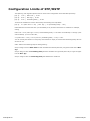
Configuration Limits of STP/RSTP........................................................................................................ 4-12
www.ipc2u.ru
www.moxa.pro