1
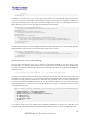
com.pushtotest.tool.ToolException: Error making SOAP RPC call:
No Deserializer found to deserialize a 'urn:ForeCast'
using encoding style 'http://schemas.xmlsoap.org/soap/encoding/'.
After further investigation, we realized we had to add additional logic to serialize the response that was
received. Serialization provides a means to map a component from one type to another. In our case,
we had to map from the XML schema type to a JavaBean representing the Forecast class. The following
code was added to handle this:
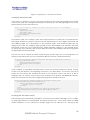
# Create a Bean Serializer
beanSer = BeanSerializer()
qName = QName("http://weather", "Forecast")
protocol.setMapTypes( Constants.NS_URI_SOAP_ENC, qName, Forecast, beanSer, beanSer
)
In the above code listing, the setMapTypes method is used to specify the mapping rule. The QName
variable indicates what XML schema type to use. In this case, we are looking for the Forecast type
defined within the “http://weather” namespace. The setMapTypes method then specifies that this XML
type should be mapped to our Forecast class, and further specifies that a basic BeanSerializer should be
used for the serialization. This can be done because the Forecast class was implemented as a
JavaBean.
Finally, we had to add the necessary code to contact the web service. We wanted to send the SOAP
request 100 times using a for loop. The following shows the code used to determine the average
response time after invoking the service 100 times:
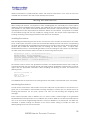
totaltime = 0.0
for I in range(100):
response = protocol.connect()
totaltime += response.getTotalTime()
print “Avg. Response Time=”, totaltime/100, “ ms to complete.”
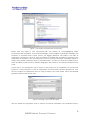
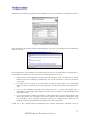
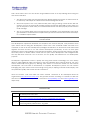
Before running the agent, we had to add the Weather.jar to the testmaker_home/testmaker/lib
directory and restart TestMaker. Successful calls to the weather web service appeared in the Output
window:
Figure 11. The results of the test run
©2003 H EWLETT -P ACK ARD C OMP ANY
21