1
DB006 G144A12 polyFORTH Supplement
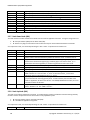
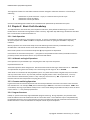
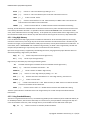
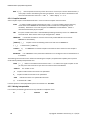
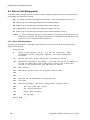
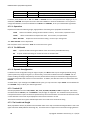
X! ( n da)
XC@ ( db - c)
XC! ( c db)
Stores a cell into extended memory.
Fetches a byte from an extended, 21-bit byte address.
Stores a byte into extended memory.
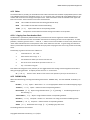
Extended memory is allocated by any task using the following words:
'XHI
A 2VARIABLE containing the cell address of the next available word of high memory.
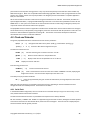
XHI ( -da)
XCREATE ( _)
XALLOT ( n)
returns the double precision cell address contained in 'XHI .
names a location at HIGH in high memory. Returns a da when executed.
reserves n cells in high memory by adding n to 'XHI . Crosses 64k word boundaries.
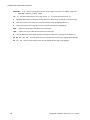
Memory display is simplified as follows:
~type ( db n)
TYPEs a string of n characters from anywhere in memory. Applies printability filter like
>MOVE and crosses any boundary.
XDUMP ( da n)
Displays at least n cells of data starting anywhere in memory, in rows of eight cells in
the current BASE followed by the same eight cells as sixteen bytes filtered for printability.
DUMP ( a n)
Uses XDUMP to display at least n cells from main or high memory.
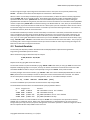
The basic system allocates only the top 2k words of Extended Memory (starting at hex F.F800) for use as a write buffer
by the SPI flash code.
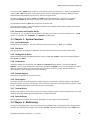
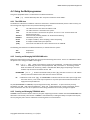
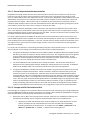
4.2.3 Character Operations
Despite having distinct cell versus byte addresses, usage is affected less than you might expect. Here is a quick tutorial
beginning with standard storage areas:
CORE ( -b)
returns the byte address of the start of PAD .
TIB ( - b)
returns the byte address of the terminal input buffer, two cells above the data stack.
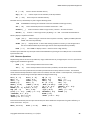
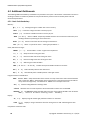
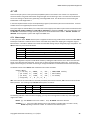
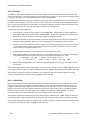
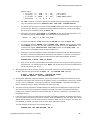
The addresses and counts produced and consumed by standard words are all by default in cell units. The standard
words that deal with byte addresses and/or counts are as follow; note that COUNT is a mixed operator, converting the
cell address of a counted string into the byte address and length of that string:
CELL ( b - a)
BYTE ( a - b)
EMIT ( c)
TYPE ( b n)
?KEY ( - c)
EXPECT ( b n)
SPACES ( n)
HOLD ( c)
CMOVE ( s d #)
<CMOVE ( s d #)
C+! ( c b)
(.) ( n - b n)
NUMBER ( b - n | d) FILL ( b n c)
XC@ ( db - n)
XC! ( n db)
(YYYY) ( u - a n) (TIME) ( d - a n)
-TRAILING ( b n - b n)
?DIGIT ( b - b 0 | b n 1)
-MATCH ( d n s n - b t)
C@ ( b - c)
MARK ( b n)
CORE ( - b)
#> ( d - b n)
.MOVE ( bs bd n)
(D.) ( d - b n)
HC@ ( b - n)
~type ( db n)
INTERPRET ( b n)
BLANK ( b n)
*DIGIT ( d b n - d
C! ( c b)
KEY ( - c)
COUNT ( a - b n)
TIB ( - b)
>TYPE ( b n)
CONVERT ( d b - d b)
HC! ( n b)
(DATE) ( u - a n)
STRING ( c)
b)
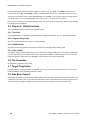
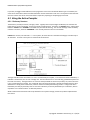
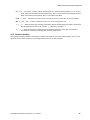
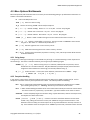
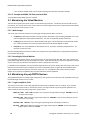
Some words occasionally used in a byte-oriented way have been classified as cell operators for greater efficiency, so
watch out for them. They are:
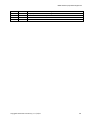
MOVE ( as ad n)
WFILL ( a n w)
Copyright© 2010-2011 GreenArrays, Inc. 9/23/12
ERASE ( a n)
23