1
Abstract
One of the best suggested solutions for prevention of severe‐slugging flow
conditionsatoffshoreoilfieldsistheactivecontroloftheproductionchokevalve.This
thesis is a study of robust control solutions for stabilizing multiphase flow inside the
risersystems;throughS‐riserexperimentsandOLGAsimulations.“Nonlinearity”asthe
importantcharacteristicofsluggingsystemposessomechallengesforcontrol.Focusof
thisthesisisononlinetuningrulesthattakeintoaccountnonlinearityoftheslugging
system.Themainobjectivehasbeentoincreasethestabilityofrisersystemsathigher
levelsofvalveopeningswithmoreproductionrates.
Similarresearchhasbeendonepreviously,butisrepeatedinthisthesisusingnew
systematic tuning methods. Three different tuning methods have been applied in this
thesis. One is Shams’s set‐point overshoot method developed by Shamsozzhoha
(ShamsuzzohaandSkogestad2010).TheotherisIMC‐(InternalModelControl)based
tuningmethodwithrespecttotheidentifiedmodelofthesystemfromclosed‐loopstep
test.ThelasttuningmethodissimplePItuningruleswithgainschedulingforthewhole
operating range of the system considering the nonlinearity of the static gain. The two
latter methods have been developed very recently by Jahanshahi and Skogestad
(JahanshahiandSkogestad2013).
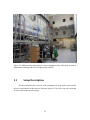
Twoseriesofexperimentshavebeencarriedoutusingamedium‐scaletwo‐phase
flow S‐riser loop. A single loop control scheme with riser‐base pressure as the
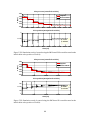
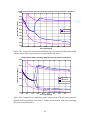
measurementwasused.Therobustnessofdifferenttuningmethodswascomparedby
slowlydecreasingtheset‐pointoftheclosed‐loopsystem,whichwastheinletpressure,
until instability was reached. The choke valve opening was increasing gradually by
decreasing the set‐point. A control with a robust tuning method can maintain system
stability in a large range of conditions. The choke valve was then replaced with a
quicker valve after the first set of experiments. The same experiments were repeated
andtheeffectofcontrolvalvedynamicswasinvestigatedthereafter.
The experiments were simulated in OLGA and the same control tests were
performed.TheOLGAcasewasconstructedbasedonthefirstseriesoftestswithvalve
1andthedesignedcontrollerswithdifferenttuningstrategieswereapplied.Resultsof
theexperimentsverifiedthoseofthesimulations.
The tuning method with the highest robustness was thus the one which could
stabilizethesystematthelargestchokevalveopening(thelowestinletpressure).The
besttuningmethod,withrespecttorobustnessisthesimplePItuningruleswithgain
scheduling for the whole operating range of the system. With this method, it was
possibletostabilizetheexperimentalrisersystemuptoachokevalveopeningof37%
from an open‐loop stability of 16 %. It was also able to stabilize the simulated riser
systemuntilachokevalveopeningof75%fromanopen‐loopstabilityof26%.
Top side measurements were in general difficult to use in anti‐slug control.
Measurement of the topside density using a conductance probe installation was not
successful.Therefore,nocascadeanti‐slugcontrolschemescouldbetested.
ii