1
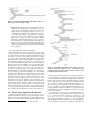
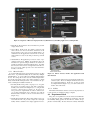
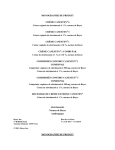
Figure 5: Artefact Description File for the Mirror (with Proximity Profile) of our example scenario.
2. Profile: Each profile represents a specific functionality and
implements the underlying logic of the functions, e.g. providing context by analyzing the attached sensors’ data or actuating an action by changing the artefacts’ state (e.g., increasing the lamp brightness etc.). Each profile is a sensor
or an actuator type and has a profile handler, a template to
plug device code and context calculation or service actuation
logic. Due to a variety of sensors and actuators, different
artefacts are augmented with different sensors or actuators
having different access and data semantics (like Smart-its [9],
Mote1 , etc.) Since the same functionality can be achieved by
different sensors and actuators, the profile handler has an abstraction layer that hides the heterogeneity of the underlying
device platforms.
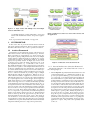
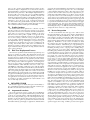
3.1.2 Documents to represent Artefacts
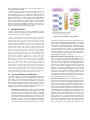
The artefact framework’s core is packaged as a ready-to-run binary with a description document, Artefact Description File (ADF)
as shown in Figure 5. This file contains the basic information about
the artefacts, e.g., name, vendor, profile specifications etc. Whenever a new profile is attached to that artefact, the corresponding
ADF is updated to reflect the added capabilities of the artefact. Profile is packaged as plug-ins that run atop the core and its services
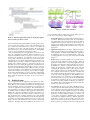
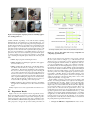
are expressed in a Profile Description File (as shown in Figure 6).
This file specifies the data semantics of the corresponding profile.
Each profile is a sensor or an actuator type. Therefore, the description file either contains a detector or an actuator node. The sensor
type profile’s description follows the specification of the Sensor
Modeling Language (SensorML)[15] (Figure 6 (a)) and expresses
profile’s output (e.g., data format, parameters, etc.). The primary
strengths of SensorML are its soft typed attribute, reference frame
and parameters, with which the semantics of different sensor data
platforms can easily be understood and interchanged. For an actuator profile, our custom designed Artefact Control Language is used
(Figure 6(b)) where the state attribute is used to abstract the operational states of the artefacts. This file specifies the required the input parameters and their data types to change artefact states. Each
profile description also contains a quality of service(QoS) block
which specifies the quality of the profile’s service. Adding a profile
to an existing artefact requires hardware attachment and installation of the plug-in implementing the profile atop the artefact core.
3.2 Task-Centric Application Framework
Usually pervasive middlewares [4, 17, 18] provide their own application model that the developers follow to utilize the environment resources. This dependency limits the deployability of the application. To create an infrastructure independent application that
1
http://xbow.com/products/wirelesssensornetworks.htm
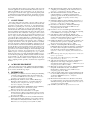
Figure 6: (a)Profile Description File for Proximity Profile. SensorML is used in the <detector> node. (b) Artefact Control
Language is used for actuator profile, only the <detector> node
is replaced with <actuator> node.
can still exploit the environment resources we utilize task specification of the applications. An application is expressed as a collection
of functional tasks independent of the implementation and infrastructure. This specification allows the FedNet runtime to map the
task to respective service provider artefacts. An application developer can follow any library and implementation language to code
the execution logic of the application. The only two things necessary for an application to run in a FedNet environment are: i) expressing application’s functional task list in a description file, and
ii) utilizing an access point to manipulate the artefact services using
generic web techniques.
Any application is composed of several functional tasks, e.g.
atomic actions. In pervasive applications, these atomic actions may
be: "get current light sensitivity","turn the air-conditioner on","sense
the proximity of an object" etc. We assume that each functional
task explicitly manipulates one artefact. So, one artefact might be
shared by multiple tasks but a single task can not use multiple artefacts. An application is expressed as a collection of such functional