1
fact, profile and application were difficult for the end users
to comprehend and differentiate. For them the artefact and
the application were the same, they could not separate the
application from the mirror. This causes confusion while installing the application (task 2) in thinking it was already installed when the mirror was added in task 1. This is reflected
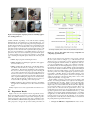
in the median time of 9 minutes taken for installing the application as well as in the corresponding average complexity as shown in Figure 13(a,b) They also had difficulties in
understanding what a profile is, as they associated the term
profile with someone’s background or record. So, they could
not correlate how a physical object could have multiple profiles, which also affected the performance in task 3 and 4 of
adding profiles as shown in Figure 13 (a,b). Since they could
not understand the notions clearly, it took time to install the
profile into the appropriate artefact. However, the hardware
installation was simple for them. These facts suggest that,
our current notions are not self explanatory to end users and
we need to provide a more comprehensive way of expressing
these concepts.
stallation is required. Although, our process is identical to
regular desktop computing, it has no similarity with home
appliances. Thus the participants found it conceptually hard
to think of the mirror as a piece furniture instead of a computer. This was further extrapolated by the fact that a tablet
PC was attached to the mirror which made them perceive the
mirror as a regular computer display. They suggested that the
software installation process should be absent, and that the
hardware installation should be the only task since it needs
manual intervention.
5. Instantaneous feedback is necessary: It is essential that
when a profile is added, the new functionalities are reflected
in the artefact instantly and erroneous installation is reported
immediately to confirm the users’ actions. In our current approach, the only way to realize a profile’s functionality is by
running the application. However, the participants were curious in knowing whether their action was successful instantly
after the installation. This missing feature caused frustration among the participants and was reported during the interview. This suggests that our artefact framework needs to
have an instant feedback facility for the users’ actions.
2. Installation process was difficult: Although, all the participants were familiar with the internet, they found it difficult
to use the web interface tool to install the artefact, the application and the profiles. Later interviews revealed that, it
was not because of the interface directly but the process to
accomplish a task, e.g. adding a profile, etc. Figure 13(a,b)
also reflects these facts, on an average 12.8 and 8.3 minutes
were required to add profiles with associated complexities
of 3.6 and 3.4. The end users mainly struggled in installing
the profile plugin, and we have found that the hardware installation was completed with less trouble. The end users
suggested that the process of profile deployment has to be
plug and play, when attaching the profile hardware the corresponding software should be installed with minimal intervention. This finding is crucial and has direct implications in
our future work.
3. Package with different options was preferred over the DIY
approach: Several participants pointed out that they can buy
a product with different functional granularity according to
their preferences. They concurred that the augmented artefact should be similar, for example: one mirror could be
packaged with a proximity profile and another with both profiles, etc. In this case they have the flexibility to buy different packages or to upgrade their existing package. Although,they agreed that the DIY approach is fun, interesting
and inexpensive, but it limits the acceptability of the product
to a mass population. A participant pointed out "I don’t think
my 58-year old mom could use your whole system. Maybe,
it was ok for me. But not for her. I don’t think she will be
able to attach sensors or even install anything. But she can
use the microwave, because it just works.....". Similar views
were received from other participants which indicate that the
DIY approach is suitable for a specific class of users familiar
with technology. These facts signify that to make augmented
artefacts available to a larger user base, packaging with variant options is needed. The incremental DIY approach can
further extrapolate the packaging scheme.
4. Balance with current practice is required: Participants
noted that when they buy furniture or home appliances, they
do not need any software installation. Usually they just plug
it in and it works. However, in our approach software in-
6. Intuitive hardware interface is needed: Considering, our
participants performances and subjective feedback, we concurred that the intuitiveness of the profile hardwares are essential for the success of the DIY approach. For example,
in our experiment, except for the floor sensor, all the sensors
had one cable that could be attached to the mirror. However,
there were two ports in the mirror for the cables and each
port was specific to a profile. 4 of the participants made mistakes in picking the right port (These cases are reflected in
the max values of Figure 13(a) for task 3 and 4) Although it
was clearly written in the manual, they did not consult it and
tried to do it intuitively. Of course, If the artefact is designed
without further augmentation such port or other hardware
interfaces need not be intuitive, however for a DIY approach
it is necessary that the hardware installation process is self
explanatory. Furthermore, we noticed that the participants
were quite serious about the aesthetics of the mirror while
attaching the sensors. Later interviews revealed that it is important for them to make sure that the overall appearance of
the artefacts matched their style. These facts suggest that the
manual had a minimum role in the DIY approach and that
the instrumentation has to be intuitive to the end users.
Although the feedback from the participants did not positively validate the current state of our approach from the usability perspective, we consider these results promising for future research on pervasive applications and augmented artefact deployment. However,
from a system point of view our approach provided stable performance and met the primary goals that we attempted to reach in this
work.
5.
DISCUSSION
For the purpose of discussion, we would like put forth a few
issues in this section.
5.1
Modality of End Users’ Support
One important discussion point is the type of support that is offered to the end users in our approach. The artefact framework is
a generic binary with the support for plugging-in multiple profiles.
So, a new artefact either with profiles or without profiles come with
a ready to run component that users can deploy using FedNet end