1
US 6,505,208 B1
3
4
wireless network, satellite network, infrared network, as
medium. The medium may include speech, typing, making
well as any combination thereof.
gestures, or moving of the computer mouse. The user
The system may employ visual 50, audio 60 touch sen
sitive 70, as well as infrared, heat, and power on/off switch
components having software sensors for detecting user
actions, when any user interacts with any of the distributed
computing devices, are provided. User actions may include
voice commands, gestures, computer mouse clicks, com
starting to speak, moving of the mouse, making gestures,
typing is the beginning of medium.
The user action segments are then indexed, compressed,
classi?ed and stored, as described in the above referenced
US. patent application Ser. No. 09/079,754, by module 82
(FIG. 2) and data from different users is compared at step
850 (FIG. 2). The comparison of data may involve the
puter keyboard strokes, touch-sensitive device touches and
other.
10
The data collected by sensors and collected at a server 80
is then analyZed by module 81. FIG. 2 shows the workings
of the analyZe module 81. First, the user actions needed to
achieve some goal are segmented at step 820 into user action
segments. Each user actions segment is then labeled at step
ments may be from the same user performing the same
command differently at different times, or from different
15 users.
830 with a purpose mark to denote one or several reasons for
a user to perform this particular action. A stored list of
purpose marks 831 contains the reasons for the user per
formed actions including: opening a terminal window, open
ing a ?le, closing a ?le, executing icons, performing
searches, executing operating system or application
commands, turning off devices, ?nding a network channel,
activating some command sequences to perform user action
sequences.
In FIG. 3, the cost of each user action segment is
20
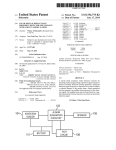
FIG. 4 shows the How of the prototyping and retrieval
steps of the present invention. After determining the user
action segment at step 820 and evaluating its cost at step
840, the user action segment is matched with the previously
stored action segment at step 851. All user action segments
produced at any time are compared with the stored segment
action. At step 852, if the new user segment action is
determined to be more ef?cient then the stored ones, the new
user segment action is stored in place of the old. If a user
25 segment action having the same purpose mark, was never
before performed and stored, the present user segment action
computed at step 840 by using a counter 845 and estimating
for example the complexity, length of the segment, amount
of distance a mouse is dragged, a type of input entry such as
a key press or mouse click, and the number of action units
into which the action segment may be split. The cost of an
action segment may be estimated as the complexity or
comparison of the purpose mark labels for different action
segments and the comparison of cost of action segments
having the same purpose marks. The compared action seg
is stored in a database 855. The user segment action may
also be pre-loaded in a database 855 by application experts.
30
If a determination is made, at step 853, that the action
segment retrieved from the database 855, has less cost than
the action segment produced by the target user, the descrip
tion of the more efficient action may be sent to that target
duration of the segment, and the number of action units into
user. The description sent, may be displayed on the user
which this action segment may be split.
terminal and played back over the user’s device’s audio
Action units may be keystrokes, 841, words or phonetic 35 means for example.
groups in a spoken phrase 842, elementary gestures 843 such
A classi?cation of the user actions may be performed by
as those described in a commonly owned, co-pending US.
patent application Ser. No. 09/079,754 now US. Pat. No.
6,421,453, entitled “Apparatus And Methods For User Rec
an interpreter module 83 (FIG. 1) having an ability to
15, 1998, the whole contents disclosure of which are incor
understand the meaning of the user action segments. The
interpretation module may include a semantic module, as
described in the above referenced US. patent application
Ser. No. 09/078,807, now US. Pat. No. 6,236,968 having an
porated herein by reference, and the elementary user func
tions 844 including Zooming in on an icon, displaying
ability to understand the meaning of phrases typed in or
spoken and of gestured. All action segments having the same
ognition Employing Behavioral Passwords”, ?led on May
top-down/up menus, opening and closing ?les, editing
functions, making graphic facilities functions, and drawing
40
goal or the same semantic meaning are classi?ed into one
45
a geometric ?gure. For example, a ?le open may contain the
following action units:
1. Click on a WordPro icon;
OUI-PWN
user is then noti?ed if there are simpler or alternative
. Click to select “SmartMaster”;
approaches for accomplishing the same task. The initial
steps or recipes may be created and stored in the database by
monitoring experts experienced in the use of the software.
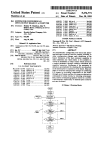
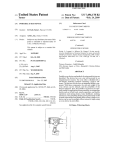
As shown in FIG. 5, the collected data is analyZed based on
application event patterns in various conditions and grouped
. Click OK;
. Click “File Open”;
. Click to select a ?le name; and
. Click on “Open”.
Furthermore, action units may constitute pressing a
55
label step 3, each user action segment is labeled with a
purpose mark containing the reason for the action. The step
4 evaluates cost of each user action and at step 5, the
sounds spoken into a audio input apparatus, a sequence of
gestures made into a camera and movements and clicks of a
60
action segment is a ?rst event necessary to start a given
segment action leading to the segment action goal. The ?rst
event for the given segment action is started when the end
of the previous segment action is reached, it is the onset of
a moment when the user turns on or starts to operate in some
into user actions at the analyZe step 1. The user actions are
then separated segments at the segmentiZe step 2. At the
sequence of keys on a keyboard, a selection of buttons on an
input device or positions on a touch screen, a sequence of
computer mouse. Each action segment is comprised of a
beginning and an end. The end of the action segment is the
event of the user goal achievement. The beginning of the
class.
When users attempt to achieve a task using any of the
devices connected to the inventive system, the system com
pares the steps followed with those saved in the database. A
65
archived actions are compared with the current user action.
At step 6 the user is advised about the availability of a more
ef?cient action, and at step 7 the more ef?cient action is
recorded in the database.
In one embodiment, the inventive system may change the
graphical characteristics of icons, windows, menu items, and
the like, to guide the user through ef?cient or alternate means
of accomplishing a task. For example, if the system has