1
36
CHAPTER 3. HOW TO RUN TURBOMOLE
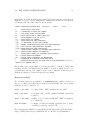
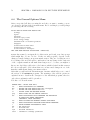
• other features, such as post–SCF methods need further action on the input,
using either the last menu of define where one can activate all settings needed
for DFT, TDDFT, MP2, CC2, etc. calculations (this is the recommended
way), or tools like Mp2prep or Rimp2prep. Please refer to the following pages
of this documentation.
3.1.4
Single Point Calculations: Running Turbomole Modules
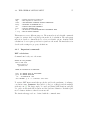
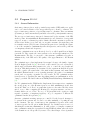
All calculations are carried out in a similar way. First you have to run define
to obtain the control file or to add/change the keywords you need for your purpose. This can also be done manually with an editor. Given a bash and a path to
$TURBODIR/bin/[arch] (see installation, Chapter 2) you call the appropriate module
in the following way (e.g. module dscf):
nohup dscf > dscf.out &
nohup means that the command is immune to hangups, logouts, and quits. & runs
a background command. The output will be written to the file dscf.out. Several
modules write some additional output to the control file. For the required keywords
see Section 18. The features of TURBOMOLE will be described in the following section.
3.1.5
Energy and Gradient Calculations
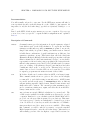
Energy calculations may be carried out at different levels of theory.
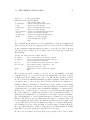
Hartree–Fock–SCF
use modules dscf and grad or ridft and rdgrad to obtain the energy and
gradient. The energy can be calculated after a define run without any previous runs. dscf and grad need no further keywords ridft and rdgrad only
need the keyword $rij. The gradient calculation however requires a converged
dscf or ridft run.
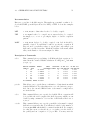
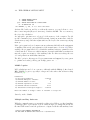
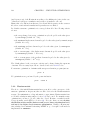
Density functional theory
DFT calculations are carried out in exactly the same way as Hartree–Fock
calculations except for the additional keyword $dft. For DFT calculations
with the fast Coulomb approximation you have to use the modules ridft and
rdgrad instead of dscf and grad. Be careful: dscf and grad ignore RI–K
flags and will try to do a normal calculation, but they will not ignore RI–J
flags ($rij) and stop with an error message. To obtain correct derivatives
of the DFT energy expression in grad or rdgrad the program also has to
consider derivatives of the quadrature weights—this option can be enabled by
adding the keyword weight derivatives to the data group $dft.
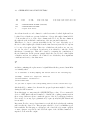
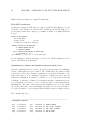
For a semi-direct dscf calculation (Hartree–Fock or DFT) you first have to
perform a statistics run. If you type