1
GeneChip® Expression Analysis Overview
Overview
C H A P TE R 1
GeneChip® Expression
Analysis Overview
The following major steps outline GeneChip® Expression Analysis:
1.
Target Preparation
2.
Target Hybridization
3.
Experiment and Fluidics Station Setup
4.
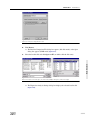
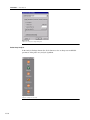
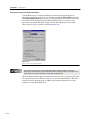
Probe Array Washing and Staining
5.
Probe Array Scan
6.
Data Analysis
Due to the differences in the RNA species between eukaryotic and prokaryotic organisms,
different target labeling protocols have been optimized for eukaryotic and E. coli samples.
Sections 2 and 3 provide detailed protocols for target preparation, hybridization, array
washing and staining for eukaryotic arrays and E. coli arrays, respectively. Please refer to
the sections in this manual for detailed protocols appropriate for your arrays.
Step 1: Target Preparation
This manual describes procedures for preparing biotinylated target RNA or cDNA from
purified eukaryotic and prokaryotic RNA samples suitable for hybridization to GeneChip®
expression probe arrays. These procedures are recommendations only. For more
information on these procedures, please contact Affymetrix Technical Support
at 1-888-DNA-CHIP.
For eukaryotic samples, using protocols in this manual Section 2, double-stranded cDNA is
synthesized from total RNA or purified poly(A)+ messenger RNA isolated from tissue or
cells. An in vitro transcription (IVT) reaction is then done to produce biotin-labeled cRNA
from the cDNA. The cRNA is fragmented before hybridization.
For E. coli samples, Section 3 describes a detailed protocol to isolate total RNA followed
by enrichment of messenger RNA. After fragmentation, the RNA is end-modified and
conjugated with biotin.
Step 2: Target Hybridization
A hybridization cocktail is prepared, including the fragmented target, probe array controls,
BSA, and herring sperm DNA. It is then hybridized to the probe array during a 16-hour
incubation. The hybridization process is described in the respective sections for the
different probe array types.
1.1.5