1
80
CHAPTER 4. THE PROLOG LANGUAGE
happen if the cut is reached), then the second will not conversely, if the second clause is to
succeed, then the rst one could not have succeeded, and the cut in it would not have been
reached.
In a CLP language, however, since instantiation of variables is not necessary (the predicate
can just constrain and backtrack upon failure), the cut would break the declarative semantics.
Green cuts are those which discard correct solutions which are not needed. Sometimes
a predicate yields several solutions, but one is enough for the purposes of the program|or
one is preferred over the others. Green cuts discard solutions not wanted, but all solutions
returned are correct.
For example, if we had a database of addresses of people and their workplaces, and we
wanted to know the address of a person, we might prefer his/her home address, and if not
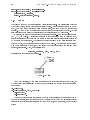
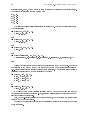
found, we should resort to the business address. This predicate implements this query:
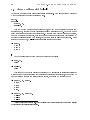
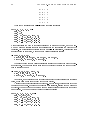
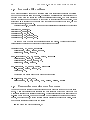
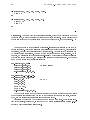
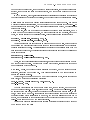
address(X, Add):- home_address(X, Add), !.
address(X, Add):- business_address(X, Add).
Another useful example is checking if an element is member of a list, without neither
enumerating (on backtracking) all the elements of a list nor instantiating on backtracking
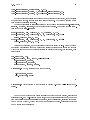
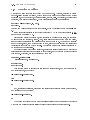
possible variables in the list. The membercheck/2 predicate does precisely this: when the
element sought for is found, the alternative clause which searches in the rest of the list is not
taken into account:
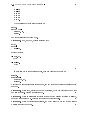
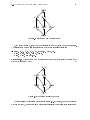
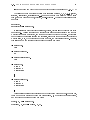
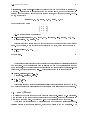
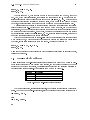
membercheck(X, X|Xs]):- !.
membercheck(X, Y|Xs]):- membercheck(X, Xs).
Again, it might be interesting in some situations, mainly because of the savings in memory
and time it helps to achieve. But it should be used with caution, ensuring that it does not
remove solutions which are needed.
Red cuts, nally, both discard correct solutions not needed, and can introduce wrong
solutions, depending on the call mode. This causes predicates to be wrong according to
almost any sensible meaning.
For example, if we wanted to know how many days there are in a year, taking into account
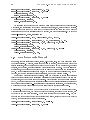
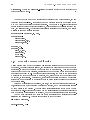
leap years, we might use the following predicate:
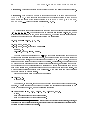
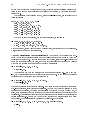
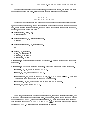
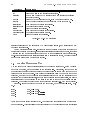
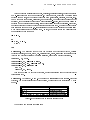
days_in_year(X, 366):- number(X), leap_year(X), !.
days_in_year(X, 365).
The idea behind is: \if X is a number and a leap year, then we succeed, and do not need
to go to the second clause. Otherwise, it is not a leap year". But the query ?- leap year(z,
D) succeeds (with D = 365), because the predicate does not take into account that, in any
case, a year must be a number. It is arguable that this predicate would behave correctly if
it is always called with X instantiated to a number, but the check number(X) would not be
needed, and correctness of the predicate will then be completely dependent on the way it is
called|which is not a good way of writing predicates.
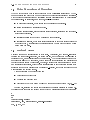
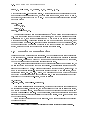
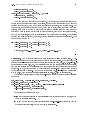
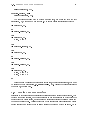
Another example is the following implementation of the max/3 predicate which works out
the maximum of two numbers: