1
somehow obtain the ground truth model of the configuration space, then in order to manipulate the configurations
for testing and debugging, we need mechanisms to automate
this process, as well as ways to capture which configuration
was active during a failure. Again, we have learned that the
complexity of real software makes this difficult – configurations can be modified and viewed from multiple locations,
and are found in both dynamic and static structures. Finally, we have discovered that it is possible for the static
structures to be out of synchronization with the dynamic
ones at the time of failure.
In this paper we attempt to uncover and quantify the extent to which these problems exist on an industrial scale. We
empirically examine several large highly-configurable applications to understand the implications for testing and debugging in practice. We study one industrial application
and two widely used open source applications. We quantify the size of the configuration space and evaluate where
and if the ground truth for the configuration model exists.
We also examine how a user, tester or maintenance engineer can manipulate the configuration options. Finally, we
examine the runtime factors involved in capturing the current configuration space. Our study shows, somewhat surprisingly, that both the industrial and open source applications have elements of configurability in common, which
leads to a set of lessons learned and a roadmap for developing configuration-aware testing and debugging tools. We
see this study as a way to share with practitioners the issues
configurability brings, and a springboard to accurate and usable configuration-aware testing and debugging techniques.
The contributions of this work are:
1. An abstraction of the general structure of configuration manipulation in modern software systems
2. A case study that quantifies the complexity of three
modern highly configurable software systems
3. A set of lessons learned that will help practitioners to
better understand and control configuration instances
for software engineering tasks such as testing and debugging
The rest of this paper is structured as follows. In the next
section we present some motivating examples motivating our
study. In Section 3 we present our case study. Results are
then given in Section 4, followed by lessons learned in Section
5. We highlight related work in Section 6 and conclude and
present future directions in Section 7.
2.
MOTIVATION
A configurable system is a software system with a core
set of functionality and a set of variable features which are
defined by a set of configuration options (or preferences).1
Changes to the value of a preference changes the program’s
behavior in some way. For instance, Firefox, a popular web
browser, is a highly-configurable system and one that we use
to motivate some of the problems that we have encountered.
In Firefox, an example configuration option that can be set
via the option menu is called Warn me when closing multiple
tabs. This is a Boolean configuration with two values, {true,
false}. Its default value is set to true which means that if you
try to close a window when multiple tabs are open, you will
1
In the remainder of this paper, we use configuration option
and user preference interchangeably.
get a warning asking if you want to close all of the tabs. If
you uncheck this on the menu (set it to false) it will prevent
a warning from being produced and immediately close the
window. The actual preference name for this (found in the
preference file) is called browser.tabs.warnOnClose. There
is another closely related preference in the preference files
called browser.tabs.warnOnCloseOtherTabs which is set to
true by default, but has no menu counterpart. When testing the system, or when a failure occurs, we need to have
information about the values that were selected for each of
these configuration options, something that may not be obvious by examining just the menu alone.
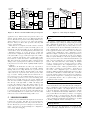
We assume an idealized use case for testing and debugging
as shown in Figure 1. In this scenario we have three entities
that interact with the configurable system. The end-user
can modify configurations and will send bug reports to (and
possibly read reports from) customer support. As can be
seen in the figure, he or she may use the menu, or they can
directly write to configuration files. A set of configurationaware techniques and tools sit between the application and
the tester and maintenance engineer, which feed information about configurations back to the bug reporting/customer support system. The challenge is to enable these
configuration-aware techniques. We have identified three
important requirements. We need
1. a Model of the possible configuration space. In order
to sample the configuration space for testing or debugging, the configuration model needs to be known,
2. to Know the Mapping of the configuration space to
programmatic elements. This is required in order to
understand the impact a configurable item can have,
and to automate the modification of configurations for
testing and bug reproduction, and
3. an Accurate Configuration Snapshot to provide
the full state of the application when a bug is encountered.
configura)on*
environment*
applica&on)
configura*on+aware!
techniques!
and!tools!
Test
Engineer
End- User
bug)report)
customer)support)
Maintenance
Engineer
Figure 1: Configuration-aware testing and debugging: expected use case
We examine each of these requirements in relation to the
existing work. Configuration-aware testing techniques [5,
10,21] propose various methods to sample and prioritize the
configuration space for testing, but all of this work assumes
that the configuration model is known (or is somehow extracted from the code). Based on our informal examination
of systems like Firefox, we do not believe that this can be
easily achieved. First, we have discovered that the configuration control is not found within a single location of the
code or in specific external files. In fact, most of the systems