1
we have studied have a multi-tiered layout of how configurations are defined and accessed and this can be done both
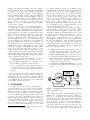
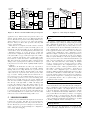
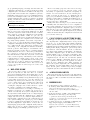
offline and at run time. Figure 2 shows a schema that represents all of the systems we have studied. First, there is
a static view of the system (labeled #1). This includes any
existing user manuals, web pages, etc. that contain documentation on the possible configuration options and their
values. This often is incomplete or out of date (see our discussion of hidden or dead preferences in Section 5). The
second static element is the source code itself. This contains
the ground truth, but source code may not be available to
everyone who wants and needs to understand the configuration model. Moreover, as we shall see, using this to extract
the full configuration space is non-trivial.
When controlling what configurations are set, there are
usually external mechanisms (#2 in Figure 2) such as preference files or databases. These can often be accessed independently of the program (even while it is running) and
therefore may or may not contain the current state of the
configurations. We have also seen that these may not contain the ground truth of the configuration space.
Finally, as is shown in #3, there are usually some runtime access mechanisms that connect to the internal data
structures (or database). For instance, most programs have
a menu system that allows the user to set preferences, but in
the systems we have studied this accounts for only a subset
of the full set of configurations. Other specialty tools exist
such as the about:config mechanism of Firefox, that allows
one to pull up a web page where configurations can be modified dynamically. Again, these may not show the complete
set of configuration options that are available. There may
also be an API to allow programmatic access to an internal
memory structure (such as the hash table in Firefox). This
should be the ground truth of what preferences are set at any
point in time, but it will not contain the hidden preferences.
2
1
Static View
External Control
Preference%Files%
Database%
User%Manual%
3
Source%
Code%
Runtime Access
Preference%Menu%%
Database%or%
Memory%
Specialty%Tools%
Figure 2: General view of configuration layers
Suppose instead of using the menus or preference files, we
want to extract the preferences from the code itself, which
also helps to build a mapping between the configuration
space and code. Rabkin et al. [23,24] presented techniques to
statically analyze Java programs with JChord. Upon studying their work in more detail, we find that it does not directly
apply to a system like Firefox. First, it assumes a single programming language (Java); second, they assume all of the
preference manipulation code exists as (name, value) pairs
and is found in a single class; and finally, they assume that
configuration manipulation methods start with get or set.
As shall see, these assumptions do not hold for any of the
applications we studied. For instance there are instances in
Firefox where the preference code includes JavaScript and
other languages such as the markup language XUL. We see
instances where the Javascript API is able to query and
update a preference, however, it uses the XUL code as a
reference to the given preference name (binding it to a user
interface element). We also see preference code that is not
using the (name, value) pair mechanism but instead uses
references, macros, or member fields to refer to the preference name. Another issue that we have encountered is that
the API method names of Firefox do not always start with
get or set. We need more different techniques if we plan to
extract all of these configuration options from the code.
Finally, if we are concerned with knowing the current state
of the configuration space at some point in time, we need a
technique that captures an accurate configuration snapshot at runtime. Indeed it may not be straightforward to
get this information from the system. In some of the applications we have studied (Firefox and LibreOffice), when
the user modifies a preference value dynamically through
the option menu, the change is reflected immediately in the
dynamic memory and preference files. However, in our industrial application, the change made by the user will be
stored temporarily and the new preference will take place
on the next startup. Therefore the running configuration
and the one reflected in the persistent memory after the application closes may be inconsistent.
Faced with the complexity that we have described informally so far, we want to quantify how often we see these
problems with the aim of developing a generic model of
how modern highly-configurable software is structured and
manipulated. We also want to know if there is a ground
truth for the configuration model and dynamic configuration
states in modern configurable systems. We next present a
case study that we have developed for this purpose.
3.
CASE STUDY
Our study has two main objectives. First, we want to
quantify the complexity of the configuration space and what
mechanisms are used to define and manipulate this space.
Second, we want to understand what are the challenges that
we will face as we develop configuration-aware testing and
debugging techniques. To address these issues we will center
our study around answering the following research questions.
RQ1: What is the complexity of the configuration space in
modern configurable software systems?
RQ2: How are configuration options structured, changed
and accessed by the user in these systems?
RQ3: Are the selected configuration options synchronized
between the different parts of the system and throughout the
lifecycle of program execution?
3.1
Software Subjects Studied
We have selected three different software systems to study.
The first is a large real-time embedded software system developed at ABB (called ABBc hereafter). ABBc has approximately 10 Million lines of code, is highly-configurable,
and has more than 58 modules; each module defines a subsystem that implements a different set of functionality of the
system. The second subject, Firefox [19], is an open source
web browser which works on multiple operating systems and
has over 300 Million users worldwide and over 9.6 Million