1
1. - User Manual
1.1 Introduction
This manual will show all the capabilities and functionalities of STAC. Some
representative examples of the code will be discussed in detail in order to point out and
avoid errors frequently committed by users.
STAC stands for "Stochastic Analysis Computation" and consists of three well defined
stages: The project definition, where the stochastic variables are defined, the
execution definition of the deterministic code and finally the statistical representation of
the generated data.
1.3 Project Definition
1.3.1 Introduction
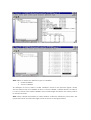
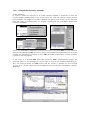
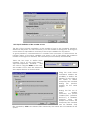
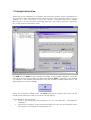
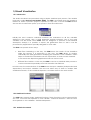
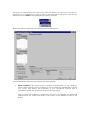
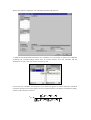
A stochastic problem is defined with STAC via the GUI (Graphic User Interface) called
Problem Definition Module (PDM). In order to define the first stage of any stochastic
process, the user first needs to analyze a deterministic process and obtain all solution
files. This means the complete problem has to be executed using all solvers involved
and all I/O files have to be generated. All this information (deterministic analysis) is
necessary, so that later the stochastic analysis can be defined with STAC.
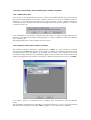
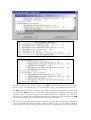
The deterministic I/O files are the basis to define the stochastic variables, their format
and the distribution type for the input variables. For the output variables a statistical
register is defined and initialized.
MDP