1
Mar. 1, 2007
US 2007/0047707 A1
analyzing the causes of such problems of the known system,
Which identifying and analyzing are part of the present
invention;
[0014]
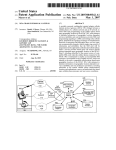
FIG. 3 depicts an environment of one or more
[0028]
FIG. 15 is a schematic shoWing of the functionality
of an International Service Federation or Clearinghouse to
coordinate the use of an MTAC IPG Cradle domestically and
When traveling abroad;
subscribers to the present embodiment, taken from the
vieWpoint of the subscribers, Who are the communication
service users, according to an embodiment of the present
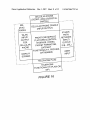
[0029] FIG. 16 is a schematic representation of the major
components of the MTAC IPG Cradle; and
invention;
improves quality of service by reducing the number of
end-to -end transcodings stages performed Within the system.
[0015] FIG. 4 depicts components of the subscriber envi
ronment of the present embodiment, particularly the MTAC
Cradle and the separate, partially built-in, or built-in plat
form enabling features provided by the present embodiment
in interacting With various networks;
[0016]
FIG. 5A depicts a cellular device, particularly a
cellular phone, nestled in an MTAC Cradle according to one
embodiment, With the cellular phone having an electrical
connection With the MTAC Cradle via a physical plug that
unplugs upon removal of the cellular phone;
[0017] FIG. 5B depicts the electrical connection betWeen
the MTAC Cradle and the cellular phone and shoWing a cord
that is part of the connection;
[0030]
FIG. 17 is diagram of a cellular netWork Which
DETAILED DESCRIPTION OF THE
PREFERRED EMBODIMENTS
[0031] Referring noW to the draWings, Wherein like ref
erence numerals designate identical or corresponding parts
throughout the several vieWs.
[0032]
The user environments depicted in FIGS. 1 through
3 are not intended to connote completeness. For the purpose
of those ?gures, such user environments constitute an exem
plary subset of the access and devices useable With the
present invention. A more detailed con?guration of the
environments of FIGS. 1 to 3 Would include additional
devices such as PCs and other home-netWorked devices.
These additional devices, When present, are connected
[0018] FIG. 5C depicts an electrical connection for inter
connecting the MTAC Cradle With the cellular phone and
shoWing a cordless connection that is part of the intercon
through a Wired or Wireless LAN and a router or a sWitch
necting of the cellular phone and the MTAC Cradle;
[0033]
[0019] FIG. 6 is a schematic representation of the interface
betWeen the MTAC Cradle and the cellular phone, Which in
environment 100 that includes a plain telephone 101 (aka a
one embodiment is the electrical connections of FIGS. 5A
and 5B for Wire link and cordless connections;
[0020]
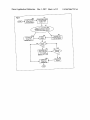
FIG. 7 is a How diagram of the operation of one
embodiment, Wherein the MTAC Cradle, platform and cel
lular-phone registration process extends the service interna
tionally;
[0021] FIG. 8 is a How diagram of the operation of one
embodiment of a Service Platform controlling the making of
(not shoWn).
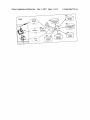
FIG. 1 depicts a user’s telecommunication access
POTS telephone) connected to the PSTN 120, a cellular
phone 107 connected to a cellular netWork 110, and another
Plain Telephone 103 connected to the PSTN 120 by Way of
a MTA 105 and an IP-netWork 115. Cellular phone 107
communicates using at least one desired session type, eg
voice, messaging, Web, and audio or video streaming. Alter
natively, Plain Telephones 101 and 103 may instead be
single, 2-line instruments, Where one line is connected to the
MTA, and the other is connected directly to the PSTN (using
an analog or ISDN connection).
outgoing calls, from the Subscriber Environment, When the
cellular phone is in the MTAC cradle;
[0034] MTA 105 may make Plain Telephone 103 the
equivalent of a Session Initiation Protocol (SIP) phone, such
[0022] FIG. 9 is a How diagram of the operation of one
embodiment of a Service Platform controlling the making of
to the description in the Internet Engineering Task Force
outgoing calls, from the cellular phone 307, When the
cellular phone is not in MTAC Cradle 305;
[0023] FIG. 10 is a How diagram of the operation of one
embodiment of a Service Platform controlling incoming
calls to the subscriber’s “one number”;
[0024] FIG. 11 is a How diagram of the operation of one
embodiment functioning as a personal gateWay;
as a Voice over Internet Protocol (VoIP) phone conforming
(IETF) Request For Comment (RFC) 3216 and related
RFCs. Phone 103 (or phone 103 and MTA 105) may
alternatively be a general-purpose computer With corre
spondingly conforming softWare. The access to Internet
Protocol (IP) NetWork 115, a special case of packet netWorks
in general, may be provided through a Wired or Wireless
transmission link. In the end-user environment of FIG. 1,
separate relationships are usually established With the pro
viders of each netWork (packet IP NetWork 115, Public
[0025] FIG. 12 shoWs the MTAC IPG (IP GateWay) Cradle
SWitched Telephone NetWork (PSTN) 120, and Cellular
NetWork 110).
as a personal, multimedia IP communications (VoIP) por
table gateWay, Which can accompany the subscriber abroad;
[0035] In certain cases, service providers offer cross
access-netWorks synergistic value. For example, based on a
[0026]
user-tunable set of rules, some providers of packet telephony
permit the redirection of incoming calls to the user’s cellular
FIG. 13 shoWs a knoWn MTA IPG;
[0027] FIG. 14 shoWs further details of a MTAC IPG
Cradle 1430, Which is similar to MTAC IPG Cradle 1230,
but additionally includes a built-in DSL modem supplanting
phone through the cellular netWork 110. Currently knoWn
MTAs permit selecting the access netWork used for outgoing
or supplementing broadband connectivity mechanisms such
access depending on the MTA sWitch settings and/or a
user-tunable set of rules. These rules alloW the user to trade
as Ethernet.
calls betWeen packet-netWork 115 and PSTN 120, With