1
Mar. 1, 2007
US 2007/0047707 A1
[0069] In the FIG. 6 signaling interface, examples of
information signaled from the MTAC Cradle 305 to the
cellular phone 307 include the following: Go off-hook or Go
on-hook; Probe for cellular phone identi?cation; Accept dial
string from MTAC Cradle 305; Push dial string and initiate
conversation; Initiate or terminate media-stream sharing
With the MTAC Cradle 305; Exchange analog media or
exchange encoded digital media (optional); Add or terminate
a party for multi-party conferencing; and Subscriber Iden
ti?cation Module (SIM) programming-process instructions.
[0070]
In the FIG. 6 media interface, the media exchanged
betWeen the MTAC Cradle 305 and the cellular phone 307
may be analog and/or digital (data and/or encoded voice).
For example, the media may be: digitally encoded GSM
(e.g., voice) media or analog voice media, With a signaling
interface, Which permits a plain telephone 103 to access the
cellular netWork via the cellular telephone 307. (GSM
[0072] In the FIG. 6“DC poWer” interface, the MTAC
Cradle 305 may preferably supply exotic poWer and voltage
requirements as might be required for secure SIM program
ming; this provides another method to program the most
secure portions of SIM cards, Where OTA is insufficient for
the required security. Thus, OTA can be used for run-of-the
mill, normal updates of the SIM card by the original
provider of the Cell phone, Whereas exotic poWer and
voltage requirements may be used to program the more
secure information embedded in the SIM card, e.g., the
transition from one cellular carrier to another.
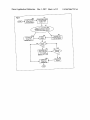
[0073] Case 1: FIG. 8 depicts an example ofthe process of
making outgoing calls from the Subscriber Environment.
[0074] User preference (as probed in step 802) is embed
ded in the MTAC Cradle 305 prior to the making of an
outgoing call as described herein. User preference is estab
lished through manual subscriber/user input or manual
formerly stood for Group Special Mobile and today stands
manufacturer’s input; input is preferably through, for
for Global System for Mobile Communication, Which is a
example, a keyboard, sWitch(es), touch pad, voice com
mand, softWare (for example, a Website hosted for this
purpose by MTAC Cradle 305), ?rmWare, and other hard
standard digital cellular phone service in many countries)
Digitally encoded media require compatible codecs (coders/
decoders) for sessions involving analog devices or mis
matched digital devices. GateWay devices (such as MTAC
Cradle 305) are used to encode and packetiZe analog voice
and/ or image and video media. Most cellular phones contain
Ware of the MTAC Cradle 305 during use, manufacture,
provisions for exchanging analog media, because they must
step 801 directly. In the illustrated embodiment, the Service
Platform 435, SoftSWitch & GateWays 430 and SIP Proxies
interface to analog devices enabling hands-free mode use in
cars.
[0071] In SIM Programming: the data listed above as
examples of the “signaling” interface enables the secure
programming of the SIM card residing in, for example,
GSM “World Phones”. When a subscriber travels to an area
that is served by a partnering cellular-service carrier, the
SIM card embedded in the cellular phone 307 is replaced by
one provided by the partnering carrier. In another preferred
embodiment, the SIM card can be reprogrammed to operate
in the geopolitical area covered by the partnering carrier. In
general, a SIM Module embedded in a cell phone can be
OTA (Over-The-Air) programmed by the cellular carriers
that it is directly associated With. The programming of the
present embodiment introduces security considerations not
normally present. The SIM may need to be provisioned for
operation by a cellular-service operator that has not origi
nally provisioned the cell phone. In one such more secure
preferred embodiment, the MTAC Cradle 305 is capable of
programming the SIM Module embedded in cellular phone
307 When the latter is physically connected to the cradle
(FIGS. 5A or 5B). In another preferred embodiment, the
OTA method is folloWed, but only if, concurrently, the
MTAC Cradle provides a SIM-unlocking signal provided by
Service Platform 435. The availability of tWo separate
communication channels (the cellular netWork and the IP
network), improves the probability that the SIM Will be
programmed in the appropriate, authenticated cell phone as
part of this embodiment. In another preferred embodiment
and/or time of sale or lease.
[0075]
The programmed process may be started in any
number of conventional Ways of initiating a call or started by
425 are built into or resident in the module of the MTAC
cradle 305, but one or more or all of their functions may be
separate from the MTAC cradle 305 and executed at the
same or remote locations. In any event, the present invention
(e.g., using the Service Platform 435) performs the example
process of FIG. 8.
[0076] STEP 801: The user keys the dial string into plain
telephone 103. The MTAC Cradle 305 previously received
an earlier indication of user preference between: I) forced
use of a particular netWork; and 2) automatic program
determination of netWork choice.
[0077]
STEP 802: The MTAC Cradle 305 captures the
dialed string from the Plain Telephone 103, and probes the
presence and status of a connected cellular phone, and the
user’s manual input choice of: l) cellular netWork 110, 2) IP
netWork 115, or automatic program determination of net
Work choice. If there is no cellular phone connected (Wired
or Wirelessly) to the MTAC Cradle, or if the user preference
calls for forcing an IP call, the process proceeds to step 804.
If the user preference calls for forcing a cellular call, the
process proceeds to step 808. If the user preference indicates
automatic program determination of a netWork choice, the
process proceeds to step 803.
[0078] STEP 803: The MTAC Cradle 305 signals to Ser
vice Platform 435 via IP NetWork 115.
tary fractions of encryption and decryption keys. This aspect
[0079] The signal contains the MTAC Cradle’s identity,
current IP address, the string to be dialed, the presence (if
any) and status of the connected cellphone, and the nature of
of the invention only applies to cellular devices that enable
the signal (i.e., “choose best netWork”). Though the Service
SIM-card programming. The MTAC Cradle 305 can cord
Platform and the SIP proxies are associated With the MTAC
Cradle on provisioning, the association can be repro
the tWo separate channels are used to exchange complemen
lessly (FIG. 5C) transmit SIM programming information to
cellular phones 307 that are capable of altering their SIM
programs in response to Wireless instructions.
grammed as needed through hardWare/softWare residing at
service-provisioning centers.