1
US 20030004934A1
(19) United States
(12) Patent Application Publication (10) Pub. No.: US 2003/0004934 A1
(43) Pub. Date:
Jan. 2, 2003
Qian
(54) CREATING AND MANAGING PORTABLE
USER PREFERENCES FOR
PERSONALIZION OF MEDIA
CONSUMPTION FROM DEVICE TO DEVICE
(76) Inventor: Richard Qian, Camas, WA (US)
Correspondence Address:
BLAKELY, SOKOLOFF, TAYLOR & ZAFMAN
LLP
Seventh Floor
12400 Wilshire Boulevard
Los Angeles, CA 90025-1026 (US)
Publication Classi?cation
(51)
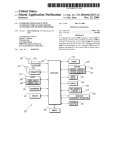
Int. Cl? ..................................................... .. G06F 7/00
(52)
US. Cl. ................................................................ .. 707/3
(57)
ABSTRACT
A method and apparatus are provided for creating and
managing portable user preferences for personalized media
consumption. According to one embodiment of the present
invention, a set of user information is captured and stored on
a portable medium, such as a smart card, compatible With
various media devices. Such use of a portable medium
(21) Appl. No.:
09/895,431
makes the information accessible to multiple devices.
Finally, the portable medium may used to tailor user pref
erences according to the device chosen by the user, and may
(22) Filed:
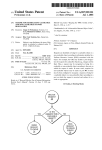
Jun. 29, 2001
be dynamically updated as user preferences change.
Read Only
Mass Storage
Memory
Device
M
Cursor
Control
Device
Processor
Communication
Device
Patent Application Publication
Jan. 2, 2003 Sheet 1 0f 8
US 2003/0004934 A1
@295:02
>20U81
co?Ez
mm?
@250
v959m
Patent Application Publication
Jan. 2, 2003 Sheet 2 0f 8
US 2003/0004934 A1
5 25 $52
g
2360
g
QL/
/
NmSmE
$250
Patent Application Publication
mESQo
Jan. 2, 2003 Sheet 3 0f 8
US 2003/0004934 A1
own
n0.59“
mtE wO mg
AH
can
Patent Application Publication
Jan. 2, 2003 Sheet 5 0f 8
END
Ema
Tcoznqwmc
US 2003/0004934 A1
Patent Application Publication
Jan. 2, 2003 Sheet 6 0f 8
US 2003/0004934 A1
User inserts the smart card
into a device of choice
505
l
Identify the user
510
l
Identify the device
515
l
Identify user preferences
associated with the device
520
l
Track user pattern and
gather usage data
525
l
Analyze the data
530
Manage and con?gure the
analyzed data (meta
description) and manually
entered data, if any.
535
Yes
by analyzed?
540
Update user preference s
545
l
Store data
550
Figure 5
Patent Application Publication
Jan. 2, 2003 Sheet 8 0f 8
US 2003/0004934 A1
Analyze data using separate
templates corresponding to
each device
705
V
Manage and con?gure the
analyzed data
710
Integration of data’?
71 5
Generate an integrated
template
Update user preferences
720
745
Integrate the data using the
integrated template
Store the segéigegated data
725
Update user preferences
Display the segregated data
730
755
Store the integrated data
735
Display the integrated data
740
-
Figure 7
Jan. 2, 2003
US 2003/0004934 A1
CREATING AND MANAGING PORTABLE USER
PREFERENCES FOR PERSONALIZION OF MEDIA
CONSUMPTION FROM DEVICE TO DEVICE
[0008] FIG. 1 is a block diagram of a typical computer
system upon Which one embodiment of the present invention
may be implemented;
COPYRIGHT NOTICE
[0009] FIG. 2 is a block diagram illustrating an exemplary
netWork upon Which the present invention may be imple
[0001] Contained herein is material that is subject to
copyright protection. The copyright oWner has no objection
to the facsimile reproduction of the patent disclosure by any
person as it appears in the Patent and Trademark Office
patent ?les or records, but otherWise reserves all rights to the
copyright Whatsoever.
FIELD OF THE INVENTION
[0002] This invention generally relates to the ?eld of
personaliZed media, and more speci?cally to dynamically
updating user preferences and transporting such preferences
from one entertainment device to another.
BACKGROUND OF THE INVENTION
[0003]
Setting user preferences on an electronic device is
nothing neW. There are several Ways to update and store user
preferences on a given device, and the devices are becoming
increasingly smart and easy to use. HoWever, the methods
and devices available today are not mature enough to
dynamically update user preferences. Additionally, the pref
erence settings are not from device to device.
[0004]
mented;
[0010] FIG. 3 is a block diagram illustrating an overvieW
of a process for communicating user preferences using a
smart card, according to one embodiment of the present
invention;
[0011] FIGS. 4a and 4b illustrate components of a per
sonaliZed media consumption system, according to one
embodiment of the present invention;
[0012] FIG. 5 a How diagram illustrating personaliZed
media consumption system processing, according to one
embodiment of the present invention;
[0013] FIG. 6 is a block diagram illustrating components
of a personaliZed media consumption system including
integration of data, according to one embodiment of the
present invention;
[0014] FIG. 7 is a How diagram illustrating a process of
personaliZing and integrating user information in a media
consumption system, according to one embodiment of the
present invention.
DETAILED DESCRIPTION
For instance, a user’s favorite television (TV) net
Work or channel settings cannot be transferred betWeen tWo
or more television sets or set-top boxes. Similarly, a user’s
preferences or favorite settings for Web broWsing or MP3
music selection may not be transferred When the user
sWitches devices or even the program for sur?ng the Web.
[0015] A method and apparatus are described for creating
and managing portable user preferences for personaliZed
media consumption. Broadly stated, embodiments of the
present invention alloW user preferences to be dynamically
Moreover, the methods and devices available today do not
updated for personaliZed media, and support portability
dynamically update user preferences, and therefore, require
manual updating.
[0016]
[0005]
An example of a user preference-setting device is
TIVO. TIVO uses a centraliZed system to collect informa
tion on users and updates such information from time to
time. HoWever, TIVO fails to recogniZe individual users,
and instead, maintains information on a household-basis.
Further, the information maintained by TIVO is not portable
from device to device, and is only applicable to TIVO, and
used for marketing purposes.
[0006] To obtain portability, typically a card can be used
as a portable media. Cards With magnetic tapes, hoWever,
only hold limited information. Microprocessor-embedded
smart cards can be programmed and personaliZed With
users’ information. HoWever, the smart cards available
today are also limited in at least the folloWing three Ways:
from device to device.
According to one embodiment of the present inven
tion, a set of user information is captured and stored on a
portable medium, such as a smart card, compatible With
various media devices. Such use of a portable medium
makes the information accessible to multiple devices. Fur
ther, the portable medium may be used to tailor user pref
erences according to the device chosen by the user, and may
be dynamically updated as user preferences change.
[0017] In the folloWing description, for the purposes of
explanation, numerous speci?c details are set forth in order
to provide a thorough understanding of the present inven
tion. It Will be apparent, hoWever, to one skilled in the art
that the present invention may be practiced Without some of
these speci?c details. In other instances, Well-knoWn struc
tures and devices are shoWn in block diagram form.
(1) information on a smart card is limited to What the issuer
[0018] The present invention includes various steps,
Wants to input; (2) the information is maintained and
updated by the issuer; and (3) accessibility is limited to one
type of device, such as an ATM, selected by the issuer, and
therefore, the smart card is not portable.
Which Will be described beloW. The steps of the present
invention may be performed by hardWare components or
may be embodied in machine-executable instructions, Which
BRIEF DESCRIPTION OF THE DRAWINGS
processor or logic circuits programmed With the instructions
to perform the steps. Alternatively, the steps may be per
formed by a combination of hardWare and softWare.
[0007]
The appended claims set forth the features of the
invention With particularity. The invention, together With its
advantages, may be best understood from the folloWing
detailed description taken in conjunction With the accom
panying draWings of Which:
may be used to cause a general-purpose or special-purpose
[0019] The present invention may be provided as a com
puter program product, Which may include a machine
readable medium having stored thereon instructions Which
may be used to program a computer (or other electronic
Jan. 2, 2003
US 2003/0004934 A1
devices) to perform a process according to the present
invention. The machine-readable medium may include, but
is not limited to, ?oppy diskettes, optical disks, CD-ROMs,
and magneto-optical disks, ROMs, RAMs, EPROMs,
EEPROMs, magnetic or optical cards, ?ash memory, or
other type of media/machine-readable medium suitable for
processor, such as processor 102, in alternative embodi
ments, the steps may be fully or partially implemented by
any programmable or hard-coded logic, such as Field Pro
grammable Gate Arrays (FPGAs), TTL logic, or Application
Speci?c Integrated Circuits (ASICs), for example. Addition
computer to a requesting computer by Way of data signals
ally, the method of the present invention may be performed
by any combination of programmed general-purpose com
puter components and/or custom hardWare components.
Therefore, nothing disclosed herein should be construed as
limiting the present invention to a particular embodiment
embodied in a carrier Wave or other propagation medium via
a communication link (e.g., a modem or netWork connec
Wherein the recited steps are performed by a speci?c com
bination of hardWare components.
storing electronic instructions. Moreover, the present inven
tion may also be doWnloaded as a computer program prod
uct, Wherein the program may be transferred from a remote
tion).
[0020] FIG. 1 is a block diagram of a typical computer
system upon Which one embodiment of the present invention
may be implemented. Computer system 100 comprises a bus
or other communication means 101 for communicating
information, and a processing means such as processor 102
coupled With bus 101 for processing information. Computer
system 100 further comprises a random access memory
[0025] FIG. 2 is a block diagram illustrating an exemplary
netWork upon Which the present invention may be imple
mented. In this example, an Ethernet netWork 210 is shoWn.
Such a netWork may utiliZe Transmission Control Protocol/
Internet Protocol (TCP/IP). Of course, many other types of
netWorks and protocols are available and are commonly
used. HoWever, for illustrative purposes, Ethernet and TCP/
IP Will be referred to herein.
(RAM) or other dynamic storage device 104 (referred to as
main memory), coupled to bus 101 for storing information
[0026]
and instructions to be executed by processor 102. Main
memory 104 also may be used for storing temporary vari
ables or other intermediate information during execution of
240, devices 250, and Wireless Input/Output (I/O) devices
instructions by processor 102. Computer system 100 also
comprises a read only memory (ROM) and/or other static
storage device 106 coupled to bus 101 for storing static
information and instructions for processor 102.
[0021] A data storage device 107 such as a magnetic disk
or optical disc and its corresponding drive may also be
coupled to computer system 100 for storing information and
instructions. Computer system 100 can also be coupled via
Connected to this netWork 210 are computers 220,
260. The computers 220, 240 may include a netWork admin
istrator terminal 220. A human operator could use this
netWork administrator terminal 220 to monitor and maintain
the netWork. The devices 250 may include netWork attached
storage devices or other types of non-terminal devices or
devices for the users to use that are compatible With smart
cards. The Wireless I/O devices 260 may include remote
controls helping certain devices communicate With the sys
tem. The number and arrangement of this equipment may
vary depending on the application.
information to an end user. Typically, an alphanumeric input
[0027] FIG. 3 is a block diagram illustrating an overvieW
of a process for communicating user preferences using a
smart card, according to one embodiment of the present
device 122, including alphanumeric and other keys, may be
coupled to bus 101 for communicating information and/or
issues smart cards 315 to users. Auser may use a smart card
command selections to processor 102. Another type of user
input device is cursor control 123, such as a mouse, a
315 With any of the compatible devices, such as computers
320, television sets 325, and PDAs 330. The smart cards
trackball, or cursor direction keys for communicating direc
tion information and command selections to processor 102
and for controlling cursor movement on display 121.
preference information, as tailored by the issuer, for use With
only one designated device, such as an ATM. Thus, using the
bus 101 to a display device 121, such as a cathode ray tube
(CRT) or Liquid Crystal Display (LCD), for displaying
[0022] Acommunication device 125 is also coupled to bus
101. The communication device 125 may include a modem,
a netWork interface card, or other Well-knoWn interface
devices, such as those used for coupling to Ethernet, token
ring, or other types of physical attachment for purposes of
providing a communication link to support a local or Wide
area netWork, for example. In this manner, the computer
system 100 may be coupled to a number of clients and/or
servers via a conventional netWork infrastructure, such as a
company’s Intranet and/or the Internet, for example.
[0023]
It is appreciated that a lesser or more equipped
computer system than the example described above may be
desirable for certain implementations. Therefore, the con
?guration of computer system 100 Will vary from imple
mentation to implementation depending upon numerous
factors, such as price constraints, performance requirements,
technological improvements, and/or other circumstances.
[0024] It should be noted that, While the steps described
herein may be performed under the control of a programmed
invention. As illustrated, the card issuing system (issuer) 310
available today typically only include user demographic and
smarts cards available today, if any of the user information
or preferences needs to be updated, a user Would have to
request the issuer to re-con?gure the smart card or issue a
neW smart card containing the updated information. Never
theless, the smart card Would remain compatible With only
one device.
[0028]
According to one embodiment of the present inven
tion, the issuer 310 issues a smart card 315 With basic user
demographic and preference information and user history
templates compatible With multiple devices 320-330. Auser
may insert the smart card 315 in any of the compatible
devices 320-330 of his or her choice. The user history
templates, according to one embodiment of the present
invention, are compatible With multiple corresponding
devices 320-330, and can be used to store and update user
preferences. The user may choose to manually update user
preferences using any one of the devices 320-330 or let the
smart card 315 or devices 320-330 detect user patterns and
update user preferences automatically based on the detected
pattern.
Jan. 2, 2003
US 2003/0004934 A1
[0029] For example, a user inserts the smart card into a
slot in a television set 325. Upon inserting the smart card
315, the system 300 identi?es the user using the identi?ca
tion information (such as userid/passWord) assigned by the
issuer 310. Upon user identi?cation, user preferences are
identi?ed, and are translated into the format recogniZed by
the device 325. Similarly, the smart card 315 identi?es the
device 325 and may communicate With the issuer 310, if
necessary. Upon identifying the device 325, the smart card
315 generates a template to compile, maintain, and store
user history, and automatically update user preferences
based on the criteria initially set by the user and/or issuer
310. The criteria may track for information such as hoW
many times a television program Was Watched in a given
time period. In addition to the smart card automatically
updating user preferences, the user may also manually
portability. The analyZer 440 then Works to analyZe the data,
such as television programming, to generate usage history
415.
[0033] The analyZer 440, based on the retrieved template,
analyZes the behavior pattern of the user in order to auto
matically update user preferences 410 for future use. In the
embodiment depicted, the analyZer 440 comprises three
components, a teXt analyZer 445, an audio analyZer 450, and
a video analyZer 455, Where either one or any combination
of the components may be used. The teXt analyZer 445
analyZes teXt, such as closed caption information, of a
program to determine user patterns based on the criteria set
forth in user preferences 410 either by the user or by the
issuer. The audio analyZer 450 analyZes audio information
associated With a program searching for key Words, phrases,
and categories de?ned in the criteria set forth in the user
update user preferences using the device 325. Further, the
preferences 410. Finally, the video analyZer 455 analyZes the
user may use the same smart card 315 With a different
sequence of motions in a program in order to determine the
category of the program as de?ned in user preferences. The
device, such as a computer 320.
[0030] FIGS. 4A and 4B illustrate components of a per
sonaliZed media consumption system, according to one
embodiment of the present invention. FIG. 4A illustrates
three templates 405-415 residing Within the system the
system 400, according to one embodiment of the present
invention. An issuer may input user identi?cation informa
tion 405 and user preferences 410 in a smart card at the time
of issuance. The system 400 may retrieve an identi?cation
template 405 from a template database for obtaining the user
information 405. Similarly, the system 400 may obtain a
outcome of the analyZer 440 is a meta description 462 about
the semantic meaning of contents that in turn is fed into a
data management and con?guration module 465 along With
any user manual input 460.
[0034] As illustrated, as an eXample, in user preferences
410, the user likes Watching sports, but limits his interest to
Watching only the Los Angeles Lakers basketball games. Let
us suppose that the user history 415 sets the criteria accord
ing to Which Watching a program three times a Week is
de?ned as a most Watched program, While a program cur
user preference template 410 corresponding to the device
chosen by the user from the template database for indenti
fying user preferences 410 for the device chosen. Further, a
blank user history template my reside With the system,
hoWever it is typically populated 415 only after the smart
rently in the user preferences but not Watched for three
Weeks is categoriZed as the least Watched program. For
eXample, the user in this case Watches the Portland Trail
blaZers games, of Which only one Was against the Lakers,
three times in one Week. FolloWing that Week, the user stops
Watching the Lakers for three Weeks. According to one
card is used at least once. Upon activating the smart card into
a device, such as television, the identi?cation module 420 is
activated.
be added to user preferences 410 at the end of the Week in
Which the user Watched the TrailblaZers three times. In other
[0031] In the eXample illustrated in FIG. 4B, the identi
?cation module 420 performs tWo forms of identi?cation.
First, the user is identi?ed 425 based on user identi?cation,
such as userid or passWord. Then, the system 400 identi?es
the device 430 in order to conform to the requirements of the
device 325. For eXample, an identi?cation template 405 may
embodiment of the present invention, the TrailblaZers Will
Words, user preferences 410 Will be updated to have both the
Lakers and TrailblaZers listed. HoWever, three Weeks later, if
this pattern continued, the Lakers Would be dropped from
user preferences 410 as one of the least Watched programs.
[0035] In the eXample set forth above, according to one
embodiment of the present invention, the teXt analyZer 445
be retrieved from template database corresponding to the
?rst analyZes closed caption information, if available, noting
device chosen by the user.
the key terms such as Lakers, TrailblaZers, dunk, assist. The
audio analyZer 450 simultaneously searches for key terms in
the audio of the program to determine With What frequency
(e.g., hoW many times a Week) the program is being
[0032]
The templates may be obtained from and stored in
a variety of sources, such as the issuer, the smart card, or the
device. For instance, the template database may reside With
the issuer, and the issuer may provide the applicable tem
Watched. The video analyZer 455, meanWhile, analyZes
plates as they are needed. The smart card may also contain
a set of templates, Which may be retrieved as they are
needed. Further, a device may be con?gured to store corre
programming. For instance, a basketball game has a left
sponding templates for retrieval and future use. The system
may have any combination of the issuer, the smart card, the
device, or any other source or database for storing and
retrieving templates. For eXample, the user may retrieve a
template from the issuer or smart card, and at anytime after
that may choose to save the template on the device for
retrieving the saved information in the future. The user may
choose to save only a copy of the template on the device and
keep the original on the smart card (or vice versa) for
motion activity of the program to determine the type of
right/right-left motion as opposed to basketball neWs/com
mentary. A combination of the video analyZer 455, the eXt
analyZer 445, and the audio analyZer 450 provides enough
information to determine speci?cally What program the user
is Watching.
[0036] The database management and con?guration mod
ule 465 then receives the analyZed data (meta description)
from the analyZer 440 and any data that the user inputs
manually 460. Once collected, the data is managed and
con?gured. For instance, the database management and
Jan. 2, 2003
US 2003/0004934 A1
con?guration module 465 parses the metadata, Which may
be expressed using different standards or formats (e.g., RDF,
MPEG-7, TV-AnyTime). Further, the database management
and con?guration module 465 con?gures the data by ?rst
querying for any con?icts betWeen the data received from
the analyzer 440, and received via the user’s manual input
460. According to one embodiment, in the event that there
is a con?ict betWeen the tWo sets of data, the data entered by
the user 460 outWeighs the analyZed data. For instance, if the
analyZed data determines that the Lakers should be removed
from user preferences 410, but the user, realiZing that the
Lakers Will be removed from the list, reenters the term
“Lakers,” the term Will remain part of the user preference
template 410. Based on such information, the system tracks
user history 415 and dynamically updates user preferences
410, and stores it 475 for future use.
[0037] FIG. 5 a How diagram illustrating personaliZed
media consumption system processing, according to one
embodiment of the present invention. First, the issuer issues
a smart card to a user may be With initial information such
as user identi?cation information and user preferences. The
user inserts the smart card into a device choosing from
multiple media devices in processing block 505. The system
?rst identi?es the user in processing block 510, and then
identi?es the device in processing block 515. An identi?
cation template retrieved from a template database With the
user and device information may be used for identi?cation
purposes. The system retrieves a user preference template
corresponding to the chosen device from the template data
base. User preferences associated With the device are iden
ti?ed using the corresponding user preference template in
processing block 520. A user history template is retrieved
from a template database corresponding to the device chosen
accesses a computer 605 to access NBA.com to ?nd out
about the Lakers’ performance against the TrailblaZers dur
ing the ?rst round of the NBA Playoffs 2000-01 using a
smart card. The system 600 identi?es and veri?es the user
610 and identi?es the device 615. The user reads the text and
statistics detailing the performance of the Lakers. Once the
device, the computer 605, is identi?ed 615, a user preference
template containing user preferences associated With the
computer 605 is retrieved 620 for identifying the user
preferences. Similarly, a user history template suited for
tracking Website usage history 622 is retrieved. The data
transferred to or from the Website is then analyZed 625 and
the resulting meta description 627 is transferred to the
database management and con?guration module 630 along
With the data manually entered by the user 635, if any. The
combined data is then parsed and con?gured in the database
management and con?guration module 630.
[0040] The user then uses a different device, for example,
a television set 650 to learn more about the Lakers’ perfor
mance in the ?rst round of the playoffs on NBC, Which
broadcasts an intervieW With the Lakers’ coach, Phil J ack
son. FolloWing the same process, as described above, the
meta description (or the analyZed data) is transferred to the
database management and con?guration module 675 along
With data manually entered by the user 680, if any. The
combined data is then parsed and con?gured in the database
management and con?guration module 675.
[0041] According to one embodiment of the present inven
tion, the parsed and con?gured data is then transferred to the
integration module 685 for integration. The data manage
ment and con?guration module 630 receives the meta
description and user data in different formats, such as
by the user. The template is used to track user pattern and
MPEG-7, RDF, and TV-AnyTime, and parses the data using
gather usage data in processing block 525. As mentioned
above, With reference to FIG. 4, that a template, including
the user history template, may by stored in and retrieved
parsers for different formats, and then translates the data into
from any combination of sources and databases including,
but not limited to, the issuer, the smart card, and the device.
a common descriptor. The common descriptor is used for the
integration module 685 to recogniZe and process the data.
The parsed data and all its associated content may be sent to
vieWed by the user using an analyZer comprising one or
the integration module 685 through an Application Program
ming Interface (API) or using an extensible markup lan
guage (XML). Further, the integration module 685 may
more of a text analyZer, an audio analyZer, and a video
include a content ?lter for ?ltering out unWanted or over
The analyZer analyZes the data read, listened to, and/or
analyZer in processing block 530. The analyZed data (meta
lapping information or even When integrating the data. The
description) is transferred to the database management and
con?guration module 465 in processing block 535.
integration module 685 may sort and/or prioritiZe the data
for the user, based, for instance, on user preferences or
criteria set forth by the user.
[0038] At decision block 540, the system determines
Whether the user manually entered any information. If no
[0042] Using the Lakers’ example, the data management
such information Was entered, the analyZed data is parsed
and con?gured in the database management and con?gura
tion module 465 having priority and importance over the
analyZed data in processing block 535. The resulting data is
then used to update user preferences at processing block
545. Finally, the data is stored for future reference in
and con?guration module 630 may use a common descrip
tor, such as “Lakers”, and the Website information and Phil
processing block 550. If the user elected to enter informa
tion, such information is transferred to data management and
J ackson’s intervieW as content associated With the common
descriptor “Lakers”. The integration module 685 then ?lters
the unWanted or overlapping information, for example,
general intervieW questions regarding Phil Jackson’s career
as a coach prior to joining the Lakers, Which may not include
any Lakers-related discussion, and therefore is classi?ed as
update user preferences in processing block 545. Finally, the
unWanted information. Finally, the ?ltered data may be
sorted and prioritiZed, for instance, into a set of user-de?ned
topics retrieved from the criteria set forth by the user or by
data is stored for future reference in processing block 550.
tracking user history.
[0039] FIG. 6 is a block diagram illustrating components
of a personaliZed media consumption system including
integration of data, according to one embodiment of the
present invention. As illustrated, for example, the user ?rst
[0043] A separate multipurpose template 690 is retrieved
for maintaining the integrated data, Which is used to update
con?guration module 465 in processing block 535 along
With the analyZed data. The resulting data is then used to
user preferences, and is stored 695 for future use. According
to one embodiment of the present invention, the user may
Jan. 2, 2003
US 2003/0004934 A1
choose to display 697 the integrated data on any of the
compatible devices, such as computers, televisions (With/
Without a set-top box), kiosks/Web terminals, PDAs, por
table media players, cellular phones. For example, When the
user accesses his set-top box or computer With broadband
connection, among stories of other interests, he Will see the
What is claimed is:
1. A method comprising:
identifying a user, Wherein the user inserting a smart card
into a device selected from a plurality of devices;
identifying the device;
Lakers’ ?rst round performance story containing the broad
cast-quality television video highlights of the coach’s inter
vieW seamlessly integrated With the summary of the Website
identifying user preferences associated With the device;
story.
tracking user pattern and gathering usage data;
[0044] According to one embodiment of the present inven
tion, the integrated data may be accessed at anytime and
from anyWhere. For example, the data may be stored at a
analyZing the usage data;
service center or cached by a local storage of the client
device to achieve the timesharing functionality. The data
may also be accessed using various devices, such as personal
computers, PDAs, kiosks/Web terminals, portable media
players, televisions (With/Without a set-top box), cellular
phones. HoWever, the data may be displayed in a form in
accordance With the display device chosen by the user. For
example, both full-motion video and text story may be
rendered simultaneously on a PC With a broadband connec
tion, While a PDA may only display the text. The device
capability pro?les and different display choices may be
expressed using various emerging standards, such as CC/PP
and XSL from W3C.
[0045] According to one embodiment of the present inven
tion, the data is not required to be integrated, and may be
stored 695 and displayed 697 in a segregated form 698-699.
This alloWs the user to Watch the entire interview and/or read
the entire Website story separately, and even folloW the
hyperlinks in the article if the user chooses to do so.
[0046]
FIG. 7 is a How diagram illustrating the process of
personaliZing and integrating user information in a media
consumption system, according to one embodiment of the
present invention. First, the data from multiple devices along
With data manually entered, if any, by the user is analyZed
using corresponding device templates in processing block
705. The outcome of the analysis (meta description) is then
transferred to the data management and con?guration mod
ule for further processing in processing block 710. At
processing block 710, in the data management and con?gu
ration module, the data is parsed, con?gured, and translated
into a common descriptor to be used for updating user
preferences, storage for future use, display, and integration,
if necessary.
[0047] At decision block 715, the user decides Whether to
integrate the data received from the management and con
?guration module. If the data is to be integrated, an inte
grated template is retrieved in processing block 720. The
integrator then integrates the data using the integrated tem
plate by ?ltering, sorting and prioritiZing the data having the
common descriptor in processing block 725. The integrated
data is used to update user preferences in processing block
730. Further, the integrated data is stored for future use in
processing block 735. A user may choose to display the
integrated data on a display device of the user’s choice in
processing block 740. If the data is not to be integrated, the
segregated data is used to update user preferences in pro
cessing block 745. Further, the segregated data is also stored
for future use in processing block 750. As With the integrated
data, the user may choose to display the segregated data on
a display device of his or her choice in processing block 755.
con?guring the analyZed data; and
updating the user preferences.
2. The method of claim 1 further comprising retrieving an
identi?cation template from a template database for the
identifying the user and the identifying the device.
3. The method of claim 1 further comprising retrieving a
user preference template corresponding to the device from a
plurality of user preference templates corresponding to the
plurality of devices from the template database for the
identifying the user preferences and for the updating the user
preferences by updating the corresponding user preferences
template using the con?gured data.
4. The method of claim 1 further comprising retrieving a
user history template corresponding to the device from a
plurality of user history templates corresponding to the
plurality of devices from the template database for the
tracking the user pattern and the gathering the usage data.
5. The method of claim 1, Wherein the tracking the user
pattern is based on a predetermined criteria.
6. The method of claim 1, Wherein the analyZing the usage
data comprising analyZing text associated With a media
program, Wherein the text including closed caption infor
mation and articles.
7. The method of claim 1, Wherein the analyZing the usage
data comprising analyZing audio information associated
With the media program, Wherein the audio information
including Words, phrases, and audio expressions.
8. The method of claim 1, Wherein the analyZing the usage
data comprising analyZing video, Wherein the video com
prising sequence of motion associated With the media pro
gram.
9. The method of claim 1, Wherein the plurality of devices
comprising multiple types of media devices including a
television, a computer, a PDA, a cellular phone, a portable
media player, a Web terminal, and a set-top box.
10. The method of claim 9 further comprising displaying
the stored data using the plurality of devices, Wherein the
stored data is adjustable in accordance With display require
ments of the plurality of devices.
11. The method of claim 1, Wherein the updating the user
preferences comprising dynamically updating the user pref
erences.
12. A method comprising:
identifying a user, Wherein the user inserting a smart card
into a plurality of devices;
identifying the plurality of devices;
identifying user preferences associated With the plurality
of devices;
Jan. 2, 2003
US 2003/0004934 A1
tracking user pattern and gathering usage data;
18. The system of claim 17 further comprising:
analyzing the usage data;
the management and con?guration module for parsing the
con?guring the analyzed data;
integrating the con?gured data; and
updating the user preferences.
13. The method of claim 12, Wherein the con?guring the
analyZed data further comprising:
parsing the analyZed data; and
associating the parsed data With a common descriptor,
Wherein the common descriptor is a Word or a phrase
analyZed data;
the management and con?guration module for associating
the parsed data With a common descriptor, Wherein the
common descriptor is a Word or a phrase descriptive of
the content associated With the parsed data;
an integration module for ?ltering and integrating the
con?gured data using an integrated user history tem
plates;
updating the user preferences; and
descriptive of the content associated With the parsed
data.
14. The method of claim 12 further comprising:
retrieving a plurality of user history templates correspond
ing to the plurality of devices;
generating an integrated user history template by integrat
ing the plurality of corresponding user history tem
plates for integrating the con?gured data; and
?ltering the integrated data.
15. The method of claim 12 further comprising storing the
integrated data.
16. The method of claim 15 further comprising displaying
the stored data using a plurality of devices, Wherein the
stored data is adjustable in accordance With display require
ments of the plurality of devices.
17. A system for updating user preferences for personal
iZation media consumption from device to devices compris
mg:
storing the integrated data.
19. The system of claim 17, Wherein the template database
is associated With at least one of a plurality of sources
including the smart card, the issuer, and the plurality of
devices.
20. The system of claim 17, Wherein the plurality of
devices comprising multiple types of media devices includ
ing a television, a computer, a PDA, a cellular phone, a
portable media player, a Web terminal, and a set-top boX.
21. A machine-readable medium having stored thereon
data representing sequences of instructions, the sequences of
instructions Which, When executed by a processor, cause the
processor to:
identify a user, Wherein the user inserts a smart card into
a device selected from a plurality of devices;
identify the device;
identify user preferences associated With the device;
an identi?cation template retrieved from a template data
base for identifying a user, Wherein the user inserting a
smart card issued by an issuer into at least one of a
plurality of devices;
the identi?cation template for identifying the at least one
of the plurality of devices;
a user preference template corresponding to the at least
one of the plurality of devices from a plurality of user
preference templates corresponding to the plurality of
devices retrieved from the template database for iden
tifying user preferences associated With the device;
a user history template corresponding to the at least one
of the plurality of devices from a plurality of user
history templates corresponding to the plurality of
devices from the template database for tracking user
pattern and gathering usage data;
an analyZer for analyZing the usage data, Wherein the
analyZer comprising a teXt analyZer for analyZing teXt
track user pattern and gather usage data;
analyZe the usage data;
con?gure the analyZed data; and
update the user preferences.
22. The machine-readable medium of claim 21, Wherein
the sequences of instructions further cause the processor to:
retrieve an identi?cation template from a template data
base.
23. The machine-readable medium of claim 21, Wherein
the sequences of instructions further cause the processor to:
retrieve a user preference template corresponding to the
device from a plurality of user preference templates
corresponding to the plurality of devices from the
template database.
24. The machine-readable medium of claim 21, Wherein
the sequences of instructions further cause the processor to:
associated With a media program, an audio analyZer for
analyZing audio associated With the media program,
and a video analyZer for analyZing sequence of motion
associated With the media program;
a management and con?guration module for con?guring
the analyZed data;
updating the user preferences; and
storing the con?gured data.
retrieve a user history template corresponding to the
device from a plurality of user history templates cor
responding to the plurality of devices from the template
database.
25. The machine-readable medium of claim 21, Wherein
the sequences of instructions further cause the processor to:
analyZe teXt associated With a media program, Wherein the
teXt includes closed caption information and articles;
Jan. 2, 2003
US 2003/0004934 A1
analyze audio associated With the media program,
wherein the audio includes Words, phrases, and audio
expressions;
analyze video associated With the media program,
Wherein the video includes sequence of motion asso
ciated With the media program.
track user pattern and gathering usage data;
analyZe the usage data;
con?gure the analyZed data;
integrate the con?gured data; and
26. The machine-readable medium of claim 21, Wherein
update the user preferences.
29. The machine-readable medium of claim 28, Wherein
the plurality of devices comprises multiple types of media
the sequences of instructions further cause the processor to:
devices including a television, a computer, a PDA, a cellular
phone, a portable media player, a Web terminal, and a set-top
boX.
27. The machine-readable medium of claim 21, Wherein
parse the analyZed data; and
associate the parsed data With a common descriptor,
Wherein the common descriptor is a Word or a phrase
the update the user preferences comprises dynamically
descriptive of the content associated With the parsed
update the user preferences.
28. A machine-readable medium having stored thereon
data representing sequences of instructions, the sequences of
data.
30. The machine-readable medium of claim 28, Wherein
instructions Which, When eXecuted by a processor, cause the
processor to:
identify a user, Wherein the user inserting a smart card into
a plurality of devices;
the sequences of instructions further cause the processor to:
retrieve a plurality of user history templates correspond
ing to the plurality of devices;
generate an integrated user history template by integrating
the plurality of corresponding user history templates;
and
identify the plurality of devices;
?lter the integrated data.
identify user preferences associated With the plurality of
devices;
*
*
*
*
*