1
DSLR Autofocus Modes Explained
http://photographylife.com/dslr-autofocus-modes-explained
1) How DSLR Autofocus Works
The nice thing about digital cameras today, is that you do not have to manually focus like people used
to before, back in the early film days. Digital photography is much more forgiving in this regard,
because unlike film, you can see the results instantly and you can easily change your camera settings
and take many exposures without worrying about film cost and replacement. Autofocus has gotten
better and better over the last decade and even the cheapest entry-level DSLRs are now equipped with
rather complex autofocus systems. So, how do the modern camera autofocus systems work? Let’s go
over a few basics.
1.1) Active vs Passive Autofocus
There are two types of AF (Autofocus) systems – Active and Passive. The “Active AF” system works by
shooting infrared light on your subject, then bouncing that light back to your camera to figure out the
distance between the camera and the subject. Once the camera knows what that distance is, it
instructs the lens to adjust focus based on this information. The nice thing about Active AF, is that it
can be used in very poorly-lit environments, where normal (passive) AF does not function. The bad
thing about Active AF, is that you can only use it for stationary, non-moving subjects and it only works
for close subjects within 15-20 feet. If you use a Nikon or a Canon speedlight that has an “AF Assist”
function, it will use an Active AF system.
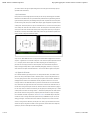
On the other hand, the “Passive AF” system works very differently – instead of relying on infrared
signal to find out the distance between the camera and the subject, it either uses special sensors
within the camera to detect contrast from the light that goes through the lens (known as “Phase
Current Promotions
Detection”) or uses the camera sensor itself to detect contrast in the image (known as “Contrast
Detection”). What does “detect contrast” mean? Without going into complex terminology, this simply
means that it tries to look for sharpness in a particular part of an image. If it is blurry, the AF system
will adjust the lens focus until sharpness/contrast is achieved. That is why the Passive AF system
requires that you have enough contrast in your frame for it to be able to focus properly. When a lens
starts to “hunt” for focus on single color surfaces like white walls or gradient/blurry surfaces, it
happens because the camera needs objects with edges (contrast) that stand out from the background
to be able to acquire focus.
All mirror-less digital cameras such as point and shoot cameras, video cameras, etc. use the “Contrast
Detection” AF method to obtain focus, while most modern DSLRs can use both Phase and Contrast
Detection to acquire focus. Since the “Contrast Detection” AF method requires light to actually hit the
sensor, DSLRs must have their mirrors raised in order for this to work, which means that contrast
detection autofocus in DSLRs can only be done when the camera is in “Live View” mode. The Phase
Detection AF is great for tracking moving subjects, while the Contrast Detection AF is great for
stationary subjects. Contrast Detection is often more accurate than Phase Detection, especially in
challenging or low-light situations. The nice thing about Contrast Detection, is that you can use any
part of the image (including extreme corners) on your sensor to acquire focus, while with Phase
Detection, you must use one or more of the focus points on your DSLR. The disadvantage of Contrast
Detection on DSLRs at the moment, is that it is extremely slow. I’m sure manufacturers will soon catch
up with this, since the speed of autofocus while capturing videos is getting more and more important
on modern DSLRs.
By the way, if your DSLR has an “AF Assist” lamp in front of the camera, it is not an “Active AF” beam –
all it does is fire direct light at your subject like a flashlight would, so it still relies on your camera’s
“Passive AF” system.
Don’t worry about all this if it sounds too confusing – the technical information above is just provided
to help you understand how autofocus functions. Just remember that the default autofocus behavior on
2 of 39
12/24/13, 11:48 AM