1
1 INTRODUCTION
3
1 Introduction
The contents of this work is the implementation of the bottom-up evaluation procedure of
Generalized Annotated Programs (GAPs). A related procedure was presented in 2] (Chapter 3.3) and 13]. The procedure has been formulated in terms of Coloured Petri-nets 6].
Also the extension to GAP-clauses with negated body literals has been examined. The
developed tool, called GAPCAD (Generalized Annotated Program Construction And Debugging), allows the interactive graphical entering of the Petri-net representation of GAPs
and therefore serves as an front-end to DAEDALUS 9]. GAPCAD also permits the monitoring and step-by-step execution of GAPs. In contrast to DAEDALUS, which performs
a query initiated backward chaining (SLG-resolution), the forward chaining procedure in
GAPCAD computes the whole model of the GAP based on the xpoint semantics. To
compute normal GAPs, i.e. clauses with negated literals in the body, an algorithmical proposal for the computation of the well-founded model according to the alternating xpoint
characterisation 20] is presented. This will ensure answer compatibility to DAEDALUS.
The implementation uses DAEDALUS routines, a generic graph editor 5] and inbetween code for representing the Petri-net and computing the xpoint. It was taken care
to dene a useful interface between the GAPCAD core and the graph editor for possibly
exchange with a dierent editor.
The outline of this report is as follows: Firstly, the generalized annotated logic, the
well-founded semantics and the Coloured Petri-net formalisms are described shortly. Next,
the extended Petri-net model is presented, in the rst instance without negated literals
and subsequently including them. Chapter 4 addresses the architecture of GAPCAD, and
the nal chapter discusses some further issues and an outlook. This text does not cover
GAPCADs actual purpose: To serve as a front-end for developing mediatory knowledge
bases for the integration of heterogeneous and inconsistent information sources.
2 Prerequisites
2.1 Generalized Annotated Programs
In this section the generalized annotated logic, introduced by M. Kifer and coworkers 7],
is sketched. It provides an universal language for dealing with temporal, uncertain and
inconsistent information or in general with parametric data with provides the algebraic
structure of a lattice. For a comprehensive description of the language the reader may refer
to 10, 7].
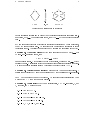
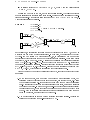
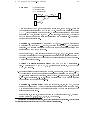
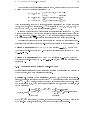
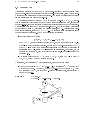
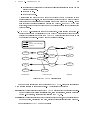
Salient features of the language are the so-called annotations which are constants, variables and terms over a complete lattice T 1. Figure 1 presents some examples for complete
lattices. The following denitions are from 7]:
Denition 2.1 An annotation is either an element of T (c-annotation), an annotation
variable (v-annotation) or a complex annotation term (t-annotation). Annotation terms are
1
A complete lattice (T ) is a partial ordering with respect to , a least upper bound (lub) t and a
greatest lower bound (glb) u for every subset of T . A lattice is linear if is a total ordering.