1
3.4
Microphone channels
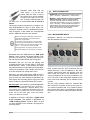
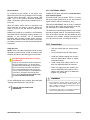
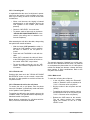
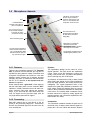
4 bands EQ. This stage has a
dynamic range compressor
compresor that begins to work
over 0 VU. The indicator “MIC
compressor” shows its action.
Gain
Enable/disable the
phantom power (48V) for
MIC-1a and MIC-2a.
The processed signal can
be sent to PGM and REC.
To the left, the switch
cancels the sending.
The channels can be
assigned direct to PGM or
be send to the processor
stage (EQ)
Previous listening (Cue)
Main fader. To enable the
microphones press the
MASTER MIC button, located
at the right on the console.
The gain must be adjusted in
order to the main fader works
over -30 dB indication. OVL
indicates overload, thjat is to
say, excesive input gain.
The apropiate operation level is
mantaining the peaks at 0 VU
3.4.1 Features
Equalizer
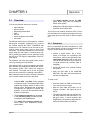
There are two microphone channels. The “Phantom
48V” is common for both channels; but only MIC-1a
and MIC-2a gives phantom voltage. Remember that
all dynamic microphones can connect to a line with
phantom voltage, without risk of damage; because
internally they have a transformer that disconnects
the DC. So it is possible to mix dynamic and condenser microphones.
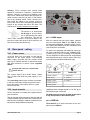
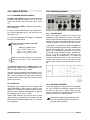
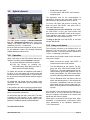
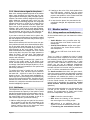
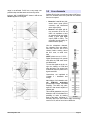
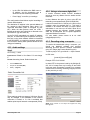
The equalization settings are the same for all assigned channels. The figure shows the equalization
curves. These curves are designed to improve the
quality of the human voice. The ends of the spectrum
work in shelving way, with 15 dB action.
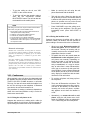
All the channels have a gain knob. It must adjust so
that the main fader works over the overload “OVL”
indication (- 30 dB). Remember that in all audio consoles, excessive input gain reduces the dynamic
range. If you work with the main fader below this
level, the signal from the previous stage must be
very high and the peaks will be clipped.
3.4.2 Processing
Each MIC channel can be sent directly to the air
(PGM) or the processing stage (EQ + compressor).
As well, the processed signal can be sent to the air
or to recording out.
Page 21
As reference we said that the LOW (or bass) control
offers “body” and “weight” to the voices; whereas the
HIGH one adds “presence” and usually improves the
intelligibility. The central frequencies have a bellshaped curve (peak EQ). Mid-bass is centered in 160
Hertz, where usually the plopping effect are concentrated, or there is excessive resonance in certain masculine voices. The mid-high band is located at 5 KHz,
because around this frequency usually appear the
problems with the “sss” (excessive emphasis the sibilants sounds, like “shhh”)
Compression
The compressor maintains constant the peak level of
the human voice. It starts to work when the signal surpasses the 0 VU level. Below that level the dynamic
www.SolidynePro.com