1
Section 4: Pinsetter Cycles
General Information
The GS Certified Pre-owned Pinsetter is capable of performing many different
cycles in reaction to a bowler throwing a ball. Before the pinsetter can begin
one of these cycles, The following events must occur:
1.
The pinsetter must be turned on, waiting for a ball.
2.
The following conditions must be met:
a.
b.
c.
d.
Table is up (“A” switch is closed)
Sweep is forward (“SM” switch is closed)
Sweep is up (“G” switch is not closed)
Spotting tongs are fully open (“ST” switch is closed)
To begin a cycle a bowler must throw a ball, the pinsetter reacts as follows:
1.
The ball detect “sees” a ball and sends a pulse to the Pinsetter CPU.
2.
The ball door solenoid energizes to lock the ball door for three seconds.
3.
The sweep release solenoid energizes dropping the sweep.
4.
Once sweep wagon lowers completely to the guarding position the “G”
switch closes.
5.
The table motor runs counterclockwise to start the cycle, causing the
switch cluster cam to leave the A switch and rotate toward the “B”
switch.
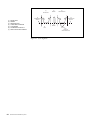
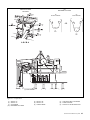
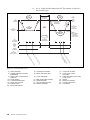
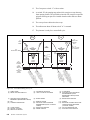
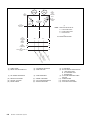
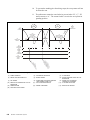
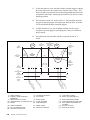
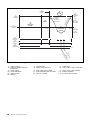
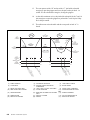
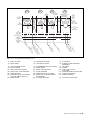
Every cycle can be divided into three segments Refer to Figure 4-1. The first
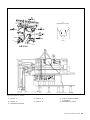
segment is the detection stroke of the cycle. Figure 4-2. In this segment, the
table is lowered to detect or find out the results of the ball hitting the pins. The
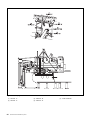
sweep segment occurs after the table is raised, during this segment the sweep
clears all the deadwood from the pin deck and flat gutters. Figure 4-3. The final
segment is the preparation stroke in which the pinsetter readies itself for the
next ball. This may be a short stroke where pins are respotted back onto the pin
deck if they were lifted by the table during the detection segment or it may be a
long stroke where new pins are set on the pin deck in preparation for a new
frame. Figure 4-4.
Section 4: Pinsetter Cycles 4-3