1
NEVER allow anyone to operate the unit when their
alertness or coordination is impaired.
Check the conditions of the unit at the end of each day
and repair any damage or defects.
DO NOT operate unit without wearing adequate outer
garments. Wear adequate safety gear and protective
gloves. Wear proper footwear to improve footing on
slippery surfaces.
ALWAYS block wheels and know all jack stands are
strong and secure and will hold weight of unit during
maintenance.
Protect eyes, face, and head from objects that may be
thrown from unit. Wear appropriate hearing protection.
Avoid Sharp Edges. Sharp edges can cut. Moving
parts can cut or amputate fingers or a hand. Wear
gloves to service unit when handling sharp edges.
Keep unit free of dirt, stones, and other debris. Clean
up oil or fuel spills.
ALWAYS keep hands and feet away from all moving
parts during operation. Moving parts can cut off body
parts.
Storage
DO NOT store unit inside a building with fuel in the fuel
tank where any ignition sources are present. Allow unit
to cool completely.
DO NOT touch unit parts which might be hot from
operation. Allow parts to cool before attempting to
maintain, adjust, or service.
ALWAYS clean unit before extended storage. See
Engine Manual for proper storage.
Controls
Spark Arrester
Come to a complete stop before reversing.
Never jerk the control levers. Always use a steady
even action to achieve smooth control.
Always be aware of obstructions that may cause injury
to operator or damage to the unit.
Service Position
WARNING: ALWAYS block wheels and know
that jack stands or blocks used are stable,
strong, or secure and will hold the weight of
the unit during maintenance.
Avoid Electric Shock. DO NOT reverse battery
connections.
Explosive Gases! Poisonous battery fluid contains
sulfuric acid and its contact with skin, eyes, or clothing
can cause severe burns.
No flames. No sparks. No smoking near battery.
Always wear safety glasses and protective gear near
battery.
Place unit on flat, level surface. ALWAYS stop engine
and disengage clutches. Assure unit is secure and will
not tip over. Strap and clamp onto lift, if used.
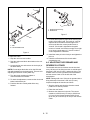
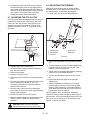
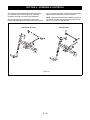
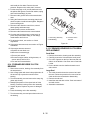
2. If jacks are not available, place support blocks
under both transaxles at the rear of unit.
CAUTION: Remove enough fuel so that no
spills will occur.
This product is equipped with an internal combustion
engine. DO NOT use on or near any unimproved,
forest covered or brush covered land unless the
exhaust system is equipped with a spark arrester
meeting applicable local, state or federal laws. A spark
arrester, if used, must be maintained in effective
working order by the operator.
Battery
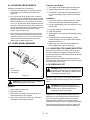
WARNING: ROTATING PARTS can amputate
body parts. Keep hands and feet away. Loose
clothing, long hair or scarves can get caught
in rotating parts and cause death or serious
injury.
1. Place jack stands under rear transaxles only.
Before maintenance, adjustments, or service (except
where specifically recommended), shut off engine.
Allow hot parts to cool.
ALWAYS keep hands away from any pinch points.
To ensure the unit is positioned in the proper service
position:
Keep nuts and bolts tight and keep equipment in safe
operating conditions.
DO NOT TIP battery beyond a 45o angle in any
direction.
ALWAYS KEEP BATTERIES OUT OF REACH of
children.
Transport
Use extra care when loading or unloading unit onto
trailer or truck. Secure unit chassis to transport vehicle.
NEVER secure from rods or linkages that could be
damaged.
DO NOT transport with attachment in raised position.
Lower attachment when unit is parked or stored unless
a positive mechanical lock is used.
Maintenance
Attachments and Accessories
ALWAYS maintain unit in safe operating condition.
Damaged or worn out muffler can cause fire or
explosion.
Use only attachments or accessories designed for your
unit.
2-6