1
All-in-1 / A+ Certification Exm Gde, 6th Ed. / Meyers / 6311-3
CompTIA A+ Certification All-in-One Exam Guide
872
Documents printed through the dye-sublimation process display continuous tone
images, meaning that the printed image is not constructed of pixel dots, but is a continuous blend of overlaid differing dye colors. This is in contrast to other print technologies’ dithered images, which use closely packed, single-color dots to simulate
blended colors. Dye-sublimation printers produce high-quality color output that rivals
professional photo lab processing.
Thermal Printers
You’ll see two kinds of thermal printers in use. The first is the direct thermal printer, and
the other is the thermal wax transfer printer. Direct thermal printers use a heated print
head to burn dots into the surface of special heat-sensitive paper. If you remember the
first generation of fax machines, you’re already familiar with this type of printer. It is
still used as a receipt printer in many retail businesses. Thermal wax printers work
similarly to dye-sublimation printers, except that instead of using rolls of dye-embedded film, the film is coated with colored wax. The thermal print head passes over the
film ribbon and melts the wax onto the paper. Thermal wax printers don’t require special papers like dye-sublimation printers, so they’re more flexible and somewhat cheaper to use, but their output isn’t quite as good because they use color dithering.
Laser Printers
Using a process called electro-photographic imaging, laser printers produce high-quality and
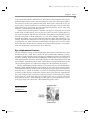
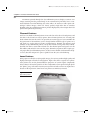
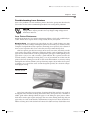
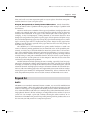
high-speed output of both text and graphics. Figure 20-8 shows a typical laser printer.
Laser printers rely on the photoconductive properties of certain organic compounds.
Photoconductive means that particles of these compounds, when exposed to light (that’s
the “photo” part), will conduct electricity. Laser printers usually use lasers as a light source
because of their precision. Some lower-cost printers use LED arrays instead.
Figure 20-8
Typical laser printer
ch20.indd 872
11/26/2006 11:21:41 AM