1
Queensland Health: Spirometry (Paediatric)
The largest VC from at least two acceptable and repeatable manoeuvres is reported.
The largest FVC and largest FEV1 from acceptable and repeatable manoeuvres are
reported, even though the values may not come from the same manoeuvre.
All other flows, if required by the requesting medical officer, are reported from the
“best” test. The “best” test is defined as the manoeuvre with the largest sum of FVC
and FEV1.
If a single volume-time tracing or flow-volume curve is to be included in a final report, it
should be the spirogram from the effort with the largest sum of FVC and FEV 1.
Expiratory and inspiratory flow-volume curves from different acceptable efforts may be
combined to produce a flow-volume loop.
A medical officer may request the reporting of other measurements (see section 5
Definition of Terms), in which case the largest value for all these measurements should
be reported.
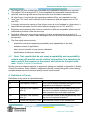
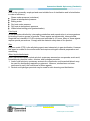
The final report should include:
—
scientist’s comments regarding acceptability and repeatability of the data
—
software version (if applicable)
—
date, time and results of most recent calibration
—
identification of reference values used.
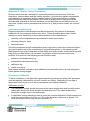
4.8. Note: Test results that do not meet acceptability and repeatability
criteria may still provide useful clinical information. It is important to
make note of the reasons in the report, and advise to interpret with
care. Quality Control Procedures
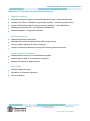
Quality control procedures specific to spirometry testing are detailed in Appendix 4: Quality
Control Procedures. Daily validation (calibration checks), weekly biological control testing,
and data analysis are the minimum quality control requirements.
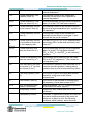
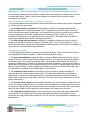
5. Definition of Terms
Definitions of key terms are provided below.
Abbreviation
Term
Definition / Explanation / Details
VC
Vital capacity, litres (L)
The volume change between the position of full
inspiration and complete expiration 9
IVC
Inspiratory vital capacity,
litres (L)
The maximal volume of air inhaled slowly from
the point of maximal exhalation achieved by a
slow expiration from end-tidal inspiration 9
EVC
Expiratory vital capacity,
litres (L)
The maximal volume of air exhaled slowly from
the point of maximal inhalation 9
FVC
Forced vital capacity, litres
The maximal volume of air exhaled with
Version No.: 1.0; Effective from: 26 November 2012
Page 15 of 36
Printed copies are uncontrolled