1
TOWER DESIGN AND CONSTRUCTION
CHAPTER 2: SITE DESIGN AND DEVELOPMENT
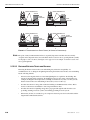
FIGURE 2-4 EXAMPLE OF ANTENNA TRANSMISSION LINE DRIP LOOP
•
Transmission lines shall not be installed in a way that will impede climbing or safety devices.
•
Transmission lines shall not be mounted to climbing ladder rungs or climbing pegs.
•
Transmission line installation should be planned with consideration for future expansion.
•
Excess transmission line shall not be stored (coiled or looped) on the tower.
•
All transmission line connectors, splices, terminations, and jumpers shall be weatherproofed.
•
Transmission line shall be anchored to the tower using hardware recommended by the transmission
line manufacturer for that type of tower. Spacing of anchoring hardware is also determined by the
line manufacturer and is dependent on the type and size of the line. Hangers and/or angle adapters
are typically provided for every 914 mm (3 ft.) of line, including any ice bridge paths. All clamps
and hardware shall be corrosion-resistant.
•
Transmission lines shall be identified in a permanent manner using metal tags, or equivalent
method located at the antenna, at the bottom of the tower, at the shelter cable entrance and inside
the shelter or building.
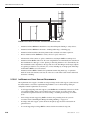
2.12.8.1 ICE BRIDGE AND CABLE SUPPORT REQUIREMENTS
The requirements below apply to installations using ice bridges and/or cable support systems between
the shelter and the tower. These requirements help minimize tower or shelter damage during an
earthquake. General requirements are as follows:
2-26
•
A self-supporting bridge and cable support system shall not be mechanically fastened to both the
tower and the building, unless a nonconductive slip joint is used at one of the locations. The
recommended separation between tower and ice bridge, or building and ice bridge, is 152 mm
(6 in).
•
An ice bridge and each support leg shall be bonded to the grounding electrode system in
accordance with “Cable Bridge/Ice Bridge Grounding (Earthing)” on page 4-71.
•
Ice bridges and cable support systems should be adequately supported and constructed from
galvanized steel.
•
A non-self-supporting ice bridge shall be connected with a nonconductive slip joint.
68P81 089E50 -B
9/1 /05