1
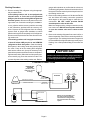
To Close Liquid or Suction Line Service Valve:
WARNING
1 - Remove the stem cap with an adjustable wrench.
2 - Use a service wrench with a hex-head extension to
turn the stem clockwise to seat the valve. Tighten it
firmly.
Never use oxygen to pressurize refrigeration or air
conditioning systems. Oxygen will explode on
contact with oil and could cause personal injury.
When using high pressure gas such as nitrogen for
this purpose, be sure to use a regulator that can
control the pressure down to 1 or 2 psig (6.9 to 13.8
kPa).
3 - Replace the stem cap. Tighten finger tight, then tighten
an additional 1/6 turn.
SUCTION LINE SERVICE VALVE (VALVE OPEN)
INSERT HEX
WRENCH HERE
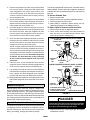
Using an Electronic Leak Detector
STEM CAP
1 - Connect the high pressure hose of the manifold gauge
set to the suction valve service port. (Normally, the high
pressure hose is connected to the liquid line port, however, connecting it to the suction port helps to protect
the manifold gauge set from damage caused by high
pressure.)
FIELD SIDE
SCHRADER
VALVE
2 - With both manifold valves closed, connect the cylinder
of R410A refrigerant. Open the valve on the R410A cylinder (vapor only).
UNIT SIDE
3 - Open the high pressure side of the manifold to allow
R410A into the line set and indoor unit. Weigh in a trace
amount of R410A. [A trace amount is a maximum of 2
ounces (57g) refrigerant or 3 pounds (31 kPa) pressure]. Close the valve on the R410A cylinder and the
valve on the high pressure side of the manifold gauge
set. Disconnect R410A cylinder.
SERVICE PORT
CAP
SERVICE PORT
SUCTION LINE SERVICE VALVE (VALVE CLOSED)
RETAINING RING
STEM CAP
FIELD SIDE
4 - Connect a cylinder of nitrogen with a pressure regulating valve to the center port of the manifold gauge set.
INSERT HEX
WRENCH HERE
5 - Adjust nitrogen pressure to 150 psig (1034 kPa). Open
the valve on the high side of the manifold gauge set in order to pressurize the line set and the indoor coil.
SERVICE
PORT
(VALVE FRONT
SEATED)
6 - After a short period of time, open a refrigerant port to
make sure that an adequate amount of refrigerant has
been added for detection (refrigerant requirements will
vary with line lengths). Check all joints for leaks. Purge
nitrogen and R410A mixture. Correct any leaks and recheck.
SERVICE PORT
CAP
SCHRADER VALVE OPEN
TO LINE SET WHEN VALVE IS
CLOSED (FRONT SEATED)
UNIT SIDE
FIGURE 7
IMPORTANT
Leak Testing
Leak detector must be capable of sensing HFC refrigerant.
After the line set has been connected to the indoor and outdoor units, the line set connections and indoor unit must be
checked for leaks.
WARNING
Refrigerant can be harmful if it is inhaled. Refrigerant must be used and recovered responsibly.
Failure to follow this warning may result in personal
injury or death.
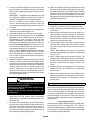
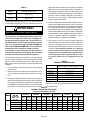
Evacuation & Dehydration
Evacuating the system of non-condensables is critical for
proper operation of the unit. Non-condensables are defined
as any gas that will not condense under temperatures and
pressures present during operation of an air conditioning
system. Non-condensables and water vapor combine with
refrigerant to produce substances that corrode copper piping and compressor parts.
Page 8