1
This work analyzes the CAN bus of a 2003 Mini Cooper S which
interconnects the instrument cluster, engine control unit, anti-lock
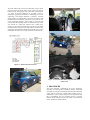
braking system, steering angle sensors, and other systems (Figure
1-1). Since the message identifiers for the Mini Cooper are
manufacture proprietary information, a methodology for reverse
engineering CAN message identifiers is presented. Potential
attack strategies are demonstrated, to show how an attacker could
manipulate the interconnected components on the CAN bus. The
reverse engineering method is used to build a CAN clock from
scratch, using the instrument cluster of a 2003 Mini Cooper S that
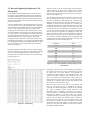
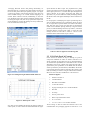
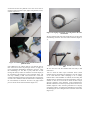
was involved in a staged auto collision with a GMC Envoy
(Figure 1-2). This paper concludes with a discussion of the future
of communication security for passenger vehicles and the security
engineering mechanisms that should be considered early on in the
development life cycle of ECUs and associated vehicle networks.
Figure 1-1: Mini Cooper Data Network
Figure 1-2: Wrecked 2003 Mini Cooper and Instrument
Cluster Unit
2. PROCEDURE
This section describes a methodology for reverse engineering
proprietary CAN message IDs on passenger vehicles. We provide
an example by using the CAN data log captured from a 2003 Mini
Cooper that was involved in a staged vehicle collision. Next we
demonstrate a proof of concept using the reverse engineered CAN
IDs to manipulating the car's instrument cluster to generate
artificial vehicle and engine speed CAN traffic to the instrument
cluster (speedometer and tachometer).