1
INTRODUCTION:
Welcome to the world of aftermarket performance tuning. If you are reading this
document, then obviously you have an interest in tuning your own vehicle. Once
you have grasped some basic methods, techniques and terminology, you will be
able to successfully tune your modified vehicle. Proper tuning will help you to
achieve optimum performance and eliminate poor drivability.
We will focus on the techniques available to tune your vehicle and the use of the
IEMS3 “In Series” engine management system.
The IEMS3 is vastly different from more common “piggyback” units, and we will
explore what those differences are as well.
Please read through this entire document and any literature supplied with your unit.
Additional reading regarding the basics of fuel injection and in particular the
functioning of a modern OBDII compliant vehicle ECU would also be helpful. Your
vehicles service manual should provide a discussion of the function of various
systems, individual components, and sensors.
It is also a good idea to read the troubleshooting/testing sections related to
malfunction codes for the particular area of interest associated with your vehicle.
With the right components, tools, and knowledge, you can make your vehicle more
enjoyable or if you disregard caution and simply charge ahead, you can cause
damage if the tuning is not done correctly.
HOW THINGS WORK:
What is this CANbus thing I hear about?
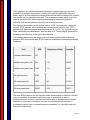
The modern OBDII compliant (meaning it meets and maintains compliance to the
Federal Emissions Standards) vehicle uses a very complicated and intelligent series
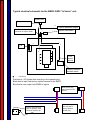
of computers. Today, most vehicles have numerous modules (or nodes) connected
together over what is known as a Controller Area Network bus (CANbus) system.
The modules have their own “address” (like your computer’s IP address on the
internet), and if one is missing, the system will call foul and may take a time out.
This is similar to the central nervous system you and me were born with. In nearly
all cases, if you disconnect a module from the system, you will get a Malfunction
Indicator Light (MIL) or some call it a Check Engine Light (CEL). Depending on the
device disconnected, you may simply get a hidden trouble code as commonly occurs
when changing audio equipment, or a particular system, such as Heating and
Cooling, may cease to function all together. Worst case, the vehicle simply will not
start or run.
Page 3